Is StoryWorth Worth It in 2026? An Honest Review
We built a StoryWorth competitor, so we have every reason to slag it. We're not going to. Here's the honest review — what StoryWorth actually does well, where it falls short, and who should skip it.
Patrick Moore, Founder • April 27, 2026
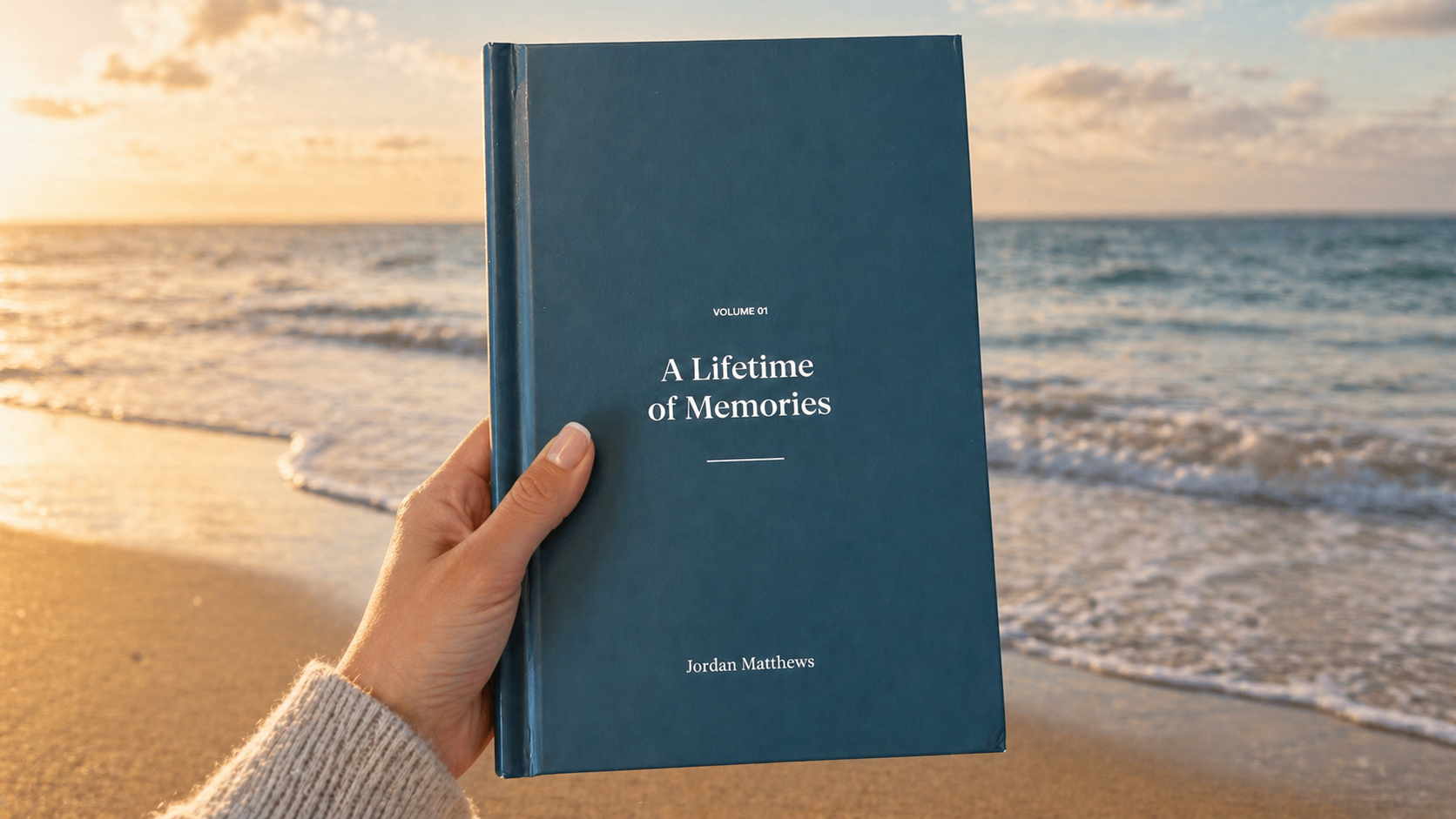
You've got the StoryWorth checkout page open in another tab. You've already scrolled past the "Mom is going to love this" testimonials. You've read three or four reviews — most of them with a referral link tucked underneath the verdict. And now you're sitting on the buy button thinking: is this actually worth it?
That's why you're here. So let's get the awkward part out of the way.
Disclosure
We built Memory Murals, which is in the same general category as StoryWorth. So we have every commercial reason to tell you StoryWorth is bad. We're not going to. Most reviews on the front page of Google for "is storyworth worth it" have an affiliate link in the verdict — ours doesn't, and we're going to be fair about what StoryWorth actually does well. The only way you can trust a competitor's review is if it's honest about the strengths first.
This post is for the person who's three clicks from buying. We're not going to bury you in 4,000 words. You'll get the real verdict in the next callout, and the rest of the post is for whoever wants to know why.
Buying as a gift?
The "is it worth it" question shifts when StoryWorth is specifically a gift — the 13-month book timeline and the empty day-of moment change the answer. Our StoryWorth gift cost 2026 breakdown covers the gift-specific math and the alternatives that arrive same-day.
The 30-second answer
Buy it if you want one parent's stories printed in a single hardcover book a year from now, gifter wants set-and-forget, recipient is comfortable typing email replies.
Skip it if voice matters to you, you have more than one storyteller in the family, or you want anything that outlasts a single book on a shelf.
Read on if you want to know which group you're in.
StoryWorth's pitch is a beautifully simple structure that hasn't really changed in ten years. You buy a subscription on behalf of a parent or grandparent. They get an email every Monday with a question. They reply. The replies pile up over the year. At the end, StoryWorth prints everything as a hardcover book and ships it to you.
What it costs, from StoryWorth's pricing page in October 2026:
$69
Basic
One hardcover up to 480 pages, black-and-white interior. Questions by email; no phone storytelling.
$99
Color
One full-color hardcover up to 300 pages. Questions by email or text, plus phone storytelling with transcription.
$199
Unlimited
Two color books and unlimited family memoirs for the first year, then auto-renews at $99 a year.
Extra books are $39 (black-and-white), $79 (color, up to 300 pages) or $99 (color, up to 480 pages), and there's a full refund within 30 days. One oddity worth knowing: the FAQ on that same pricing page, and StoryWorth's homepage, still quote the older $59 and $109, so check the figure at checkout before you rely on it.
The book itself is around 7×9 inches, hardcover, casebound. Photos count toward the page limit (one big photo per page, sometimes two if they're small). The bookmaking is decent. It's not a coffee-table photography monograph but it's substantially nicer than what you'd print yourself at Walgreens.
Four things StoryWorth does well, and we say this without holding our nose.
The weekly cadence is the right cadence. This is the single most underrated thing about StoryWorth's design. Most parents will not sit down and write their life story on their own. But ask one specific question — "What did your bedroom look like when you were ten?" — and most parents will reply. The Monday email is a tiny, low-pressure, repeatable nudge. Once a week is sustainable. Once a day would burn people out. Once a month would lose momentum. They got the rhythm right and most competitors haven't caught up.
The hardback book is genuinely well-made. It looks like a real book. Heavy stock pages, archival-quality binding, the kind of object you'd be embarrassed to throw away. We've seen StoryWorth books on coffee tables, and they don't read as vanity press. That matters when the giftee opens the box on Christmas morning. The artifact has weight.
The end-to-end gifter experience is dialed. Gift box, printable card, personalized landing page for the recipient — they thought about every step from "swipe a credit card" to "Mom holds the book a year later." For a person who wants to give a meaningful gift but does not want to manage a project, StoryWorth is one of maybe three products on the internet that actually delivers.
Ten years of polish. StoryWorth launched in 2014. Every onboarding email, every customer-support response, every print-quality control gate has been iterated on for a decade. There are no rough edges. That's rare in this category.
OK. Now the part that didn't make it onto StoryWorth's homepage.
The book keeps the words, not the voice. This is the big one for us, and it's why Memory Murals exists. StoryWorth lets the recipient answer by voice, but what ends up in the book is the transcript. Your dad's voice, the way he says your name, his laugh, the cadence with which he tells the story he's been telling for forty years — that's not in the book. The book is text only. If voice is what you're trying to preserve, you're buying the wrong product.
More than one storyteller costs more. The base subscription is built around one person. StoryWorth's Unlimited plan ($199 for the first year, then $99 a year) covers unlimited family memoirs, so if you have two living parents, four grandparents and an aunt who tells the best stories, that's the plan to price, not Basic.
The book is the artifact, but the book sits on a shelf. This is the longest-arc problem and it's the one we think about the most. The book is beautiful in 2026. In 2056, your grandkids — the ones the book is supposedly for — are not going to walk over to the bookshelf and pull it down. There's no search. No tagging. No way to find "Grandma's snowstorm story" without flipping pages. Compare a printed book to what a digital archive can do thirty years out, and the printed book starts to look more like a memento than a research tool. We wrote about this trade-off at length in digital vs. physical memory books — which actually lasts. The short version: physical books survive better than people expect, but they don't get used the way an indexed digital archive does.
You don't own the data after the year. Once the book ships, that's it. There's no archive you can log into. No JSON export. No audio files. No way to go back and pull out a specific story to share at a wedding speech. You bought a book, and a book is what you have. If you want anything else — anything you can search, share, or hand to your kids in a format they actually use — you're starting from scratch.
52 prompts is a fixed structure. StoryWorth gives you a set of weekly questions (the full list is here, with 50 better alternatives). They're good questions, mostly. But your dad has stories that don't fit the prompt for Week 12 ("What's the bravest thing you've ever done?"). Stories that just come up on Tuesday at 3pm because someone mentioned the dog. Those don't get captured. The structure is what makes StoryWorth work — and it's also what makes it incomplete.
For the person who wants the trade-offs in one place:
Weekly cadence is the right rhythm
Sustainable and repeatable. Most parents will reply when prompted once a week. More frequent burns them out; less frequent loses momentum. They got the rhythm right.
The hardback book is genuinely well-made
Heavy stock, archival binding, looks like a real book on a coffee table — not vanity press. The artifact has real weight when the giftee opens it.
Gifter experience is set-and-forget
Gift box, printable card, personalized landing page for the recipient. One of the cleanest gift-giving flows on the internet — push a button and a year later a book shows up.
Ten years of brand polish
Onboarding emails, support, print quality control — all iterated on for a decade. No rough edges. Rare in this category.
The book keeps the words, not the voice
Voice answers are transcribed for the book. The way your dad says your name is not on the page.
Extra storytellers cost extra
The base plan is built around one person. More storytellers need the $199 Unlimited plan, which renews at $99 a year.
The book is the only artifact
No searchable archive, no audio export, no JSON dump. After the year ends, what you have is what's on the printed page — and a book sits on a shelf.
Fixed 52-prompt structure
Stories that don't fit the week's question don't get captured. Unprompted Tuesday-afternoon stories live and die in the moment.
Here's who StoryWorth genuinely is for. If you fit this profile, stop reading and go buy it — you'll be happy.
You have one parent (or one grandparent) you want to focus on. You're giving this as a gift, and you don't want to manage the project — you want to push a button, write a personal note, and have something show up at their door. The recipient is comfortable answering email. They're not going to need help replying. The whole family wants a single, tangible artifact at the end — a book on a coffee table that anyone can pick up and flip through.
If that's you, StoryWorth is one of the few products on the internet that delivers on its promise without you having to do anything. The price, $69 to $199 depending on the plan, is fair for what you're getting.
Don't overthink it. Go buy it. Come back to this post in 18 months when you're shopping for the next parent.
But there's a meaningful chunk of buyers for whom StoryWorth is the wrong tool. If any of these describe you, the rest of this post is going to be useful.
Voice-first families. If part of why you're doing this is that you don't want to forget what your mom's laugh sounded like — StoryWorth doesn't solve that. The audio gets thrown away. You need a tool that keeps the recordings.
Multi-storyteller projects. Two parents, several grandparents, an aunt or uncle with stories worth saving. You probably want one place where the family's stories live together and keep growing, not a book per person.
Long-term archivists. If you're thinking about your kids' kids — the ones who don't exist yet, in 2056 — you want something searchable, taggable, and migratable. A book on a shelf doesn't get used the way a digital archive does over a thirty-year arc.
If any of those is you: the next section's where to look. Otherwise — and we mean this — go buy StoryWorth. You'll be happy.
Three honest alternatives across price points and effort levels.
Voice-first family archives. This is the category Memory Murals is in, and we're not going to pretend we're neutral here. The pitch: voice-first by design, multiple storytellers in one place, ongoing rather than a one-year project, and your data is yours forever rather than baked into a single book. We're not the only option in this corner of the market — see our roundup of voice-recording books and tools for grandparents for an honest comparison across price points before you decide.
Heirloom-style voice cousins. Tools like Remento, Storii, and HereAfter AI use the same prompted-letters model as StoryWorth but capture audio. Remento is the closest direct swap: $99 for the first year including a full-color hardcover, with a QR code in each chapter that plays the original recording (checked on remento.co, October 2026). See Remento vs StoryWorth. Memorygram's Legacy Book goes a step further, printing a QR code on the cover that plays the recordings back — we put the two side by side in Memorygram vs StoryWorth. You get the structured weekly cadence and the printed book at the end, but the recordings stick around too. Our full StoryWorth alternatives roundup compares six of them on price, voice and the book.
DIY phone voice memos plus a permanent archive. Free if you're disciplined. Open Voice Memos on iPhone (or Recorder on Android), call your mom, hit record, ask her one question. Save the file somewhere durable. Repeat next week. We wrote a step-by-step on how to record your parent's voice before time takes it — it works, it's free, and it requires more lift than StoryWorth. The lift is the point: you'll only do it if voice matters enough to you to put in the effort.
The short answer for gift buyers
StoryWorth is a good Christmas gift if the person you're buying for will answer a question a week by email and you're happy for the "real" present to arrive next year as a book. If you'd rather they could start on Christmas Day, or you want to keep how they sound and not just what they say, give something voice-first instead.
What StoryWorth gives on the day
A card and a promise. The questions start arriving after Christmas and the book ships about a year later.
What a voice-first gift gives on the day
Somewhere to start right away: record a story at the table on Christmas afternoon and it's saved, with the voice, before dessert.
If voice is the point, you can give Memory Murals as a gift: a month or a year of Premium, paid once with nothing to cancel. The recipient gets an email with their activation link within minutes, you get a copy to print in a card, and the gift period only starts when they activate it. For other ideas in the same spirit, see our sentimental Christmas gift ideas.
The honest verdict
StoryWorth is genuinely worth the money if you want one parent's stories printed in a single hardcover book a year from now. The product does what it says it does, and the experience for both gifter and recipient is unusually polished. But skip it if voice matters to you, if you have more than one storyteller in your family, or if you want anything that outlasts a single book on the shelf. Those use cases need a different tool.
That's the take. We built Memory Murals because we kept watching families lose the voices first — the laugh, the way she said your name, the cadence of the bedtime stories — and the existing tools weren't designed to catch them. If that's the use case you have, give Memory Murals a try. If you want a hardcover book on a coffee table a year from now and don't care about the audio, StoryWorth's still the cleanest path. We'd rather you buy the right tool for the job than the wrong one with our logo on it.
Now go open the StoryWorth tab — or close it — and either way go ask your mom about her childhood bedroom on Sunday. The product is less important than the asking.
Get 50 questions to ask your parents — before the stories are gone
The exact prompts families use to draw out the stories nobody ever wrote down. Free, straight to your inbox.
No spam. Unsubscribe anytime.
Frequently asked questions
How much does StoryWorth actually cost in 2026?
StoryWorth's pricing page lists three plans: Basic at $69 (one hardcover up to 480 pages with a black-and-white interior, questions by email, no phone storytelling), Color at $99 (one full-color hardcover up to 300 pages, questions by email or text, phone storytelling with transcription) and Unlimited at $199 for the first year, then auto-renewing at $99 a year (two color books and unlimited family memoirs). Extra books are $39 (black-and-white), $79 (color, up to 300 pages) or $99 (color, up to 480 pages). The same page's FAQ and StoryWorth's homepage still quote $59 and $109, so confirm at checkout. Checked October 2026. StoryWorth offers a full refund within 30 days.
Is StoryWorth worth it as a Christmas gift?
Yes, if the person you are buying for will answer a weekly question by email or text and the thing you want is one printed book a year from now. Two things to know before you buy: the book arrives about a year after Christmas, so on the day they open a card, not a book; and the book prints their words, not their voice. If you want something they can use on Christmas Day, or you want to keep how they sound, look at a voice-first gift instead.
Is StoryWorth worth it as a gift?
Yes, with caveats. It is worth it if the recipient is the type of person who will respond to a weekly email, if you (the gifter) want a no-management experience, and if a single hardcover book at the end is what you are actually after. If the recipient will not reply to email, the math gets messier. The single biggest predictor of a successful StoryWorth gift is the recipient's willingness to type.
What happens to my StoryWorth book after the year ends?
You get the printed book. You can order extra copies of the same book. The questions and answers stay in your StoryWorth account, but there is no ongoing archive feature, no audio export, no JSON dump of the data. The book is the artifact. If you want a second year of stories, you start a new subscription rather than appending to the existing one. Plan accordingly: this is a one-year, one-book gift, not the start of an ongoing archive.
Can my parent's voice be saved on StoryWorth?
Not in the book. The recipient can answer by voice, but what gets printed is the transcript, so there is no way to hear them from the page. If keeping the actual sound of your parent's voice is part of why you are doing this, choose a tool that keeps the recording with the story.
What are the best StoryWorth alternatives?
Depends what you are optimizing for. If you want voice preserved, look at Memory Murals, Remento, or Heirloom voice-book products. If you want a print book at the end with audio captured along the way, Remento is probably the closest direct alternative — it uses the same prompted-letters cadence StoryWorth does but actually keeps the recordings. If you want a free DIY route, your phone's voice recorder plus a durable archive will get you most of the way there with more lift on your side.
About the author
Patrick Moore, Founder of Memory Murals
Patrick Moore is the founder of Memory Murals. He built it after realizing how much of his own family's history had quietly slipped away — to help families preserve their stories, voices, and photos while they still can.
Related Stories

Comparisons
StoryWorth vs Remento vs Tinybeans vs FamilyAlbum vs Memory Murals: Honest 2026 Comparison
Five tabs open, a Mother's Day deadline, and a credit card half-pulled out. The honest side-by-side on StoryWorth, Remento, Tinybeans, FamilyAlbum, and Memory Murals — including which one is the bridge between photo-sharing and story-capture, and which gift will actually arrive in time.
Patrick Moore • April 24, 2026
Comparisons
How Much Does StoryWorth Really Cost in 2026? ($69 to $200+, Full Math)
A friend bought StoryWorth for her dad off the $69 starting price. By year's end she'd spent $178 before shipping. She didn't get scammed — she just made the upgrades almost everyone makes (color, a second copy, faster shipping). Here's the full math for 2026.
Patrick Moore • May 9, 2026

Comparisons
Best Digital Photo Frames for Grandparents: Share Memories Easily
Looking for the perfect digital photo frame for your grandparents? We compare top options like Aura and Skylight, focusing on what truly matters: ease of setup, simple photo sharing for the whole family, and a beautiful display. Discover how to choose a frame that bridges distances and keeps them connected.
Patrick Moore • July 16, 2026
See the version we built.
Voice-first, multi-contributor, and priced on one page — $12.99/mo, $99.99/yr, or a $7 weekend pass. Free for 7 days.