Voice Recording Books for Grandparents: What Actually Works
A voice recording book can turn a grandparent's storytelling into something your kids will actually hear someday. But there's a wide gap between the gimmicky ones and the ones that really work. Here's what to look for.
Patrick Moore, Founder • April 14, 2026
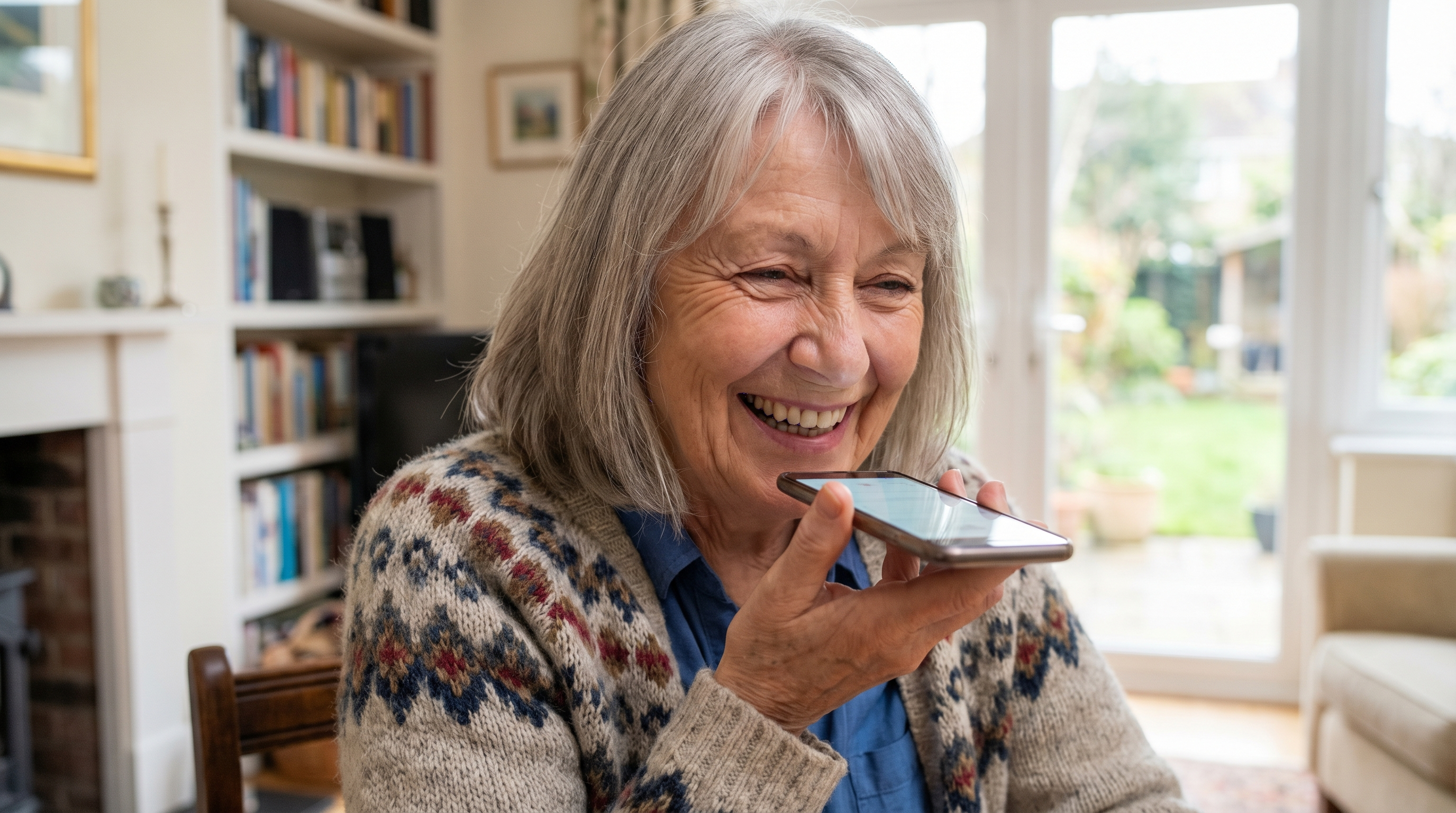
A few Christmases ago, my aunt gave my grandma one of those talking photo albums. You know the kind — thick cardboard pages, a little speaker built into the spine, a button next to each photo. You press the button and hear ten seconds of someone's voice.
Grandma loved it. She sat in the kitchen for an hour recording snippets next to old pictures: "That's me at Lake Erie, I was seventeen. Your grandfather wouldn't get in the water."
It broke six months later.
Not the speaker — the button. One of the kids had pressed it too hard and the little clicker underneath stopped registering. All those recordings were still on the chip inside, but there was no way to play them back. No export. No backup. No port. Just ten voice clips of my grandmother, sealed inside a broken toy.
That's the whole problem with voice recording books in one story. The idea is beautiful. The execution, most of the time, is throwaway.
But the idea itself — giving your grandparents something that captures their voice while they still have it — is one of the best gifts you can give your family. You just have to know what to buy. Or build.
The one thing worth remembering
Whatever you choose, make sure the audio lives somewhere you can actually get to. A device that records but never lets you export is a ticking clock. Cloud-based voice books solve this by default — the recording is yours, on your account, forever.
Three Very Different Products Get Called the Same Thing
When people search for "voice recording books for grandparents," they're actually looking at three pretty different things — and most of the time they don't realize it until the box shows up.
Physical gadget books
Prompted writing books
Audio memory apps
If you only remember one thing from this article, remember this: when people imagine a "voice recording book," they're almost always picturing the third thing. A real recording. Their grandma actually talking. Available on their phone. Forever.
The first two get bought constantly because they show up on Amazon first. The third is what you end up wishing you'd gotten.
Physical Voice Recording Books: The Good, The Fragile
Let's start with the kind you'll see if you Google "voice recording book" and shop the first page of Amazon.
These are usually thick board books with a recordable sound module built into each page. Some are kid-themed ("Grandma reads Goodnight Moon"), some are blank family albums, and some are pre-printed with prompts ("Tell me about the day I was born").
They're charming. Little kids love pressing the button and hearing a grandparent's voice. Honestly, if your grandparent is already 85 and your goal is a keepsake for a 4-year-old right now — these are great. Buy one.
Tactile and immediate
Grandkids interact with it. There's something magical about a toddler pressing a button and hearing grandma laugh. No screen required.
Works without any tech skill
No app to set up, no account to make, no password to remember. Record, close, done.
Great as a one-off keepsake
For a specific child, at a specific age, with a specific book — hard to beat the charm.
Recordings are trapped in the device
No export, no backup, no transfer. When the hardware fails (and it will), the audio is gone.
Very short recording time per page
Usually 10-30 seconds. Enough for a greeting, not enough for a story.
Batteries die. Speakers break. Pages tear.
You're building your family heirloom on consumer-grade toy electronics. Think about where that ends up in 20 years.
My honest take: treat these like a birthday card with sound. Fun. Temporary. Not your actual archive.
Prompted Writing Books (StoryWorth, Grandparent's Journal, etc.)
Second category: books that call themselves memory books but don't keep the voice in the finished book. They're prompt journals.
StoryWorth is the most famous. Every week they email your grandparent a question. Grandparent writes an answer. After a year, you get a printed book of all their answers bound nicely.
These books are genuinely good products. I'm not hating on them. Thousands of families have one on their coffee table and they're treasured.
But the thing is: they're not voice recording books. They're writing books. The "voice" is the writing voice — which, if your grandparent is a natural writer, can be beautiful. And if your grandparent doesn't love writing, or has arthritis, or never responds to emails, can turn into a stack of unanswered prompts and a book that never gets made.
Who the writing books work for
Grandparents who enjoy writing, check email reliably, and have the time and hand strength for regular typed responses. If your grandparent fits that profile, a StoryWorth-style book is a legitimately great option.
Here's the test I'd apply: if your grandparent already writes long emails or keeps a journal, go with the writing book. If your grandparent is the type who calls you to tell a story instead of texting it — you want audio, not writing. We have a full guide on how to record your grandparents' stories if you want practical tips for getting started.
What People Actually Want: Audio Memory Apps
Before the criteria, the field itself: we put seven AI memory apps through a hands-on test to see which ones actually keep a grandparent's voice rather than quietly reducing it to a transcript.
This third category is the one most people are actually looking for when they Google "voice recording books for grandparents." They just don't know it has a different name.
An audio memory app works like this: grandparent records a voice message (usually from their phone, sometimes from a web browser). The app transcribes it. Family members can listen back whenever, from anywhere. The recordings live in the cloud — meaning they survive hardware, phones, even the grandparent.
This is the thing that actually scales. You can save hundreds of stories. You can organize them by year, person, or topic. You can pull out a single recording in twenty years when your kid asks "what did great-grandma sound like?" and the answer is: click play.
Unlimited length and quantity
Record a 2-minute story or a 2-hour interview. As many as you want. No 30-second card speaker limit.
The actual voice, preserved
Tone, laugh, accent, pauses. All of it. That's the thing you genuinely cannot recreate later.
Stored in the cloud, not a toy
Works on any phone, any computer, any device. Doesn't break when the hardware does.
Transcribed and searchable
Modern apps transcribe audio automatically. Later you can search "the year they moved to Ohio" and find the right recording.
Requires a phone or a device
If your grandparent genuinely can't use a smartphone, this path is harder. You'll need to record with them rather than leave them to it.
Monthly or annual subscription
Most cloud-based options are subscriptions. That's fair — they're paying to store your audio indefinitely — but it's not a one-time purchase.
Five Things That Matter in a Voice Memory App
Once you've decided audio is what you want, the question becomes: which app? A bunch of options have popped up in the last few years and they're not equal.
Here's the short list of things I'd check before committing your family's audio to a platform.
Can you export the recordings?
Is it private by default?
Can multiple family members contribute?
Does it transcribe automatically?
Will it still exist in 10 years?
Our short version
If you're picking between a gadget book and an audio app: the gadget book is a gift for a 4-year-old. The audio app is a gift for the next four generations. Pick accordingly.
The Case for Voice Over Everything Else
One more thing before I wrap up, because I think people underestimate this.
Photos fade in your mind faster than you'd expect. Written letters get skimmed. But voice? Voice doesn't fade. Ten seconds of someone's actual voice can pull you back into a kitchen you haven't stood in for thirty years. It's physical. It hits you somewhere different than reading their words ever could.
The science behind this is real — hearing a loved one's voice can lower stress hormones and raise oxytocin in ways text simply doesn't. We wrote more about it here if you want to go deeper.
But you don't need the science to know it. Anyone who's heard a voicemail from someone they've lost already knows.
The window for recording your grandparents is finite. Usually narrower than families admit. If a voice book — any kind — gets you into the habit of sitting down and pressing record, it's worth it. Just pick the kind that won't break in six months.
If You Asked Me What to Actually Do
Alright, practical answer. If someone messaged me tonight and said "my grandfather is 82, I want to capture his stories, what do I do?" — here's what I'd tell them, in order.
A realistic four-step plan
Sit down with them tonight, on your phone
Open the voice memo app already on your phone. Record one story. Any story. Don't over-plan it. The point is to start.
Move that recording somewhere safe
A voice memo on your phone is better than nothing, but it's one accident away from gone. Back it up to the cloud. Today.
Pick an audio memory app for the ongoing archive
Something that transcribes, organizes, and lets the whole family contribute. This is where the real library builds over time.
Do it a little at a time
You don't need a dedicated 3-hour sit-down. Fifteen minutes a week, over six months, and you'll have a richer archive than any gadget book could produce.
That's the honest version. No product is going to do the work for you — but the right one makes it easy enough that you actually keep doing it.
Where Memory Murals Fits In
Full disclosure: we built Memory Murals specifically because the gadget books kept failing friends of ours, and the writing books weren't working for the grandparents who told stories best out loud.
It's built around voice-first memories. Your grandparent records, the story is transcribed on Premium, and the family you invite can listen, comment and add their own side of it. Everything is private, exportable, and yours. No social feed. No ads. No button that breaks.
If that sounds like the kind of thing you were hoping to find when you searched for "voice recording books," you can try it free here. Record one story tonight. That's really all it takes to start.
Giving it as a gift instead?
You can give Memory Murals as a gift: a month or a year of Premium, paid once with nothing to cancel. Your grandparent (or the grandchild who'll sit with them) gets an activation email within minutes, you get a copy of the link to print in a card, and the gift period only starts when they activate it. No shipping, so it works for a last-minute Christmas present. More in our sentimental Christmas gift ideas.
The best day to record your grandparents was ten years ago. The second best day is whatever day you stop planning and actually press record — and if you want a date on the calendar to force the issue, Grandparents Day is the obvious one. And if you're shopping for the grandparent who already has everything, here are 15 meaningful gift ideas beyond the usual suspects.
Get 50 questions to ask your parents — before the stories are gone
The exact prompts families use to draw out the stories nobody ever wrote down. Free, straight to your inbox.
No spam. Unsubscribe anytime.
Frequently asked questions
What is a voice recording book for grandparents?
A voice recording book is either a physical hardcover with a built-in audio chip and speaker (you push a button on the page and it plays a pre-recorded voice clip) or a memoir-style book paired with a digital app that captures voice as part of the story-collection process. The physical-button kind is a novelty gift. The app-paired kind is closer to a real archive. Both are sold under the "voice recording book" label, which is why families end up disappointed when they pick the wrong category.
Are voice recording books actually worth it?
It depends which kind. The physical-button gadget books are a fun gift for young children but the recordings rarely survive past a few years — speakers fail, batteries die, the book gets put in a closet. The app-paired voice products are worth it if you want recordings that last across phones, devices, and decades. The honest summary: gadget books are toys; app-based voice archives are infrastructure. Pick based on which one you actually need.
How much does a voice recording book cost?
Physical voice-button books vary a lot in price depending on length and audio quality, so compare current listings. App-based voice products vary more widely: a free phone voice memo; Remento at $99 for the first year including a hardcover; StoryWorth's Color plan at $99, the one with phone storytelling; or Memory Murals at $12.99/month or $99.99/year (prices checked October 2026). The cost of the right tool is almost always cheaper than the regret of losing the voice you meant to capture.
What's a good recordable gift for grandparents this Christmas?
Pick by who will do the recording. If a grandparent will happily talk into a phone when a link arrives, a prompted voice service such as Remento (printed book with QR codes that play the recordings) or Memory Murals (an ongoing private archive that keeps every recording with its photos) works well, and both can be given by email with no shipping. If they won't touch a phone, a physical voice-button book is the simpler toy, but plan for a family member to record them during a visit and save the audio somewhere that outlasts the book's battery.
What's the difference between a voice recording book and a memory app?
A voice recording book is usually a single physical artifact — one book, one set of recordings, one moment captured. A memory app is an ongoing archive that captures voice across many sessions, transcribes the audio, organizes it by person and date, and lets the whole family contribute. The book is a memento; the app is infrastructure. Which one you want depends on whether you're commemorating a person or building a multi-generational archive.
What's the best voice recording book for older grandparents?
If "older" means 80+ and not comfortable with apps, a physical voice-recording memoir book with simple step-by-step prompts (handed to them by a family member who can review the recordings) is the lowest-friction option. If a family member is willing to handle the tech, an app like Memory Murals lets the grandparent talk while the relative manages the device. The bottleneck is almost never the grandparent — it's whether someone in the family will sit with them while they record.
About the author
Patrick Moore, Founder of Memory Murals
Patrick Moore is the founder of Memory Murals. He built it after realizing how much of his own family's history had quietly slipped away — to help families preserve their stories, voices, and photos while they still can.
Related Stories
How-To Guides
You Have the Questions. Here's How to Actually Record the Answers.
Every article gives you a list of questions to ask your grandparents. Almost none of them tell you what to do next. Here's the part nobody writes: how to actually capture the answers so they outlive the conversation.
Patrick Moore • April 11, 2026

Insights
The Sound of Home: Why a Loved One's Voice is the Ultimate Time Machine
We obsess over HD video but overlook our most powerful connection: the human voice. Here's why recording your family's voices might be the most important thing you ever do.
Patrick Moore • January 20, 2026
Pillar Articles
Ensure Your Kids Truly Know Their Grandparents, Before It's Too Late
It's easy for the connection between kids and grandparents to remain surface-level. This post explores practical, heartfelt ways to bridge that generational gap, ensuring your children build a deep, lasting bond and inherit the family stories that define them.
Patrick Moore • June 12, 2026
See the version we built.
Voice-first, multi-contributor, and priced on one page — $12.99/mo, $99.99/yr, or a $7 weekend pass. Free for 7 days.