Press & Media
Everything you need to write about Memory Murals.
The story, verified product facts, and downloadable images. If you need something that isn't here — a demo, a test account, an interview — just ask.
patrick@memorymurals.comAbout the founder
Copy any version below straight into show notes, a run sheet or an article. No attribution or approval needed.
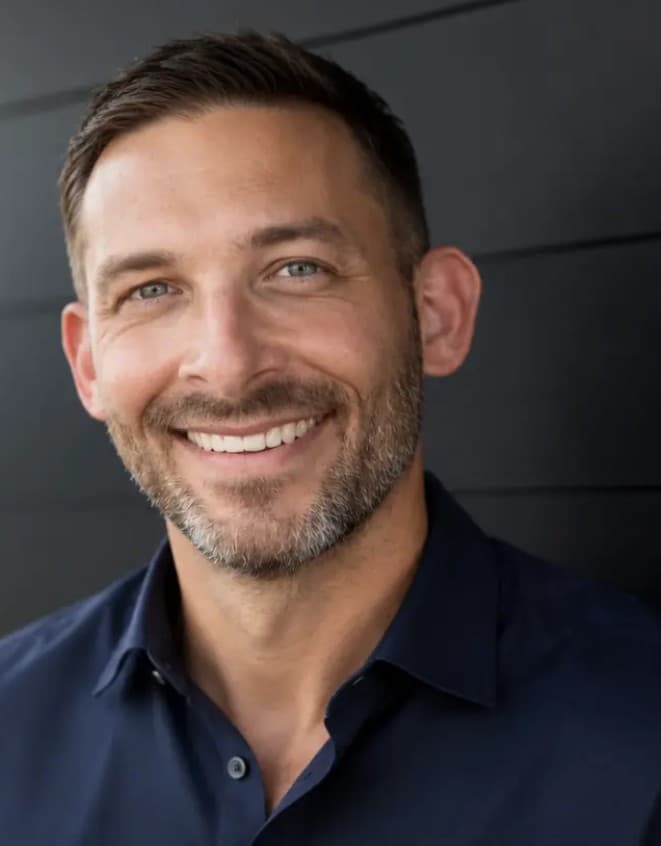
Patrick Moore
Founder, Memory Murals · Tacoma, Wash.
Short · 25 words
Patrick Moore is the founder of Memory Murals, a private app for preserving family stories. He built it in Washington State for his own family.
Standard · 50 words
Patrick Moore is the founder of Memory Murals, a private app for preserving family stories. He built it to catch the stories his mother told him about three generations of their own family, then found out mid-build that he was having a daughter — and started building for her too.
Long · 100 words
Patrick Moore is the founder of Memory Murals, a private app that helps families preserve life stories through voice, photos, and video. His mother kept telling him things he wanted to keep — about her life, her parents, her brothers and sisters — and there was no easy way to catch them. The family photo albums had the same problem in reverse: shelves of pictures, almost none saying who was there or why it mattered. Partway through building it he found out he was having a daughter, and the project turned both ways at once. He lives in Washington State.
Full biography +−
Patrick Moore is the founder of Memory Murals, a private app that helps families preserve the stories behind their lives through voice, photos, and video.
The idea began with his mother. She would tell Patrick stories about her life, her parents, and her brothers and sisters—small details and family stories he wanted to remember but had no simple way to capture.
At the same time, his family’s old photo albums presented the opposite problem. They were filled with decades of photographs, but very little context. Who were the people in them? Where were they? What was happening that day? Why did that moment matter?
Patrick began building Memory Murals to bring those two pieces together: the memories people tell and the photos and videos they leave behind. A place where families could preserve not just what a moment looked like, but the story that made it meaningful.
Partway through building Memory Murals, Patrick learned he was going to become a father. Suddenly, the project looked in both directions. It was no longer only about preserving the stories of the generations that came before him. It was also about capturing the life of his daughter as she grew up—so that years from now, the stories behind those moments would still be there.
For interviews, a live demo or a test account: patrick@memorymurals.com. The longer, first-person version of this story is on the founder's story page.
He Was Building an App to Save His Parents’ Stories. Then He Found Out He Was Having a Daughter.
Memory Murals began as one son’s attempt to catch his family’s stories before they went unrecorded. Then it started running in the other direction too.
TACOMA, Wash. — August 11, 2026 — Patrick Moore was nine months into building an app to save his parents' stories when he found out he was having a daughter.
The project stopped running in one direction.
Moore had not set out to start a company. He had set out to solve a problem in his own family, and the problem was volume.
His mother told him stories constantly. About her own life, but also about her parents, her brothers and sisters, relatives he had never met. Not one life history — dozens of them, spread across three generations, arriving in the middle of ordinary conversation.
He wanted to keep them. He had no practical way to catch them.
“She would tell me something I really wanted to remember,” Moore said, “and I couldn't find an easy way to capture it and keep it.”
The albums that don't say anything
The family's photo albums showed him the same problem from the other end.
There are a lot of them. A few have notes written on the pages. Most are blank.
The photographs survived perfectly well. What did not survive was everything around them — who these people are, what was happening that day, why anyone thought the moment was worth a picture.
“Most of them are blank,” Moore said. “There's no way for anyone to understand the context behind them.”
He looked for something that would fix both halves. He found genealogy platforms built around family trees, names and dates. He found social networks built around sharing publicly. He found journals and digital scrapbooks that still left the context to be filled in later, which is exactly what never happens.
So he built something himself.
Memory Murals is built around capturing a memory at the moment it is told rather than the moment someone finally sits down to organize it. A person can talk instead of writing, and the recording is transcribed, the people named aloud are matched to the family roster, and spoken time references are resolved to real dates. Voice is the primary path because it is the fastest way to catch a story while it is being told, not because writing is a problem.
Then it started running forward as well as back
The news that he was having a daughter changed what the project was for.
It had been an effort to preserve what his parents and grandparents remembered. Now it was also the thing that would let his daughter understand any of it — and, at the same time, a way to record her own childhood with the context attached from the beginning.
“It wasn't just my parents' and grandparents' history anymore,” Moore said. “Now I could save it for my daughter to understand. And I could capture her growing up the same way, and actually keep the context this time.”
The alternative was leaving her another shelf of albums nobody can explain.
“Could I have one for my mom?”
Memory Murals was originally intended for Moore's own family.
Then other people saw it.
They didn't just ask what he had built. They asked whether they could use it for their own mother, father or grandparent.
Millions of families have photographs of the people they love. They have names, birthdays and family trees.
What they often don't have is anything explaining them.
And many adult children carry the same unfinished intention: I really need to sit down and ask my parents about their lives.
“It doesn't feel urgent,” Moore said. “Right up until it does.”
Built for families, not followers
As more families began using the platform, Moore added features around the way families actually preserve memories.
Family members can privately share access. Parents and grandparents can respond to prompts when they don't know what story to tell next. Memories can include photographs, videos and audio alongside the stories behind them.
But one principle remained from the original version built for his own family: Memory Murals would not become another social network.
There is no public social feed and the experience isn't designed around likes, followers or keeping people scrolling.
The purpose is much quieter. It's to create a private collection of the voices, photographs, stories and ordinary moments that make up a family's history — with enough context attached that someone who wasn't there can still understand them.
The ordinary stories may eventually matter most
Technology has made it easier than ever to document life. Families take thousands of photographs and videos every year.
But Moore believes something important is still being lost.
A photograph captures what something looked like. It doesn't capture why the moment mattered, and it can't answer a question from someone who wasn't born yet.
That's the gap Memory Murals is trying to fill.
Not simply preserving more media, but preserving the human context surrounding it.
His advice to other families is simple.
Don't wait for the perfect interview or the perfect occasion.
Ask about the first job. The childhood bedroom. The neighborhood friends. The family vacations. The embarrassing stories. The ordinary Tuesday nobody thought was important enough to document.
“Ask while there's no reason to hurry,” Moore said. “That's the whole point.”
About Memory Murals
Memory Murals is a private family memory platform designed to help people preserve life stories through voice, photos, video and written memories. Originally created by founder Patrick Moore as a way to keep his own family's stories and the context behind their photographs, the platform uses AI-assisted transcription and organization to make capturing family history simple for people of all ages.
Memory Murals is available on the web and Android at memorymurals.com.
Media Contact
Patrick Moore
Founder, Memory Murals
patrick@memorymurals.com
Fact sheet
Reference detail for reporters, kept out of the release itself. Every claim below is true of the shipping product. If you need something verified that isn't listed, ask and we'll confirm or correct it.
- What it is
- A private app for preserving family stories, photos, and voices
- Founded
- Built for the founder’s own parents, released publicly after other families asked for it
- How memories are captured
- Voice recording, typing, or photos — voice is the primary path by design
- What happens to a recording
- Transcribed automatically; people named aloud are tagged to the family roster; spoken time references are resolved to real dates
- Privacy model
- Invite-only. No public profiles, no follower counts, no feed, and no ads shown in the product. Memories are never sold or shared
- Platforms
- Any web browser, and Android via Google Play. A free Chrome extension saves images and video you come across while browsing to your library by right-click, though some sites block outside downloads. An iOS app is planned
- Pricing
- $12.99/month or $99.99/year, after a 7-day free trial that requires no credit card
- Data ownership
- Full export of all memories and media to a downloadable archive at any time
We don't publish user numbers or revenue figures at this stage, so you won't find them here and we won't estimate them on request.
Quotable user reviews
Real reviews from the Google Play listing, where they can be independently verified. Offered as reference if you want a user voice — they are not part of the release.
An incredibly invaluable app to record your memories in real time. We all know how easy it is to snap a quick picture but how fast you forget the details around that moment. I love that you can audio record yourself talking about the memory and the AI feature will type it out and tag names/dates so it saves you time. I’m so glad I came across this app to preserve memories of my children and other loved ones!
This is one of those apps that feels useful right away. I added a few memories in just a couple of minutes, and it already feels like something I’ll be glad to have years from now. Easy to use and thoughtfully designed.
I like how simple and straightforward this app is. It doesn’t take long to add a memory, and having everything in one place makes it easier to look back on special moments.
Images
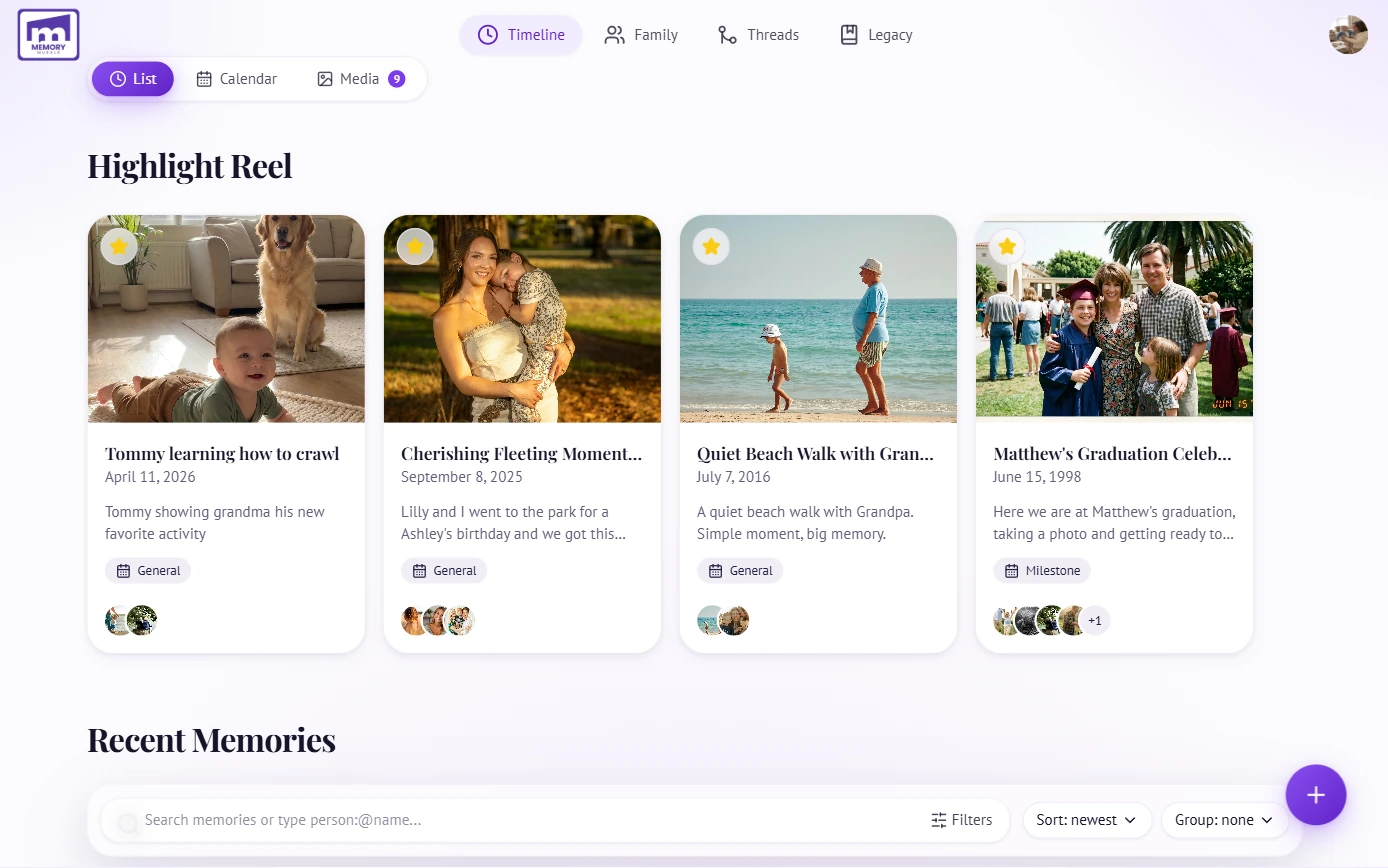
Free to use in coverage of Memory Murals. Right-click to save, or email for anything else you need at higher resolution.
More background: for grandparents · for aging parents