Digital vs Physical Memory Books: Longevity & Preservation
Deciding between digital and physical memory books for your family's stories? Explore which method offers greater longevity and preserves more of your precious moments.
Patrick Moore, Founder • March 27, 2026
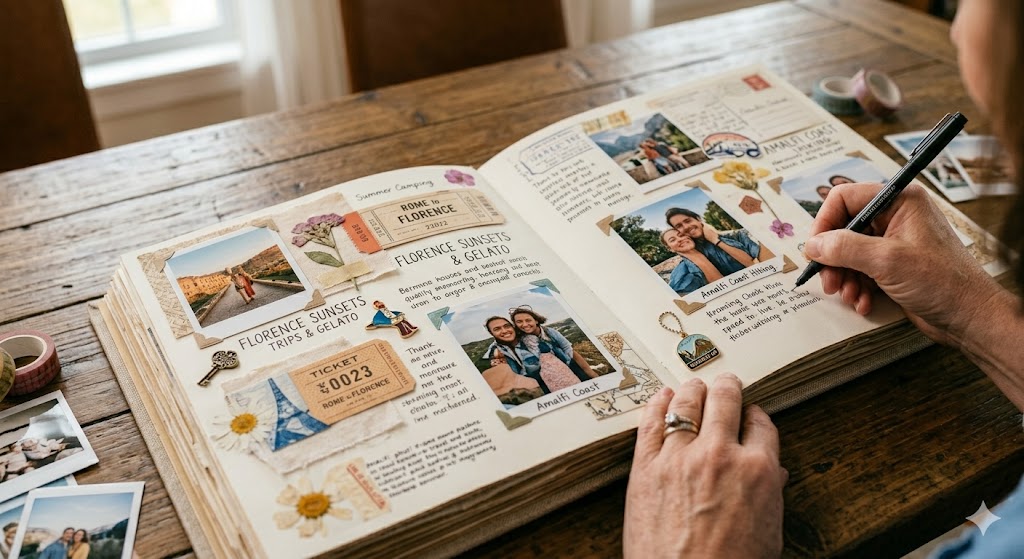
I found a box of my grandmother's photos last year. Half of them had stuck together — the ones that hadn't were faded so badly I couldn't tell who was in them. And the digital side? I've got photos on a Dropbox account tied to an email I can't access anymore.
Both methods failed. And both for completely preventable reasons.
That's the real question here: not which format is "better," but which one actually survives long enough for your grandchildren to see it. The answer's more complicated than you'd think — and it probably involves doing both.
The Enduring Appeal of Physical Memory Books
People have been preserving memories in physical form for centuries. Handwritten journals, photo albums, scrapbooks stuffed with ticket stubs and dried flowers. There's something about holding a piece of your history in your hands that a screen can't replicate.
What Physical Books Do Well
Tactile Experience
Holding a physical photo, turning pages in a family album — it deepens the emotional connection. Engaging multiple senses, including touch, can strengthen memory recall and emotional engagement. There's a reason flipping through an old album feels different than scrolling.
No Tech Required
A physical book doesn't need an app, a charger, or a software update. It works for anyone — tech-savvy or not — for as long as it exists. Just open it.
Heirloom Quality
A beautifully bound album can become a genuine family heirloom, passed from generation to generation. It has weight. It has character. It physically exists in someone's home.
Immune to Digital Disasters
Physical books don't care about hard drive crashes, corrupt files, or platforms shutting down. They won't become unreadable because some company went out of business.
Where Physical Books Fall Short
They Degrade
Paper fades. Photos curl. Glue discolors. Water, fire, pests, mold — all real threats. A single house fire can erase a whole collection in minutes. Environmental factors like light, humidity, and temperature are the primary threat to physical preservation. It's not a matter of if they deteriorate, but when.
Space Problems
As your family grows, so does the stack of albums. Shelves fill up. Collections get shoved into boxes in the attic. And the bigger the collection, the harder it is to find anything specific.
Photos and Text Only
You can't put a voice recording in a scrapbook. You can't attach a video clip to a photo album page. Physical books are limited to what you can physically stick to paper.
Hard to Copy and Share
Making duplicates means scanning, reprinting, or mailing the original — which is both expensive and risky. Family members who live far away don't get to experience it unless someone ships it to them.
Locked Once Assembled
Once you've glued everything in, that's it. Reorganizing, adding new context, or correcting mistakes usually means damaging the original. The story gets frozen in place.
What Digital Memory Books Bring to the Table
Digital technology has completely changed how we capture, store, and share memories. Cloud storage, online albums, dedicated family memory apps — the options are growing fast. And they solve a lot of problems that physical books can't.
What Digital Does Well
Massive Storage
Digital platforms can hold an enormous amount of photos, videos, audio clips, and text without taking up a single shelf. No clutter. No space concerns. You can be comprehensive without being buried.
Access From Anywhere
Your memories aren't locked in one house. Family members across the globe can view and contribute — all they need is a link and an internet connection.
Multimedia
This is the big advantage. Digital memory books can include audio recordings, video clips, scanned documents — not just photos and text. Imagine seeing a picture of your grandmother and hearing her tell the story behind it. We wrote more about this in The Sound of Home.
Searchable and Organized
Tags, categories, search — you can find a specific memory in seconds instead of flipping through 40 pages. And you can reorganize without destroying anything.
Backed Up
With the right setup (cloud storage, external drives, multiple copies), digital memories can survive any single disaster. Your house could flood and your memories would still be safe.
Dynamic Storytelling
Platforms like Memory Murals can create timelines, connect related memories through "Life Threads," and use guided prompts to help you tell a more complete story — not just store photos.
Where Digital Falls Short
Formats Go Obsolete
Remember floppy disks? Zip drives? File formats become outdated. Storage media degrades. Platforms disappear. The Digital Orphan Crisis is a real risk — memories can become unreadable if nobody's actively maintaining them. Format obsolescence is a persistent, well-documented challenge for digital archives.
Data Loss Happens
Hard drives fail. Cloud services have outages. Files get corrupted. Backups protect against this, but they require ongoing effort and some technical know-how.
You Need Power and a Screen
No device, no memories. Digital files are invisible without technology. That's a real barrier when the power goes out or when someone in the family isn't comfortable with tech.
Privacy Concerns
Storing intimate family memories online raises fair questions about security and who has access. Choosing the right platform matters a lot. We wrote about this in Why Privacy is the Heart of Memory Murals.
Digital Clutter
It's so easy to capture everything that you end up with thousands of photos you'll never look at. The sheer volume can make it harder to find the moments that matter. This is the Photographic Paradox — more photos, less connection.
Missing That Tangible Feeling
Scrolling through photos on a screen doesn't feel the same as sitting on a couch with a heavy album on your lap. For some people, that physical warmth and focused attention can't be replaced.
Side-by-Side: How They Compare
| Feature | Physical | Digital |
|---|---|---|
| Longevity | Decades with proper care; centuries under archival conditions but prone to environmental decay | Indefinite with active migration and robust backups, but vulnerable to technological obsolescence |
| Media Types | Photos and text only; limited to what can be physically affixed | Photos, video, audio, scanned documents, interactive elements, rich text |
| Storage | Requires significant physical space; limited by shelf room and physical bulk | Virtually unlimited; minimal physical footprint, scalable with cloud solutions |
| Sharing | Must mail or scan; one copy at a time, limited distribution | Instant sharing with anyone, anywhere via secure links; global accessibility |
| Editing | Difficult or impossible without damaging the original; rigid structure | Non-destructive edits anytime; dynamic, adaptable content |
| Disaster Risk | Highly vulnerable to fire, water, pests, and environmental factors | Redundant backups protect against single disasters; requires active management against obsolescence |
| Emotional Impact | Strong tactile and nostalgic connection; fosters focused attention | Rich multimedia storytelling; less tangible, but highly interactive |
| Tech Required | None — accessible to anyone, simple and direct | Device + power + internet needed; requires basic digital literacy |
Longevity
- PhysicalDecades with proper care; centuries under archival conditions but prone to environmental decay
- DigitalIndefinite with active migration and robust backups, but vulnerable to technological obsolescence
Media Types
- PhysicalPhotos and text only; limited to what can be physically affixed
- DigitalPhotos, video, audio, scanned documents, interactive elements, rich text
Storage
- PhysicalRequires significant physical space; limited by shelf room and physical bulk
- DigitalVirtually unlimited; minimal physical footprint, scalable with cloud solutions
Sharing
- PhysicalMust mail or scan; one copy at a time, limited distribution
- DigitalInstant sharing with anyone, anywhere via secure links; global accessibility
Editing
- PhysicalDifficult or impossible without damaging the original; rigid structure
- DigitalNon-destructive edits anytime; dynamic, adaptable content
Disaster Risk
- PhysicalHighly vulnerable to fire, water, pests, and environmental factors
- DigitalRedundant backups protect against single disasters; requires active management against obsolescence
Emotional Impact
- PhysicalStrong tactile and nostalgic connection; fosters focused attention
- DigitalRich multimedia storytelling; less tangible, but highly interactive
Tech Required
- PhysicalNone — accessible to anyone, simple and direct
- DigitalDevice + power + internet needed; requires basic digital literacy
Which Lasts Longer?
Honest answer: neither format guarantees survival without effort.
Physical Memory Books
Longevity is limited by the materials themselves — paper, ink, adhesives all degrade over time. Light, humidity, and temperature speed things up. Ordinary, non-archival prints can show noticeable fading within a few decades. And that's under decent conditions. Most family albums don't get archival treatment.
Digital Memory Books
A digital file doesn't physically degrade. But your ability to access it constantly faces threats. Consumer hard drives last maybe 5-10 years. File formats go obsolete. Cloud services change or shut down. The key is active migration — regularly updating formats and backing up to new media. Without that, digital files become unreadable orphans.
Verdict on Longevity
Neither method lasts forever without maintenance. Physical books decay. Digital files need ongoing migration. For most families, a well-managed digital archive with redundancies offers the best shot at long-term survival — but only if someone's actively maintaining it.
Which Preserves More?
This is where digital pulls ahead. Clearly.
Physical Preserves
Photos, clippings, handwritten notes, printed text. It's nostalgic and tangible — but limited to what fits on a page. The sounds, the movement, the unwritten context? Those stay trapped in someone's memory.
Digital Preserves
High-resolution photos and videos, voice recordings, detailed stories, guided prompts, transcribed interviews, scanned documents, timestamps, geotags, and connections between memories. It's a much richer, more complete picture of family life.
Verdict on Preservation
Digital preserves more types of memories and tells a richer story. You can see a picture of your grandmother, hear her voice telling the story, and read her reflections — all in one place.
The Best of Both Worlds
Given the strengths and weaknesses of both, the smartest strategy is usually a hybrid:
1. Keep Your Best Physical Keepsakes
Identify your most irreplaceable physical items — the handwritten letters, the meaningful photos, the artifacts with real sentimental weight. Store them properly with archival-safe materials. These are your physical heirlooms.
2. Digitize and Enrich Everything Else
For everything else — the bulk of your photos, videos, audio recordings, stories — a dedicated digital platform does the heavy lifting. This is where Memory Murals comes in: it lets you capture the depth that physical books can't.
A hybrid approach gives you the tangible warmth of a few key physical items plus the comprehensive power of digital for everything else. Start your free 7-day trial to see how it works.
How Memory Murals Bridges the Gap
Memory Murals isn't just photo storage. It's a private platform built for telling your family's real story — with depth and staying power.
Multimedia Integration
Upload photos, videos, and audio memories — like the sound of someone's voice, their laugh, the stories they tell — all in one secure place.
Timeline & Life Threads
Organize memories chronologically on an interactive timeline. Connect related moments through "Life Threads" to reveal patterns and deeper stories across your family's history. More about Life Threads here.
Legacy & Guided Prompts
Guided prompts help you and your loved ones capture stories that usually go untold. Not just what happened, but what it meant.
Family Collaboration
Invite family members to contribute their own memories, photos, and perspectives. A collective archive is always richer than one person's version.
Privacy & Security
This isn't social media. Memory Murals is a private space for your family's truth. Your data stays yours. See our pricing and plans for details on what's included.
A Modern Alternative
A powerful alternative to traditional photo books and static scrapbooks — one that brings your family's legacy into the digital age without losing emotional depth. See how it works.
The Bottom Line
The digital vs physical memory books debate isn't really either/or. It's about understanding what each does well and using both strategically.
Physical memory books offer a tangible, nostalgic connection. But they're fragile, limited in what they can hold, and one disaster away from being gone.
Digital memory books offer capacity, multimedia, dynamic storytelling, and backup redundancy. But they need ongoing maintenance to stay accessible.
The real answer? Preserve your most treasured physical items carefully. And use a dedicated digital platform like Memory Murals to capture the full, living depth of your family's story — voices, photos, videos, and all the context that gives them meaning.
This question hits hardest at specific moments. Weddings are one — every guest has photos in their pocket, the day-of app you used will probably shut down in five years, and the real question is where these photos actually live in 2046. Our wedding photo collection guide walks through the day-of choices and the long-term archive question side by side.
Ready to Build Your Family's Legacy?
Combine physical preservation with a digital platform like Memory Murals to protect your memories from both degradation and digital fragmentation. Start your free 7-day trial and start building.
Frequently Asked Questions
Are physical photo albums better than digital for long-term storage?
They're immune to tech obsolescence — you don't need software to open them. But they're extremely vulnerable to physical damage: light, humidity, fire, water, pests. Ordinary prints can fade visibly within a few decades without archival conditions. Digital storage needs active management (backups, format migration) but can offer better redundancy against disaster. Neither is foolproof alone.
What are the biggest risks to digital memories?
Format obsolescence (when file types become unreadable), data corruption, hard drive failure, and platforms shutting down. Format obsolescence is a well-documented, recurring problem for digital archives. The fix: back up to multiple locations, periodically migrate to current formats, and choose a reliable platform with strong privacy and data practices.
How can Memory Murals help preserve my family's memories?
It's a secure, private platform built specifically for family memory preservation. You can integrate photos, videos, and audio recordings, organize them into timelines and "Life Threads," and use guided prompts to capture stories — not just images. It goes deeper than a photo book or basic cloud storage because it's designed to preserve context, not just files.
Is it better to print photos or keep them digital?
Do both. Print your most important photos for display and as tangible heirlooms. For everything else — especially videos, audio recordings, and stories — keep them in a well-organized digital archive with redundant backups. A platform like Memory Murals lets you combine the emotional warmth of selected prints with the comprehensive preservation power of digital.
Get 50 questions to ask your parents — before the stories are gone
The exact prompts families use to draw out the stories nobody ever wrote down. Free, straight to your inbox.
No spam. Unsubscribe anytime.
About the author
Patrick Moore, Founder of Memory Murals
Patrick Moore is the founder of Memory Murals. He built it after realizing how much of his own family's history had quietly slipped away — to help families preserve their stories, voices, and photos while they still can.
Related Stories
How-To Guides
Create Photo Book Online: Step-by-Step Guide (And a Better Alternative)
Learn how to create a photo book online step-by-step. Discover design tips, printing options, and why families are choosing Memory Murals instead.
Patrick Moore • March 9, 2026
Comparisons
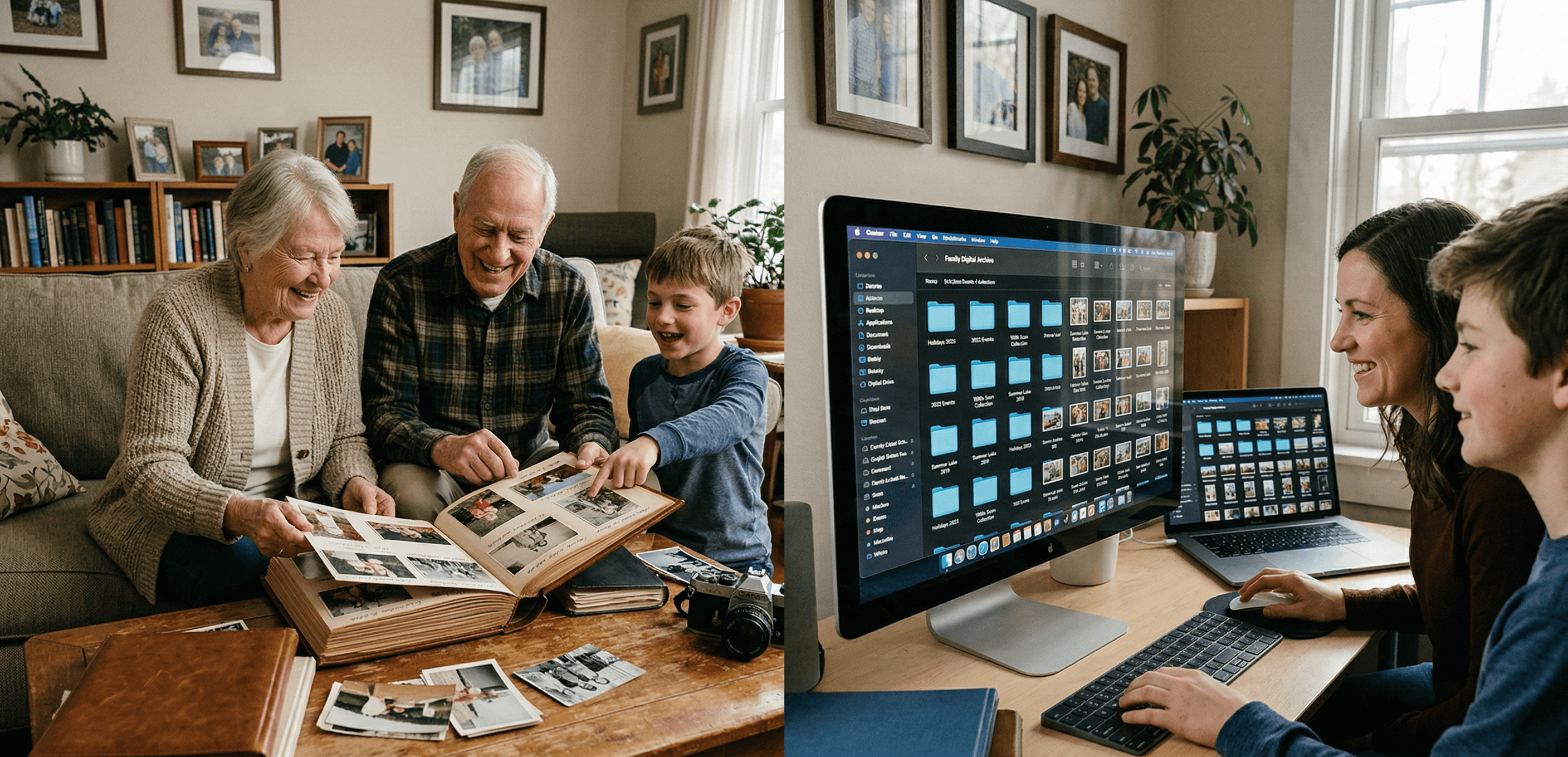
Digital Family Archive vs Photo Albums: Why the Shoebox Under Your Bed Isn't Enough Anymore
Your family photos are fading, your stories are unrecorded, and your kids can't find anything. Here's why a digital family archive does what photo albums never could — and how to build one without losing what makes physical keepsakes special.
Patrick Moore • April 3, 2026
Comparisons
Ancestry & Kensington Launch Personal Heritage Journeys: A New Era for Family History?
Ancestry and Kensington Tours have partnered to offer "personal heritage journeys," turning DNA results and family trees into real-world travel. We explore what this means for family history enthusiasts and how to preserve the new memories you'll make along the way.
Patrick Moore • July 31, 2026
See the version we built.
Voice-first, multi-contributor, and priced on one page — $12.99/mo, $99.99/yr, or a $7 weekend pass. Free for 7 days.