When Nostalgia Halts Decluttering
The task of clearing a parent's home is more than just sorting objects; it's an emotional excavation. Every item holds a story, and nostalgia can make it feel impossible to let go. This post explores why we feel this way and offers gentle strategies for honoring memories without keeping everything.
Patrick Moore, Founder • August 8, 2026
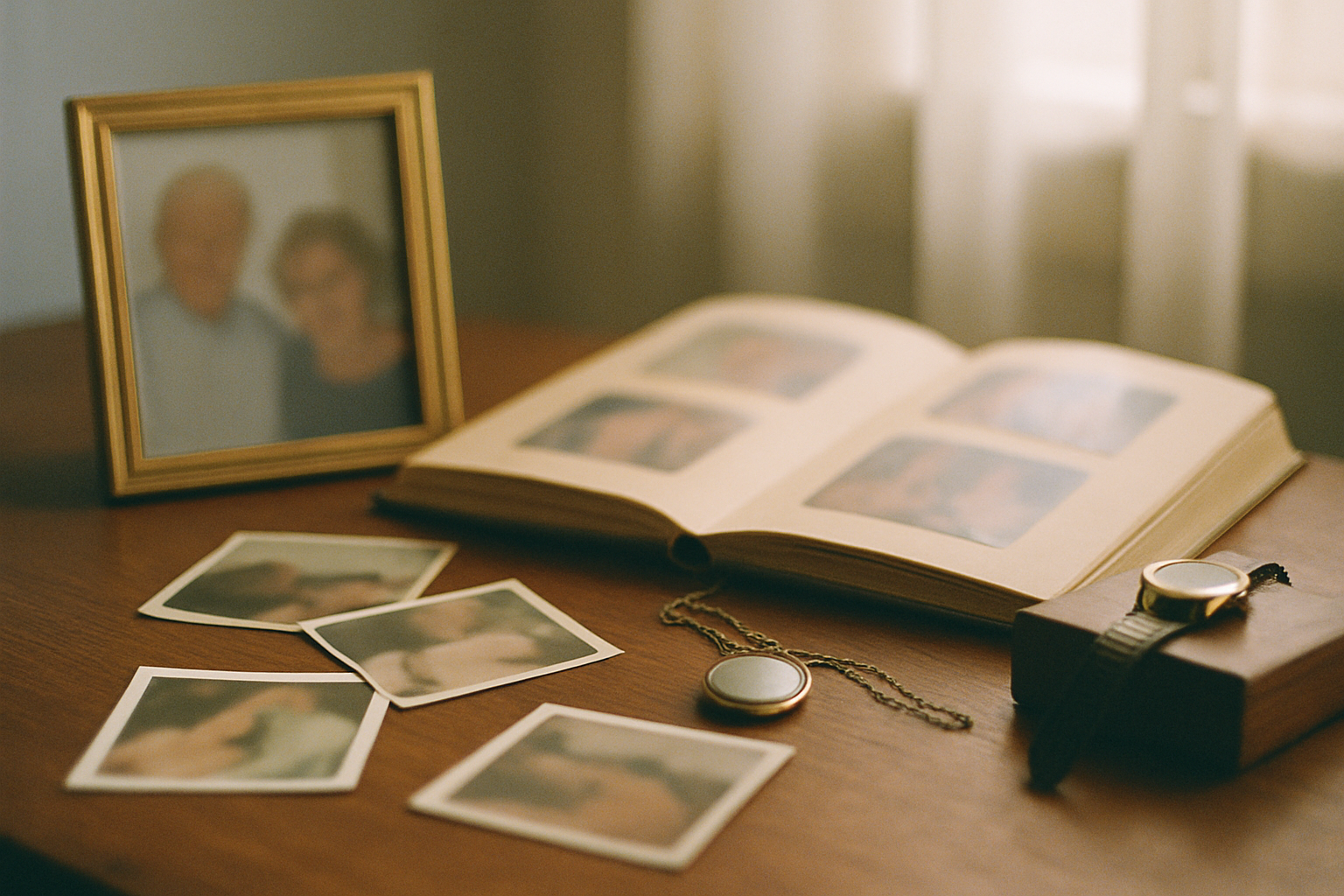
The attic stairs creak under your weight. You pull the string for the single bare bulb, illuminating a landscape of boxes and shrouded furniture. It’s been months, maybe longer. But today was supposed to be the day you’d finally start. You lift the lid off a cardboard box labeled “Kitchen — Fragile” and the scent of your mother’s house—a faint mix of cinnamon and old paper—rises to meet you.
Inside, nestled in yellowed newspaper, is her recipe box. You slide out a stained index card, the familiar loops of her cursive spelling out “Apple Crumble.” You’re not just holding a recipe; you’re holding a thousand Sunday afternoons, the warmth of the oven, the sound of her humming. Suddenly, the thought of this box going anywhere but back on a shelf in your kitchen feels like a betrayal.
The box lid goes back on. Maybe next weekend.
This paralysis is a story we hear all the time. The process of clearing a parent’s home is rarely a simple task of decluttering. It’s an archaeological dig through a life, where every object is a potential artifact, and nostalgia is a powerful, immobilizing force.
The short answer
Nostalgia's grip makes it hard to clear a parent's home because their possessions are not just objects; they are tangible anchors to our most cherished memories. Each item can feel like a piece of our parent and our own history, and letting go can feel like losing them all over again. The solution isn't to discard the memories, but to separate them from the physical items by digitally preserving the most important objects and, more crucially, the stories they represent.
Why Objects Hold So Much Power
Why does a chipped coffee mug or a well-worn coat hold us captive? It’s because these objects are rarely just “things.” They are what sociologists call extensions of self. Over a lifetime, our parents imbued their possessions with their presence, their habits, and their love. The armchair isn't just a piece of furniture; it's the place your dad read the paper every morning. That collection of mismatched teacups isn't junk; it’s a testament to your mom's love of hosting friends.
These items become powerful memory triggers. As explored in research on how scents trigger childhood nostalgia, our brains form deep connections between sensory input and emotional memory. The tactile feel of a worn leather wallet or the visual cue of a faded photograph can instantly transport us back in time, unlocking a flood of feelings and stories we thought were lost. When we’re faced with clearing these items, we’re not just facing a logistical task. We’re facing a direct confrontation with our memories and our grief.
More Than Just Clutter
If you feel overwhelmed, you are not alone. This process unearths a complex cocktail of emotions: profound sadness for the loss, guilt over what to discard, and even a subtle identity crisis. These objects helped define your family's story and your place within it. Removing them can feel like erasing a part of that story.
Many people find themselves caught between two conflicting truths: the deep-seated need to hold on and the practical necessity of letting go. This internal tug-of-war is exhausting.
The Comfort of Keeping Everything
Each item feels like a tangible link to your parent. Keeping them close can feel like keeping them close, offering a sense of security and continuity during a time of immense change and loss. The fear of forgetting is real, and these objects can feel like insurance against that fear.
The Burden of Keeping Everything
The sheer volume of a lifetime's possessions can be overwhelming, creating physical and emotional clutter in your own home. It can tether you to the past, making it harder to process grief and adapt to your new reality. The responsibility of caretaking these items can become a heavy weight.
Recognizing this conflict is the first step. The goal isn't to eliminate the emotional connection, but to find a way to honor it that doesn't require turning your own home into a museum.
The Art of Selective Preservation
The breakthrough often comes when you realize you can separate the memory from the object. The story is the treasure, not the chest it came in. By shifting your focus from preserving the thing to preserving the meaning, you open up a new, more sustainable way to honor your parent's legacy.
This is where a structured, digital approach can transform the process from a burden into a beautiful act of curation. It provides a concrete set of actions to take when you feel emotionally stuck.
A Gentle 5-Step Decluttering Method
Triage with a Team
Don't attempt this alone. Ask a sibling, a cousin, or a trusted, empathetic friend to be with you. Their role isn't to make decisions for you, but to offer support, listen to the stories as they emerge, and provide a steadying presence when emotions run high.
Create Three Categories
Instead of a simple keep/toss binary, use three piles: 1) Keep Physically, 2) Donate/Sell, and 3) Digitize & Release. The first pile should be for a small number of truly irreplaceable items. The third category is your release valve—for things you can't keep but can't bear to forget.
Capture the Object
For everything in the “Digitize” pile, take a few clear, well-lit photos. Capture it from multiple angles, including any special details like an inscription, a maker's mark, or a charming bit of wear and tear. This is especially effective for things like old family letters or treasured recipes.
Record the Narrative
This is the most crucial step. As you hold the object, use your phone's voice memo app and record yourself telling its story. Start with, "This was Mom's..." and just talk. What did she use it for? Where did it come from? What memory does it spark in you? This audio file is pure gold.
Let Go with Gratitude
Once the object and its story are digitally saved, you can let the physical item go. This might mean donating it to a charity where it can start a new life, or passing it to another family member. Thank the object for the memories it held, knowing you've safely preserved its essence.
Where Memories Can Breathe
This process of digital preservation is about more than just clearing space in a house; it's about building a new, intentional home for your family's legacy. A place where the stories aren't trapped in dusty boxes, but are alive, accessible, and shareable.
This is why we built Memory Murals. We saw so many families struggling with this exact problem: drowning in physical artifacts but starving for the stories they contained. A private digital archive allows you to keep the best part—the memories—without the physical and emotional weight of the stuff.
Space Without the Stuff
Preserve the memory of thousands of items—from furniture to jewelry to your dad's entire tool collection—without filling a single closet in your own home.
Stories Attached
The magic is in the context. In Memory Murals, you can pair the photo of an object with the voice note of its story, a written caption, and related photos, creating a rich, multi-dimensional memory.
Share with Family
A digital archive breaks down geographical barriers. Siblings, cousins, and grandchildren can all visit this shared space, listen to the stories, and even add their own memories, creating a collaborative family tapestry.
Secure & Private
Your family's history is precious. Unlike public social media, a dedicated archive ensures your memories are kept safe and for your family's eyes only, defining your digital legacy on your own terms.
The task of sorting through a parent's home is a profound rite of passage. It is often the last act of service we can do for them, and it is a foundational act of care for ourselves and the generations that will follow.
It's not about erasure. It's about curation. It’s about choosing which stories to carry forward and giving them a home where they can be cherished forever. If you're ready to start building that new home for their memories, you can begin your family's private archive today.
Letting go of the things is hard. But holding onto the stories? That's forever.
Get 50 questions to ask your parents — before the stories are gone
The exact prompts families use to draw out the stories nobody ever wrote down. Free, straight to your inbox.
No spam. Unsubscribe anytime.
Frequently asked questions
Why is it so hard to get rid of my parents' things?
It's hard because their belongings are physical anchors to your memories and your relationship with them. Each item can feel like a tangible piece of their story and your identity. Letting go can feel like losing them all over again. This emotional weight, known as nostalgia's grip, is a normal part of the grieving and remembrance process. It's not about the "stuff," but the stories and love the stuff represents, making the task deeply personal and challenging.
How do I decide what sentimental items to keep?
Focus on quality over quantity. Instead of keeping every teacup, save the one she used every morning. Ask yourself: Does this item tell a unique story? Does it evoke a powerful, positive memory? Can its story be preserved without the physical object? Prioritize items that are truly representative of your parent's life and your connection to them. It's okay to let go of things that don't hold a strong, personal narrative for you, even if they were important to your parent.
What's the best way to preserve memories without keeping all the stuff?
Digital preservation is a powerful tool. Take high-quality photos or scans of sentimental items like letters, recipes, or children's artwork. For each item, record a short voice note or write down the story behind it. This captures the memory, which is the truly valuable part. Apps like Memory Murals allow you to store these photos and stories together in a private, shareable family archive, turning a cluttered space into a curated digital legacy that can be accessed anytime.
How can I deal with guilt when decluttering a deceased parent's home?
Acknowledge that guilt is a common feeling in this process. Remind yourself that your memories of your parent are not contained within their physical possessions. Your love for them exists independently of their stuff. You are not erasing them by clearing their home; you are making space to honor their memory in new ways. Focus on preserving the most meaningful stories and items, and consider donating other useful things to charity, allowing their belongings to have a new life helping others.
What if my siblings and I disagree on what to keep?
Disagreements are common because items hold different meanings for each person. Set ground rules before you begin. Allow each sibling to claim items that are personally meaningful to them. For items multiple people want, consider taking turns choosing or finding a compromise, like digitally preserving the item so everyone has a copy of its story. If an agreement can't be reached, set the item aside and revisit it later with a calm, respectful conversation focused on the shared goal of honoring your parent.
About the author
Patrick Moore, Founder of Memory Murals
Patrick Moore is the founder of Memory Murals. He built it after realizing how much of his own family's history had quietly slipped away — to help families preserve their stories, voices, and photos while they still can.
Related Stories
How-To Guides
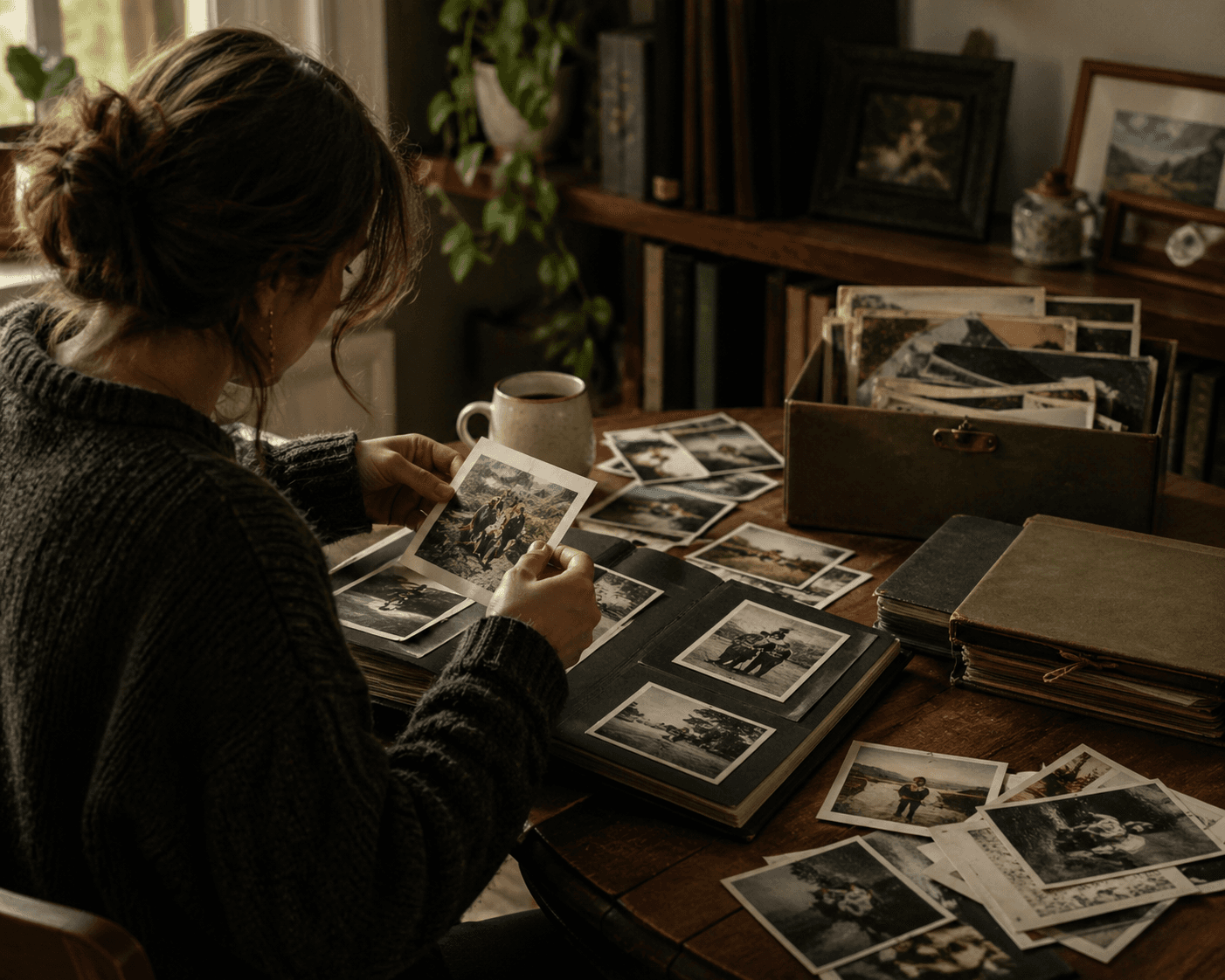
What to Do with Your Parents' Photo Collection: A Gentle Estate Guide
A practical, emotionally honest guide for going through your parents' photo collection — whether you're cleaning out a house after a death, helping a parent downsize, or staring at the boxes for the third weekend in a row. What to keep, what to let go, what to scan first, and how to forgive yourself for the parts that hurt.
The Memory Murals Team • April 28, 2026

How-To Guides
How to Memorialize a Parent: 7 Ways That Actually Last
Seven specific, lasting ways to memorialize a parent — from saving their voicemails before the carrier deletes them to planting something that outlives the grief. Pick one. Start this week.
The Memory Murals Team • April 26, 2026
Insights
Why '2026 Is the New 2016': Riding the Latest Nostalgia Wave
Have you noticed your feeds filling up with memories from just a decade ago? The '2026 is the new 2016' trend isn't just a fleeting hashtag; it's a reflection of how we process the recent past in a digital world. We'll explore why this nostalgia wave is happening now and what it means for our personal memories.
Patrick Moore • August 11, 2026
Keep what's left of their voice.
A private place for the recordings, photos and stories — no feed, no algorithm, nobody else's eyes on it.