The Scent of Memory
A whiff of freshly cut grass or baking bread can transport us back decades. New neuroscience research is revealing why smell is such a powerful key to our earliest memories, offering families a beautiful new way to think about preserving their stories.
Patrick Moore, Founder • July 30, 2026
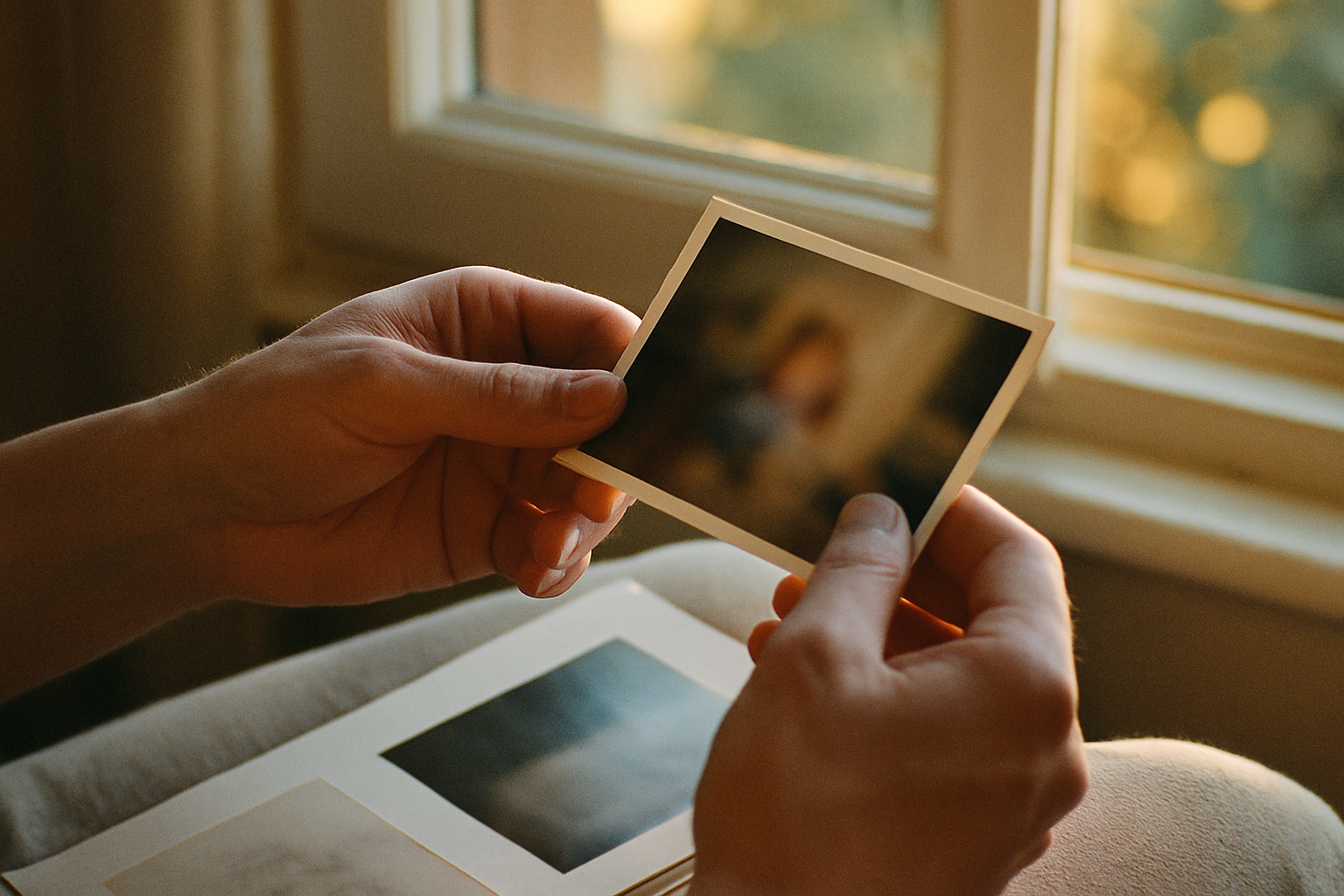
It happens when you least expect it. You’re walking through a hardware store, and the sharp, clean scent of freshly cut lumber instantly puts you in your grandfather’s workshop, sawdust soft under your sneakers. Or a stranger’s perfume passes you on the street, and for a fleeting second, you’re a child again, getting a hug from your favorite aunt.
These moments are more than just memories; they’re full-body experiences. A smell can bypass decades of conscious thought and plug you directly into the feeling of a place, a person, a time you thought was long gone. It’s a phenomenon so common we often take it for granted, but it’s one of the most profound and mysterious functions of our minds.
For years, we’ve known this connection existed—the “Proust effect,” named for the author whose narrator was famously transported to his childhood by the taste and smell of a madeleine cookie. But now, we’re beginning to understand why.
The short answer
New research reveals that the scent of memory is so powerful because of our brain’s unique wiring. Unlike sight or sound, information from our nose travels directly to the brain’s emotion and memory centers—the amygdala and hippocampus. This creates an intimate and immediate link between a scent and a deep-seated emotional memory, often from childhood, making these recollections feel exceptionally vivid and real.
The Olfactory Expressway
To understand why smell is the key that unlocks our oldest memories, we have to look at how our brain is organized. Most of our sensory input—everything we see, hear, and touch—first travels to a region called the thalamus. You can think of the thalamus as the brain’s busy central switchboard, sorting information and directing it to the appropriate processing centers.
Smell, however, gets a VIP pass. The olfactory bulb, the part of the brain that analyzes scents, is located in the front of the brain and has a direct, privileged connection to two of the most important structures for memory and emotion: the amygdala and the hippocampus. The amygdala is the seat of our emotions, and the hippocampus is a master architect of our long-term memories.
This direct neural pathway is an evolutionary relic. For early humans, a quick, instinctual reaction to a smell—the scent of a predator, a fire, or edible food—was a matter of survival. The brain prioritized this information, hardwiring it to the centers for emotion (fear, pleasure) and memory (remember this for next time).
As a recent report in Scientific American highlights, neuroscientists are now able to pinpoint how this unique neural pathway makes scent-based memories particularly potent and emotional. The memories aren't just recalled; they're re-experienced.
Why Scent Memories Feel Different
A memory triggered by a photograph is often narrative. You see your childhood home and think, “I remember playing in that yard every summer.” It’s a story you tell yourself about the past.
A memory triggered by the smell of that yard’s freshly cut grass is different. It’s a feeling. It’s the warmth of the sun on your skin, the buzz of cicadas, the faint taste of lemonade. It’s less a story and more a sudden immersion in a past emotional state.
This is the core of the scent of memory: it retrieves the feeling, not just the facts. This makes these memories incredibly powerful, but also elusive. You can’t simply decide to remember the smell of your grandmother’s kitchen. The memory lies dormant, waiting for the scent itself to act as the trigger.
This is why documenting these sensory details is so crucial for family history. The stories are important, but the feelings are what make those stories come alive for future generations. When we make an effort to capture childhood memories, we should think beyond the visual.
The Proust Effect in Action
Marcel Proust wrote in Swann's Way: "But when from a long-distant past nothing subsists, after the people are dead, after the things are broken and scattered, taste and smell alone, more fragile but more enduring, more unsubstantial, more persistent, more faithful, remain poised a long time, like souls, remembering, waiting, hoping, amid the ruins of all the rest; and bear unflinchingly, in the tiny and almost impalpable drop of their essence, the vast structure of recollection."
How to Archive a Scent
So, how do we save something as invisible and fleeting as a smell? You can’t bottle the aroma of your dad’s garage or the specific scent of rain on the dusty road where you grew up. But you can document the connection between that scent and the stories it holds.
This is where a dedicated family archive becomes more than just a photo album. It becomes a sensory journal. By consciously noting these details, you’re creating future triggers for yourself and providing a richer context for your descendants.
A 3-Step Guide to Documenting Scent Memories
Identify the Signature Scents
Start a conversation with your parents or grandparents. Use a list of questions to ask your parents as a starting point, but add a sensory twist. Ask them: What did your childhood home smell like? What is the scent you most associate with your mother? What did the holidays smell like? Write these down.
Connect Scent to Story
When you upload a photo to your family archive, go beyond the caption. In the story section, describe the smells associated with that moment. For a picture of a holiday dinner, write about the mingling aromas of roasting turkey, cinnamon, and pine needles. For a photo of a baby, describe the scent of baby powder and milk—details that are essential to the experience but impossible to photograph.
Use Your Voice
Record your parent or grandparent telling a story triggered by a smell. The sound of their voice describing the scent of their mother’s baking is incredibly powerful. The description itself becomes a time capsule, preserving not just the memory, but the emotion behind it. This is especially vital when trying to preserve baby sensory memories for your own children, as those are the first ones we form and often the deepest.
Building a Multi-Sensory Archive
Thinking about scent opens the door to considering all the senses. What did your family’s life feel like? The scratchy wool of a particular blanket, the smooth, cool surface of a kitchen table. What did it sound like? The specific chime of a doorbell, the hum of an old refrigerator, the cadence of a parent’s footsteps.
These details are the fabric of daily life. They are the first things to fade from memory and the hardest to explain to someone who wasn’t there. Yet, they are the elements that make a memory feel inhabited and real.
Preserving these fleeting details is why we built Memory Murals. It’s a space to add the color, sound, and even the scent (through words) to the black-and-white facts of a family tree. It’s a place to write down that the old family car always smelled faintly of gasoline and mint gum. You can start building your family's sensory archive today at https://app.memorymurals.com/signup.
The Enduring Power of a Whiff of the Past
Our memories are not static files stored in a cerebral cabinet. They are living, breathing networks of association, and scent is one of the most powerful threads in that web. It connects us to our earliest selves, our deepest emotions, and the people who shaped us.
By taking the time to notice, discuss, and document the scents of our lives, we are doing more than just saving facts. We are preserving feelings. We are leaving a richer, more vibrant inheritance for the generations to come—a legacy that allows them not just to know where they came from, but to feel it, too.
The next time a forgotten smell stops you in your tracks, don’t just brush it off. Pause. Inhale. Let the memory wash over you. It’s a message from your own history, delivered on the air.
Get 50 questions to ask your parents — before the stories are gone
The exact prompts families use to draw out the stories nobody ever wrote down. Free, straight to your inbox.
No spam. Unsubscribe anytime.
Frequently asked questions
Why do smells trigger strong memories?
Smells trigger strong memories because of the brain's anatomy. The olfactory bulb, which processes smells, has a direct and unique connection to the amygdala (the emotion center) and the hippocampus (the memory center). Unlike other senses that are first routed through a relay station called the thalamus, scent information gets an express lane to these deep, emotional parts of the brain, forging a powerful link between a scent and the feelings or events associated with it.
What part of the brain is linked to smell and memory?
The primary brain structures linked to smell and memory are the olfactory bulb, the amygdala, and the hippocampus. The olfactory bulb processes incoming scents. It sends this information directly to the amygdala, which is responsible for processing emotions, and the hippocampus, which is crucial for forming new long-term memories. This direct neural pathway is why smell-evoked memories are often so vivid and emotionally charged.
How can I use scents to remember my childhood?
To use scents to access childhood memories, start by consciously identifying smells from your past. Think about the aroma of a specific dish your grandmother cooked, the perfume a relative wore, or the smell of your elementary school. You can try to find these scents again or simply use the memory of them as a journaling prompt. Ask older relatives what smells they associate with their youth. Documenting these sensory details alongside photos and stories can create powerful memory triggers.
Can smells help people with memory loss?
Yes, research suggests that familiar scents can be beneficial for people with memory loss, such as those with dementia. While it's not a cure, aromatherapy and exposure to personally significant smells (like a favorite flower or food) can help reduce agitation, improve mood, and sometimes evoke positive emotional memories. This sensory stimulation can provide comfort and a sense of connection to the past, improving overall quality of life.
About the author
Patrick Moore, Founder of Memory Murals
Patrick Moore is the founder of Memory Murals. He built it after realizing how much of his own family's history had quietly slipped away — to help families preserve their stories, voices, and photos while they still can.
Related Stories
How-To Guides
How to Capture Your Kids' Childhood Memories (a Simple System That Sticks)
You have thousands of photos and almost none of the story behind them. Here's a simple, all-ages system for capturing your kids' childhood memories — the everyday ones you'll actually want back — in under a minute at a time, and keeping them somewhere they won't get lost.
Patrick Moore • July 10, 2026
How-To Guides
Beyond Photos: Creative Ways to Preserve Your Baby's Sensory Memories
Your phone is full of photos, but what about the memories a camera can't capture? This guide explores creative, simple ways to preserve the fleeting sensory details of your baby's first year—the smells, textures, and feelings you'll want to remember forever.
Patrick Moore • June 26, 2026
Insights
New Study Suggests We're Wrong About How the Brain Stores Memory
Recent neuroscience research is challenging long-held beliefs about how our brains store memories. This new understanding suggests memories aren't static files but are actively reconstructed each time we recall them. What does this mean for the stories we cherish and the ways we try to preserve them?
Patrick Moore • September 1, 2026
Preserve your family's memories in one private place.
Start free in minutes. No credit card required.