How to Preserve Handwritten Family Recipes
A grandmother's recipe card isn't just instructions — it's her handwriting, her margin notes, the splatter on the corner. Here's how to preserve handwritten recipes and the stories behind them before the cards fade for good.
Patrick Moore, Founder • July 1, 2026
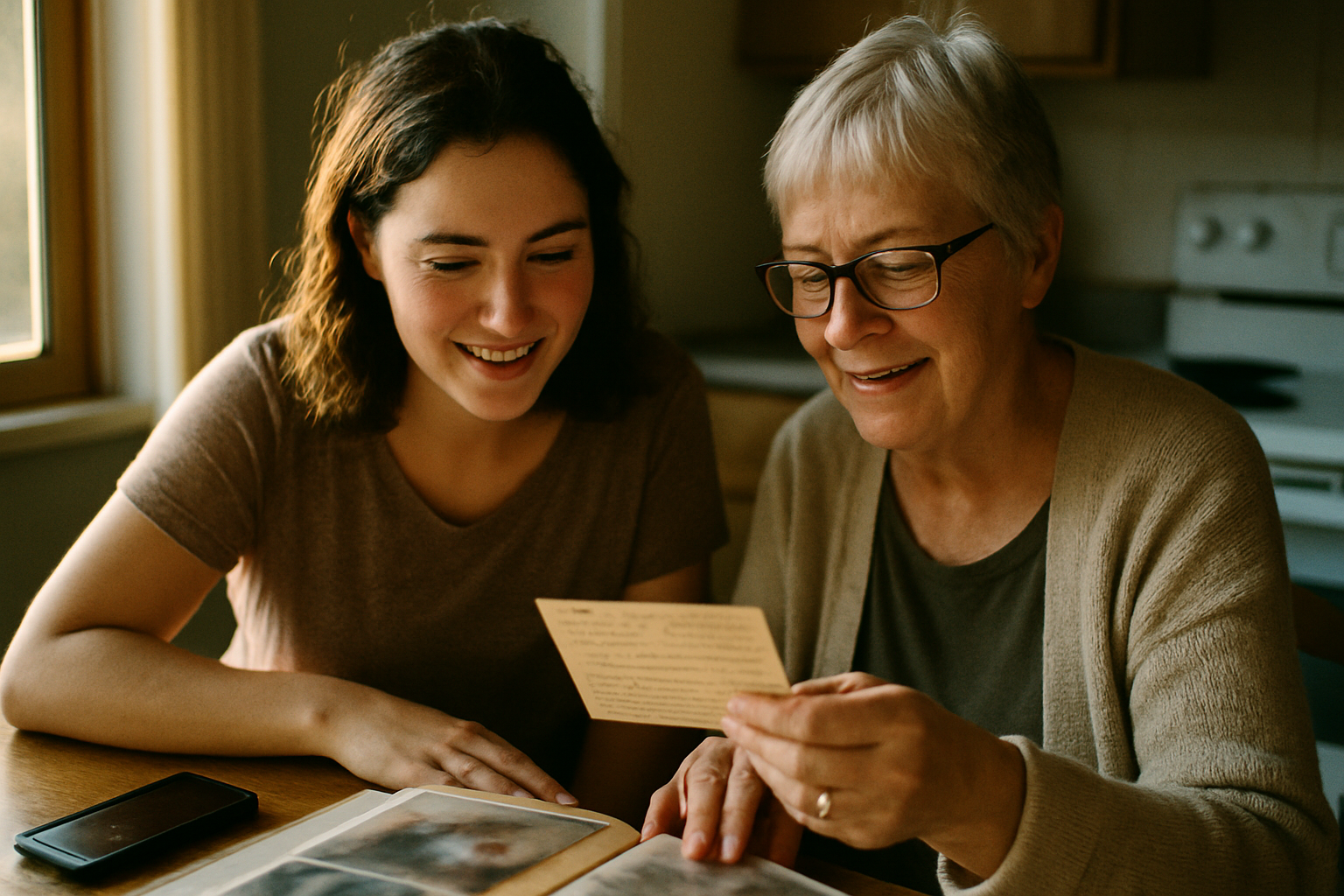
The recipe I actually wanted was for my grandmother's sformaggio bread. When she died, we found the card — index-sized, soft as cloth from decades of handling, a brown thumbprint of butter in the bottom corner. The ingredients were all there in her tight little cursive.
We made it that Christmas. It was wrong. Not terrible, just... not hers. It took my mother three tries and a long phone call with a great-aunt to figure out what the card didn't say: you let the dough rise twice, the second time near the radiator, and you "know it's ready when it smells like Sunday." None of that was written down. It lived in my grandmother's hands, and it very nearly died with her.
That's the thing about handwritten recipes. The card is never the whole recipe. Here's how to preserve both — the card and the part that isn't on it.
The 30-second answer
To preserve handwritten family recipes: scan each card at 300–600 DPI exactly as-is — splatters, margin notes, and all — then add two things the card can't hold. First, a typed transcription so the recipe stays legible and searchable for people who can't read cursive. Second, and most important, a short voice recording of the cook explaining it — the substitutions, the "cook until it looks right" instincts, and the story of who made it and when. The ingredients are on the card; the technique and the meaning are in the person. Capture both before they're gone.
The rest of this guide covers scanning the cards without ruining them, keeping what makes them heirlooms, capturing the unwritten part, and turning it all into something the whole family can actually use.
How do you digitize old recipe cards?
The mechanics are the same as any fragile paper, with one twist: do not clean the card. The grease stain, the flour dusting, the wine ring — those are evidence the recipe was made, over and over, by someone who loved feeding people. They're part of the artifact. Scan them in.
How to digitize a handwritten recipe card
Capture the recipe and the personality of the card in one pass.
- 1
Leave it as-is
Don't wipe off stains or flatten worn edges — the wear is part of the story; just handle the card by its edges with clean, dry hands.
- 2
Light it evenly
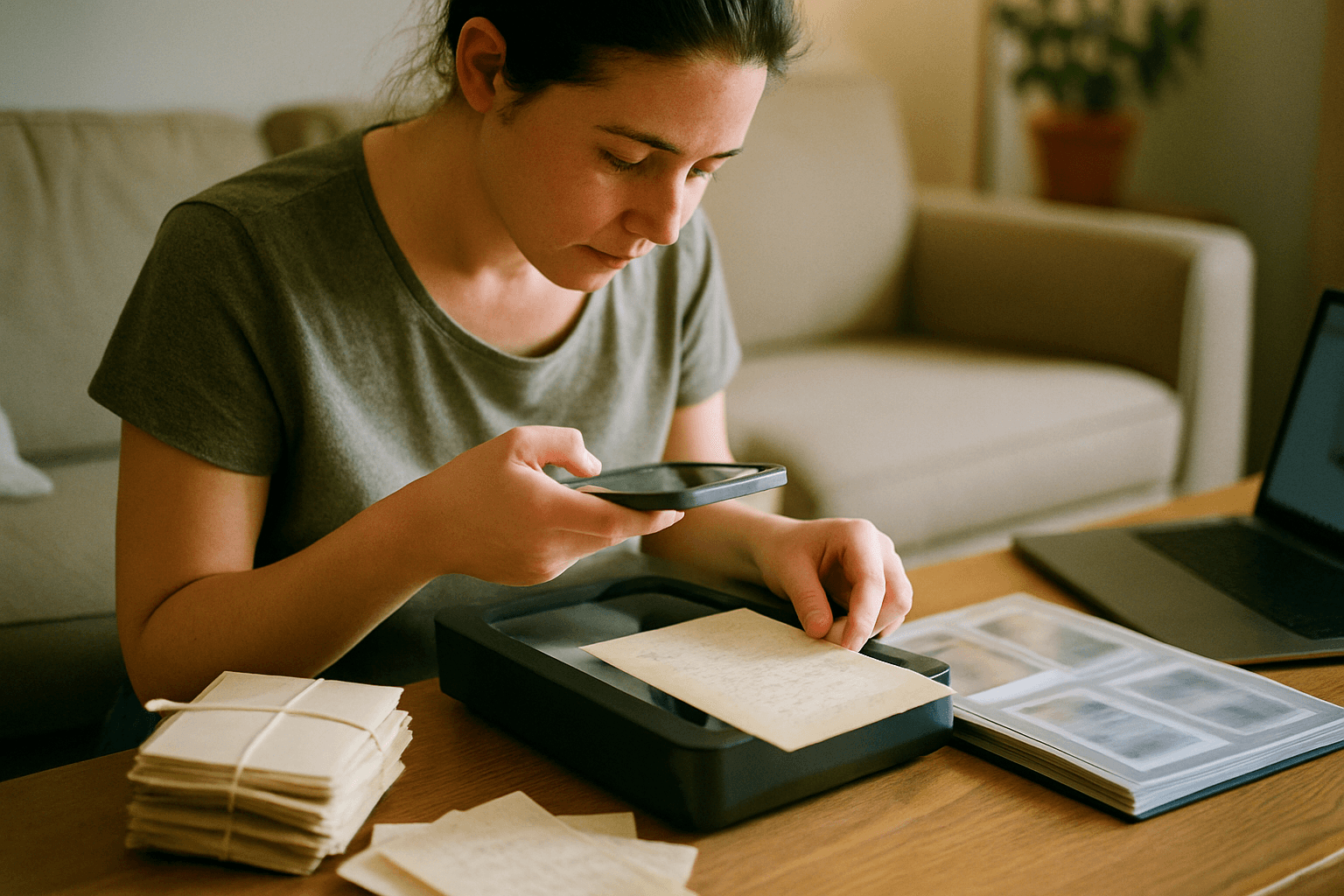
Lay the card on a plain contrasting surface in soft daylight, away from direct sun and hard shadows so the faint or smudged writing stays readable.
- 3
Scan at high resolution
Use a phone-scan app or flatbed at 300–600 DPI; text needs more resolution than photos, so go higher if the handwriting is faint.
- 4
Capture both sides
Many cooks wrote notes, timings, or 'from Aunt Rose 1961' on the back — scan it too.
- 5
Name it clearly
Save as dish-cook-year (nonna-formaggio-bread) instead of a camera filename so you can actually find it later.
- 6
Add the story
Attach who it came from, when the dish is made, and a voice note of the cook explaining the parts the card leaves out.
The handling rules overlap almost exactly with letters — clean dry hands, no rollers, no tape, store flat in acid-free sleeves afterward. If you're digitizing a mixed box of family paper, our guide to digitizing and archiving family letters covers the safe-handling details in full.
What makes a recipe card worth preserving beyond the recipe?
A clean retyped list of ingredients is useful. It is not an heirloom. When you preserve a handwritten recipe, you're preserving several things at once, and it's worth being deliberate about keeping all of them.
The handwriting
Their actual hand — the loops, the pressure, the way they wrote "tsp." A scan keeps it; a transcription loses it. This is the single most personal thing on the card, and it's irreplaceable the moment the cards are gone.
The marks of use
Grease spots, flour smudges, a corner torn from being clipped to a cabinet. These prove the recipe was lived, not just written. Preserve them; don't clean them.
The margin notes
"Double for Thanksgiving." "Bill hates raisins." "Mom's version, better than the book." The notes are often more valuable than the recipe — they're where the family's real cooking wisdom hides.
The unwritten technique
The part that never made it onto the card because the cook just knew it. The second rise, the pinch of this, the "until it looks right." This lives in the person, not the paper — and it's the first thing lost.
The first three you save by scanning carefully. The fourth one — the unwritten technique — is the one with a deadline, and it's the reason a scan alone isn't enough.
How do you preserve the story and technique behind the recipe?
This is the whole point, and it's the step almost every "digitize your recipes" guide skips. The card is the skeleton. The living recipe — the substitutions, the feel, the reason the dish exists — is in the cook's head and hands. So capture the cook.
Sit the person who makes it down with the card and record them talking through it: who taught them, what they changed, how they know when it's done, when the dish shows up in the family calendar. Two minutes of your dad explaining your grandmother's sauce is worth more than the tidiest transcription. Attach that recording to the scanned card so the technique and the memory travel together.
Do this while you still can
The unwritten half of a recipe has exactly one backup: the person who knows it. Recipe cards can wait — they're already on paper. The cook's voice and instincts can't. If there's an older relative whose cooking you'd miss, record them making or explaining one dish this month. It's the same urgency behind our guide to recording family video interviews — the recipe is just the easiest, warmest place to start.
If you'd rather have the spoken instructions as searchable text too, our voice transcription feature turns those recordings into readable, findable notes automatically — so you get the voice and a clean written version of the technique the card never had.
How do you turn preserved recipes into a family cookbook?
Once the cards are scanned, transcribed, and paired with the cook's voice, you've got the makings of the most-used heirloom your family will ever have. Two ways to shape it, and plenty of families do both:
| Format | Strengths | Best when |
|---|---|---|
| Digital recipe archive | Searchable, holds voice recordings, shareable with every relative by a link | You want the living master copy that grows and gets used |
| Printed keepsake cookbook | Beautiful physical gift, sits on the counter, no screen needed | You want a present for a milestone, holiday, or new cook in the family |
Digital recipe archive
- StrengthsSearchable, holds voice recordings, shareable with every relative by a link
- Best whenYou want the living master copy that grows and gets used
Printed keepsake cookbook
- StrengthsBeautiful physical gift, sits on the counter, no screen needed
- Best whenYou want a present for a milestone, holiday, or new cook in the family
The digital archive is the master — it can hold the scans, the transcriptions, and the voice recordings in one private place, and every relative can pull up "that cookie recipe" in seconds. A printed cookbook is the loveliest possible gift built from that archive; if that's your goal, our guide to creating photo books online covers the print side. For how recipes fit alongside letters, photos, and the rest of your family's paper, see the family history preservation overview.
The bottom line on preserving family recipes
Scan the cards exactly as they are — stains, margin notes, and handwriting intact. Transcribe the hard ones so they stay legible and searchable. And record the cook explaining the parts that were never written down, because that's the half of the recipe with a clock on it. A recipe card is a set of instructions. A preserved family recipe is a person's hands, voice, and love, kept where the next cook can find them.
Want to keep the cards, the transcriptions, and grandma's voice in one place? Start your family recipe archive free →
Get 50 questions to ask your parents — before the stories are gone
The exact prompts families use to draw out the stories nobody ever wrote down. Free, straight to your inbox.
No spam. Unsubscribe anytime.
Frequently asked questions
How do I digitize old handwritten recipe cards?
Photograph or scan each card at 300–600 DPI in even, soft light — a phone-scan app (Google PhotoScan, Photomyne, Adobe Scan) is fine and gentle, or a flatbed for crisper results. Capture the whole card including the food splatters, margin notes, and the handwriting itself, not just the text — those marks are half of what makes it an heirloom. For grease-stained or brittle cards, don't try to clean them; scan them as-is. Save each with a meaningful filename (dish-cook-year) so the collection stays usable.
Should I transcribe handwritten recipes or keep the originals?
Keep the original scan and add a typed transcription — you want both. The scan preserves the handwriting, the stains, and the personality of the card; the transcription makes the recipe legible to relatives who can't read cursive and searchable when you're hunting for 'that cookie recipe.' Type it up (or use an AI tool to draft from the scan and correct it), but never discard the original image. The handwriting is the artifact; the transcription is the working copy.
How do I preserve the story behind a family recipe, not just the recipe?
Record the person who cooks it explaining the recipe out loud — the substitutions they never wrote down, who taught them, when the dish gets made, the 'cook until it looks right' instincts that aren't on the card. A recipe card tells you the ingredients; a two-minute voice recording tells you why the dish matters and how it's actually made. Attach that recording to the scanned card so the next generation gets the technique and the memory together, not just a list of quantities.
What's the best way to make a family recipe book?
Gather the scanned cards, add clean transcriptions, and include a short note or photo with each recipe about who it came from and when it's made — then either keep it as a shared digital archive or turn it into a printed keepsake cookbook. A digital archive is searchable, easy to share with every relative, and can hold the voice recordings a printed book can't. A printed book is a beautiful gift. Many families do both: the digital archive is the master, and the printed cookbook is the version that sits on the counter.
How do I preserve a recipe card that's stained or falling apart?
Digitize it immediately and exactly as-is — the grease stains and worn edges are proof it was loved and used, so don't clean or 'restore' the physical card. Scan or photograph it in good light at high resolution, then store the original flat in an acid-free sleeve away from heat and humidity. If the card is torn, scan the pieces and reassemble them digitally rather than taping the original (tape yellows and damages paper permanently). The fragile card gets protected; the digital copy becomes the one you actually use.
About the author
Patrick Moore, Founder of Memory Murals
Patrick Moore is the founder of Memory Murals. He built it after realizing how much of his own family's history had quietly slipped away — to help families preserve their stories, voices, and photos while they still can.
Related Stories

Pillar Articles
Family History Preservation Services vs. Genealogy Platforms: Which Actually Protects Your Old Documents?
Ancestry and MyHeritage help you research a family tree. Legacybox and EverPresent digitize your originals. Neither one preserves the story behind the documents. Here's how the three categories actually differ — and how to pick for securing old family papers.
Patrick Moore • July 1, 2026
How-To Guides
How to Digitize and Archive Family Letters (Without Damaging the Originals)
Old handwritten letters are the most fragile — and most story-rich — thing in the box. Here's how to digitize them safely (phone, flatbed, or mail-in), and how to archive them so the meaning survives, not just the image.
Patrick Moore • July 1, 2026

How-To Guides
How to Ask Family Members for Old Photos (With Scripts to Copy)
The photos you want are in someone else's closet. Here's how to ask relatives for them so they actually say yes — who to ask first, what to ask for, word-for-word scripts, and what to do when someone won't let the originals leave the house.
Patrick Moore • September 11, 2026
Now give it somewhere to live.
The file you just saved outlasts nothing on its own. Put it where your family can still find it in thirty years.