
How to Capture Your Kids' Childhood Memories
You have thousands of photos and almost none of the story behind them. Here's a simple, all-ages system for capturing your kids' childhood memories — the everyday ones you'll actually want back — in under a minute at a time, and keeping them somewhere they won't get lost.
Patrick Moore, Founder • July 10, 2026
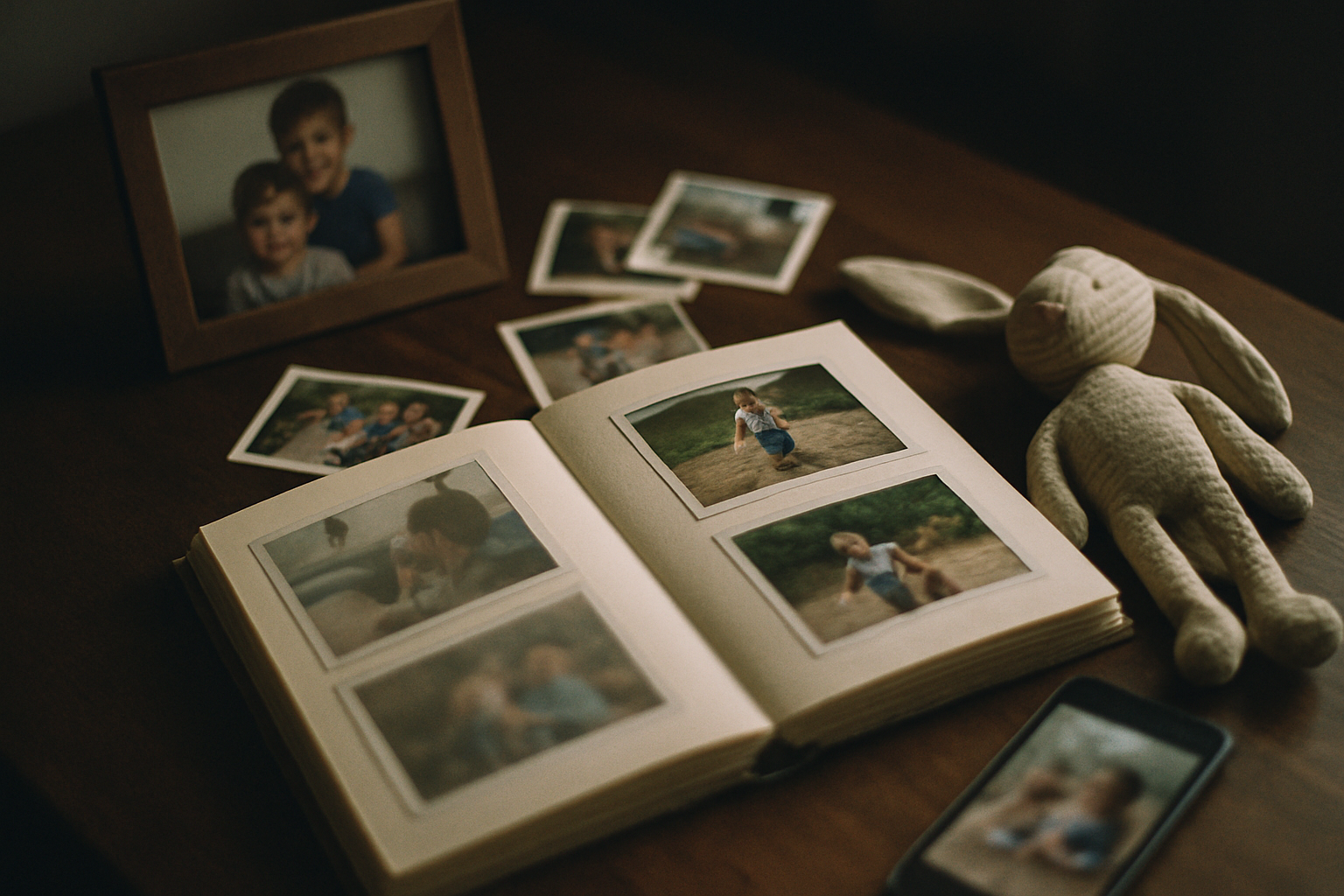
There is a video on your phone you have never watched twice. Your daughter is three, narrating an elaborate story about a dog that lives in the ceiling, completely serious, waving a spoon. You filmed it because it was perfect. Then it slid down into a camera roll of eleven thousand other things, and you have not seen it since.
That is the strange truth about capturing childhood: most of us are capturing constantly and keeping almost none of it. We have more photos of our kids than any generation in history and less of the story behind them. The first steps get filmed by everyone. The thing that actually vanishes is the ordinary texture of a specific age — the mispronounced words, the current obsession, the exact sound of the laugh — because we assume we could never forget it. And then we do.
This is a system for fixing that. Not a scrapbooking project. Not a promise to "get organized someday." A simple, all-ages way to capture the memories worth keeping, in under a minute at a time, and put them somewhere they will not disappear.
The short answer
To capture your kids' childhood memories, stop trying to save everything and start saving moments with their story attached. When something happens, take the photo — then add 30 seconds of context: a quick voice note or one sentence about what happened and what your child said. Save both to one dedicated place outside your camera roll. Add a five-minute weekly ritual to move your favorite moment of the week into that permanent home. Capture in the moment, curate later. Context is the whole game.
Capturing and keeping are two different things
Here is the gap almost no one names: capturing a moment and keeping a memory are not the same act. A photo captures what something looked like. A memory is what it meant — who was there, what was said, why you were laughing, how old they were, what they were obsessed with that month. The camera gets the first part for free. The second part evaporates faster than you think, usually within a few weeks, and it is the part you will most want back.
This is why a phone full of photos can still leave you feeling like you are losing your kids' childhood. You are keeping the images and losing the stories. If that feeling is familiar, it is worth understanding why thousands of photos still don't feel like preserving your memories — the volume is the problem, not the solution.
The fix is not to take more photos. It is to attach a little context to the few that matter, and to keep them somewhere they stay connected.
The three-step system: Capture → Context → Keep
The whole method fits in three steps, and it works the same whether your child is three weeks or thirteen years old.
Capture the Memory, Not Just the Moment
Capture in the moment
When something happens, grab it however you can — a photo, a ten-second video, a voice memo of them talking. Don't direct it, don't wait for good lighting, don't make it a production. The messy, real version is the one you'll want. This step you already do.
Add 30 seconds of context
This is the step everyone skips, and it's the one that matters most. Right then, or that night, record a 30-second voice note or type one or two sentences: What was happening? What did they say? How old were they, and what were they into that week? The context is what turns "a cute video" into "the summer she was three and obsessed with the ceiling dog."
Keep it somewhere permanent
Move the moment and its context — together — out of your camera roll and into one dedicated place. Not five places. One. A photo in your camera roll, a caption on Facebook, and a note in your head is a memory split into pieces that will never be reassembled.
That is the entire system. The magic is in step two, and it takes less time than reading this sentence twice.
The 30-second capture, by moment
The hardest part is usually not how to capture — it's remembering what's worth capturing when everything feels either too small or too fleeting. Here is the rule: capture the things you're sure you'll never forget. Those are exactly the ones you will. Below are the moments most worth a 30-second capture, and the fastest way to catch each one.
The way they talk
The mispronounced words, the invented phrases, the serious little theories. Record 20 seconds of them just talking — this is the single thing parents say they miss most, and it disappears the fastest.
This month's obsession
Dinosaurs, a specific song on loop, a blanket named Gerald. Snap a photo and add one line: "August, age 4 — Gerald goes everywhere." In a year this line will undo you.
The ordinary routine
The bedtime ritual, the breakfast negotiation, the way they fall asleep. A quick video of a normal Tuesday is worth ten posed portraits.
Their own voice, on the record
Once a season, ask them a few of the same questions and record the answers. Their voice and their answers change so fast that a yearly clip becomes something you'll replay for the rest of your life.
The things they make
The drawings, the wobbly clay animals, the first written name. You can't keep every piece — but a quick photo of it, with the date and a note, keeps the story. (Here's a full guide to preserving your kids' artwork without drowning in paper.)
Your own point of view
Your 30-second voice note about how you felt watching them is a gift to your future self and to them. A photo shows the moment; your voice explains why it mattered.
None of these take real time. The whole point is that a memory worth keeping costs you about a minute in the moment — the investment is remembering to add the context, not the effort of doing it.
Make it a habit, not a project
Systems fail when they depend on a free afternoon that never comes. So anchor capturing to a tiny, repeatable ritual instead. Pick one five-minute window a week — Sunday nap, Friday night — and do exactly one thing: move your favorite moment of the week into its permanent home, with a line of context. That is fifty-two curated, story-rich memories a year, built one small Tuesday at a time.
If your kids are very young, the weekly-ritual approach has its own playbook — see our guide to simple memory keeping for new parents. The habit scales up as they grow: the toddler photo-and-a-line becomes the school-age yearly interview becomes the teenager you're quietly recording before they leave. Same system, every age.
Keep it in one place you actually own
A memory is only as safe as the place you keep it. And most childhood memories today are scattered by default: some on your phone, some on your partner's, some on a social feed you don't control, some in a shoebox, some only in your head. Each piece is one lost phone or one deleted account away from gone.
One private archive
Photos, video, audio, and the story behind each one live together, both parents can add to it, and you own it and can back it up. The memory stays whole.
Scattered by default
The photo is here, the caption is there, the context is in your head. Nothing is connected, nothing is complete, and any single point of failure loses part of it forever.
This is exactly why we built Memory Murals: a private, family-only home where each photo, voice note, and story stays connected, both parents can add from their own phones, and nothing you save gets buried in a feed. It's the "one place" the system depends on — and it's built for the whole arc of childhood, not just the baby year.
The goal was never to capture everything. It's to capture what matters — the ceiling dog, the mispronounced words, the ordinary Tuesday — and keep it somewhere your kids can find it long after they've forgotten they were ever three. You can start your family's private archive for free and put the first memory in tonight.
Get 50 questions to ask your parents — before the stories are gone
The exact prompts families use to draw out the stories nobody ever wrote down. Free, straight to your inbox.
No spam. Unsubscribe anytime.
Frequently asked questions
What is the best way to capture childhood memories?
The best way is to capture the moment and its context together, in the same place, right away. A photo alone fades into your camera roll and loses its story within weeks. Pair each photo, video, or note with a 30-second voice memo or a single sentence — what happened, what was funny, what your child said — and save both to one dedicated spot outside your phone's camera roll. Context is what turns a picture into a memory you can actually revisit.
How do I document my child's memories without spending hours on it?
Don't try to document everything, and don't wait for a free afternoon. Use a 'capture in the moment, curate later' approach: when something happens, take five seconds to record a voice note or type a sentence next to the photo. Then set one small weekly ritual — five minutes to move your favorite moment of the week into a permanent home. Fifty-two one-minute captures a year beats one heroic scrapbooking session you never start.
What childhood memories are most worth capturing?
The everyday ones you assume you'll never forget — and will. The way they mispronounce a word, their current obsession, the bedtime routine, the sound of their laugh, what they wanted to be this week. Milestones like first steps get photographed by everyone; the ordinary texture of a specific age is what actually disappears, and what you'll most want back in ten years.
Where should I store my kids' childhood memories long term?
Somewhere private, permanent, and built to hold context — not just a camera roll or a social feed. Look for a single place that keeps photos, video, audio, and the story behind each one together, that both parents can add to, and that you own and can back up. A scattered memory (some on a phone, some on Facebook, some in a drawer) is a memory half-lost. One archive keeps the whole picture.
At what age should I start capturing my child's memories?
Now, whatever age they are. Newborn parents can focus on sensory details and first sounds; toddlers and school-age kids are quotable and full of daily obsessions worth recording; teens are worth capturing before they leave home. The system is the same at every age — capture the moment, add a line of context, keep it in one place. The only wrong time is 'later.'
About the author
Patrick Moore, Founder of Memory Murals
Patrick Moore is the founder of Memory Murals. He built it after realizing how much of his own family's history had quietly slipped away — to help families preserve their stories, voices, and photos while they still can.
Related Stories
How-To Guides
Creative Family Storytelling for Kids: How to Involve Your Children in Memory Keeping
Tired of getting one-word answers when you try to connect your kids with their grandparents' stories? I was too. Forget formal interviews. Here are some fun, game-like activities that turn memory-keeping into an adventure kids will ask to go on again.
Patrick Moore • June 21, 2026

How-To Guides
Memory Keeping for New Parents: Simple Habits for Busy Families
The first year is a blur of sleepless nights and breathtaking firsts. You want to remember every smile and coo, but creating a detailed baby book feels impossible. This guide offers simple, low-effort habits to help you capture precious moments without adding to your overwhelm.
Patrick Moore • July 1, 2026
How-To Guides
How to Digitize Old Home Movies: Super 8, 16mm, and Beyond
That box of old film reels in the attic is a treasure chest of silent stories. This guide walks you through preserving them, covering everything from Super 8 to 16mm film. Learn the pros and cons of DIY methods versus professional services to safely digitize your family's irreplaceable home movies.
Patrick Moore • July 8, 2026
Now give it somewhere to live.
The file you just saved outlasts nothing on its own. Put it where your family can still find it in thirty years.