
Is How Our Brains Store Memories All Wrong?
Recent neuroscience research is challenging long-held beliefs about how our brains store memories. This new understanding suggests memories aren't static files but are actively reconstructed each time we recall them. What does this mean for the stories we cherish and the ways we try to preserve them?
Patrick Moore, Founder • September 1, 2026
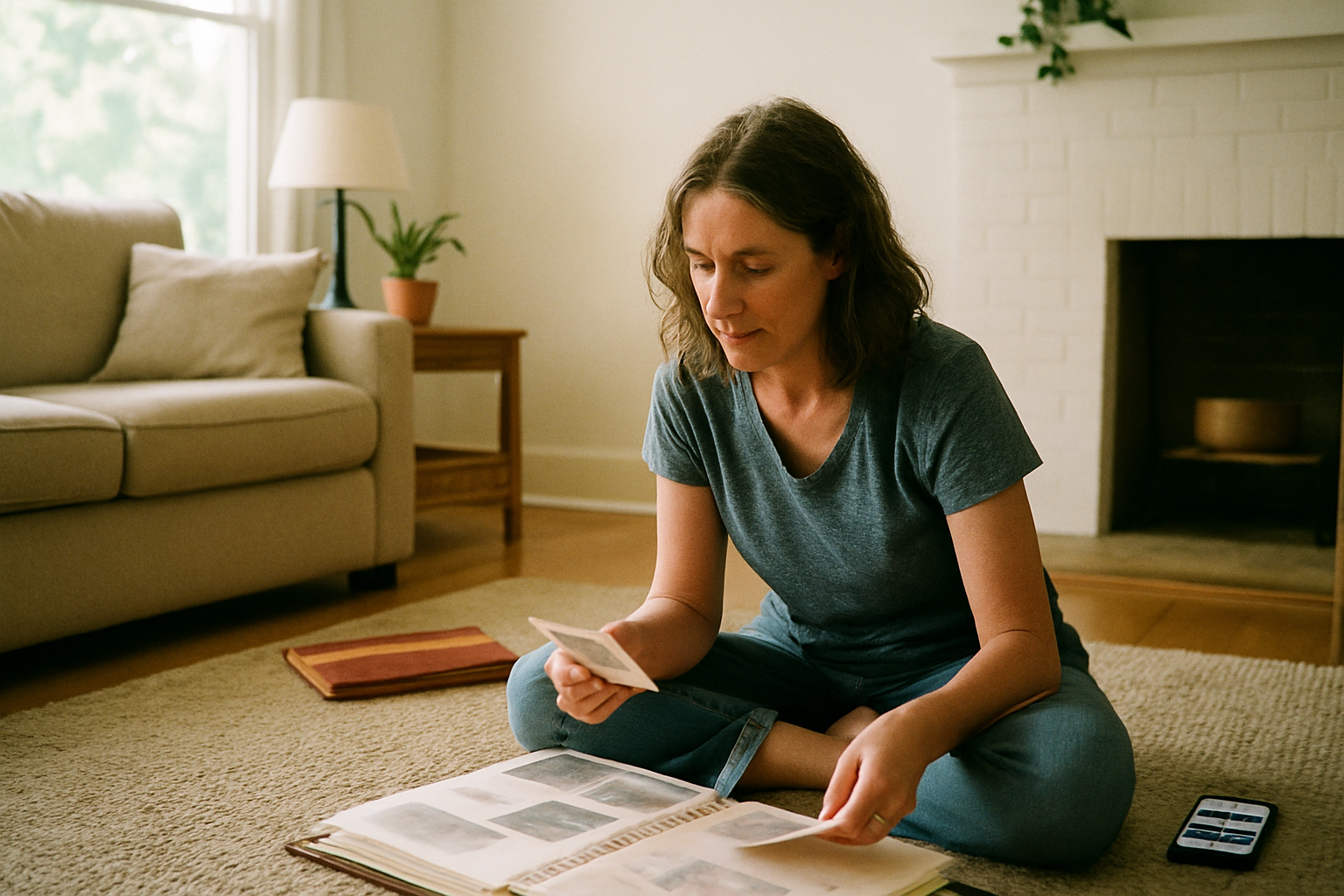
Picture your dad telling that one story again—the one about his first car, a beat-up Ford Falcon he bought with money from a summer job. You've heard it a dozen times. But this time, you notice a detail has changed. Last year, the car was sky blue; this year, he remembers it as seafoam green. Was he just mixing things up, or is something more profound happening?
For decades, we’ve tended to think of memory like a video camera, faithfully recording events for later playback. A faded detail or a changed color was seen as a glitch, a sign of the recording degrading over time. We assumed a "correct" version of the memory was stored somewhere in the brain, even if it became harder to access.
But what if that entire model is wrong? What if memory isn't a recording at all?
Recent discoveries in neuroscience, highlighted in reports from outlets like SingularityHub, are challenging our most fundamental assumptions about how memory works. This new research suggests that our brains don't store memories like files in a cabinet. Instead, they may be rebuilding them from scratch every single time we call them to mind. This shift in understanding has profound implications for how we think about our own life stories—and how we choose to preserve them.
The short answer
A new study suggests we may be wrong about how the brain stores memory. Instead of being static files stored in one place, memories appear to be actively reconstructed across different brain regions each time we recall them. This means memories are not fixed recordings but are dynamic and can be subtly altered by new experiences, emotions, and the very act of remembering. This fluidity makes capturing and preserving firsthand accounts of family stories more important than ever.
The Filing Cabinet in Your Head
For over a century, the dominant theory of memory revolved around the concept of the "engram." Scientists believed that each memory created a specific, lasting physical trace in the brain—a memory engram. The idea was intuitive and comforting. It painted a picture of the brain as a vast, biological library or a sophisticated filing cabinet.
In this model, an experience—your first day of school, the smell of your grandmother's kitchen—was encoded and stored in a specific location, or across a specific network of neurons. To remember it, your brain just had to pull the right file. Forgetting was simply a case of losing the file or the card catalog entry that pointed to it.
This "storage" metaphor has shaped everything from courtroom testimony to how we talk about our own pasts. We "search" our memories, "dig up" old recollections, and worry about our mental "storage space" running out. It’s a simple, linear model: an event happens, it gets recorded, it gets stored, and then it gets retrieved. But as compelling as it is, this model struggles to explain the quirks and complexities of human memory. Why do stories change over time? Why can two people remember the same shared event in completely different ways?
Memories in Motion
The emerging research paints a much more dynamic and fascinating picture. It suggests that a memory isn't a single thing stored in a single place. Instead, it’s a distributed pattern, a recipe of sorts. When you want to recall an event, your brain doesn't pull up a pre-recorded video. It accesses the recipe—the key sensory inputs, emotions, and facts—and reconstructs the experience on the fly.
Think of it like a chef baking a cake from a recipe. Most of the time, the cake turns out pretty much the same. But sometimes, a slightly different ingredient is used, the oven is a little hotter, or the chef is in a different mood. The result is still a cake, but it's subtly different from the one baked last week.
This is what may be happening with our memories. Each time we recall an event, the brain reassembles it. The process of reconstruction can be influenced by our current mood, new knowledge we've acquired since the event, or even the person we're telling the story to. This is why your dad’s car can be blue one year and green the next. His brain isn't pulling up a corrupted file; it's rebuilding the memory, and a new detail gets woven into the fabric.
A Ripple Effect on Justice
This new understanding of memory has significant real-world implications, particularly for the legal system. For years, eyewitness testimony has been treated as a gold standard of evidence. But if memories are reconstructed and malleable, the confidence of an eyewitness might not correlate with accuracy. The very act of being questioned by police can subtly alter a witness's memory of an event, introducing new details that feel just as real as the original experience.
Why Your Brain Isn't a Camera
This "reconstruction" model of memory might sound like a bug, but in many ways, it's a feature. It allows us to learn, adapt, and integrate new information into our understanding of the world. Our memories aren't meant to be a perfect, unchanging record of the past; they are the raw material for the ongoing story of who we are. The memory of a difficult breakup, for example, feels very different five days later than it does five years later, after we’ve healed and gained perspective.
The problem arises when we treat our fluid, narrative-driven memories as if they were infallible digital recordings. This is the great irony of the modern age: we have more tools to capture moments than ever before, but we may be losing the art of preserving the stories that give those moments meaning. As we've explored before, there's a photographic paradox where your camera might be stealing your memories, because we outsource the act of remembering to a device.
Understanding the brain's process helps us appreciate both its power and its limitations.
Memory as Reconstruction
Memory as Narrative
The key takeaway isn't that our memories are "false," but that they are alive. They breathe and evolve with us. But this also means that the firsthand account—the story as told today—is precious and fleeting. The version of the story your mother tells now is a unique product of her entire life's experience, and it will never be exactly the same again.
The Case for an External Anchor
If our internal memories are constantly being rewritten, how do we create a sense of continuity and shared history for our families? How can future generations connect with the experiences of those who came before them if the stories are always in flux?
This is where thoughtful preservation becomes critical. We need an external anchor—a place to capture the memory as it is expressed at a particular moment in time. This isn't about creating a "correct" version of a memory to challenge a person's own recollection. It's about honoring and saving the recipe. It’s about recording your dad telling the story of his Ford Falcon in his own voice, capturing his laugh, the specific words he uses, and the twinkle in his eye.
A true digital family archive is different from a simple photo album. A photo album stores a picture; an archive stores the context that gives the picture meaning. It pairs the image with the voice, the handwritten letter with a typed transcript, and the home video with the recollections of the people who were there.
This process of externalizing memory doesn't replace the brain's beautiful, dynamic system. It complements it. It provides a stable reference point, a piece of durable truth that the family can return to for generations. It captures the story before it changes again, preserving a snapshot of not just the event, but of the person remembering it. This is why a comprehensive guide to recording family life stories is so valuable—it helps you capture that lightning in a bottle.
The Brain's Memory
It’s adaptive, emotionally rich, and deeply integrated with our identity. It allows us to learn from the past and grow as individuals.
The Brain's Memory
It's malleable, details can fade or change, and it's ultimately impermanent. When a person is gone, their unique recollections are lost forever.
A Digital Archive
It's stable, verifiable, and can be duplicated and shared across generations. It preserves a specific telling of a story in its original form.
A Digital Archive
It can lack the rich emotional context of a lived memory unless that context—voice, video, personal writing—is intentionally captured alongside the facts.
An Anchor for Your Family's History
We built Memory Murals with this profound understanding of memory at its core. We knew that simply creating another cloud storage bucket for photos wasn't enough. The real magic of a memory isn't just in the pixels of a photograph, but in the story that goes with it. Our platform is designed to be that external anchor for your family's most cherished narratives.
It’s a private, secure space where you can pair a faded black-and-white photo of your grandparents' wedding with an audio recording of your grandmother describing the day. It's a place to upload a scan of a handwritten recipe and have your mom record the story of why it was her favorite childhood meal. You are creating a multi-sensory record, capturing the memory in a way that is far more robust and evocative than a simple image file.
Critically, this archive is built on a foundation of privacy. These are not data points for training an algorithm; they are your family's soul. We believe that privacy is the heart of memory preservation, ensuring your stories are shared only with whom you choose, forever.
This new science doesn’t devalue our memories. On the contrary, it makes them feel even more precious and human. It reminds us that our parents' and grandparents' stories are not static artifacts but living, evolving narratives that reflect a lifetime of wisdom and experience. Capturing them is an act of profound love and respect.
By creating a dedicated space for these moments, you're not just saving files; you're building a legacy. You can start your family's private archive today. The story of the seafoam green car, told in your dad's own voice, is a treasure worth preserving, no matter what color he remembers it being next year.
Get 50 questions to ask your parents — before the stories are gone
The exact prompts families use to draw out the stories nobody ever wrote down. Free, straight to your inbox.
No spam. Unsubscribe anytime.
Frequently asked questions
How does the brain actually store memories?
Recent research suggests the brain doesn't store memories like files in a single location. Instead, a memory is a pattern of connections across many parts of the brain. When you recall something, your brain actively reconstructs the pattern, pulling together sensory details, emotions, and facts. This process is dynamic, meaning the memory isn't a perfect playback but a fresh re-creation each time, which can lead to slight changes or variations in the details over time.
What is the difference between short-term and long-term memory?
Short-term memory, or working memory, is your brain's temporary scratchpad. It holds a small amount of information, like a phone number you're about to dial, for a very brief period. For a memory to last, it must be consolidated into long-term memory. This process involves strengthening the neural connections related to the memory, moving it from temporary to more permanent storage. Long-term memories can last for days, years, or even a lifetime.
Does recalling a memory change it?
Yes, according to the theory of memory reconsolidation. Every time you retrieve a memory, it becomes temporarily unstable and adaptable. During this window, it can be modified by new information or your current emotional state before it is "re-saved." This is why stories can evolve in our minds over time. The core of the memory might remain, but details can be updated, strengthened, or even subtly altered with each recollection, making it a living part of your personal narrative.
Why is it important to record family stories?
Recording family stories is important because human memory is fluid and impermanent. As new research shows, memories can change over time and are lost forever when a person passes away. By recording stories in someone's own voice or handwriting, you create a stable, lasting record of their unique perspective and experiences. This external archive acts as an anchor for family history, allowing future generations to connect directly with their heritage in a way that goes far beyond names and dates.
How can technology help preserve memories accurately?
Technology can help preserve memories by capturing them at a specific moment in time, creating a durable record that counteracts the natural fluidity of the brain's recall process. Apps like Memory Murals allow you to pair photos with audio recordings, videos, and written accounts. This captures not just the facts of an event but the emotional context—the sound of a voice, the way a story was told. This creates a rich, multi-layered archive that preserves the memory with greater accuracy and emotional resonance.
About the author
Patrick Moore, Founder of Memory Murals
Patrick Moore is the founder of Memory Murals. He built it after realizing how much of his own family's history had quietly slipped away — to help families preserve their stories, voices, and photos while they still can.
Related Stories

Pillar Articles
The Biological Glue: How Your Brain Builds Your Legacy
New research shows memory can be stabilized by physical structures in the brain. Here's what functional amyloids reveal about why some moments last a lifetime.
Patrick Moore • February 22, 2026
Insights
Is Social Media Rewriting Your Childhood? The Hidden Science of "Digital Forgetting"
New research shows sharing photos online sharpens what's in-frame while erasing surrounding context. Here's how to protect the full story behind your memories.
Patrick Moore • February 21, 2026
Insights
New Study: Probiotic Improves Memory Function and Its Link to Family Stories
A recent study suggests a fascinating connection between gut health and cognitive function, showing a specific probiotic can improve memory. This breakthrough offers a new perspective on how we can support our loved ones' ability to recall and share the precious stories that define a family.
Patrick Moore • July 21, 2026
Preserve your family's memories in one private place.
Start free in minutes. No credit card required.