
Preserving Your Baby's Sensory Memories
Your phone is full of photos, but what about the memories a camera can't capture? This guide explores creative, simple ways to preserve the fleeting sensory details of your baby's first year—the smells, textures, and feelings you'll want to remember forever.
Patrick Moore, Founder • June 26, 2026
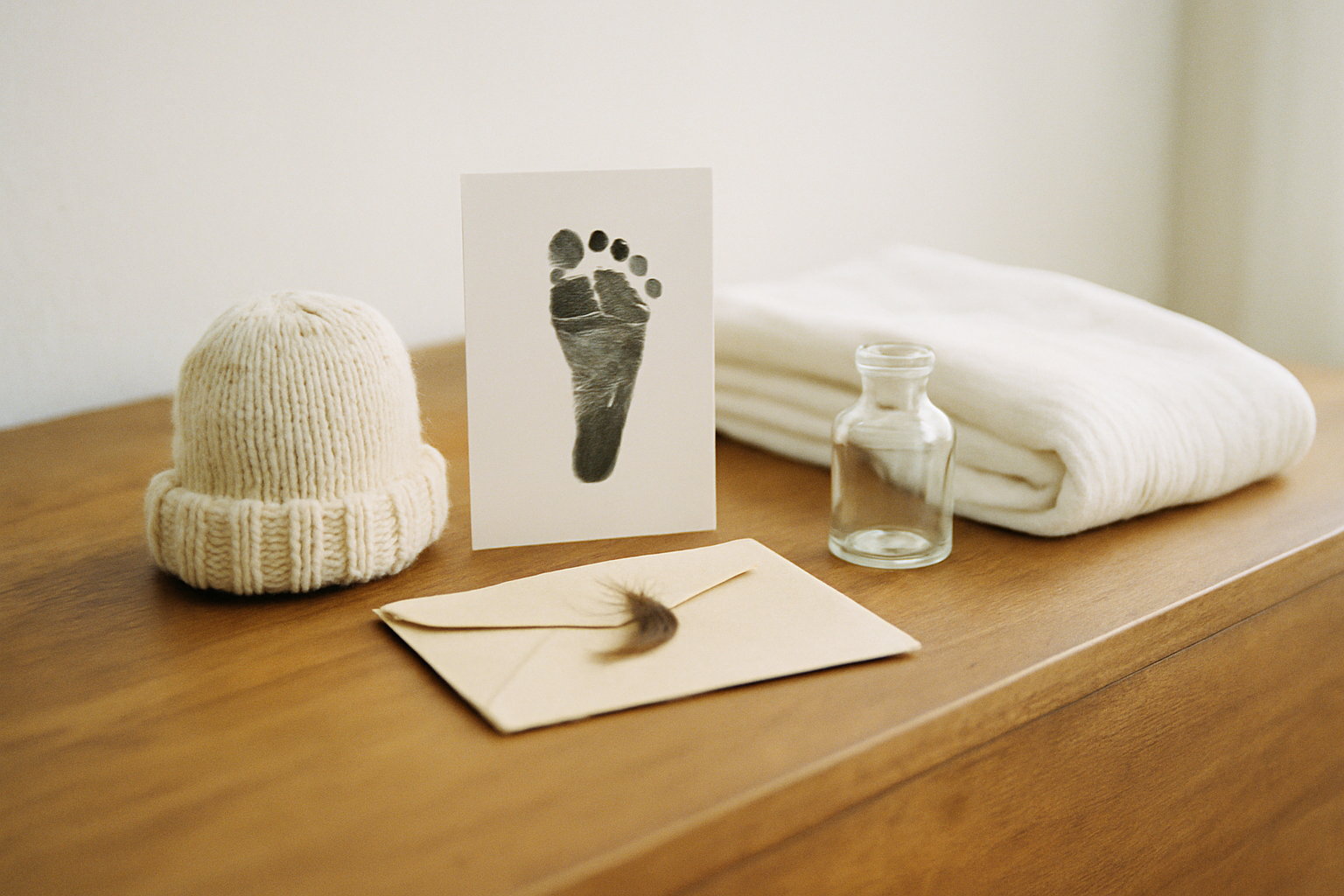
Picture holding your newborn. You’re probably taking hundreds of photos, capturing every sleepy smile and tiny yawn. But what about the things a camera can't see? The specific, milky scent of their breath after a feeding. The almost-painful grip of their tiny hand wrapped around your finger. The downy-soft feel of the hair on their head, so fine it feels like spun air.
These are the memories that live outside the frame. They’re the ones that, years from now, can transport you back to a moment with breathtaking clarity. They're also, unfortunately, the first to fade. While a photo can remind you what happened, it can't always remind you how it felt. The problem isn't just that we forget; it's that we rely so heavily on our cameras that we sometimes forget to preserve the full, multi-sensory experience of a moment, a topic we've explored before in why thousands of photos are not preserving your memories.
This isn't about adding another task to your already-full plate as a new parent. It's about a small shift in focus—a few intentional acts of preservation that can build a richer, deeper, and more emotionally resonant family archive.
The short answer
To preserve your baby's sensory memories, go beyond photos. Create a dedicated sensory journal or use a digital archive to write detailed descriptions of smells, textures, and feelings. Save small, meaningful objects like a worn onesie in an airtight bag or a swatch from their favorite blanket. By consciously documenting these non-visual details alongside your pictures, you create a richer, more evocative record of their first years.
The Science of Smell, Touch, and Emotion
There’s a reason the scent of freshly baked cookies can instantly transport you to your grandmother’s kitchen, or why the feel of a certain fabric can bring a wave of calm. Smell and touch are powerful memory triggers, closely tied to the brain's emotional and memory centers.
This is why a scent can trigger a more vivid emotional memory than a photograph. For a baby, these senses are paramount. Long before their vision is fully developed or they can understand language, they understand the world through touch and smell. The scent of their parent and the feeling of being held are their primary sources of comfort and connection. These are, quite literally, the building blocks of how babies form memories and attachments.
When we make an effort to preserve these sensory details, we’re not just saving cute anecdotes. We are honoring the very first ways our children experienced love and security. We are building a bridge back to the foundational feelings of their existence.
Deeply linked
Smell & memory
Smell is closely tied to the brain's emotional and memory centers, making it a powerful gateway to your deepest memories.
An Archive of Scent and Feeling
So, how do you capture a smell or a feeling? It involves a two-pronged approach: saving physical triggers and, more importantly, writing down detailed descriptions.
Physical Keepsakes: Some memories are best anchored by a tangible object. The idea isn't to hoard everything, but to select a few small, potent items.
- The Scent Vial: Find a tiny, airtight glass vial (like those used for perfume samples). Put a few drops of your baby’s specific lotion, shampoo, or baby oil inside. Label it with the date and brand. Years from now, opening that vial will be a potent form of time travel.
- The Sealed Swaddle: Take their first hat from the hospital or a favorite (unwashed) sleepsuit they’ve just outgrown. Place it in a vacuum-sealed bag to preserve the scent as long as possible. Store it away from light and heat.
- The Texture Swatch: Cut a small, unnoticeable square from their softest blanket or the furry ear of a beloved stuffed animal. Attach it to a labeled card.
Saving physical items is a powerful way to connect with the past, but it has its trade-offs.
A Powerful Sensory Trigger
The primary benefit is immediacy. Holding a physical object or smelling a preserved scent can bypass conscious thought and trigger a deep, emotional memory in a way that nothing else can. It's a direct, tangible link to a moment in time.
Physical World Problems
Objects take up space, can degrade over time, and are vulnerable to loss or damage from fire, water, or pests. Scents will inevitably fade, no matter how well they are sealed. These items are precious but fragile.
The Sensory Journal: This is arguably the more durable and powerful method. Whether in a physical notebook or a digital archive like Memory Murals, the act of translating a sensation into words is what cements it in your memory and makes it shareable. Don't just write "he smelled so good." Get specific.
- Smell: "After his bath, he smelled like lavender and warm milk. It was a clean, sweet scent that clung to his hair and the collar of my shirt when I held him close."
- Touch: "Her hand, when it gripped my thumb, was surprisingly strong. Her fingernails were like tiny, perfect shells, and the skin on her palm was impossibly soft and a little bit damp."
- Feeling: "The weight of him asleep on my chest was the most calming feeling in the world. It was a heavy, trusting warmth that made my own breathing slow to match his."
These written notes are the true preservation. They provide the context, the emotion, and the story that a physical object alone cannot tell.
Creating a Multi-Sensory Archive
The ultimate goal is to integrate these sensory notes directly with your photos and videos. This creates a holistic memory, a single entry that captures sight, sound, and feeling all at once. It turns a simple photo album into a rich, layered story. This is precisely what we designed Memory Murals to do—to hold not just the pictures, but the stories behind them.
Instead of just a photo of your baby's feet, you can add a note about the feel of their velvety skin. Alongside a video of them splashing in the tub, you can write about the smell of the soap and the warmth of the water. It’s about building a complete baby first-year memory capsule that is digital, durable, and deeply personal.
Here’s a simple process you can follow to start building these richer memories today.
How to Add a Sensory Note in Your Archive
Anchor the Memory
Start with a photo or video that reminds you of a specific sensation. Maybe it's a picture of your baby sleeping on a particular blanket, or a close-up of their hands. This visual will be the anchor for your sensory note.
Describe the Sensation
In the description field, close your eyes for a moment and recall the feeling. Use vivid, specific language. What did it smell like? What was the texture? Was it warm or cool? Heavy or light? Write it down as if you're describing it to someone who has never experienced it.
Connect the Dots
Add a sentence about why this sensation mattered. "That blanket was the one my grandmother knitted, and its slightly scratchy wool texture always seemed to calm him down instantly." This context is what transforms a simple description into a meaningful family story.
This doesn't have to be done for every single photo. But for the moments that truly move you, taking an extra two minutes to add a sensory note will pay enormous dividends in the future. You are giving your future self—and your child—a gift of profound depth.
Years from now, your child won't remember the texture of their first teddy bear or the scent of their nursery. But by preserving these details, you give them a chance to experience it through your words. You're preserving not just their history, but the feeling of being loved and cared for in those fleeting, foundational days.
It’s a way to build a richer story, one you can return to for years. When you're ready to start weaving these details together, you can begin your own private archive and see how it feels to save the whole story.
Get 50 questions to ask your parents — before the stories are gone
The exact prompts families use to draw out the stories nobody ever wrote down. Free, straight to your inbox.
No spam. Unsubscribe anytime.
Frequently asked questions
What are sensory memories of a baby?
Sensory memories of a baby are recollections tied to senses other than sight and sound. This includes the unique scent of their skin, the feel of their soft hair, the weight of them in your arms, or the texture of their favorite swaddle. These memories are often deeply emotional and can be powerful triggers for nostalgia, but they are also the quickest to fade without a conscious effort to document them through writing or physical keepsakes.
How can I preserve the smell of my newborn?
To preserve a newborn's scent, save key items in airtight bags. Consider a well-worn, unwashed onesie, a hospital hat, or a burp cloth. You can also put a few drops of their specific baby lotion into a tiny, sealed glass vial. Most importantly, write down detailed descriptions of their scent in a journal or app, connecting it to specific moments. This written record will outlast any physical scent and provide crucial context for the future.
What is the best way to create a baby memory box?
The best way to create a baby memory box is to focus on items that evoke all five senses. Include visual items like photos and their hospital bracelet, but also add sensory keepsakes. This could be a swatch from their softest blanket, a dried flower from the nursery, or a rattle that makes a specific sound. Be sure to label each item with a tag explaining its significance and date. This turns the box from a collection of things into a curated story of their first year.
Why do I forget memories of my baby's first year?
It's incredibly common to forget details from a baby's first year due to a combination of sleep deprivation, hormonal changes, and the sheer volume of new experiences. Your brain is in survival mode, prioritizing immediate needs over long-term memory encoding. This is especially true for subtle, sensory details not captured in photos. Actively journaling or recording these moments is crucial to combat this natural 'baby brain' and preserve the richness of that fleeting time.
How do I capture memories of taste and sound?
Capturing taste and sound memories requires going beyond photos. For tastes, write detailed descriptions of their reactions to first foods—the pucker for a lemon, the delight for sweet potato. For sounds, use your phone's voice recorder to capture their unique coos, first giggles, sleepy sighs, or the specific jingle of a favorite toy. Label these audio files with the date and context. Attaching these notes and audio clips to photos in a digital archive creates a more complete, multi-sensory experience.
About the author
Patrick Moore, Founder of Memory Murals
Patrick Moore is the founder of Memory Murals. He built it after realizing how much of his own family's history had quietly slipped away — to help families preserve their stories, voices, and photos while they still can.
Related Stories

Insights
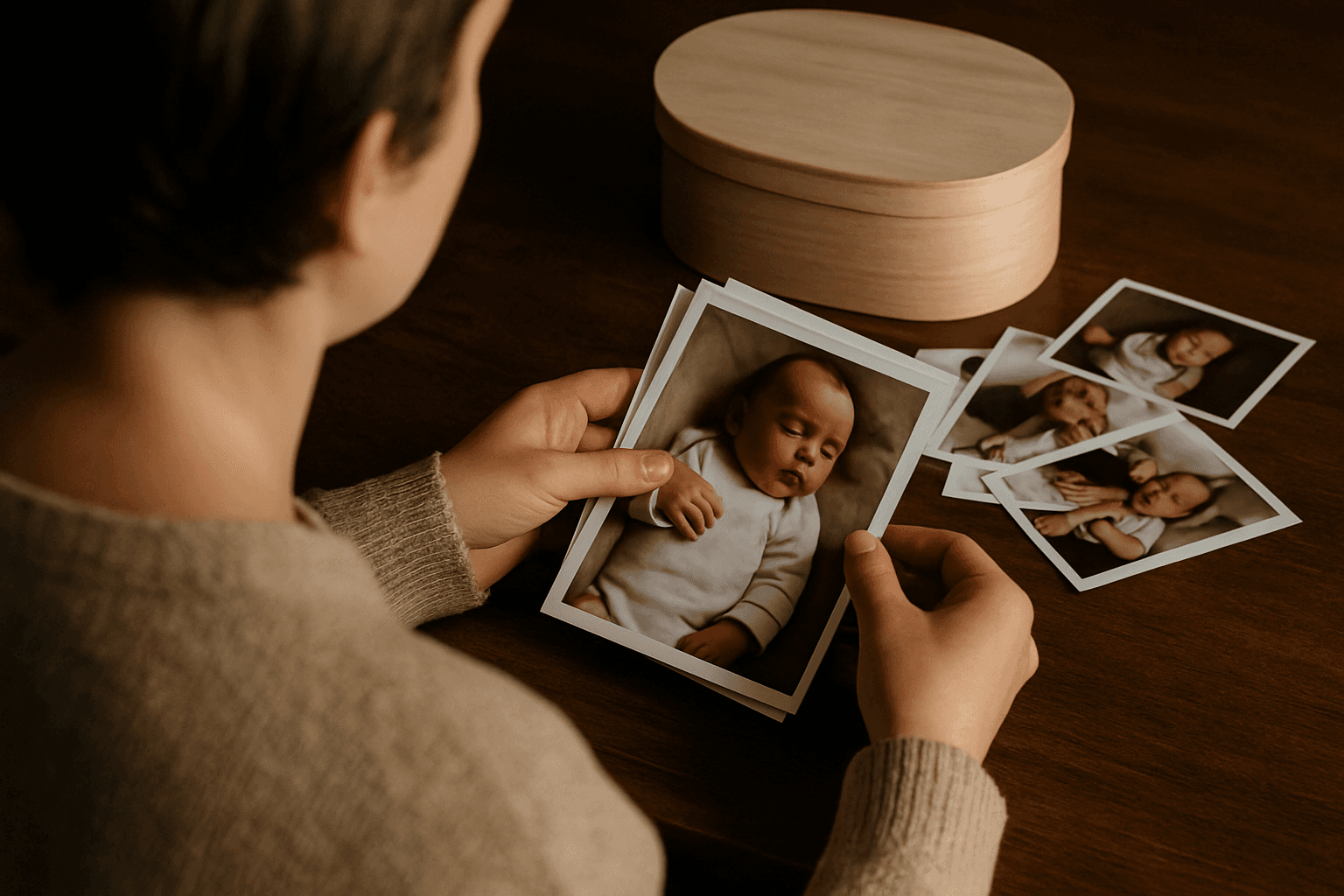
Baby Milestones You'll Forget If You Don't Write Them Down
You'll remember the first steps. You won't remember the exact day they figured out how to clap. Here's why the small milestones matter most — and how to make sure they don't disappear.
Patrick Moore • April 17, 2026
How-To Guides
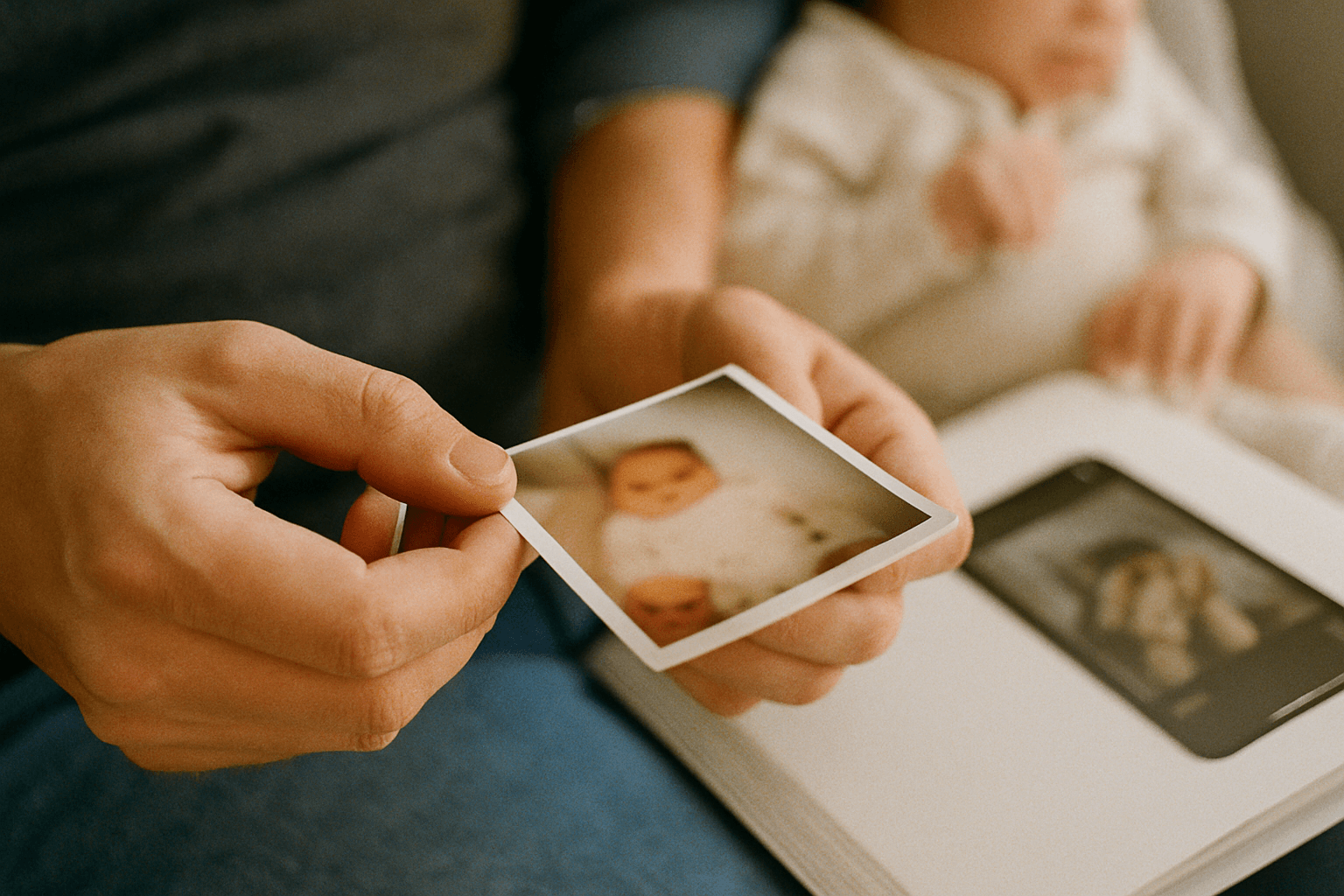
How to Create a Baby First Year Memory Capsule Your Child Will Cherish
The first year flies by in a blur of sleepless nights and incredible firsts. This guide helps you move beyond just snapping photos, showing you how to intentionally create a digital 'first year' memory capsule—a collection of stories, sounds, and moments your child can explore for years to come.
Patrick Moore • June 24, 2026
How-To Guides
Memory Keeping for New Parents: Simple Habits for Busy Families
The first year is a blur of sleepless nights and breathtaking firsts. You want to remember every smile and coo, but creating a detailed baby book feels impossible. This guide offers simple, low-effort habits to help you capture precious moments without adding to your overwhelm.
Patrick Moore • July 1, 2026
The first year is the one you'll want back.
Record the voices, keep the photos that matter, and write down why you chose the name. Free to start.