The Cognitive Benefits of Storytelling for Seniors
We often think of preserving family stories as a gift for future generations. But what if the greatest benefits of storytelling for seniors are for the storytellers themselves? From boosting memory recall to fighting social isolation, the act of sharing a life story is a powerful tool for cognitive and emotional well-being.
The Memory Murals Team • June 29, 2026
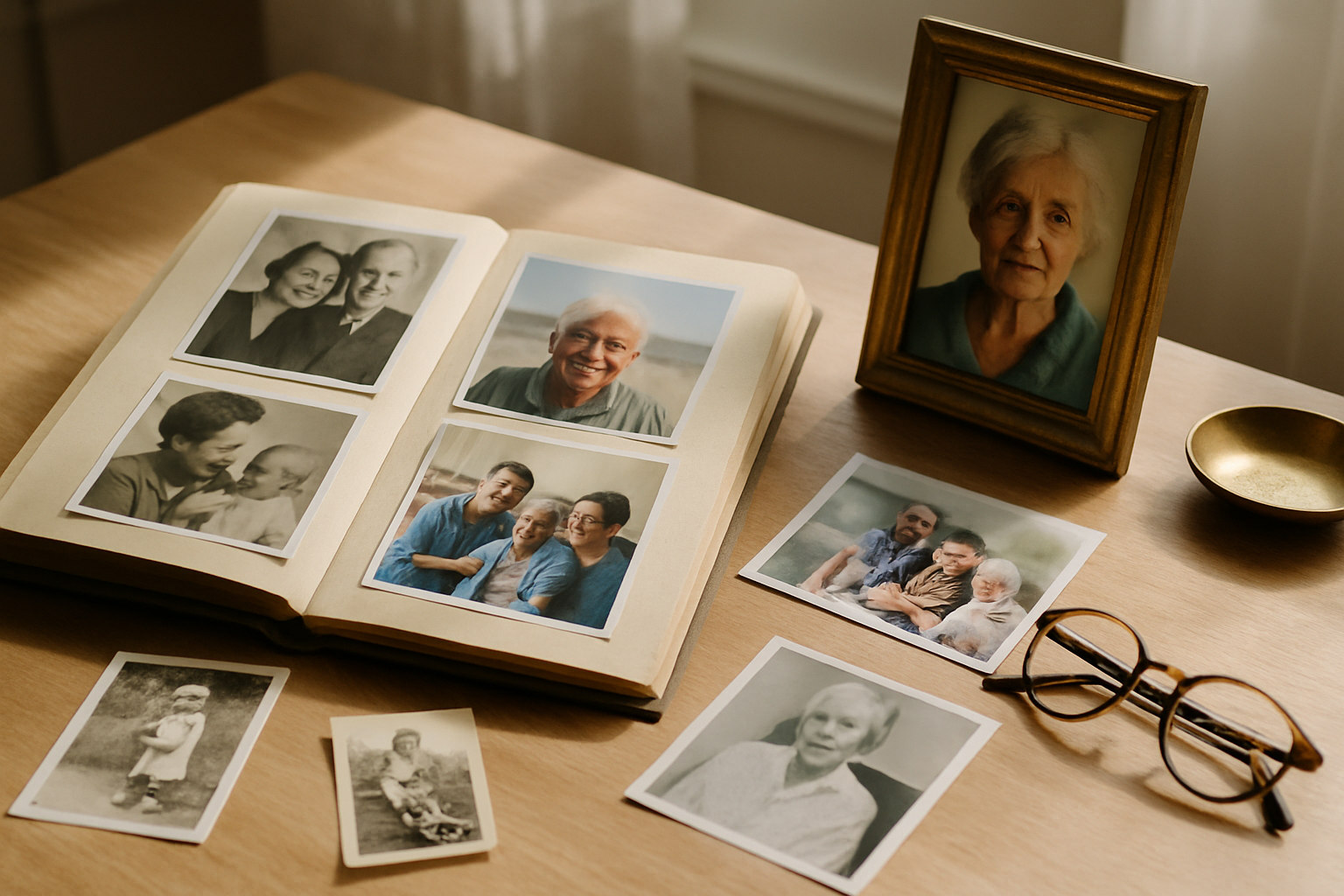
You’ve seen the moment. Maybe it’s your mom, holding a faded photograph of her own mother. Maybe it’s your grandfather, running his hand over an old wooden toolbox. For a second, they’re quiet. Then, a story begins to unspool—not just a fact, but a whole scene, complete with sounds, smells, and feelings.
We tend to focus on what happens next: scrambling for a phone to record it, wishing we’d asked sooner. We see the story as a precious artifact to be captured for the family archive. And it is. But in our rush to preserve the memory for ourselves, we often overlook something profound happening for the storyteller in that very moment.
The act of recalling and sharing a life story isn’t just a trip down memory lane. It’s a powerful, therapeutic process with scientifically-backed benefits for a senior’s cognitive and emotional health. It’s not just about legacy; it’s about well-being, right here and now.
The short answer
The primary benefits of storytelling for seniors are both cognitive and emotional. The act of recalling and structuring memories serves as a mental workout, strengthening neural pathways and improving memory function. Emotionally, it reinforces a sense of identity and self-worth, combats loneliness by fostering social connection, and can significantly reduce symptoms of depression and anxiety. It transforms memory from a passive archive into an active tool for well-being.
Reminiscence as Brain Training
Think of a complex memory—like the story of a first job or a cross-country move. Retrieving it isn't like pulling a single file from a computer. Your brain has to work. It accesses the hippocampus for the sequence of events, the temporal lobe for sensory details, the frontal lobe to structure it into a coherent narrative, and the amygdala for the emotional color.
This coordinated effort is a formidable cognitive exercise. For seniors, engaging in this process regularly can help maintain and even strengthen the neural pathways that can weaken over time. This is the principle behind what psychologists call “reminiscence therapy,” a method used to help older adults tap into their long-term memories to improve mood and cognitive function.
By telling a story, they aren't just remembering; they are actively reconstructing. They are organizing thoughts, choosing words, and engaging in the complex task of communication. It’s a holistic brain workout disguised as a simple conversation.
Widespread
Social Isolation
Many older adults experience social isolation, a recognized risk factor for cognitive decline.
Lower Risk
Staying Connected
Maintaining strong social relationships is associated with better cognitive health in later life.
Building a Bridge to the Present
As we age, our roles can shift. A person might go from being a CEO to a retiree, a parent of young children to a great-grandparent. These transitions can sometimes leave a person feeling unmoored, their sense of identity less clear. Storytelling provides a powerful anchor.
Recounting stories of challenges overcome, lessons learned, and joys experienced is an act of identity reinforcement. It’s a way of saying, “This is who I am. This is what I’ve done. I have mattered.” Each story shared is another brushstroke on the self-portrait of a life lived, solidifying a person's sense of self-worth and continuity.
This process is crucial for mental health. It helps integrate past experiences with the present, providing a coherent life narrative that can be a powerful buffer against feelings of depression and anxiety. When you help a parent share their stories, you're not just collecting facts; you're helping them affirm the value of their entire journey.
Strengthens Identity
Revisiting past roles and accomplishments reinforces a coherent sense of self, independent of current circumstances.
Provides Purpose
Sharing wisdom and experience with younger generations creates a meaningful role as a family historian and mentor.
Reduces Anxiety
Focusing on past resilience and positive memories can provide comfort and perspective on present-day challenges.
Fosters Connection
The act of sharing and being listened to is a powerful antidote to loneliness and feelings of irrelevance.
More Than Words: A Social Lifeline
Perhaps the most immediate benefit of storytelling is its power to connect. In a world where seniors can face increasing social isolation, a shared story is a bridge. It’s a two-way interaction that combats loneliness from both sides.
For the storyteller, being truly listened to is a profound act of validation. It communicates that their experiences are valued and their voice matters. For the listener—a child or grandchild—it’s an opportunity to understand their loved one not just in their current role, but as a complete person with a rich, complex history. This is how you truly help kids know their grandparents beyond just a name and a face.
These conversations strengthen intergenerational bonds in a way few other activities can. They create shared meaning and build a tapestry of family identity that is passed down not as a list of dates, but as a collection of living moments.
The Listener's Role is Crucial
Your role in this process is just as important. The goal is to create a safe, comfortable space for sharing. This means practicing active listening: put your phone away, make eye contact, and ask gentle, open-ended follow-up questions. Resist the urge to correct dates or facts. The emotional truth of the memory is far more important than its perfect accuracy.
Creating the Right Environment
Knowing the benefits is one thing; making it happen is another. The key is to be gentle, patient, and creative. You don't need to sit down with a formal list of interview questions (though a few good creative memory prompts for seniors can help).
Often, the best approach is indirect. Spread out some old, unlabeled family photos on the dining room table and just see what happens. Play music from their teenage years. Ask about a specific object in their home that seems to have a history. The goal is to spark a memory, not force one.
When a story does emerge, you can capture it with a simple voice memo app on your phone. But to truly honor it, context is everything. This is why we built Memory Murals. Instead of having a disembodied audio file, you can attach the recording of their voice directly to the photo or object that sparked it. You can add a transcript, tag the people involved, and place it on a timeline of their life.
This approach transforms a collection of memories into a browsable, private family Legacy. It makes it easy for other family members to experience the story in its full context. If you're looking for a way to structure these conversations, you can start building your family's private archive and let the platform guide you.
Ultimately, the best tool is the one you'll actually use. The most important thing is to create the moment for the story to be told.
Look again at that moment—your parent or grandparent, lost in a memory, a story on their lips. It isn't just a piece of the past being offered to the future. It is a mind at work, an identity being polished, and a human connection being forged in the present. The gift they are giving the family is also a gift they are giving themselves.
Get 50 questions to ask your parents — before the stories are gone
The exact prompts families use to draw out the stories nobody ever wrote down. Free, straight to your inbox.
No spam. Unsubscribe anytime.
Frequently asked questions
How does storytelling help seniors with memory loss?
Storytelling acts as a mental workout, specifically targeting long-term memory retrieval. This process, known as reminiscence, can strengthen neural pathways associated with memory. While it may not reverse conditions like dementia, it often helps access and articulate preserved memories, which can improve mood, reduce agitation, and provide a comforting sense of connection to their own life story.
What is reminiscence therapy for seniors?
Reminiscence therapy is a structured approach that uses life histories—written, oral, or both—to help seniors recall and share past events. Guided by prompts like old photos, music, or familiar objects, it encourages conversation about their experiences. The primary goal isn't historical accuracy but improving well-being, enhancing self-esteem, and reducing symptoms of depression by focusing on positive and meaningful life moments.
Can storytelling reduce loneliness in the elderly?
Yes, absolutely. Storytelling is an inherently social act that combats loneliness by fostering connection. When a senior shares a story, they are not just recounting a memory; they are engaging with a listener, feeling heard, and being validated. This shared experience strengthens intergenerational bonds and creates meaningful moments of interaction, directly counteracting feelings of isolation and reinforcing their value within the family unit.
What are the best ways to start recording a senior's stories?
Start small and make it comfortable. Use a physical photo album or a box of old objects as a natural starting point. Ask open-ended questions like, "What was happening in this picture?" instead of "Tell me about 1968." Use a simple recording app on your phone, and most importantly, practice active listening. The goal is a conversation, not an interrogation. Let them lead.
How does sharing stories improve a senior's self-esteem?
Sharing life stories allows seniors to review their life and acknowledge their accomplishments, resilience, and unique experiences. It reinforces their identity and the value of their journey. Being the "expert" on their own life and having younger generations listen with interest confirms that their wisdom is respected. This validation can significantly boost self-esteem, especially during a life stage where other roles may have diminished.
Related Stories
How-To Guides
How Seniors Can Record Their Life Story: A Practical Guide for Families
Many seniors want to share their stories but don't know where to start. This guide offers practical, gentle ways for them to take the lead in recording their own life story, from simple audio apps to creative writing prompts, ensuring their unique voice is preserved for generations.
Patrick Moore • June 16, 2026

How-To Guides
Creative Memory Prompts: Help Seniors Share Their Life Stories
Tired of the same old interview questions? This guide offers creative, gentle ways to help seniors share their stories using sensory prompts, music, photos, and shared activities—perfect for those who are reluctant or facing memory challenges.
The Memory Murals Team • June 28, 2026
Insights
Alzheimer's & Memory Loss: New Links to Inflammatory Processes
New research is uncovering a surprising link between inflammation and the brain changes seen in Alzheimer's disease. While science works on treatments, this complex connection highlights the urgency for families to preserve precious memories. Understanding the 'why' behind memory loss can empower us to focus on what matters most: the stories that define a life.
The Memory Murals Team • August 16, 2026
Preserve your family's memories in one private place.
Start free in minutes. No credit card required.