Recording Your Life Story: A Senior's Guide
Many seniors want to share their stories but don't know where to start. This guide offers practical, gentle ways for them to take the lead in recording their own life story, from simple audio apps to creative writing prompts, ensuring their unique voice is preserved for generations.
Patrick Moore, Founder • June 16, 2026
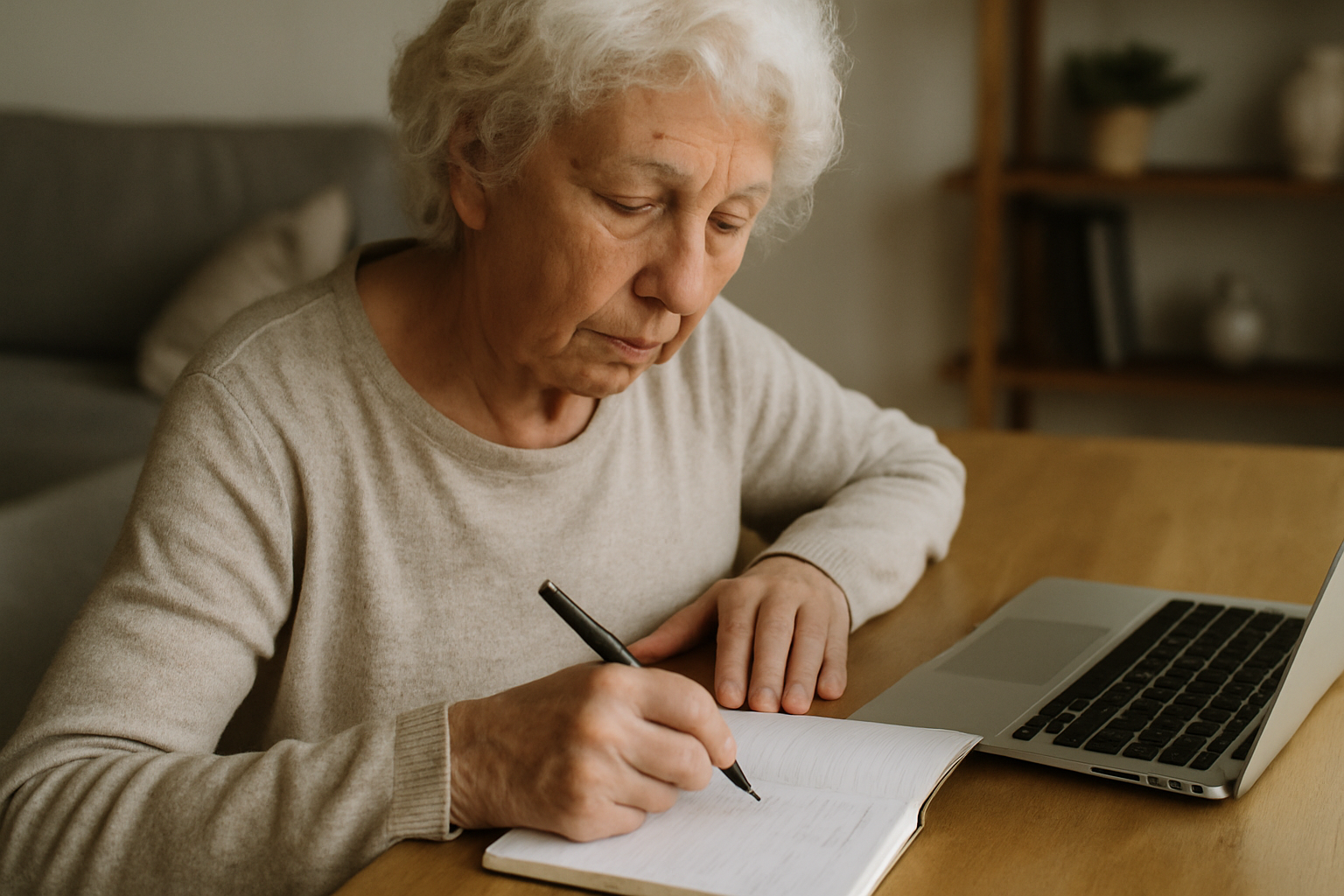
My grandmother kept a small, worn-out photo in her jewelry box. It wasn't of a person, but of a television set—a clunky Philco with a tiny, round screen. Whenever I'd ask about it, her eyes would light up. She wouldn't just say, 'That was our first TV.' She'd tell me about the whole neighborhood crowding into their living room to watch Milton Berle, the smell of her mother's popcorn, the static, and the sheer magic of a picture moving in a box.
That story wasn't a historical fact; it was a feeling. It was her voice, the pauses, the specific details that made it real. When she passed away, I realized the photo was just a prompt. The real treasure was the story she told, a story that lived only in her memory and, thankfully, now in mine.
So many of us want to preserve these stories, but we often frame it as a task we have to do—interviewing, recording, transcribing. But what if we shifted the focus? What if we empowered our parents and grandparents to become the authors of their own legacy, giving them the tools and confidence to record their own stories in their own time?
The short answer
Seniors can record their life story by using simple tools like a smartphone's voice memo app, writing in a journal, or using a dedicated app like Memory Murals. The key is to start small, choose a comfortable method, and focus on specific memories rather than trying to tell their entire life story at once. Using gentle prompts about childhood, major life events, and personal values can make the process feel manageable and enjoyable, creating a priceless record in their own voice for their family.
The Power of a Personal Narrative
There's a profound difference between a story about someone and a story told by them. A biographer can list dates, jobs, and addresses. But only your mother can tell you how the salt air felt on her skin the first time she saw the ocean. Only your grandfather can replicate the exact, booming laugh he shared with his army buddies.
When a senior records their own story, they preserve the most essential part of the memory: their perspective. The nuances of their voice—the cadence, the emotion, the specific words they choose—are a form of DNA. This is the stuff that future generations will cling to. It's how a great-grandchild who never met them can still, in a way, know them.
More Than Just Facts
A birth certificate tells you where someone was born. A recording of their voice telling you about their childhood home tells you what it felt like. The goal isn't just to archive data; it's to preserve the feeling, the personality, and the unique perspective that only they can provide.
Simple Methods for Self-Recording
The best tool is the one they will actually use. The goal is to reduce friction and make the process feel as natural as talking to a friend. For most seniors, this means avoiding complex software or equipment. The options generally fall into two camps: audio or written.
Audio Recording is often the most accessible path. It bypasses any physical difficulty with writing or typing and directly captures the warmth of their voice. We have a whole guide on the specifics of recording grandparents' stories that goes deeper into this, but the simplest start is the phone in their pocket.
Writing or Typing is perfect for those who have always been journalers or letter writers. It allows for more reflection and editing, and some people are simply more comfortable expressing themselves on the page. It can be a beautiful, meditative practice.
Here’s a look at the trade-offs:
Audio Recording
Captures the unique sound of their voice, including laughter and emotion. It's often easier for those who find typing or writing difficult.
Audio Recording
Can be time-consuming to transcribe or search through. Background noise can sometimes be an issue if not recorded carefully.
Writing or Typing
Allows for more editing and refinement. The final product is easily searchable and can be shared as text or printed in a book.
Writing or Typing
Loses the emotional nuance of the spoken word. Can be physically challenging for some seniors and may feel more like a chore.
A Gentle Process for Capturing Memories
'Tell me your life story' is perhaps the most intimidating request you can make. It’s overwhelming. The secret is to break it down into tiny, manageable pieces. The process itself should be a source of joy, not stress.
A Four-Step Approach to Self-Recording
Set the Scene
Find a quiet, comfortable spot with good lighting and minimal distractions. Make it a regular, enjoyable ritual, perhaps with a cup of tea. The environment should feel safe and relaxed, not like an interview.
Choose a Single Memory
Don't try to tackle 'your life.' Instead, pick one small thing. Use a prompt like, 'Tell me about your first car,' or 'Describe the kitchen in the house you grew up in.' Starting small builds momentum.
Just Start Talking (or Writing)
Hit record and just begin. Don't worry about perfection, grammar, or a perfect timeline. The goal is to capture the raw memory. Ramble. Go on tangents. The most beautiful details are often found there.
Save and Label Immediately
As soon as you're done, save the file with a clear name (e.g., 'Mom - Story of First Car - June 16 2026.mp3'). This simple habit is crucial for organizing your family photos and stories and prevents a digital shoebox of mystery files later.
Beyond the Obvious Questions
The best stories often hide behind unexpected doors. Instead of just asking about major life events, try prompts that trigger sensory details and forgotten feelings. For a more exhaustive list, you might find our guide on questions to ask your grandparents helpful, but here are a few creative categories to get started.
Sensory Memories
The 'Firsts'
Objects and Places
Values and Lessons
From Recordings to a Lasting Legacy
Once you have these precious recordings, the next step is to preserve them in a way that’s private, permanent, and accessible to the right people. A folder of audio files on a desktop is a good start, but it's fragile and lacks context.
This is the whole reason we built Memory Murals. It’s a single, secure home for these stories, where audio clips can live alongside photos and written memories, creating a rich tapestry of a life. You can attach a recording of your dad telling the story of his first car directly to a photo of that car. You can tag family members, build a visual timeline, and ensure the context is never lost.
It’s designed to be simple enough for anyone to use, turning a collection of files into a living, breathing archive. If you're looking for a private, dedicated space for this important work, you can start building your family's Legacy on Memory Murals today.
The goal isn't to create a perfect, polished documentary. It's to capture the essence of a person in their own words. The hesitation before a difficult memory, the chuckle when recalling a funny moment—these are the textures of a life well-lived. By empowering the seniors in our lives to tell their own story, we give them a final, beautiful gift: the chance to define their own legacy. And we give ourselves, and the generations to come, the gift of hearing their voice long after they're gone.
Get 50 questions to ask your parents — before the stories are gone
The exact prompts families use to draw out the stories nobody ever wrote down. Free, straight to your inbox.
No spam. Unsubscribe anytime.
Frequently asked questions
What is the easiest way for a senior to record their life story?
The easiest way for a senior to record their story is by using a tool they're already comfortable with. For many, this is the voice memo or recorder app on their smartphone. It's free, simple to operate, and captures the priceless quality of their voice. Starting with short, five-minute recordings on a single topic, like a favorite childhood memory, makes the process feel approachable and less overwhelming than trying to document an entire life at once.
How can I help a parent who is hesitant to share their stories?
To help a hesitant parent, create a comfortable, low-pressure environment. Instead of a formal interview, bring it up casually during a shared activity. Start with positive, easy-to-recall memories, perhaps prompted by an old photograph. Ask questions that show genuine interest, like 'I've always wondered about...' rather than 'Tell me your life story.' Your patience and authentic curiosity will make them feel valued, not interrogated, which often encourages them to open up naturally.
What are the best apps for recording a senior's memories?
The best apps are often the simplest. A smartphone's built-in voice recorder is an excellent starting point because it's free and familiar. For a more organized approach, dedicated platforms like Memory Murals provide a private, secure space to save audio clips alongside photos and written notes. This helps connect the stories to visual aids and share them easily and safely with family members, creating a comprehensive digital legacy.
How long should a life story recording session be?
Keep recording sessions short and sweet, ideally between 30 and 60 minutes. This prevents both the storyteller and the listener from becoming fatigued. It's far more effective to have a series of focused, energetic conversations than one long, exhausting interview. Ending on a high note will make them look forward to the next session, turning memory-keeping into an enjoyable ritual rather than a chore.
What kind of questions should I ask a senior about their life?
Start with open-ended questions that spark specific memories rather than broad ones. Instead of 'What was your childhood like?', try 'What games did you play with your friends on your street?' Ask about sensory details: 'What's a smell that reminds you of your grandmother's house?' Inquire about firsts (first job, first car, first date) and major life events like school, marriage, and career. Focusing on concrete moments often unlocks richer, more detailed stories.
About the author
Patrick Moore, Founder of Memory Murals
Patrick Moore is the founder of Memory Murals. He built it after realizing how much of his own family's history had quietly slipped away — to help families preserve their stories, voices, and photos while they still can.
Related Stories
How-To Guides
You Have the Questions. Here's How to Actually Record the Answers.
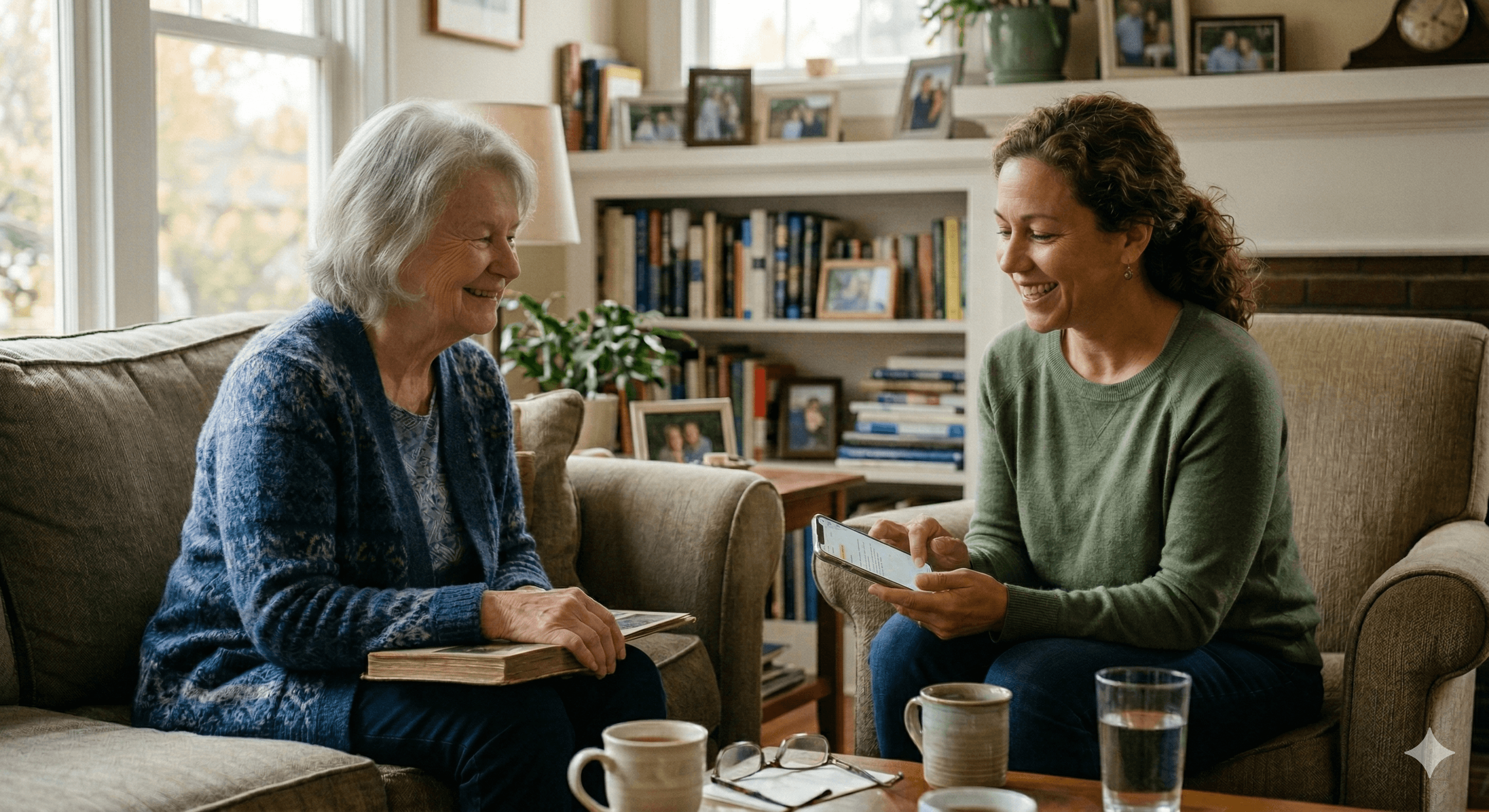
Every article gives you a list of questions to ask your grandparents. Almost none of them tell you what to do next. Here's the part nobody writes: how to actually capture the answers so they outlive the conversation.
Patrick Moore • April 11, 2026
Comparisons
The Best Storytelling Apps for Seniors in 2026 (Simple Enough for Grandma, Meaningful Enough to Matter)
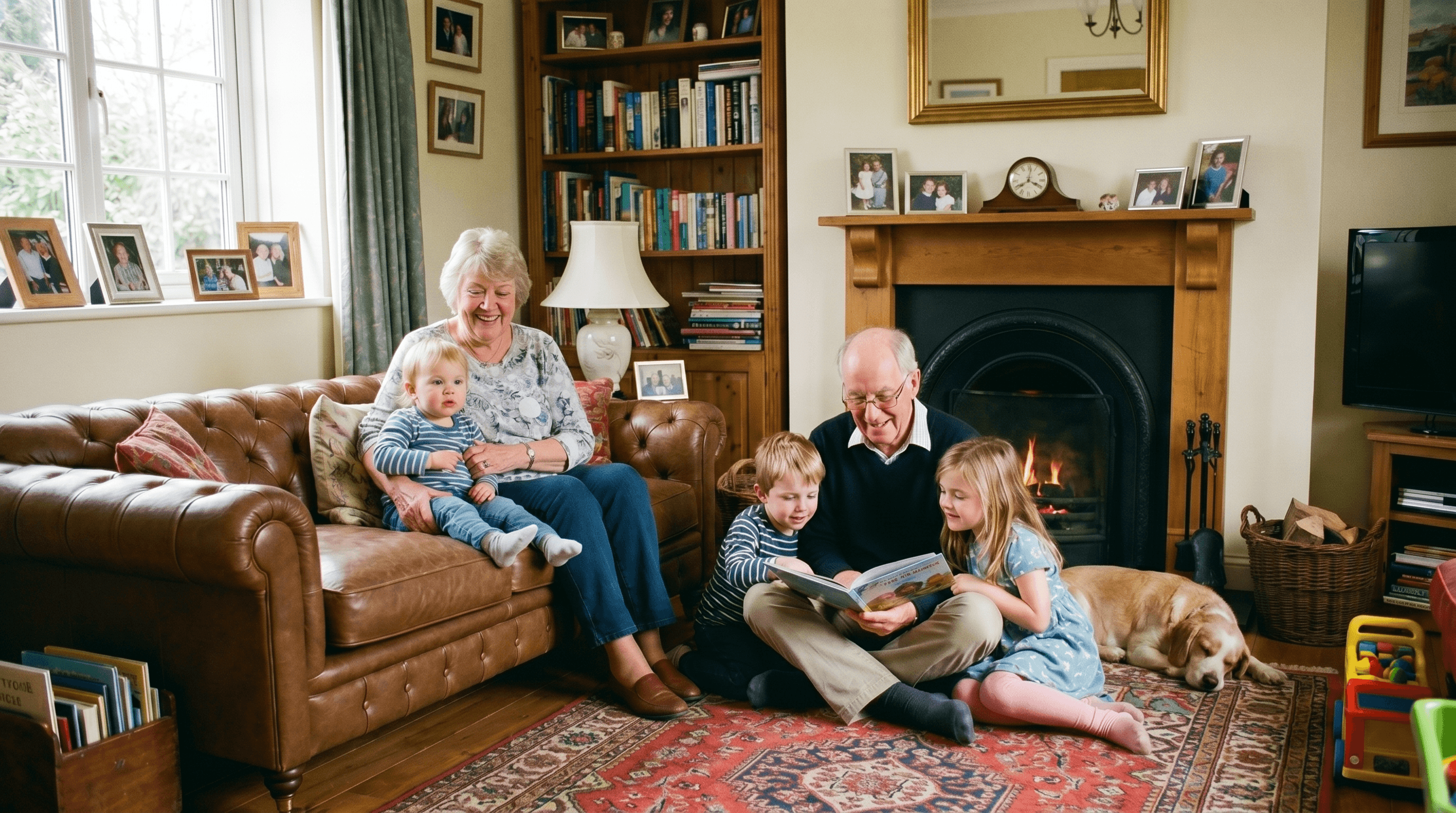
Most apps marketed to seniors are brain training games. What families actually need is a storytelling app — a place where Mom can talk about her childhood, Dad can record the story behind a photo, and the family doesn't lose what's inside their heads. Here are the apps that actually do the job.
Patrick Moore • April 7, 2026
How-To Guides
Creative Memory Prompts: Help Seniors Share Their Life Stories
Tired of the same old interview questions? This guide offers creative, gentle ways to help seniors share their stories using sensory prompts, music, photos, and shared activities—perfect for those who are reluctant or facing memory challenges.
The Memory Murals Team • June 28, 2026
Now give it somewhere to live.
The file you just saved outlasts nothing on its own. Put it where your family can still find it in thirty years.