How to Get Your Loved Ones to Share Their Family Stories
To unlock a family member's history, stop acting like a biographer and start acting like a key-holder. Here's how to move past one-word answers.
Patrick Moore, Founder • January 28, 2026

Last Thanksgiving, I sat across from my mom with my phone recorder running and asked her to tell me about growing up. She stared at the ceiling for about three seconds and said, "It was fine. Nothing special." That was it. The whole interview.
I know she grew up on a farm, survived a house fire, and moved across the country alone at 19. But "nothing special" was all I got.
If you've been there -- holding a recorder, ready to capture someone's entire life, only to hit a wall of shrugs and one-word answers -- you're not alone. Bruce Feiler wrote about this exact problem years ago, and it's still the single biggest barrier to preserving family history.
This piece focuses on breaking the one-word-answer wall. If you also need the broader method — who to interview first, the recording technique, what to do with the audio afterward — that lives in our master guide on recording family stories.
But here's what I've learned: those "I don't remember" moments aren't a sign of a boring past. They're a sign you're using the wrong key.
Beyond "Fine": Why Generic Answers Mask a Rich History
The problem isn't that your loved one's life was unremarkable. It's that memories don't sit in neat chronological folders. They're tangled up in sensory details -- smells, textures, sounds, specific objects. When you ask something broad like "What was your childhood like?", their brain basically freezes. It's like asking someone to describe an entire forest when they can only see individual trees.
And there's another layer. Many parents and grandparents downplay their own experiences. They filter their past through the lens of who they became later -- spouse, parent, employee -- rather than who they actually were. They think the "small stuff" isn't worth sharing. They want to stay on what I'd call the "parental pedestal," presenting a polished version of themselves. As we explore in "The Person You Never Knew: Why We Often Miss the True Story of Our Parents," this filtering means we miss the real, complex humans behind the roles.
But those "small details" are exactly what future generations will crave. Fifty years from now, your descendants won't just want to know their great-grandparent lived in Chicago. They'll want to know what the air smelled like on their first visit, the song playing on the radio during their first car ride, that specific feeling of triumph when they nailed something nobody thought they could.
These details are the texture of a life. To get at them, you've got to stop acting like a biographer demanding facts and start acting like a key-holder.
How Memories Actually Work
Understanding a little bit about memory science goes a long way here. Our brains don't record events like a video camera. Memories are reconstructed every time we recall them, shaped by our current emotions and perspective. Psychologist Frederic Bartlett spent his career studying this.
For storytelling purposes, there are three types of long-term memory that matter:
Episodic Memory
Semantic Memory
Procedural Memory
When someone says "I don't remember," the episodic memory usually isn't gone. The retrieval cues are just missing. Our brains lean heavily on context-dependent memory -- we recall things more easily when our current environment or emotional state matches the original one. That's why sensory details, objects, and emotions are such powerful tools. You're essentially giving the brain a roadmap back to stored experiences.
This lines up with reminiscence therapy techniques used with older adults, where structured recall has real cognitive and emotional benefits.
The Power of Specificity
Generic questions ("How was school?") get generic answers. Specific questions -- especially ones tied to senses, objects, or emotions -- force the brain to access particular pathways. You're not asking "What happened?" You're asking "What did it feel like when it happened?"
Technique 1: The "Sensory Trick" for Deep Recall
Memories are tangled up with our senses. If you want to get past "I don't remember," ask something that forces their brain to revisit a physical space. Oral historians use this all the time -- ground someone in a specific sensory moment, and the stories follow.
Skip "Tell me about your childhood." Try these instead:
The Kitchen Table
The Neighborhood
The Wardrobe
A specific smell, a distinct sound, a particular seat at a table -- these trigger the brain's associative memory. It's basically the Proust thing. One taste of a madeleine and suddenly he's remembering his entire childhood. Research confirms it -- olfactory cues are especially potent memory triggers, often bypassing conscious thought entirely.
Once their mind lands on the "loud dinner table," stories about a specific argument, a hilarious family joke, a beloved holiday meal -- they just start flowing. The sensory detail is the entry point. The narrative follows.
The Sensory Trick in Action
Pick a Specific Sense
Choose smell, sound, taste, touch, or a vivid visual from their past
Ask a Grounded Question
"What did the kitchen smell like when your mom cooked dinner?" or "What was the loudest sound in your childhood home?"
Let Associations Flow
The sensory cue triggers associative memory -- stories naturally emerge from the grounded detail
Follow the Thread
Use gentle follow-ups like "Tell me more" or "What happened next?" to deepen the narrative
Technique 2: Use the "Object Method"
When conversation stalls, stop looking at the person. Look at the room. Physical objects are incredible story-starters because they carry personal history and emotional weight. Researchers call this "photo-elicitation" when it involves photographs, but it works with anything tangible.
Pick up a trinket on their shelf. A worn book. A piece of jewelry they wear daily. A faded photograph. Don't ask about the object itself -- ask about its story: "Who gave this to you? Where did you find it? What's the first thing you think of when you touch it?"
That dusty ceramic bird on the shelf? It might be what they bought with their very first paycheck. Or the only thing they kept from their grandmother's house. Sherry Turkle wrote a whole book about this -- "Evocative Objects: Things We Think With" -- exploring how everyday items hold our memories, beliefs, and identities.
Everyday Items
Try kitchen utensils ("Tell me about the first meal you cooked with this pot"), gardening tools ("What's the most rewarding thing you ever grew?"), or books ("Did you read this at a pivotal time?").
Sentimental Objects
Try jewelry ("Who gave you this necklace?"), photographs ("What was happening before this photo was taken?"), or figurines ("Where did this come from and what does it mean to you?").
The "Object Method" shifts the pressure from direct interrogation to shared exploration. You're not grilling someone about their life. You're both looking at a thing and wondering about it together. It's a completely different energy.
And it naturally leads to stories you can preserve. If you're looking for ways to organize these discoveries, our roundup of the best memory-sharing apps for families is a good place to start.
Technique 3: The Power of "Selective Vulnerability"
Give a Little to Get a Lot
Parents and grandparents often hesitate to share the "real" stories -- the ones involving mistakes, regrets, or personal struggles -- because they want to maintain that pedestal. To get to the deeper truth, you often have to offer some of your own first.
This is basic reciprocity. When you share something personal and vulnerable, it creates a safe space and an unspoken invitation for the other person to do the same. Share a mistake you made recently. A fear you're navigating. A moment of self-doubt from your twenties. Then follow it up: "Did you ever feel this way when you were my age?"
This shifts everything. They go from "advice-giving parent" to relatable peer. When they realize you're not looking for a lecture but for honest connection, they open up. They might tell you about the time they failed a class, got their heart broken, felt completely lost, or made a career decision they regretted for years.
These are the stories that hold the most profound lessons. They're also the stories that forge the deepest bonds.
Research on self-disclosure backs this up -- sharing personal experiences builds intimacy and trust. The storytelling process becomes about mutual connection, not just information extraction.
Technique 4: Master Active Listening
Getting someone to start is half the battle. Keeping them going takes genuine listening, not just waiting for your turn to talk.
What to DO
Listen to understand, not to reply. Embrace silence -- pauses mean they're retrieving a memory. Use open-ended follow-ups like "What was that like?" and "Tell me more." Reflect and validate by summarizing what they shared.
What to AVOID
Don't interrupt, judge, or correct their story. Don't minimize with "that wasn't so bad." Don't shift the focus to yourself -- keep the spotlight on them.
Silence is your best friend here. I know it feels awkward. Let it be awkward. A five-second pause often means they're reaching for something deeper. If you jump in to fill it, you'll lose whatever was about to surface.
For more on the power of voice specifically, see "The Sound of Home: Why a Loved One's Voice is the Ultimate Time Machine".
Technique 5: Create the Right Environment
Where and when you ask matters more than you'd think. A busy family gathering with kids running around? Terrible setting. A formal "interview" with a microphone in their face? Also terrible.
Choose the Right Time
Pick a time when you're both relaxed with no distractions. A quiet afternoon or coffee date works better than a holiday dinner. Respect their energy -- shorter, more frequent sessions beat one marathon.
Optimize the Space
Familiar environments work best -- their living room, a favorite bench. Familiar places can actually trigger memory on their own. Keep background noise low. Offer a favorite drink.
You're trying to create a space where stories can unfold naturally. No pressure, no audience, no agenda.
Making it a Habit, Not a Project
The biggest mistake people make with family history is trying to do everything at once. Sitting down for a three-hour oral history session sounds great in theory. In practice, it's exhausting for everyone, and you'll hit "I don't remember" within twenty minutes.
In 2026, the best approach is "micro-storytelling" -- asking one focused, meaningful question every few days, during regular, casual interactions. Low pressure, high engagement. Memories surface naturally when they're not forced.
How to Implement Micro-Storytelling
Integrate, Don't Isolate
Weave story prompts into daily conversations: "That old song just played -- did you have a favorite when you were dating Dad?"
Use Digital Prompts
Set a weekly reminder to send a specific question, or use guided prompts within an app like Memory Murals.
Keep It Brief
Aim for 5-10 minute conversations, not hour-long interviews. Short bursts are less intimidating and often more productive.
Follow the Energy
If a story takes off, let it flow. If not, pivot and try another prompt next time. There's no failure here, only discovery.
Document Immediately
As soon as a story emerges, jot down keywords, record an audio note, or capture it quickly before details fade.
This makes storytelling a habit, not a project. And it's way more sustainable. For practical steps on organizing what you capture, "5 Gentle Ways to Start Your Family Archive" is a good starting point.
The Gift of Being Seen and Remembered
When you ask these questions, you're telling your loved one that their life is worth remembering. Memory Murals includes Legacy prompts and Audio Memories to help you capture and organize these stories. Start your free 7-day trial.
Frequently Asked Questions
What are the best ways to get my parents to open up about their past?
Ditch the broad questions. Instead of "What was childhood like?", ask about specific smells, sounds, or objects from their youth -- "What was the loudest sound at dinner when you were ten?" or "What did your favorite childhood blanket feel like?" Sensory cues are powerful triggers for episodic memory. You can also try sharing something vulnerable about yourself first to create a safe, reciprocal space. And don't try to get everything in one sitting -- short, regular conversations work much better than marathon interviews.
Why do older people sometimes struggle to remember specific stories?
They haven't "lost" their memories -- the retrieval pathways just need better cues. Memories are reconstructed each time they're recalled, and broad questions don't give the brain enough to latch onto. Stress, feeling put "on the spot," and normal aging can all make spontaneous recall harder. Physical objects and sensory-specific questions help bypass these difficulties by providing stronger, more direct access points.
What's the most effective way to preserve family stories for future generations?
Capture them in multiple formats. Audio recordings are incredibly powerful -- a loved one's voice carries emotional weight that text can't match. Supplement audio with written transcripts, photos, and videos. A dedicated app like Memory Murals -- with its Timeline, Audio Memories, and guided Legacy prompts -- keeps everything organized, searchable, and protected. For more on preservation methods, see "Digital vs Physical Memory Books".
How can sharing family stories benefit my family?
For the storyteller, it's a form of life review that enhances well-being and satisfaction in older adults. For listeners, research by Marshall Duke and Robyn Fivush shows that understanding family narratives boosts resilience, self-esteem, and sense of identity in kids. These shared stories act as connective tissue -- fostering belonging and purpose across generations.
Get 50 questions to ask your parents — before the stories are gone
The exact prompts families use to draw out the stories nobody ever wrote down. Free, straight to your inbox.
No spam. Unsubscribe anytime.
About the author
Patrick Moore, Founder of Memory Murals
Patrick Moore is the founder of Memory Murals. He built it after realizing how much of his own family's history had quietly slipped away — to help families preserve their stories, voices, and photos while they still can.
Related Stories

Lists & Roundups
25 Questions to Ask Your Mom Before It's Too Late (And Why Each One Matters)
Most of us think we know our mothers. But between the school pickups and the phone calls, there's an entire life you've never asked about. These 25 questions will change that.
Patrick Moore • March 31, 2026
How-To Guides
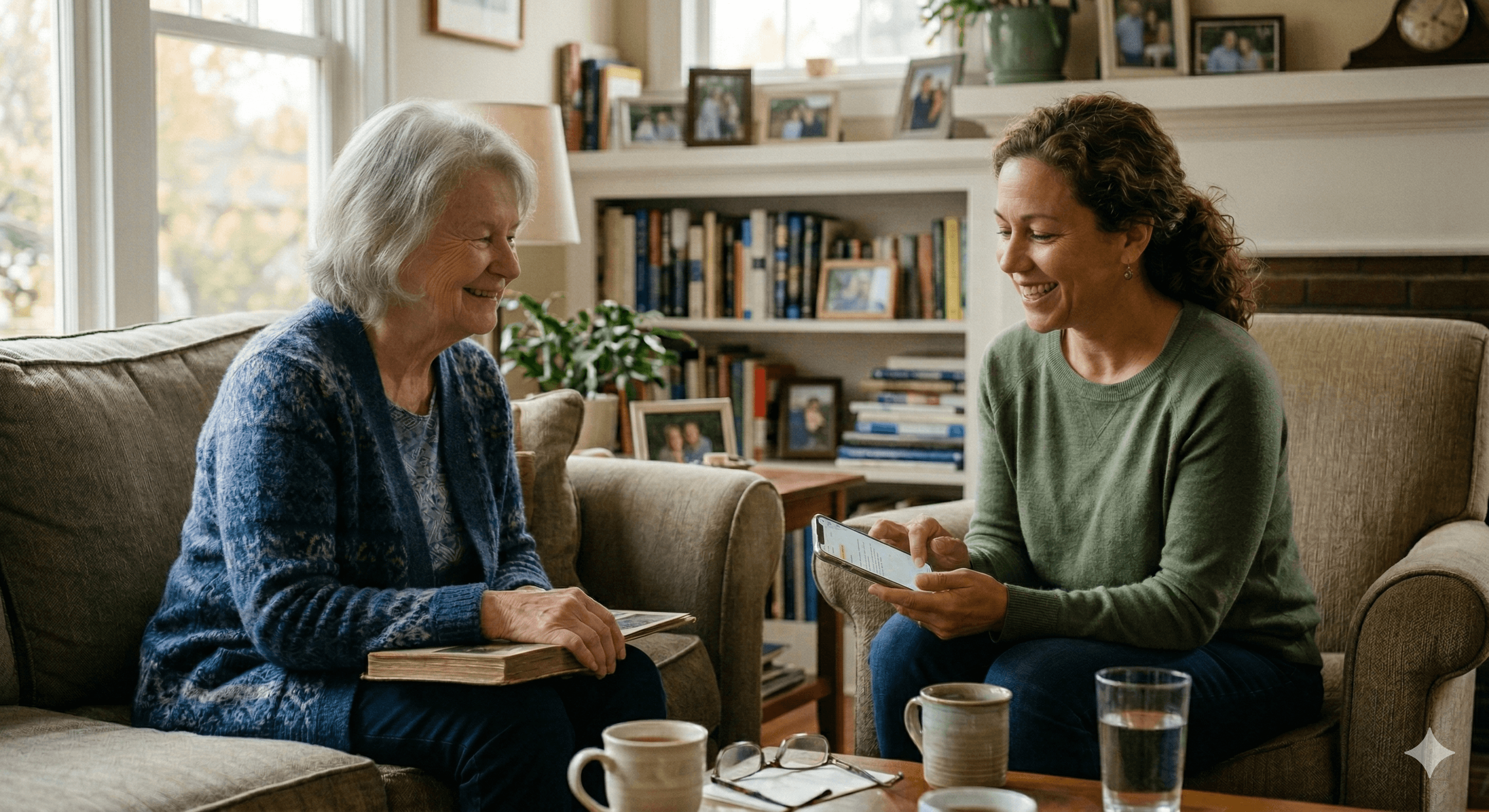
You Have the Questions. Here's How to Actually Record the Answers.
Every article gives you a list of questions to ask your grandparents. Almost none of them tell you what to do next. Here's the part nobody writes: how to actually capture the answers so they outlive the conversation.
Patrick Moore • April 11, 2026
How-To Guides
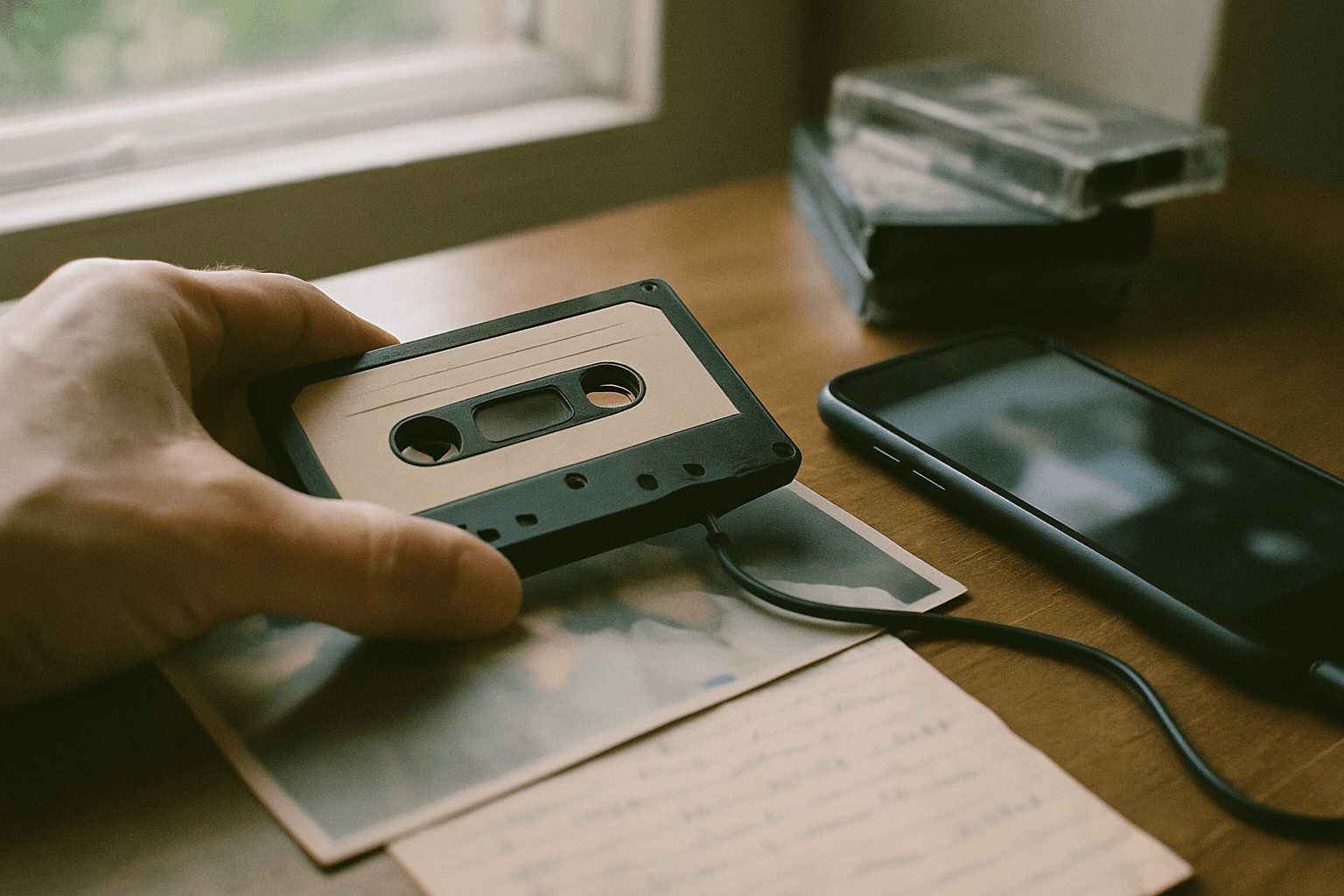
How to Digitize Old Audio Cassettes & Preserve Family Voices
That dusty box of cassettes holds more than magnetic tape; it holds voices, stories, and laughter you can't get back. This guide offers practical steps to digitize old audio cassettes, converting precious recordings into a lasting digital format you can share and cherish for generations.
Patrick Moore • July 4, 2026
Now give it somewhere to live.
The file you just saved outlasts nothing on its own. Put it where your family can still find it in thirty years.