Memory Gifts for Tech-Shy Seniors
Shopping for a parent who finds smartphones frustrating? This guide explores meaningful memory gifts for tech-shy seniors, focusing on options that are simple to use and don't require complex setups. Discover gentle ways to help them share their stories without the digital headache.
Patrick Moore, Founder • July 3, 2026
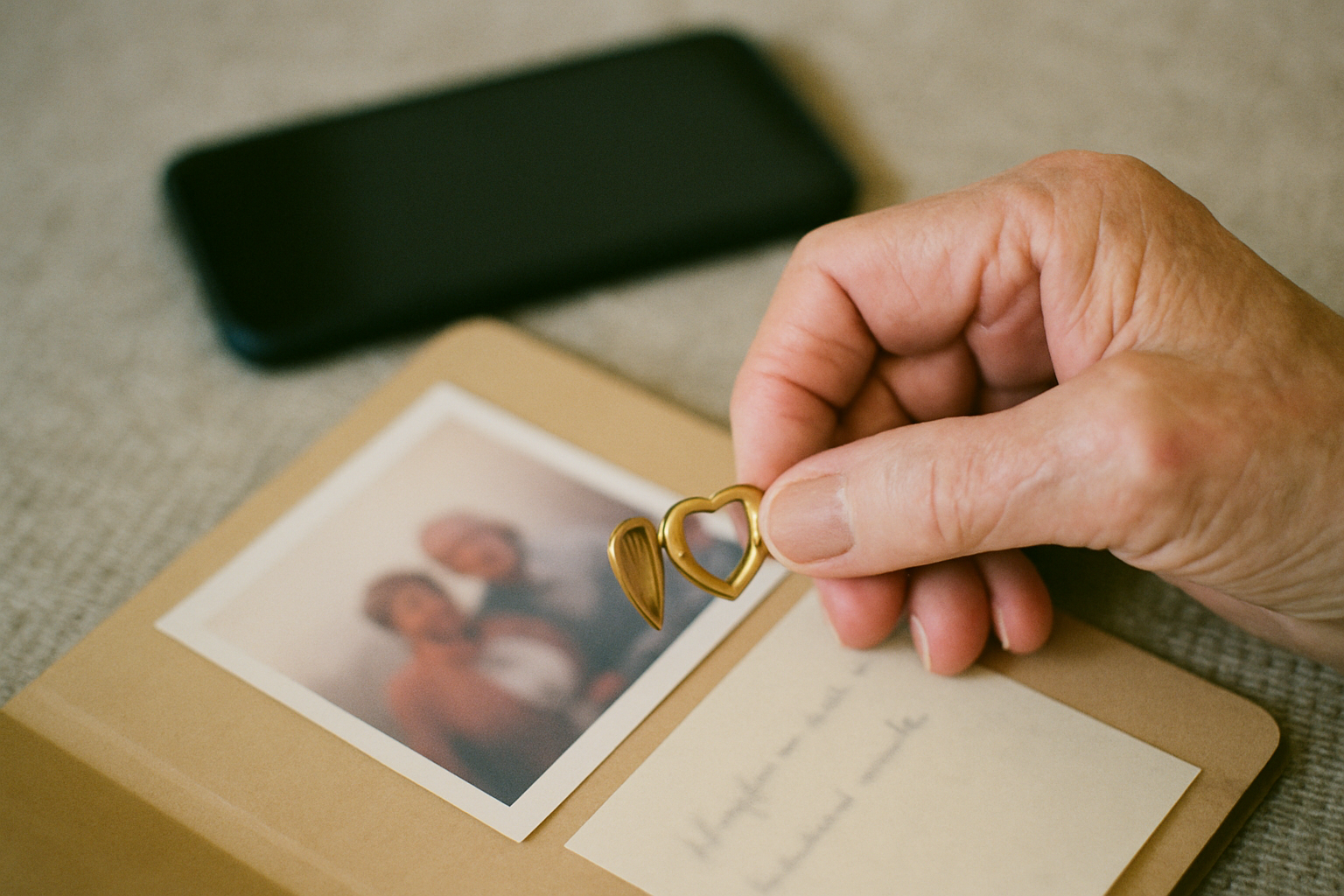
Picture your dad. He has that one story about his first car—a '68 Ford Falcon—that he tells at every holiday. You know the details by heart. But you also know there are a hundred other stories just beneath the surface, stories about his own father, his first job, the day he met your mom.
You want to save them. All of them. The problem is, his phone is a decade-old flip model, and the laptop you bought him last Christmas is still in the box. The technology that makes it easy for us to record and share feels like a locked door to him.
This is a challenge we hear about all the time. How do you bridge the gap between a lifetime of precious memories and the digital tools that can preserve them, especially for a loved one who finds modern tech more frustrating than helpful?
The answer isn't to force them to learn a new app. It's to find a gift that meets them where they are, removing the friction so all they have to do is what they do best: remember.
The short answer
The best memory gifts for tech-shy seniors eliminate the need for them to interact with complex technology. Consider options where you do the 'tech' part: digital photo frames you manage remotely, simple one-button audio recorders, or story-prompting services that call them on a regular phone. A collaborative platform like Memory Murals also works well, allowing you to manage the digital archive while they simply share their stories with you in person or over the phone.
It's Not About Resistance, It's About Friction
When we label a parent or grandparent "tech-shy" or "tech-illiterate," we often miss the point. It's rarely about a stubborn refusal to learn. It's about a lifetime of experience with things that are tangible, reliable, and straightforward. For many seniors, the digital world feels the opposite.
Think about the small hurdles that you clear every day without a second thought: a forgotten password reset, a two-factor authentication code, a tiny 'x' to close a popup ad, an interface that changed overnight after an update. For someone who didn't grow up with this, these aren't small hurdles; they are walls. The fear isn't about technology itself, but the feeling of being frustrated, confused, or even tricked by it.
The goal of a good memory gift is to absorb all that friction.
Password Overload
Remembering dozens of unique, complex passwords is a common source of digital anxiety.
Confusing Interfaces
Inconsistent menus, small icons, and non-intuitive gestures can make using an app a frustrating puzzle.
Privacy Concerns
Worries about scams and who can see their personal information are valid and can lead to avoidance.
Physical Barriers
Difficulty with touch screens due to arthritis or vision challenges can make smartphones physically hard to use.
Low-Tech and Assisted-Tech Options
If the goal is to remove the burden from your loved one, the best gifts are often those that require them to do almost nothing. The technology works for them, orchestrated by you or a service.
1. The Pre-Loaded Digital Photo Frame
This is a classic for a reason. Modern frames from companies like Aura or Skylight are brilliant because the recipient is a passive viewer. You, your siblings, and even the grandkids can add photos from an app on your own phones. A new picture of a soccer game or a birthday party just appears, like magic. It’s a window into the family’s daily life without requiring them to log in, scroll, or tap anything.
2. The Simple Audio Recorder
Sometimes the best tool is the simplest. A dedicated digital voice recorder with a single, large 'Record' button can feel much more approachable than a smartphone app with multiple screens. You can set it up, show them the one button they need to press, and let them talk whenever a memory strikes. You can then take the device periodically to transfer the audio files to a secure computer or cloud archive.
3. Interview-by-Phone Services
Services like Storyworth and others have built their model around this concept. They remove the screen entirely. The process typically involves the senior receiving a weekly email or phone call with a life story prompt. They simply reply to the email or talk on the phone, and the service transcribes their answer and compiles it. At the end of a year, the family often gets a printed book.
This approach is excellent for its simplicity, but it's worth considering the trade-offs.
Extremely Low-Friction
For the storyteller, it requires no new technology. They just use their email or telephone as they always have.
Structured Prompts
Weekly questions can uncover memories that might not have come up in casual conversation.
Can Feel Impersonal
Some users report that the automated calls or generic emails can feel less personal than a real conversation with a loved one.
Limited Media & Control
The final product is often text-focused, and you have less control over the raw audio or the digital archive itself. Check their current terms.
The 'We'll Do It Together' Approach
Another path is to choose a tool that's designed for collaboration, where you act as the family archivist. This is the philosophy we built into Memory Murals. The platform is robust, but your tech-shy parent doesn't need to interact with it at all. You are their interface.
You create the private, secure family space. You upload that scanned photo of the '68 Falcon. Then, you sit with your dad, open the app on your own phone or tablet, and say, “Dad, tell me about this car.” You tap record and capture his voice, his laughter, the details he remembers. The story is saved right there, forever linked to that photo.
In this model, the technology serves the conversation; it doesn't demand attention for itself. You can record in person, or even record a phone call. Your parent's only job is to share. You handle the one-time setup, the organization, and the preservation. It turns the act of archiving from a technical task into a shared experience.
You Are the Family Historian
With this approach, you become the curator. You manage the technology so your loved one can focus purely on the memories. This deepens your connection and allows for follow-up questions and genuine conversation that automated prompts can't replicate. It’s an act of love and service that creates a legacy together.
Your family’s stories deserve a safe place
Photos, voice recordings, and the stories behind them — private, ad-free, free to start.
Start preserving memories freeFree plan available • No credit card required
This method is perfect for capturing the stories behind old photos, recipes, or heirlooms. And because it's a shared space, the rest of the family can see and hear these stories, adding their own memories. You can even give Memory Murals as a gift to the whole family to contribute.
Practical Steps to Get Started
No matter which gift you choose, the presentation matters. You can’t just hand over a box and expect them to dive in. A gentle, thoughtful introduction can make all the difference.
A Gentle Approach to Recording Memories
Frame It as a Gift for You
Instead of saying, "I want to record your life story," try, "For my birthday this year, the only thing I really want is to spend some time hearing your stories about growing up. It would mean the world to me." This removes the pressure of performance.
Start with Physical Objects
Don't start with an abstract question. Pull out an old, unlabeled photo album or a box of letters. Tangible prompts make remembering feel natural and spontaneous. Our guide on how to get your mom to share stories has more tips on this.
Choose a Quiet, Comfortable Time
Don't try to do this during a chaotic holiday gathering. Set aside a specific, relaxed time. Make a cup of tea, sit at the kitchen table, and make it a special, one-on-one activity where you won't be interrupted.
Do a Low-Stakes Test Run
Show them how simple it is. Say, "I'm just going to turn on the recorder on my phone so I don't forget this." Record a short, simple story. Then play it back for them. Hearing their own voice can be a powerful and positive experience that demystifies the process. For more interview tips, see our guide on how to record grandparents' stories.
The best memory gift isn't really about the device or the subscription. It's about the time you spend together, the act of listening, and the message it sends: Your life matters. Your stories are worth saving. The technology is just the vessel we use to hold onto them.
Ultimately, the goal is to create a space where memories can be shared without fear or frustration. By choosing a gift that absorbs the technical complexity, you give something far more valuable than a gadget. You give them the freedom to remember, and you give your family a what-is-a-digital-legacy that will echo for generations. When you're ready to start building that legacy, we invite you to try Memory Murals.
Get 50 questions to ask your parents — before the stories are gone
The exact prompts families use to draw out the stories nobody ever wrote down. Free, straight to your inbox.
No spam. Unsubscribe anytime.
Frequently asked questions
What is the easiest way for a senior to record their life story?
The easiest method is one that removes the technology burden from them. This could be a simple, one-button audio recorder you provide, or a collaborative app like Memory Murals where a family member manages the account. Services that call them on the phone to record answers are also very low-friction. The key is to let them focus only on sharing their memories, while someone else handles the digital organization and preservation.
How can I save my grandparents' stories if they don't use computers?
You can act as their personal historian. Sit with them and use your own smartphone's voice memo app to record conversations. You can also use a dedicated digital audio recorder. Afterward, you can upload these audio files to a secure, private family archive. This way, they only need to talk, and you handle all the technology, ensuring their precious stories are safely stored and accessible to the family for years to come.
Are digital photo frames a good gift for someone who isn't tech-savvy?
Yes, they can be an excellent gift. Most modern digital frames are designed so the recipient doesn't need to do anything. Family members can upload new photos remotely via an app or a unique email address. The photos simply appear on the frame automatically. It provides a constant, fresh connection to family without requiring the grandparent to navigate any menus or software. Just be sure to set it up for them completely before gifting it.
What if my parent is hesitant to be recorded?
Start by framing it as a gift for you and the family, which can ease the pressure. Instead of a formal interview, begin with a natural conversation prompted by physical photos or heirlooms. Don't make the recording device the center of attention. Use a discreet smartphone app and explain that you just want to capture the sound of their voice telling these stories so you'll never forget it. A gentle, low-pressure approach is always best.
Is it better to record audio or video of family stories?
Audio is often better, especially for tech-shy individuals. A camera can feel intimidating and formal, making people self-conscious. An audio-only recording is less intrusive and allows the storyteller to relax and forget they're being recorded. The richness of their voice, cadence, and laughter can be incredibly powerful on its own. It captures the essence of the story without the pressure of being 'on camera,' leading to more natural and heartfelt sharing.
About the author
Patrick Moore, Founder of Memory Murals
Patrick Moore is the founder of Memory Murals. He built it after realizing how much of his own family's history had quietly slipped away — to help families preserve their stories, voices, and photos while they still can.
Related Stories
Lists & Roundups
Best Gift for Grandparents Who Have Everything: 15 Meaningful Ideas They'll Actually Love in 2026
Struggling to find the perfect gift for grandparents who seem to have it all? Discover 15 deeply meaningful ideas they'll cherish long after 2026.
Patrick Moore • March 27, 2026

How-To Guides
You Have the Questions. Here's How to Actually Record the Answers.
Every article gives you a list of questions to ask your grandparents. Almost none of them tell you what to do next. Here's the part nobody writes: how to actually capture the answers so they outlive the conversation.
Patrick Moore • April 11, 2026

How-To Guides
How to Ask Family Members for Old Photos (With Scripts to Copy)
The photos you want are in someone else's closet. Here's how to ask relatives for them so they actually say yes — who to ask first, what to ask for, word-for-word scripts, and what to do when someone won't let the originals leave the house.
Patrick Moore • September 11, 2026
Preserve your family's memories in one private place.
Start free in minutes. No credit card required.