
Sharing Baby's Milestones with Grandparents
That little phone in your pocket holds a universe of firsts: first smile, first grasp, first messy spoonful of peas. For grandparents living miles away, seeing these moments is everything. This guide offers practical, private ways to bridge the distance and ensure they feel deeply connected to your baby's journey.
Patrick Moore, Founder • June 29, 2026
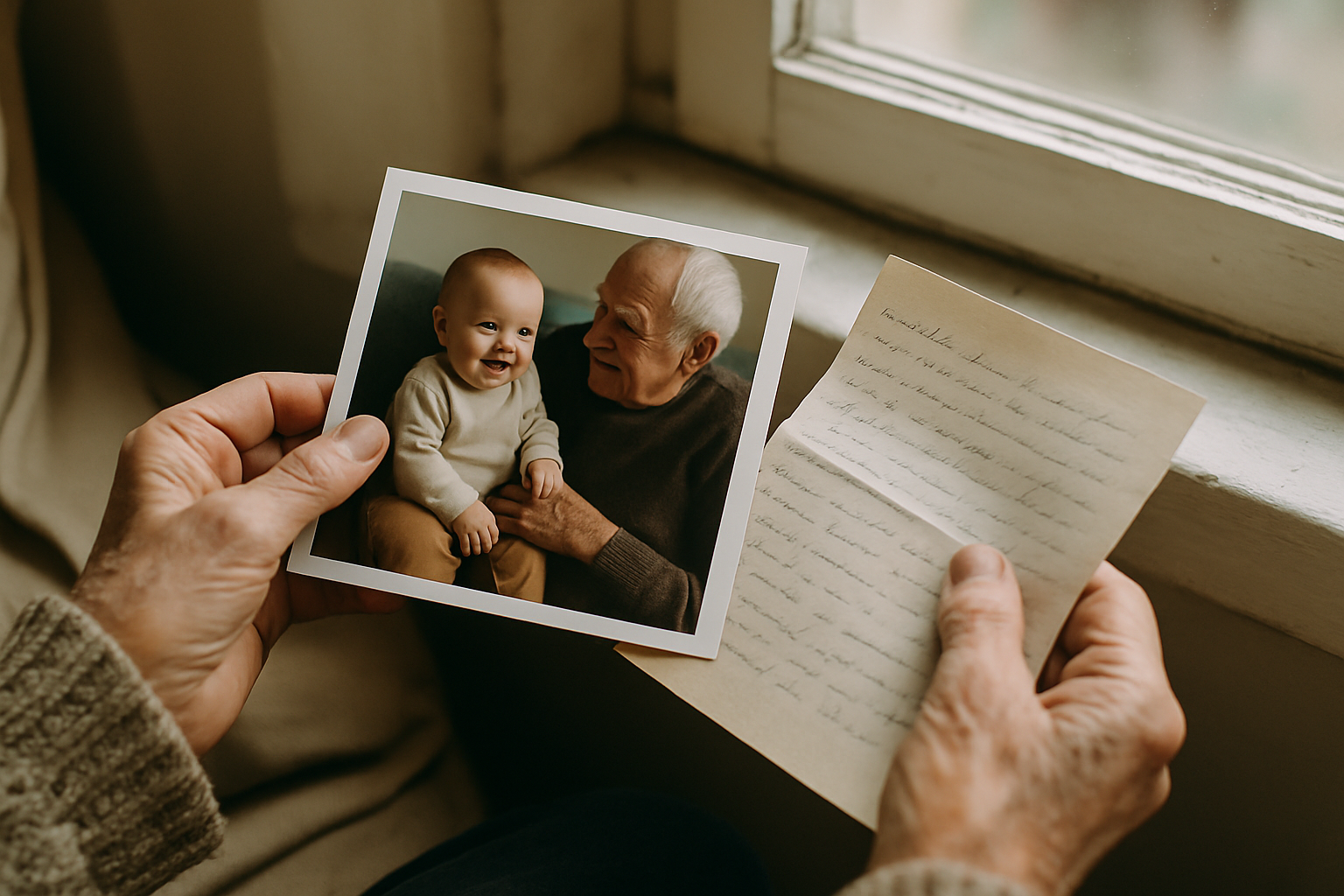
It’s 2 AM. The house is silent except for the soft hum of the refrigerator and the gentle breathing of the tiny person sleeping in the bassinet next to you. You’re scrolling through your phone, not out of boredom, but to relive the day. You stop on a photo: a blurry, perfect shot of a tiny hand wrapped around your finger.
A wave of love washes over you, so intense it almost hurts. And right behind it, another feeling: a quiet ache that Grandma and Grandpa aren't here to see this. They're hundreds of miles away, asleep in a different time zone. You could text it, but it’s the middle of the night. You could post it, but it feels too intimate for a public feed. So the moment stays on your phone, a beautiful secret.
This is the modern parenting paradox. We have the technology to capture everything, yet bridging the emotional distance to the people who matter most can feel surprisingly complicated. How do you share the daily magic, not just the big, posed events, in a way that feels meaningful, private, and real?
The short answer
The best way for sharing baby milestones with grandparents is through a private, dedicated family app. This creates a secure, organized space where photos, videos, and stories live together, free from social media's noise and privacy risks. It transforms passive photo viewing into an active, shared experience, ensuring grandparents feel truly included in every step of the journey and nothing gets lost in a chaotic group chat.
Why Texting and Social Media Fall Short
In the first flush of new parenthood, the default is often to create a group text or blast photos to a social media feed. It’s fast, it’s easy, but it quickly reveals its limitations.
The family group chat becomes a firehose of notifications, where a precious video of a first giggle is immediately buried by five people replying with emojis and someone else asking about weekend plans. Videos get compressed into pixelated blurs. Photos lose their context. Who has the energy to scroll back three weeks to find that one specific picture?
Public social media presents a different set of problems. You find yourself curating for a broad audience, posting the highlight reel instead of the beautifully mundane reality. There’s also the growing concern over a child's digital footprint and privacy. Every photo you post is data, subject to the platform’s ever-changing terms of service. And critically, algorithms decide who sees what. There's no guarantee that Grandma, who logs in once a week, will even be shown the photo of her grandchild's first time sitting up.
These methods deliver images, but they often fail to deliver connection.
A Private, Dedicated Space
This is why so many families are turning to private, dedicated platforms. Think of it as a digital nursery—a quiet, safe, and inviting room where only the people you choose can gather. It’s a space built for connection, not for clicks.
Here’s a look at the trade-offs:
Public Social Media
It's convenient because most family members already have an account. Sharing is quick and requires no new apps or logins for your audience. It's a simple way to update a large number of people at once.
Public Social Media
You sacrifice privacy, creating a digital footprint for your child without their consent. Key moments can be missed due to algorithmic feeds, and the space is filled with ads and other distractions, diluting the experience.
Private Sharing Apps
They offer a secure, ad-free environment focused solely on your family. You have complete control over who sees your content. Milestones are often organized chronologically, creating a beautiful, easy-to-navigate story of your child's growth.
Private Sharing Apps
It can require getting grandparents and other relatives to download and learn a new app, which can sometimes be a hurdle. Some services also have subscription fees or storage limitations.
The landscape of best private family photo sharing apps is broad. Some, like Tinybeans, function like a digital baby journal. Others focus on creating physical products like photo books. The key is to find one that feels right for your family—a platform where the technology fades into the background, leaving only the connection.
Weaving a Richer Story
Once you have your private space, you can move beyond just posting photos. A child’s first year is a sensory explosion, and the more senses you can engage for faraway grandparents, the more real it will feel. Milestones are more than a checklist — though if you'd like the checklist too, our free baby milestone tracker covers the classic firsts — they're the texture of a life just beginning.
Think about capturing:
- The Sounds: A 30-second audio clip can be incredibly powerful. The sound of a baby's coo, a new babble, or even a contented sigh is a treasure. Learning how to record your baby's first words and sounds is a gift to your future self and your family.
- The Motion: A short video of wobbly first steps is a classic. But so is a video of them mesmerized by a ceiling fan, splashing in the bath, or discovering the texture of grass between their fingers.
- The Context: This is the most important part. A photo of a baby crying is just a photo. But a photo of a baby crying with the caption, "He just heard thunder for the first time and needs all the cuddles," is a story. Add the who, what, when, and why. This context is what transforms a simple picture into a shared memory.
Here’s a simple ritual to make it a habit:
A Simple Weekly Memory Ritual
Set a Time
Pick one 15-minute slot each week—maybe Sunday morning with a cup of coffee—to be your memory-sharing time. Consistency is key.
Curate the Moments
Don't just dump your entire camera roll. Choose 3-5 of the most meaningful photos or videos from the week. Curation makes each post feel more special and less overwhelming for grandparents.
Add the Story
For each photo or video, write one or two sentences of context. What was happening right before or after? What did it feel like? This is the narrative thread that ties everything together.
Ask a Question
End your caption with a simple question for the grandparents. "Doesn't he have Grandpa's smile?" or "Do you remember when I used to love peas this much?" This actively invites them into the conversation.
Making Grandparents Part of the Story
The ultimate goal is to make grandparents feel less like a distant audience and more like active participants. The right platform will not only let you share to them, but share with them.
Encourage them to leave comments and reactions. Their perspective is invaluable. When they comment, "Oh, your dad used to make that exact same face when he was concentrating," they are weaving the past into the present. They are helping your child know their grandparents and understand the deep family roots from which they've grown.
Invite Them to Contribute
Don't make it a one-way street. Create a space in your family archive for grandparents to share their own stories. Ask them to upload a photo of you as a baby, or to record a short story about what they were doing the day they found out they were going to be grandparents. This shared ownership creates a living, breathing history.
Bridging the distance isn’t about finding the perfect app or having the best camera. It’s about intention. It’s about taking a moment to add a story to a photo, to record a sound, to ask a question. It’s about building a bridge made of tiny, everyday moments that, together, can span any number of miles.
These small acts of sharing do more than just keep family updated. They build a rich, private archive of your child’s first years, told from multiple perspectives. It’s a story they will one day be able to look back on to see not only how much they were loved by you, but by a whole family that was cheering them on, every step of the way.
It’s the reason we built Memory Murals—to create a quiet, permanent home for these connections. You can start building your family's bridge today.
Get 50 questions to ask your parents — before the stories are gone
The exact prompts families use to draw out the stories nobody ever wrote down. Free, straight to your inbox.
No spam. Unsubscribe anytime.
Frequently asked questions
What is the best way to share baby pictures with grandparents?
The best way is often a private, dedicated family sharing app. Unlike public social media or chaotic group texts, these platforms create a secure, organized space. They allow you to share photos, videos, and stories with context, ensuring grandparents don't miss important moments. This focused environment fosters deeper connection without compromising your child's digital privacy, making it a comfortable space for the whole family to gather and celebrate milestones together.
How do I keep my baby's photos private when sharing online?
To keep your baby's photos private, avoid posting them on public social media profiles. Instead, use a service specifically designed for private sharing. Look for platforms that require an invitation to join your family's space and give you clear control over who can see and download content. Always review the app's privacy policy to understand how your data is used. Using a dedicated, secure app is the most reliable way to share moments only with the people you trust.
How can grandparents feel involved if they live far away?
Beyond just seeing photos, grandparents can feel involved when you actively invite their participation. Ask them questions in photo captions, like 'Does she have your eyes?' or 'Do you remember when I made this face?' Schedule regular, short video calls focused on the baby. You can also invite them to contribute their own memories and stories to a shared family archive, transforming them from spectators into active participants in building the family story.
Should I post my baby's milestones on social media?
Deciding whether to post your baby's milestones on social media is a personal choice with significant privacy implications. Public posts contribute to a child's digital footprint before they can consent. Algorithmic feeds also mean that key family members, like grandparents, might miss the post entirely. Many parents opt for private sharing solutions to ensure these precious moments are shared only with a trusted circle, protecting their child's privacy while guaranteeing the right people see every update.
What are some creative ways to share baby milestones besides photos?
Think beyond the picture. Record short audio clips of their first coos, giggles, or attempts at words. Take videos of them discovering their toes or trying a new food. You can also scan and share sentimental items like their hospital bracelet or the first drawing they scribble. Another meaningful idea is to pair a photo of your baby with a photo of a parent at the same age, creating a tangible link across generations that grandparents will adore.
About the author
Patrick Moore, Founder of Memory Murals
Patrick Moore is the founder of Memory Murals. He built it after realizing how much of his own family's history had quietly slipped away — to help families preserve their stories, voices, and photos while they still can.
Related Stories

Insights
Baby Milestones You'll Forget If You Don't Write Them Down
You'll remember the first steps. You won't remember the exact day they figured out how to clap. Here's why the small milestones matter most — and how to make sure they don't disappear.
Patrick Moore • April 17, 2026

How-To Guides
How to Organize Baby Photos on iPhone: A New Parent's Guide
The first few months with a new baby are a blur of joy, exhaustion, and a thousand photos a day. If your iPhone's camera roll has become a chaotic sea of nearly identical sleepy smiles, you're not alone. This guide offers a simple, sustainable system to bring order to the adorable chaos.
Patrick Moore • June 15, 2026
Lists & Roundups
Best Baby Memory Books for Capturing Your Child's First Years
From traditional scrapbooks to modern digital apps, choosing the right baby memory book can feel overwhelming. We explore the best options for new parents to capture those fleeting first-year milestones, helping you decide between the tactile charm of paper and the lasting security of a private digital archive.
Patrick Moore • September 19, 2026
The first year is the one you'll want back.
Record the voices, keep the photos that matter, and write down why you chose the name. Free to start.