
A Parent's Guide to Preserving Childhood Art
That ever-growing pile of your child's art is a treasure trove of memories, but it's also overwhelming. How do you decide what to keep and how to save it forever? This guide offers a practical, heartfelt approach to digitally preserving your child's artwork, ensuring these precious creations become a lasting part of your family's story.
Patrick Moore, Founder • July 4, 2026
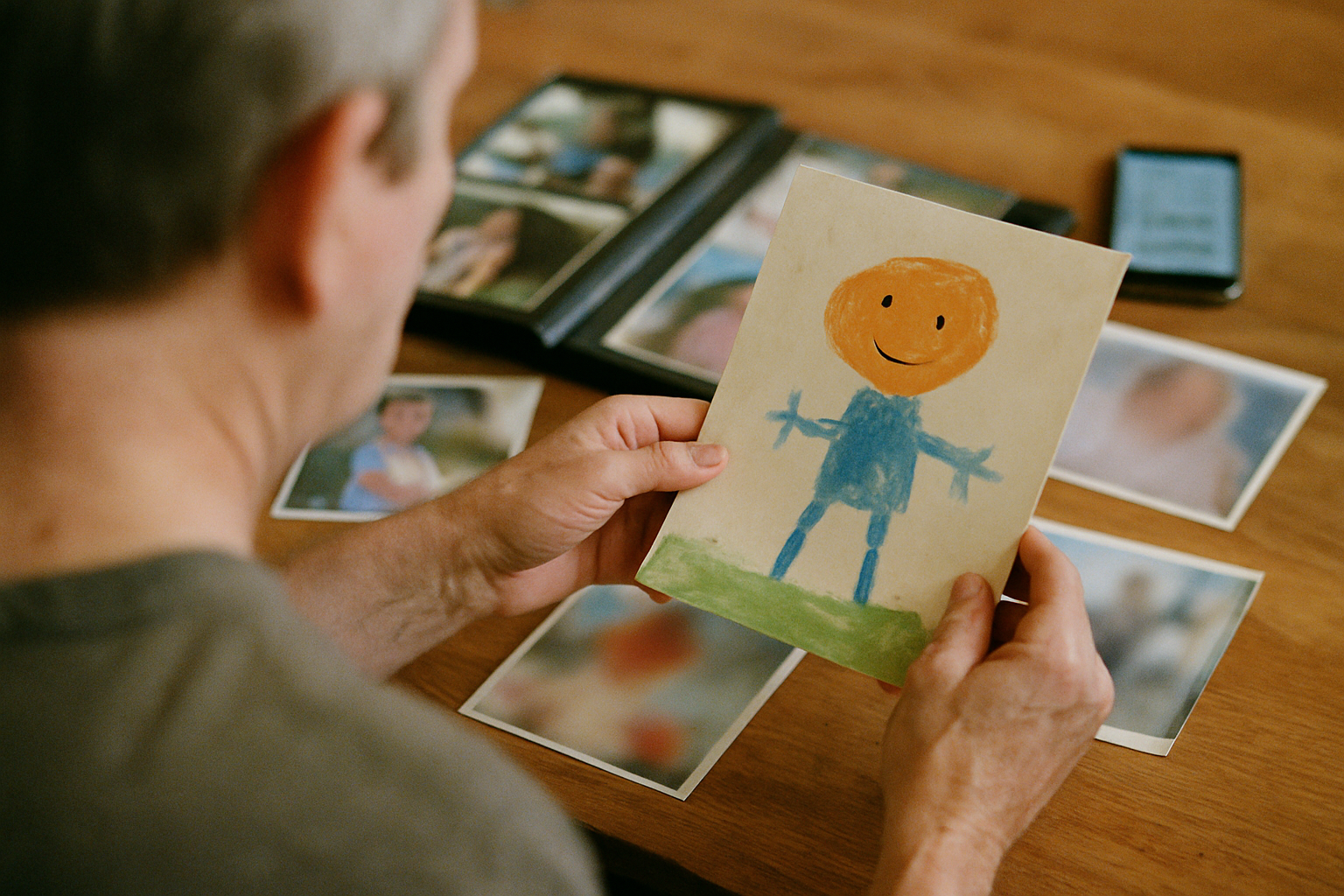
There’s a pile of paper somewhere in your home. Maybe it’s in a portfolio under the bed, a bin in the garage, or a teetering stack on the kitchen counter. It’s a collection of crayon scribbles, finger paintings, lopsided clay pinch pots, and construction-paper collages. Each piece is a testament to a fleeting moment of childhood creativity.
You love this collection. It’s proof of a life being lived, a mind expanding. But you also feel a quiet anxiety about it. The corners are starting to curl. The glitter is shedding. The sheer volume is overwhelming. What do you do with it all? How do you hold onto the magic without drowning in the physical artifacts?
This isn’t just about decluttering. It’s about stewardship. These aren’t just drawings; they are the very first stories your child ever told. They are visual records of their inner world—a world of purple suns, six-legged dogs, and families holding hands under a rainbow. Preserving them is preserving a unique and irreplaceable part of your family’s history.
The short answer
To preserve children's artwork, focus on selective digitization. First, curate the most meaningful pieces—the ones that tell a story or mark a milestone. Use a scanner or a high-quality smartphone scanning app for the best digital copy. Most importantly, add context by recording the date, the artist's age, and their description of the piece. Finally, store these digital files in a private, secure family archive designed for long-term preservation, not just on a social media feed or a generic cloud drive.
Choosing What to Keep
The first, and perhaps hardest, step is accepting that you cannot keep everything. And that’s okay. Your goal is not to create a complete archive of every doodle, but to curate a collection that tells the story of your child’s development and personality.
Trying to save it all is a recipe for overwhelm, which often leads to saving nothing. Instead, approach the task like a museum curator. You are selecting the most representative, significant, and story-rich pieces for the permanent collection. This transforms the chore of sorting into a meaningful act of remembrance. Look for the pieces that truly resonate.
The Milestones
Keep the firsts: the first time they drew a recognizable person, the first time they wrote their name (forwards or backwards), the first piece they were truly proud of.
The Storytellers
Some drawings have a whole narrative behind them. If your child can tell you a detailed story about the green blob fighting the blue triangle, that's a keeper.
The Uniquely 'Them'
Does your child have a recurring obsession? Dinosaurs? Robots? A specific shade of pink? Keep the pieces that best represent these distinct phases of their personality.
The Emotional Connection
Trust your gut. Some pieces will just make you smile or feel a pang of love. These are the ones that capture an essence, a feeling. Always keep those.
The How-To of Digitizing
Once you’ve selected your keepers, it’s time to create high-quality digital versions. This isn't just about snapping a quick photo; a little bit of effort here pays huge dividends in the quality of the final memory. The good news is you don't need a professional studio. You just need good light and the right tool for the job.
A Simple Digitizing Workflow
Prepare the Artwork
Smooth out any wrinkles or folds as best you can. For curled paper, try pressing it under a heavy book for a day. Use a soft brush to gently whisk away any dust, eraser shavings, or loose glitter.
Find Good, Even Light
Natural light is your best friend. Place the artwork near a window on an overcast day to get bright, diffuse light without harsh shadows. Avoid using your camera's flash, which creates glare and washes out colors.
Capture the Image
You have two main options: a flatbed scanner or your smartphone. Each has its advantages. A scanner provides the best quality, but a phone is fast and convenient. More on that below.
Record the Details Immediately
While the physical artwork is still in your hands, capture the story. The easiest way is to flip it over and jot down the child's name, age, the date, and a sentence about what it depicts. You'll add this to the digital file in the next phase.
Choosing between a scanner and a smartphone is a key decision. Here’s a breakdown to help you decide:
Using a Flatbed Scanner
A dedicated scanner will almost always give you a superior result. It provides perfectly even lighting, eliminates distortion and perspective issues, and captures incredibly high-resolution images with accurate colors. This is the best choice for truly special pieces you might want to print in a photo book or as a large-format gift down the road.
Using a Smartphone
The best camera is the one you have with you. Modern smartphone cameras, paired with apps like Google PhotoScan or the scanner built into the Notes app on iOS, do an amazing job. They are fast, convenient, and perfect for tackling a large pile of art in one session. Just be sure to hold your phone parallel to the artwork to avoid skewed angles.
For most parents, a mix is ideal. Use your phone for the bulk of the collection and pull out the scanner for the true masterpieces. The most important thing is simply to get it done. A good-enough digital copy is infinitely better than a masterpiece that gets lost or damaged. For more tips on the process, our guide on how to digitize old photos at home shares many of the same principles.
The Story is the Masterpiece
A digital image of a drawing is just data. What transforms it into a living memory is the story. Without context, a future grandchild might see a drawing of a red splotch and a blue line. But with context, they’ll know it’s “the time our dog, Rusty, chased a bluebird in the backyard when I was four.”
This is the most crucial step, and the one most often skipped. As you save each digital file, add the story. This is where a dedicated platform becomes essential. While you can try to manage this with file names and folders on a hard drive, it's cumbersome. At Memory Murals, we built a space where the story is just as important as the image. For every piece of art you upload, you can add:
- A title and date: So you know it's “Self-Portrait with Unicorn” from October 2026.
- A text caption: Transcribe your child's description of their work. Ask them, “Tell me about what you made.” Write down their exact words. These quotes are pure gold.
- An audio recording: Even better, use your phone to record them telling you the story in their own voice. Uploading that audio file alongside the image preserves not just the memory, but the sound of their little voice, a treasure you'll be deeply grateful for years from now.
This process of adding context is the core of easy memory-keeping for new parents. It shifts the focus from just storing files to actually preserving memories.
Beyond the Camera Roll
Your phone’s camera roll or a generic cloud storage drive might seem like an easy solution, but they are poor choices for a permanent family archive.
Social media is designed for fleeting engagement, not permanent preservation. Images are compressed, privacy is an ongoing concern, and the platform could disappear. A standard cloud drive is better, but it’s a digital filing cabinet, not a home for your stories. It lacks the features to easily combine photos, notes, and audio into a rich, browsable narrative that your family can enjoy together.
What to Look for in a Digital Archive
When choosing a permanent home for these memories, prioritize four things: privacy (who controls your data?), durability (is it built to last?), context (can you add stories easily?), and shareability (can you easily and privately share with grandparents?). A true archive is a secure sanctuary, not a public gallery.
This is why we built Memory Murals. It’s a private, secure space designed from the ground up to be a family’s permanent story archive. Everything you add is encrypted in transit (TLS) and at rest (AES-256). We provide the tools to weave images, text, and audio clips into a beautiful, chronological story that you can privately share with family. It’s a living library of your child’s earliest creative impulses, safe from data loss and the whims of social media algorithms.
By creating a dedicated home for these memories, you give them the significance they deserve. You’re signaling to your child, and to your future self, that their stories matter. If you're ready to start building that home, you can create your family's private archive today.
This project doesn't have to be completed in a weekend. Start with one small box. Put on some music, pour a cup of tea, and just enjoy the process of revisiting those early years. You’re not just clearing out a closet; you’re building a bridge. You're creating a way for the adult your child will become to visit the brilliant, imaginative, and wonderfully messy artist they once were.
Get 50 questions to ask your parents — before the stories are gone
The exact prompts families use to draw out the stories nobody ever wrote down. Free, straight to your inbox.
No spam. Unsubscribe anytime.
Frequently asked questions
What's the best way to digitally store children's art?
The best method is to use a high-resolution scanner or a scanner app on your phone to create a quality digital copy. Then, upload the image to a private, secure family archive service, not just a social media feed or general cloud drive. This ensures privacy, prevents compression, and allows you to add crucial context, like the story behind the art, in your child's own words. Look for a platform designed for long-term preservation.
How do I decide which of my kids' drawings to keep?
Since you can't keep everything, focus on curating a representative collection. Prioritize pieces that mark a developmental milestone (like their first drawing of a person), tell a specific story, or perfectly capture their unique personality at that age. Also, keep art that was a collaboration or a gift. The goal isn't quantity, but a meaningful snapshot of their creative journey.
Should I use a scanner or my phone to digitize artwork?
A flatbed scanner offers the highest quality, capturing true colors and fine details without distortion, making it ideal for special pieces you might want to print later. However, modern smartphone cameras and scanner apps are incredibly convenient and fast for capturing a large volume of art. For most parents, a good phone app is sufficient for creating a wonderful digital archive.
How can I organize digital copies of my child's artwork?
Create a simple, consistent system. A good starting point for file names is YYYY-MM_ChildsName_Description.jpg (e.g., 2026-07_Leo_FirstFamilyPortrait.jpg). On your computer, use folders for each child and then subfolders for each year. In a dedicated app like Memory Murals, you can use tags and albums to organize by child, year, and even themes like 'Holiday Crafts' or 'Dinosaur Phase.'
About the author
Patrick Moore, Founder of Memory Murals
Patrick Moore is the founder of Memory Murals. He built it after realizing how much of his own family's history had quietly slipped away — to help families preserve their stories, voices, and photos while they still can.
Related Stories
How-To Guides
Memory Keeping for New Parents: Simple Habits for Busy Families
The first year is a blur of sleepless nights and breathtaking firsts. You want to remember every smile and coo, but creating a detailed baby book feels impossible. This guide offers simple, low-effort habits to help you capture precious moments without adding to your overwhelm.
Patrick Moore • July 1, 2026
How-To Guides
How to Organize Baby Photos on iPhone: A New Parent's Guide
The first few months with a new baby are a blur of joy, exhaustion, and a thousand photos a day. If your iPhone's camera roll has become a chaotic sea of nearly identical sleepy smiles, you're not alone. This guide offers a simple, sustainable system to bring order to the adorable chaos.
Patrick Moore • June 15, 2026
How-To Guides
How to Create a Baby First Year Memory Capsule Your Child Will Cherish
The first year flies by in a blur of sleepless nights and incredible firsts. This guide helps you move beyond just snapping photos, showing you how to intentionally create a digital 'first year' memory capsule—a collection of stories, sounds, and moments your child can explore for years to come.
Patrick Moore • June 24, 2026
The first year is the one you'll want back.
Record the voices, keep the photos that matter, and write down why you chose the name. Free to start.