Don't Just Photograph: Record Their First Sounds
We obsess over photographing every baby milestone, but the most evocative memories are often sounds: the gurgles, babbles, and that first garbled 'dada.' This guide offers practical ways to capture and preserve the fleeting audio of your baby's first year, ensuring their tiny voice is never forgotten.
Patrick Moore, Founder • June 20, 2026
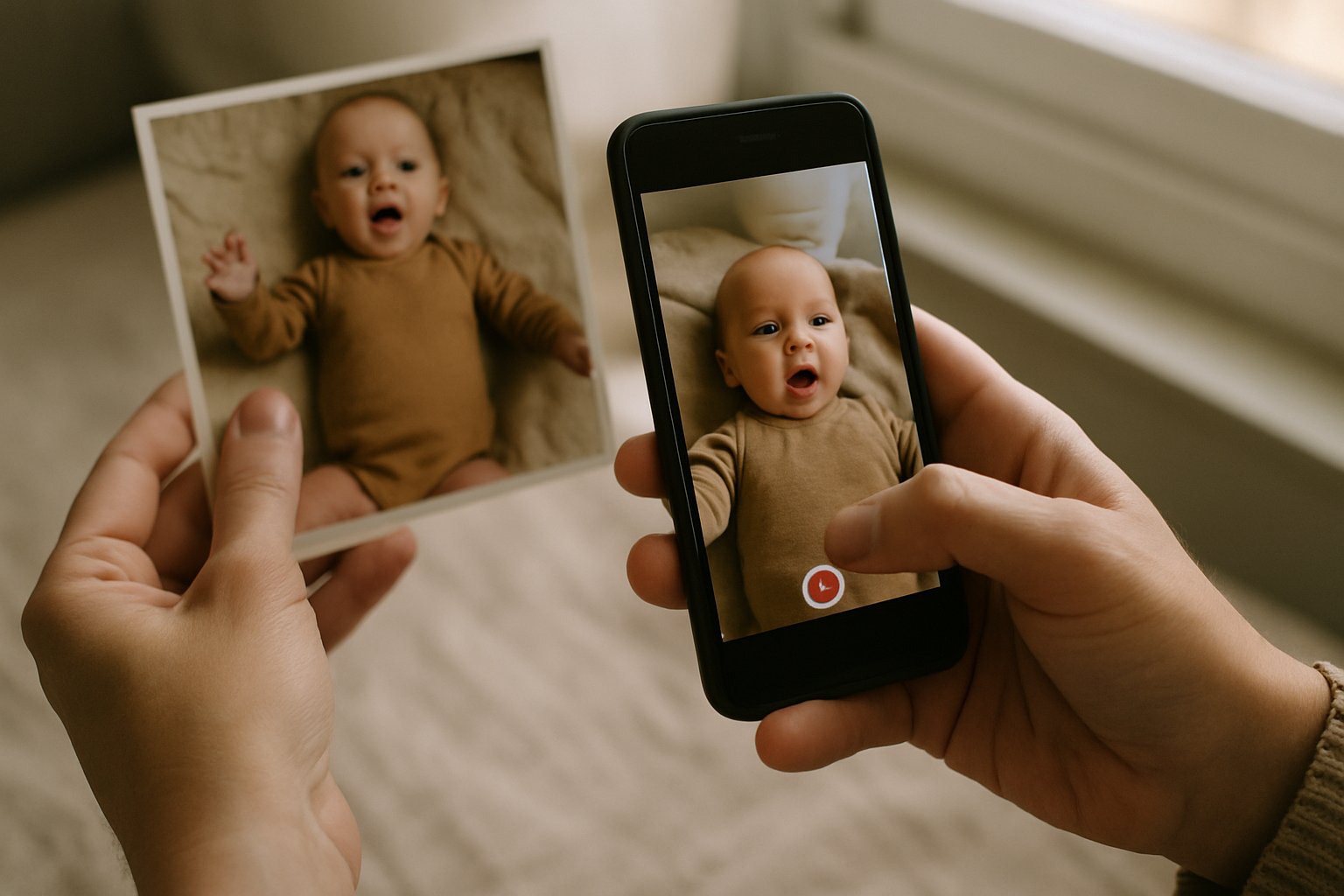
My son’s first word wasn’t “mama” or “dada.” It was “Dee-doh,” his toddler-fied name for our sweet, lumbering golden retriever, Guido. I have a photo of the moment: my son, strapped into his highchair, pointing a chubby, Cheerio-dusted finger at the dog, a look of intense concentration on his face. It’s a great photo. But it’s silent.
The photo doesn’t capture the sound. It doesn’t hold the high-pitched, declarative squeal of “Dee-doh!” or the way he’d say it five times in a row, each one more emphatic than the last. The photo is the evidence, but the audio is the feeling. That little sound file, buried in my phone’s voice memos, is a time machine. When I play it, I’m not just looking at a memory; I’m standing right back in the middle of it.
We are the most photographed generation in history, yet we risk raising a generation of silent children in our archives. We meticulously document what their first steps looked like, but what did their first words sound like? That’s a dimension of memory too precious to lose.
The short answer
To record your baby's first words, use your phone's voice memo app for quick, in-the-moment captures. For better quality and long-term organization, use a dedicated app where you can link audio to photos and notes. The key is to be ready, record short clips frequently (not just the milestones!), narrate them with a whispered date for context, and immediately back them up to a secure, private family archive. Consistency is more important than perfection.
The Sound of a Memory
There’s a strange phenomenon many of us experience: the more photos we take, the less we sometimes remember the actual event. It's as if we outsource the act of remembering to our camera roll. This photographic paradox means we end up with thousands of images but a fading sense of the lived experience.
Audio cuts right through that. Sound has a way of reaching the emotional core more directly than a still image can. You know this instinctively. A photo of your baby laughing is sweet. But a recording of their hiccup-filled, full-body giggle? That’s a visceral, transportive experience. A picture of them crying is one thing; hearing the specific, heart-wrenching wail they had when they were six months old is another entirely.
These sounds are the texture of life. They are the background music to our family's story, and the lead vocals are your child's developing voice. Preserving them is just as vital as preserving the photos.
The Always-On Option: Your Phone's Voice Memo App
Let’s be realistic. The perfect moment won’t wait for you to set up a microphone. The best tool is the one you have in your pocket. For 99% of parents, that’s the native voice recording app on your smartphone.
It’s Always Ready
It’s fast, free, and already installed. You can open the app and be recording in under three seconds, which is crucial for capturing a fleeting babble or a surprise first word. There is zero friction.
It’s a Digital Junk Drawer
Your recording of “dada” will live between a reminder to buy milk and a garbled note from a work meeting. These apps offer no organization, no context, and no easy way to connect the audio to a photo or a story. They're a capture tool, not an archive.
Dedicated Audio & Memory Apps
For a more intentional, long-term solution, you’ll want to move beyond the simple voice recorder. The options generally fall into two categories, each with a different philosophy on how memories should be saved.
Audio-Only Journal Apps
These apps are designed to be digital audio diaries. They are great for creating a clean, chronological log of recordings. The focus is purely on the sound. However, they often lack the ability to integrate photos or written stories, leaving the audio disconnected from the visual context of your life.
Integrated Memory Archives
This is the approach we've taken with Memory Murals. We believe audio is a powerful part of a memory, but not the whole thing. In an integrated archive, you can upload an audio clip and attach it to the photos from that day, write a short story about what was happening, and tag it with the date and location. The sound becomes a layer in a rich, multi-sensory memory, not just a floating file.
How to Actually Capture Their Voice
Having the right tool is only half the battle. Developing a simple habit is what ensures you'll actually have these memories to look back on. Here’s a workflow that has worked for me and many other parents.
A Simple 5-Step Audio Capture Plan
Be Prepared
Don't bury your voice recorder app in a folder. Move it to your phone's home screen or dock. The goal is to minimize the time between hearing a precious sound and pressing record. Every second counts.
Record the 'Nothing' Moments
Don't just wait for a recognizable word. The real magic is in the evolution. Record the coos at two months, the gurgles at four, the consonant babbles at seven. These are the baby milestones you'll forget if you don't capture them. A 20-second clip every week creates an incredible audio timeline.
Keep It Short & Sweet
You're not producing a podcast. Short clips of 15-45 seconds are perfect. They are easier to manage, faster to upload, and more likely to be listened to in the future. Just capture the core sound or phrase.
Narrate for Future You
This is the most important tip. After your baby makes the sound, hold the phone up to your own mouth and whisper some context. "June 20th, 2026. That was Leo's first time saying 'book.' We're in his nursery before bed." This turns a mystery file into a priceless, dated artifact.
Organize and Backup Immediately
Do not let these clips languish on your phone. Once a week, make a habit of moving them off your device and into their permanent home, whether that's a cloud folder or a dedicated memory app. Label them clearly. A file named 2026-06-20_Leo_FirstWord_Book.mp3 is infinitely more useful than New Recording 74.m4a.
A Note on Quality
Don't stress about pristine audio. The goal is authenticity, not studio production. Simply reducing obvious background noise—like a TV, running faucet, or dishwasher—can make a huge difference. Get your phone reasonably close (a foot or two is fine) and that's it. A recording with a little bit of life happening in the background is far better than a missed moment because you were waiting for perfect silence.
Creating an Audio Timeline of Their Voice
The real prize isn't just capturing the first word. It's capturing the entire journey of their voice. It's the way they said “pasketti” instead of spaghetti for a solid year. It’s their first full sentence, their first knock-knock joke, the way they sang their ABCs slightly off-key.
Each of these recordings is a building block in your digital family archive. When you organize them chronologically, you create a timeline you can listen to. You can literally hear your child growing up. This is one of the most powerful forms of memory keeping I've ever experienced.
By attaching these audio clips to specific dates and photos in a dedicated archive, you're not just saving files; you're building a story. We designed Memory Murals with exactly this in mind, letting you weave audio into your family's timeline. You can start building your own audio archive today and ensure these sounds are safe and accessible for decades to come.
One day, your child will be a teenager, and their voice will have dropped or changed in ways you can no longer remember. You’ll sit with them, play a 20-second clip from long ago, and for a brief moment, the sound of that tiny voice will fill the room. You’ll both close your eyes and be right back there. And in that moment, you’ll be so incredibly glad you took a few seconds to press record.
Get 50 questions to ask your parents — before the stories are gone
The exact prompts families use to draw out the stories nobody ever wrote down. Free, straight to your inbox.
No spam. Unsubscribe anytime.
Frequently asked questions
What's the best app to record my baby's first words?
The best app is the one you have with you. Your phone's built-in voice memo app is perfect for quick, spontaneous captures. For long-term organization, consider a dedicated memory-keeping app like Memory Murals, which allows you to pair audio clips with photos and stories. This creates a richer context for the memory, rather than having standalone audio files that are easy to lose or forget. The key is choosing a system you'll consistently use.
How can I get a clear audio recording of my baby?
You don't need professional equipment. To get a clear recording, simply minimize background noise by turning off the TV, music, or loud appliances. Position your phone's microphone about a foot or two away from your baby. Speak softly yourself to avoid overpowering their sounds. Authenticity is more important than studio-perfect quality, so focus on capturing the moment rather than achieving perfect audio fidelity. A genuine giggle with some background noise is better than a missed moment.
How often should I record my baby's sounds?
Aim for short, frequent recordings rather than long, infrequent ones. Try capturing a 15-30 second clip every few days. This approach helps you document the subtle, rapid changes in their vocal development, from coos and gurgles to babbles and eventually words. Consistency is more valuable than quantity. It creates a beautiful audio timeline of their voice evolving, which is a treasure to listen back on. Don't just wait for milestone words.
Why is recording audio of my baby important?
While photos capture what your baby looked like, audio captures the essence of their personality and the sound of their developing voice. Hearing their specific giggle, cry, or the way they first tried to say a word brings a memory to life in a way a silent image cannot. These sounds are incredibly fleeting and change quickly. Preserving them creates a powerful, multi-sensory family archive that offers a much deeper connection to those early years when you revisit them later.
About the author
Patrick Moore, Founder of Memory Murals
Patrick Moore is the founder of Memory Murals. He built it after realizing how much of his own family's history had quietly slipped away — to help families preserve their stories, voices, and photos while they still can.
Related Stories

Insights
Baby Milestones You'll Forget If You Don't Write Them Down
You'll remember the first steps. You won't remember the exact day they figured out how to clap. Here's why the small milestones matter most — and how to make sure they don't disappear.
Patrick Moore • April 17, 2026
How-To Guides
How to Organize Baby Photos on iPhone: A New Parent's Guide
The first few months with a new baby are a blur of joy, exhaustion, and a thousand photos a day. If your iPhone's camera roll has become a chaotic sea of nearly identical sleepy smiles, you're not alone. This guide offers a simple, sustainable system to bring order to the adorable chaos.
Patrick Moore • June 15, 2026
How-To Guides
Preserving Your Childhood Art: A Guide for Parents and Grandparents
That ever-growing pile of your child's art is a treasure trove of memories, but it's also overwhelming. How do you decide what to keep and how to save it forever? This guide offers a practical, heartfelt approach to digitally preserving your child's artwork, ensuring these precious creations become a lasting part of your family's story.
Patrick Moore • July 4, 2026
The first year is the one you'll want back.
Record the voices, keep the photos that matter, and write down why you chose the name. Free to start.