Baby Milestones You'll Forget
You'll remember the first steps. You won't remember the exact day they figured out how to clap. Here's why the small milestones matter most — and how to make sure they don't disappear.
Patrick Moore, Founder • April 17, 2026
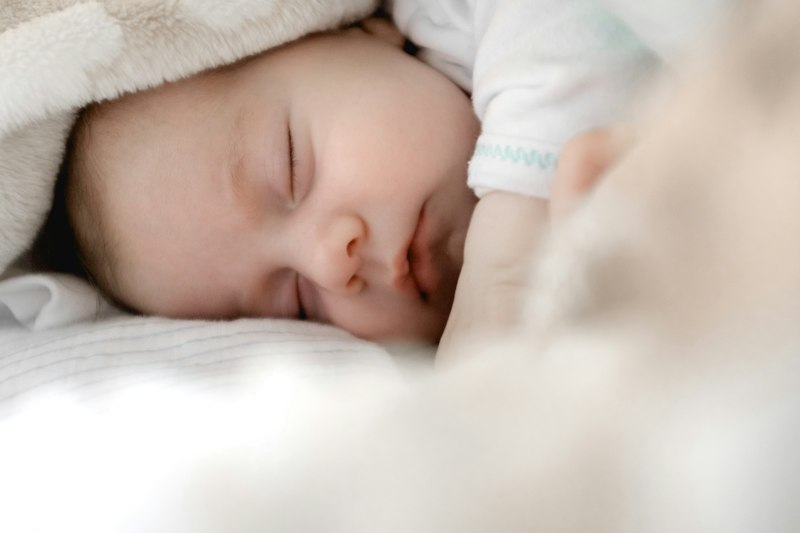
You'll remember the first steps. Everyone remembers the first steps. There was probably a video. Someone probably cried.
But do you remember the first time they clapped? Not when they did it on command — when they figured it out. When they were sitting in the high chair and something delighted them and their hands just... found each other. And the look on their face when they realized they made that sound.
Do you remember what week that was? What month?
Didn't think so. Neither do I.
The milestones nobody tracks
Pediatricians give you a list. First smile, first rollover, first word, first steps. You dutifully check them off at well-visits. Those are the headlines.
But the real milestones — the ones that make you stop in the middle of the kitchen and think oh, you're a person now — those aren't on anybody's list.
Like the first time they:
- Reached for you specifically (not just any adult — you)
- Laughed at something that was actually funny
- Waved bye-bye and meant it
- Fed themselves a single Cheerio after twenty minutes of trying
- Said a word you didn't teach them
- Pointed at something just to show you, not because they wanted it
- Fell asleep holding your finger
These are the moments that define the first year more than any CDC checklist. And they evaporate from memory faster than you'd believe.
Track what matters to you
Our Baby Milestone Tracker generates a personalized timeline based on your baby's birthday — but the milestones worth remembering aren't always the clinical ones. Use it as a starting point, then add the weird, wonderful ones that are uniquely yours.
Why we forget so fast
There's a reason parents of toddlers can't remember the baby phase clearly, even though it was only a year ago. It's called "infantile amnesia" — but for parents.
Sleep deprivation can make it harder to form and hold on to new memories. You're running on 4-hour stretches for months. Your brain is triaging: remember to feed the baby (critical), remember the first time she grabbed her toes (nice but not survival). Guess which one gets filed away and which one gets overwritten.
By month 8, months 2 through 5 are already blurring together. By the first birthday, the newborn phase feels like it happened to someone else. By the time they're three, you'll swear they were born walking.
Often
Forgotten
Many parents can't recall what month their baby hit major milestones within a couple of years.
A few years
Memory Fade
First-year details tend to become unreliable within a few years without documentation.
What actually works for remembering
Forget the baby book. Nobody finishes the baby book. It's sitting in a drawer right now with three pages filled in and a lock of hair taped to page seven.
What works is whatever you'll actually do. And the lowest-friction option is the one you already have in your hand: your phone.
Voice memos. When something happens — the first giggle, the weird new sound they're making, the moment they pulled up on the coffee table — open your phone and talk for 30 seconds. You don't need to write an essay. Just say "April 17th, she pulled up on the coffee table for the first time and looked absolutely terrified and then did it again."
That's it. That's a milestone preserved.
Quick photos with context. Not just the photo. Open your notes app and write one sentence: "First time at the pool. Screamed for two minutes, then refused to leave." In two years, the photo alone won't tell you that. The sentence will bring the whole day back.
A dedicated place. Scattered voice memos and notes work for a week. They don't work for a year. You need somewhere they all live together — searchable, organized, tagged with who was there and when it happened.
One place for all of it
Memory Murals was built for exactly this. Record a voice memo, snap a photo, and the AI transcribes and titles it automatically. Tag the family members who were there. Search for "first time at the pool" three years later and it's right there. Free to start.
The milestones that matter at 30
When your kid is grown and asks you to tell them about when they were little, they won't ask about the percentile charts. They'll ask:
- "What was my first word?"
- "Did I like baths?"
- "What was I afraid of?"
- "What did I do that made you laugh?"
- "What was I like as a baby?"
And you'll either have the answers — vivid, specific, maybe even in your own voice from that day — or you'll say "honestly, I don't really remember. It was so long ago."
Both are normal. But only one is a choice you make right now.
The milestones you track today are the stories you tell in 25 years. The ones you don't track are the ones that disappear — not dramatically, not all at once, just gradually, until one day you realize you can't quite remember the sound of their first laugh.
Write it down. Record it. Put it somewhere safe. Future you will be grateful.
Earlier in the journey
If you're still picking a name — or stuck between two — our Baby Name Generator helps you filter by meaning, culture, and style across 26+ origins. The story of why you chose the name is one of the first milestones worth preserving. And if the registry isn't built yet, consider baby registry ideas that aren't stuff — gifts that capture this year instead of cluttering it.
Get 50 questions to ask your parents — before the stories are gone
The exact prompts families use to draw out the stories nobody ever wrote down. Free, straight to your inbox.
No spam. Unsubscribe anytime.
About the author
Patrick Moore, Founder of Memory Murals
Patrick Moore is the founder of Memory Murals. He built it after realizing how much of his own family's history had quietly slipped away — to help families preserve their stories, voices, and photos while they still can.
Related Stories

Insights
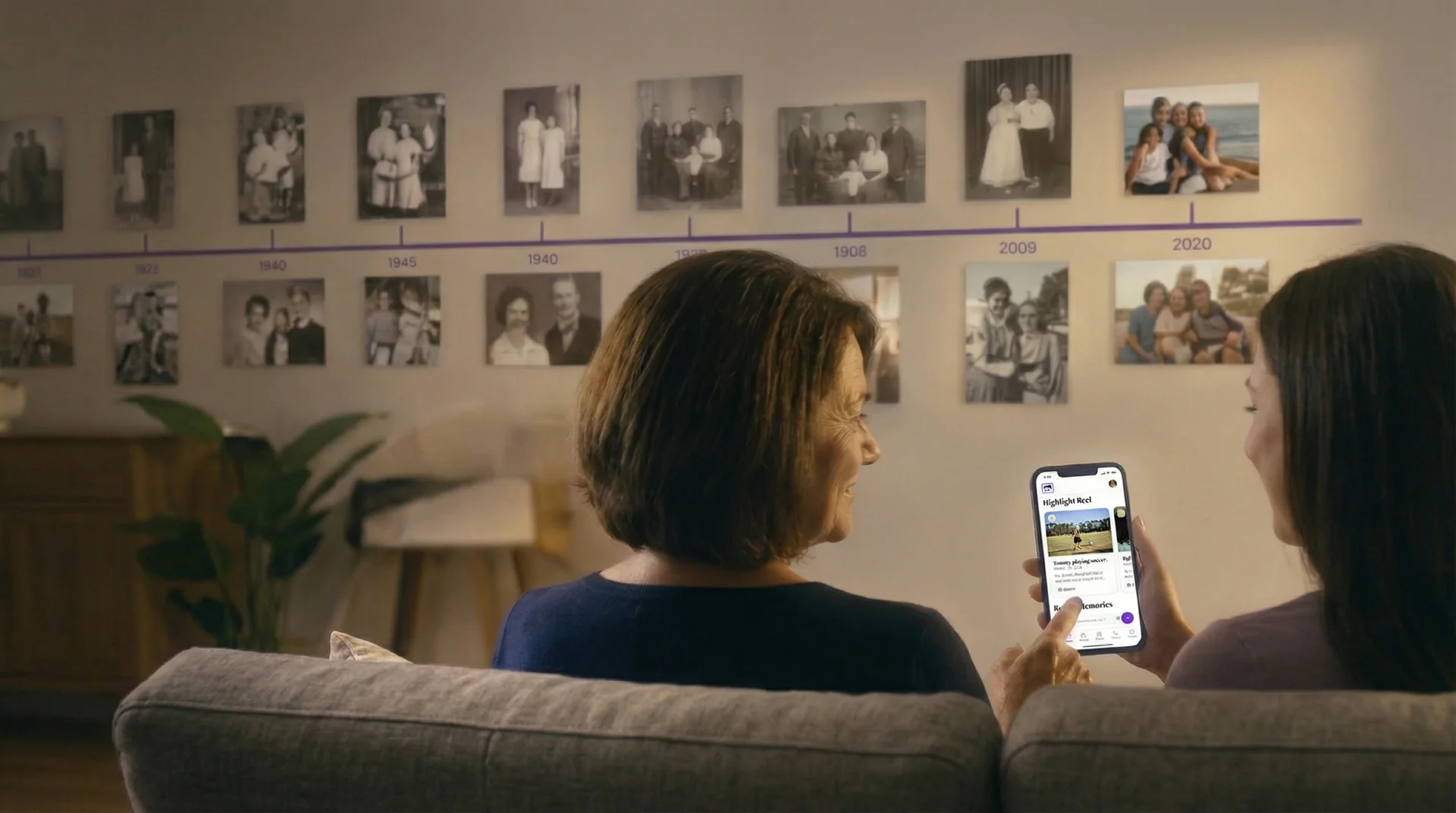
The Sound of Home: Why a Loved One's Voice is the Ultimate Time Machine
We obsess over HD video but overlook our most powerful connection: the human voice. Here's why recording your family's voices might be the most important thing you ever do.
Patrick Moore • January 20, 2026
Insights
The Stories You'll Never Hear Again: Why Every Unrecorded Day Is a Permanent Loss
Your family is losing stories every single day. Not to tragedy or disaster, but to the quiet, ordinary passage of time. Here's why the window is closing faster than you think.
The Memory Murals Team • March 29, 2026
Lists & Roundups
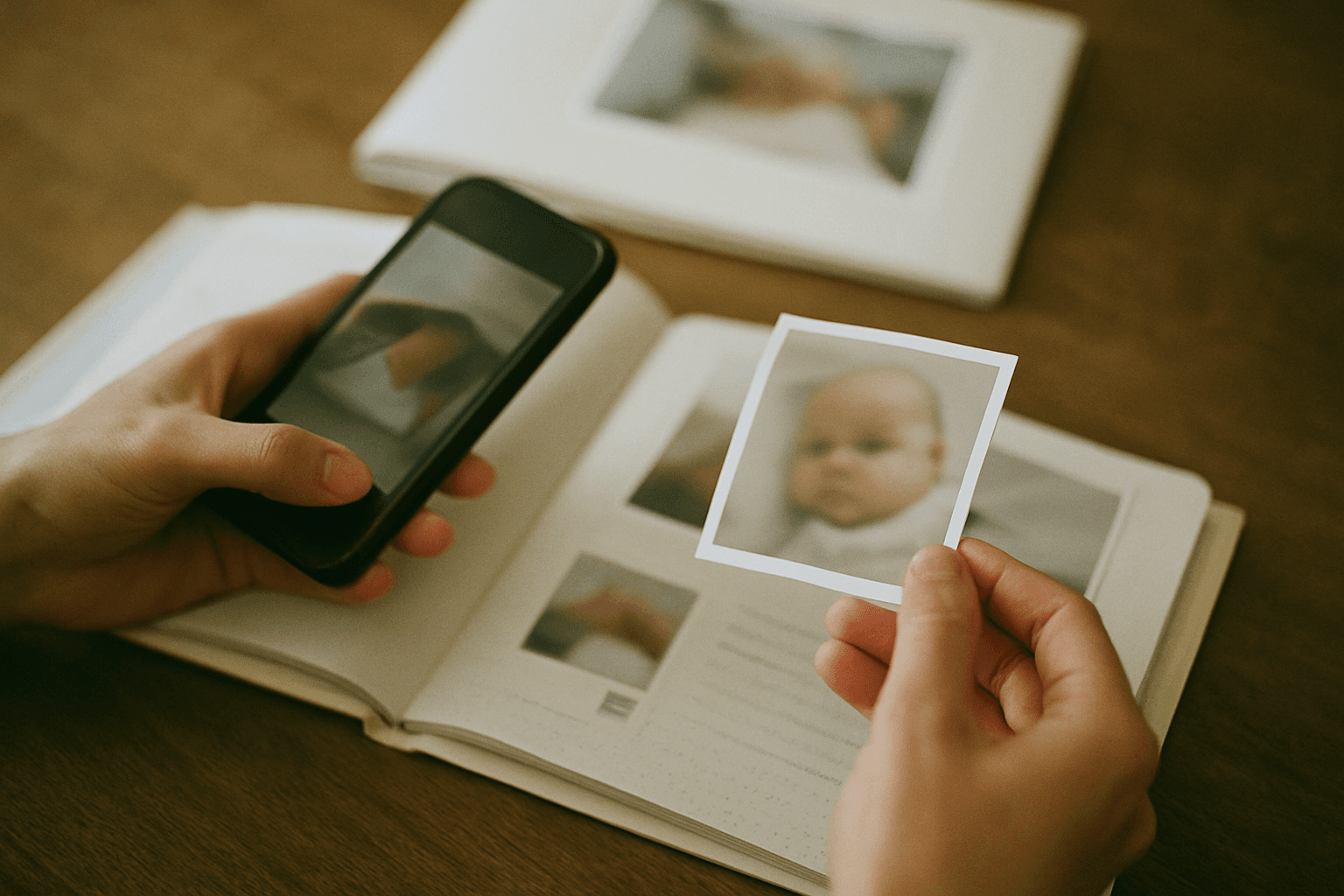
Best Baby Memory Books for Capturing Your Child's First Years
From traditional scrapbooks to modern digital apps, choosing the right baby memory book can feel overwhelming. We explore the best options for new parents to capture those fleeting first-year milestones, helping you decide between the tactile charm of paper and the lasting security of a private digital archive.
Patrick Moore • September 19, 2026
The first year is the one you'll want back.
Record the voices, keep the photos that matter, and write down why you chose the name. Free to start.