
School Cellphone Bans: A Family Guide
As more schools consider banning cellphones, families face new questions about communication, safety, and memory-making. This trend isn't just about reducing distractions; it's a chance to rethink our kids' digital habits and how we capture the moments that matter, both in and out of the classroom.
Patrick Moore, Founder • August 6, 2026
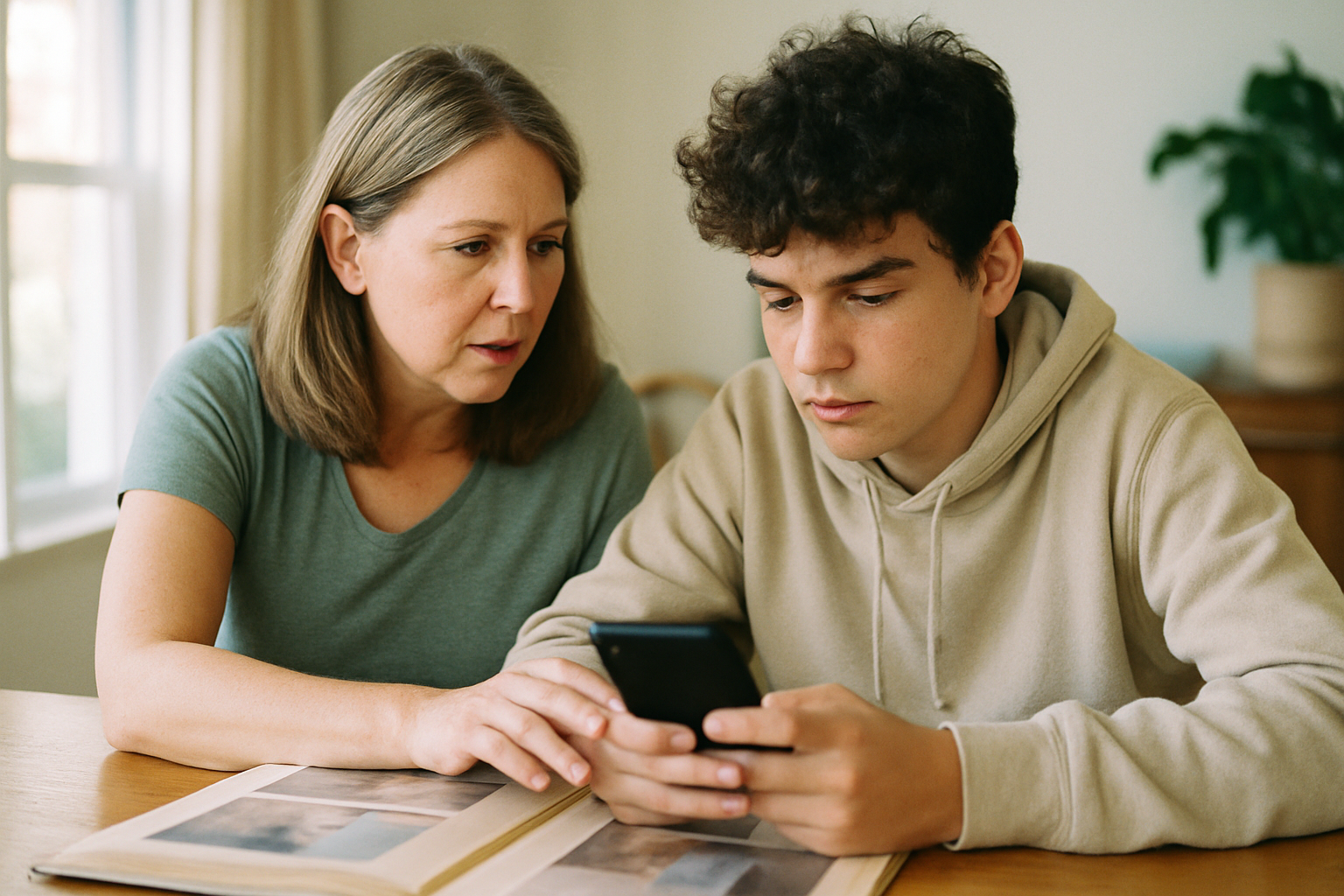
It’s 11:15 AM on a Tuesday, and your phone buzzes. It’s a text from your high schooler—a grainy photo of a frog in a dissection tray, followed by a string of green-faced emojis. A moment later, another buzz: a TikTok link from your middle schooler, sent from the back of a bus on a field trip.
For years, this has been the rhythm of the school day for many parents: a scattered, real-time feed of minor updates, inside jokes, and occasional logistical questions. It provides a sense of connection, a feeling of being loosely tethered to our children's worlds, even when they're miles away.
But that tether is being re-examined. Across the country, a conversation that has simmered for a decade is now reaching a boil. School districts are increasingly moving to restrict or ban student cellphone use during the day, and public support for these measures is growing.
This shift isn't just a new rule in the student handbook. It’s a fundamental change in how our children experience their education, their social lives, and even their own memories. For families, it raises a host of practical and philosophical questions. How do we stay in touch? What happens in an emergency? And in a world where every moment is captured, what does it mean when the camera is suddenly turned off?
The short answer
School cellphone bans are gaining support as a way to reduce classroom distractions and improve student well-being. For families, this means adapting communication methods, re-evaluating kids' digital habits, and finding new ways to capture school-day memories. It's a shift from constant connectivity to more intentional interaction, requiring clear family plans for emergencies and a focus on preserving memories outside the classroom.
Why the Change, and Why Now?
The push for phone-free schools isn't new, but it has gained significant momentum. According to recent data from Pew Research, public support for these bans is growing. This reflects a broader societal concern over the effects of constant screen time and social media on young people. In fact, a recent survey cited by The Hill and CNET found that 56% of U.S. adults would support a social media ban for teens.
Educators and child development experts argue that the benefits of a phone-free learning environment are substantial. They point to several key factors driving the trend:
- Academic Focus: The primary goal is to eliminate the single biggest source of distraction in the modern classroom. Without the constant lure of notifications, games, and social media, students are better able to engage with lessons and think deeply about complex subjects.
- Mental Health: There's a growing body of evidence linking heavy social media use to increased rates of anxiety, depression, and poor body image among adolescents. Removing phones from the school environment provides an eight-hour respite from the pressures of online social dynamics.
- Social Development: When phones are put away, students are more likely to talk to each other face-to-face during lunch, between classes, and on the playground. This fosters crucial in-person social skills that can be stunted by constant digital interaction.
- Reducing Bullying: While it doesn't eliminate bullying, a phone ban can significantly reduce instances of cyberbullying that occur during school hours, from hurtful text chains to the non-consensual recording of peers.
A Quieter, More Focused Classroom
Advocates for cellphone bans envision a return to a more traditional learning environment. They argue that without the digital crutch, students become more resourceful, more present, and more engaged with their teachers and classmates. The classroom becomes a space for focused learning and genuine social connection, free from the constant digital noise that fragments attention.
Losing a Modern Lifeline?
For many parents, the primary concern is safety and logistics. A child's phone can feel like a direct lifeline, essential for coordinating pickups, checking in, or communicating during an emergency. Critics of the bans worry that these policies, while well-intentioned, may leave families feeling disconnected and create new anxieties, especially in an era of heightened school safety concerns.
A Teachable Moment for Families
A school cellphone ban does more than just change the rules from 8 AM to 3 PM; it creates a powerful opportunity for families to reassess their relationship with technology. When the phone is no longer a constant companion, it forces a conversation about when, why, and how we use our devices.
This enforced separation can help break the cycle of reflexive documentation. We've all seen it: a beautiful sunset, a funny pet antic, a child's artistic creation. The first impulse is often to grab a phone and capture it. But this can lead to what some call the photographic paradox—the act of recording a moment can actually prevent us from fully experiencing it. By taking away the camera, schools are inadvertently encouraging students to simply live in the moment.
For families, this is a chance to talk about the difference between the ephemeral digital stream and a meaningful digital legacy. It's an opportunity to ask bigger questions about what's truly worth remembering.
Social Feeds vs. Lived Memories
Is the goal to create a perfect-looking timeline for others, or to build a rich internal library of memories and stories for ourselves and our family? A school phone ban can be a catalyst for discussing how social media might be rewriting childhood memories, shifting the focus from public performance to private preservation. It’s a chance to teach kids that the most valuable memories aren't always the ones that get the most likes.
From Constant Capture to Intentional Curation
Of course, there's a trade-off. Without a phone, your child can't send you a quick snap of the clay pot they made in art class or a video of their friend's hilarious talent show performance. The casual, everyday moments that phones so easily capture will be, for the most part, unrecorded by them.
This doesn't mean those memories are lost. It means the way we preserve them has to change. The focus shifts from the visual artifact (the photo) to the narrative (the story). The car ride home or the dinner table becomes the primary venue for memory sharing. Instead of seeing a blurry photo, you get to hear the story in your child's own voice, complete with their unique perspective and emotional color.
This is a more profound way to capture childhood memories. It's less about amassing a massive, unorganized camera roll and more about curating the stories that truly define these years. A private family archive becomes not just a place to dump photos, but a space to record these conversations—to write down the funny quote from their science teacher, to save a voice note of them describing their day, to pair the one official school photo with the story of what happened right before it was taken.
Story Over Stream
A dedicated archive values the narrative around a memory, not just the picture. It prioritizes the context, the feelings, and the voices that bring a moment to life, creating a richer record than a simple photo gallery.
Private by Design
In an age of oversharing, a private space is a sanctuary. It allows kids to share their school experiences without the pressure of public performance. This is central to our philosophy; you can read more about why privacy is at the heart of Memory Murals.
From Their Mouths to Your Archive
Use a phone's voice recorder (after school, of course) to capture your child telling a story. These audio clips are treasures. You can transcribe their best quotes and pair them with photos to preserve their unique voice and personality at that age.
A Collaborative Family History
When you save these curated stories, they become part of a larger family narrative that grandparents, aunts, and uncles can experience. It connects them to your child's life in a more meaningful way than a social media feed ever could.
Navigating the New Rules Together
Adapting to a school cellphone ban is a process. It requires communication, planning, and a bit of a mindset shift. Here’s how you can approach it as a family.
A Family Action Plan for Phone-Free Schools
Review the School's Policy Together
Don't just read the email from the principal. Sit down with your child and go over the specifics. Where are phones stored during the day? What are the consequences for breaking the rule? Most importantly, what is the official procedure for emergency communication? Knowing the plan reduces anxiety for everyone.
Create a Family Communication Plan
Talk through the 'what ifs.' What should your child do if they feel sick? How will you coordinate a change in pickup plans? Reassure them that they can always go to the school office to contact you, and confirm that you will always be reachable via the school's main line. This reinforces that they are safe and connected, even without their device.
Establish 'Memory-Catching' Rituals
Designate a time and place for sharing stories from the day. Maybe it's a 'no-phones-at-the-table' dinner rule (for parents, too!), a chat before bed, or a weekend recap. Ask open-ended questions like, "What was the most interesting thing you learned today?" or "What made you laugh?" This turns memory sharing into a cherished family habit.
Curate What Matters Most
Instead of mourning the loss of a constant photo stream, embrace the power of curation. After you hear a great story, make a note of it. Once a week, gather the best anecdotes and pair them with any relevant photos (like an official team picture or a photo of a finished school project brought home). Using a dedicated, private space like Memory Murals ensures these important stories are saved securely and organized for your family to enjoy for years to come.
The shift toward phone-free schools can feel like a step backward, a loss of connection and convenience. But it might also be an unexpected gift.
It's a chance to untangle our kids—and ourselves—from the culture of constant distraction. It’s an invitation to strengthen our in-person communication skills and to be more present in our own lives. And for families who care about preserving their history, it’s a powerful reminder that the most important memories aren't just captured; they're shared, told, and carefully tended, one story at a time.
Get 50 questions to ask your parents — before the stories are gone
The exact prompts families use to draw out the stories nobody ever wrote down. Free, straight to your inbox.
No spam. Unsubscribe anytime.
Frequently asked questions
Why are so many schools banning cellphones?
Schools are banning cellphones primarily to reduce classroom distractions, improve student focus, and address concerns about cyberbullying and mental health linked to social media. The goal is to create a more engaged and positive learning environment by minimizing the constant interruptions and social pressures that smartphones can introduce during the school day.
How can I contact my child in an emergency if their school has a cellphone ban?
Schools with cellphone bans have established procedures for emergency communication. Typically, parents can call the school's main office, and staff will relay messages to the student immediately. Similarly, students can go to the office to contact their parents. These policies ensure that urgent communication is still possible without allowing personal phone use during class time.
What are the benefits of a school cellphone ban for students?
The primary benefits for students include improved academic focus, increased in-person social interaction, and reduced anxiety from social media pressures. A phone-free environment can lead to better concentration, deeper engagement with lessons and peers, and less exposure to online bullying during school hours, contributing to overall well-being.
Are there any downsides to banning cellphones in schools?
Critics of cellphone bans point to potential downsides, such as removing a direct line of communication for students in emergencies and taking away a tool for digital literacy education. Some families also worry about coordinating after-school activities and pickups. Schools often try to mitigate these concerns with clear communication protocols and by integrating technology education into the curriculum separately.
How does a cellphone ban affect my child's ability to capture school memories?
A cellphone ban means students can't take spontaneous photos and videos of school events, friends, or projects. While yearbooks and official school photos still exist, the everyday, candid moments might be missed. This encourages families to be more intentional about capturing memories outside of school hours and finding other ways to document these important years.
About the author
Patrick Moore, Founder of Memory Murals
Patrick Moore is the founder of Memory Murals. He built it after realizing how much of his own family's history had quietly slipped away — to help families preserve their stories, voices, and photos while they still can.
Related Stories

Insights
Is Social Media Rewriting Your Childhood? The Hidden Science of "Digital Forgetting"
New research shows sharing photos online sharpens what's in-frame while erasing surrounding context. Here's how to protect the full story behind your memories.
Patrick Moore • February 21, 2026

Insights
The Photographic Paradox: Is Your Camera Stealing Your Memories?
The more we document, the less we may remember. Here's the science behind the photo-taking impairment effect — and how to use photos as cues instead of replacements.
Patrick Moore • February 23, 2026

Insights
Surgeon General's Warning: Navigating Kids' Screen Time for Healthy Memories
The recent Surgeon General's warning about children's screen time has many parents concerned. This post breaks down the key implications for family life, offering practical strategies to balance digital tools with the irreplaceable value of real-world experiences and memory-making.
Patrick Moore • September 24, 2026
Preserve your family's memories in one private place.
Start free in minutes. No credit card required.