
Questions to Ask Your Kids Every Year
Ask your child the same short list of questions once a year and record the answers. It takes ten minutes, and by the time they're grown you'll have something almost no parent has: their actual voice, changing year by year. Here's the question set and how to make it a tradition that sticks.
Patrick Moore, Founder • July 10, 2026
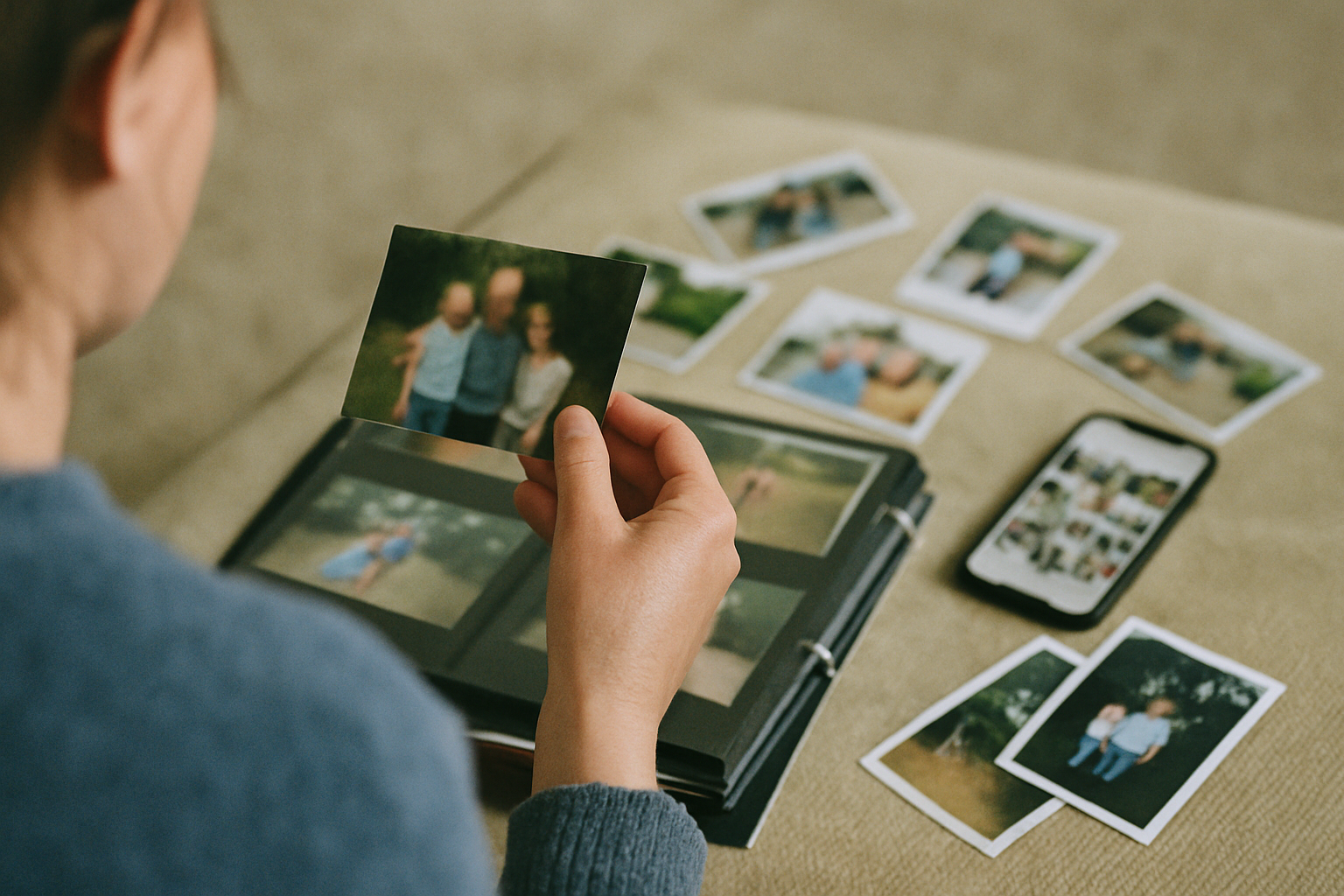
Ask a parent of grown kids what they wish they'd done, and you'll hear a version of the same thing: "I wish I had their voice from back then." Not more photos — they have thousands. The voice. The way she said "pasketti." What he wanted to be when he grew up that year. The stuff that felt too ordinary to bother recording, until it was gone.
There's a ten-minute tradition that fixes this, and it's almost embarrassingly simple: ask your kids the same short list of questions every year, and record the answers. Not new questions each time — the same ones. Because the point isn't the answer. The point is watching the answer change.
Do it from age three to eighteen and you end up with something no scrapbook can touch: a year-by-year portrait of a whole person becoming themselves, in their own voice.
The short answer
Pick 10–15 questions and ask your child the exact same ones once a year — anchored to their birthday or the first day of school so you never forget. Record their actual voice or video (the way they say things is the part you'll want back). Save each year's answers in one place, in order, so you can play them back and watch them change. Same questions + same date + real audio = the simplest, most powerful memory tradition there is. The full question set is below.
Why the same questions, every year
Asking a four-year-old "what do you want to be when you grow up?" once is a cute moment. Asking it every single year is a documentary.
The power of this tradition is repetition. One answer is a snapshot; fifteen answers to the same question, in sequence, is a story — the firefighter becomes a marine biologist becomes a "YouTuber" becomes, at seventeen, a quiet "I'm not sure yet, maybe something with people." You can hear them growing up. No single entry is impressive. The series is unforgettable.
This is also why written notes aren't enough. The magic lives in the voice — the lisp, the certainty, the pause before the honest answer. That's why the one non-negotiable is to record audio or video, not just jot it down. If you want the fuller philosophy behind capturing the story and not just the image, we wrote about how to actually capture and keep your kids' childhood memories — this yearly ritual is the single best version of it.
How to make it a tradition that sticks
The whole thing takes ten minutes a year. The trick is removing every reason to skip it.
The Yearly Kid Interview
Anchor it to a date
Pick a day you already can't forget: their birthday, the first day of school, New Year's morning. Tying the interview to a recurring occasion is what turns "a nice idea" into an actual tradition you do every year without deciding to.
Keep the same short list
Choose 10–15 questions (steal the set below) and don't change them year to year. The consistency is the feature, not a limitation. Keep the list somewhere you'll find it next year.
Record their voice, not just notes
Hit record on a voice memo or video before you start, and just have a conversation. Let them ramble. The tangents and the way they say things are the gold — that's the part a transcript can never keep.
Keep every year together, in order
Save this year's recording alongside every previous year's, in one place, so you can play them back in sequence. A row of clips from ages 3, 4, 5, 6… is the whole magic — and it only works if you can actually find last year's.
The question set
Here's a ready-to-use list, grouped so it covers who your child is this year, not just their favorites. Pick 10–15, keep them the same every year, and add one or two of your own family's inside-jokey ones.
Favorites (the easy warm-up)
- What's your favorite food right now? What food is gross?
- What's your favorite color?
- What's your favorite thing to do?
- Who is your best friend?
- What's your favorite song or show?
- What's your favorite thing about being [age]?
Who you are this year
- What are you really good at?
- What makes you happy?
- What makes you feel scared or worried?
- What's something new you learned this year?
- If you could have any superpower, what would it be and why?
- What's the best thing that happened this year?
The big one (ask it every single year)
- What do you want to be when you grow up?
Family & memory
- What do you love most about our family?
- What's your favorite thing we do together?
- What's a memory from this year you never want to forget?
- If you could tell yourself one thing when you're all grown up, what would it be?
Make it yours
Add a couple of questions that are specific to your family and keep those the same too — "What's Dad always saying this year?", "What's our house rule you'd change?" The mix of universal and personal is what makes the series feel like your kid, not a template.
Where the answers should live
A yearly ritual is only as good as your ability to find last year's answers when this year's birthday rolls around. If year three lives on an old phone, year four is a voice memo you can't locate, and year five never happened because you couldn't find the questions — you don't have a tradition, you have a few orphaned clips.
One running timeline
Every year's recording saved in the same place, in order, so you can press play and watch them grow from age 3 to 18 in a single sitting.
The questions, saved too
Keep the list attached so next year you're not reinventing it — the ritual should take ten minutes, not a planning session.
Both parents can add
Whoever's around on the birthday does the interview; it lands in the same shared archive either way.
Private, and yours to keep
Your child's voice and answers aren't content for a feed — they belong in a private family space you own and can hand down.
This is exactly the kind of thing Memory Murals was built to hold: a private timeline where each year's recording sits with the last, both parents can add to it, and the whole series stays together for good. It's also a natural companion to asking the grandparents their stories before it's too late — the same recorded-questions idea, pointed up a generation.
Start this year, whatever age they are. Ten minutes on a birthday, the same questions, their real voice on the record. It's the smallest tradition you'll ever start and, twenty years from now, quite possibly the one you're most grateful for. Record the first year's answers in your family archive tonight and let them grow up on the record.
Get 50 questions to ask your parents — before the stories are gone
The exact prompts families use to draw out the stories nobody ever wrote down. Free, straight to your inbox.
No spam. Unsubscribe anytime.
Frequently asked questions
What questions should I ask my kids every year?
Keep it short and repeatable — the same 10 to 15 questions each year so you can compare the answers over time. Cover favorites (food, color, friend, song), identity (what makes you happy, what you're good at, what scares you), imagination (what you want to be when you grow up), and family (what you love about our family, a favorite memory from this year). The exact wording matters less than asking the SAME questions annually. The full set is in this post.
When is the best time to do a yearly kid interview?
Anchor it to a date you'll never forget — most parents use the child's birthday or the first day of school. Tying the ritual to a recurring occasion means you'll actually remember to do it every year, which is the whole point. Ten minutes on the same day each year builds a record that's impossible to fake later.
How do I record my child's answers?
Record their actual voice or video, not just written notes — the way a four-year-old says 'firefighter' is the part you'll want back, and it can't be transcribed. Use your phone's voice memo or camera, ask the questions conversationally, and save the clip somewhere permanent alongside the previous years' answers so you can play them back in sequence. A private family archive keeps every year's recording together in one timeline.
Why ask the same questions every year instead of new ones?
Because the magic is in the comparison. Asking 'what do you want to be when you grow up?' once is cute; asking it every year from age three to eighteen is a portrait of a person becoming themselves. Repetition turns a one-off cute answer into a longitudinal record of how your child changes — their voice, their dreams, their fears — which is far more powerful than a scrapbook of different questions.
At what age can you start a yearly interview with a child?
As soon as they can talk — around age two or three, even if the answers are one word or nonsense. Early years capture the voice and the funny logic; the answers get richer every year. Starting young also means the tradition is simply 'how our family does birthdays' by the time they're old enough to have opinions about it.
About the author
Patrick Moore, Founder of Memory Murals
Patrick Moore is the founder of Memory Murals. He built it after realizing how much of his own family's history had quietly slipped away — to help families preserve their stories, voices, and photos while they still can.
Related Stories
How-To Guides
How to Capture Your Kids' Childhood Memories (a Simple System That Sticks)
You have thousands of photos and almost none of the story behind them. Here's a simple, all-ages system for capturing your kids' childhood memories — the everyday ones you'll actually want back — in under a minute at a time, and keeping them somewhere they won't get lost.
Patrick Moore • July 10, 2026
How-To Guides
Creative Family Storytelling for Kids: How to Involve Your Children in Memory Keeping
Tired of getting one-word answers when you try to connect your kids with their grandparents' stories? I was too. Forget formal interviews. Here are some fun, game-like activities that turn memory-keeping into an adventure kids will ask to go on again.
Patrick Moore • June 21, 2026
Insights
When Is Grandparents Day 2026? The Date and What to Do
National Grandparents Day 2026 falls on Sunday 13 September. Here is how the date is set, where the holiday came from, and eight things worth doing on it that don't involve buying anything.
Patrick Moore • September 7, 2026
Preserve your family's memories in one private place.
Start free in minutes. No credit card required.