
Simple Memory Keeping for New Parents
The first year is a blur of sleepless nights and breathtaking firsts. You want to remember every smile and coo, but creating a detailed baby book feels impossible. This guide offers simple, low-effort habits to help you capture precious moments without adding to your overwhelm.
Patrick Moore, Founder • July 1, 2026
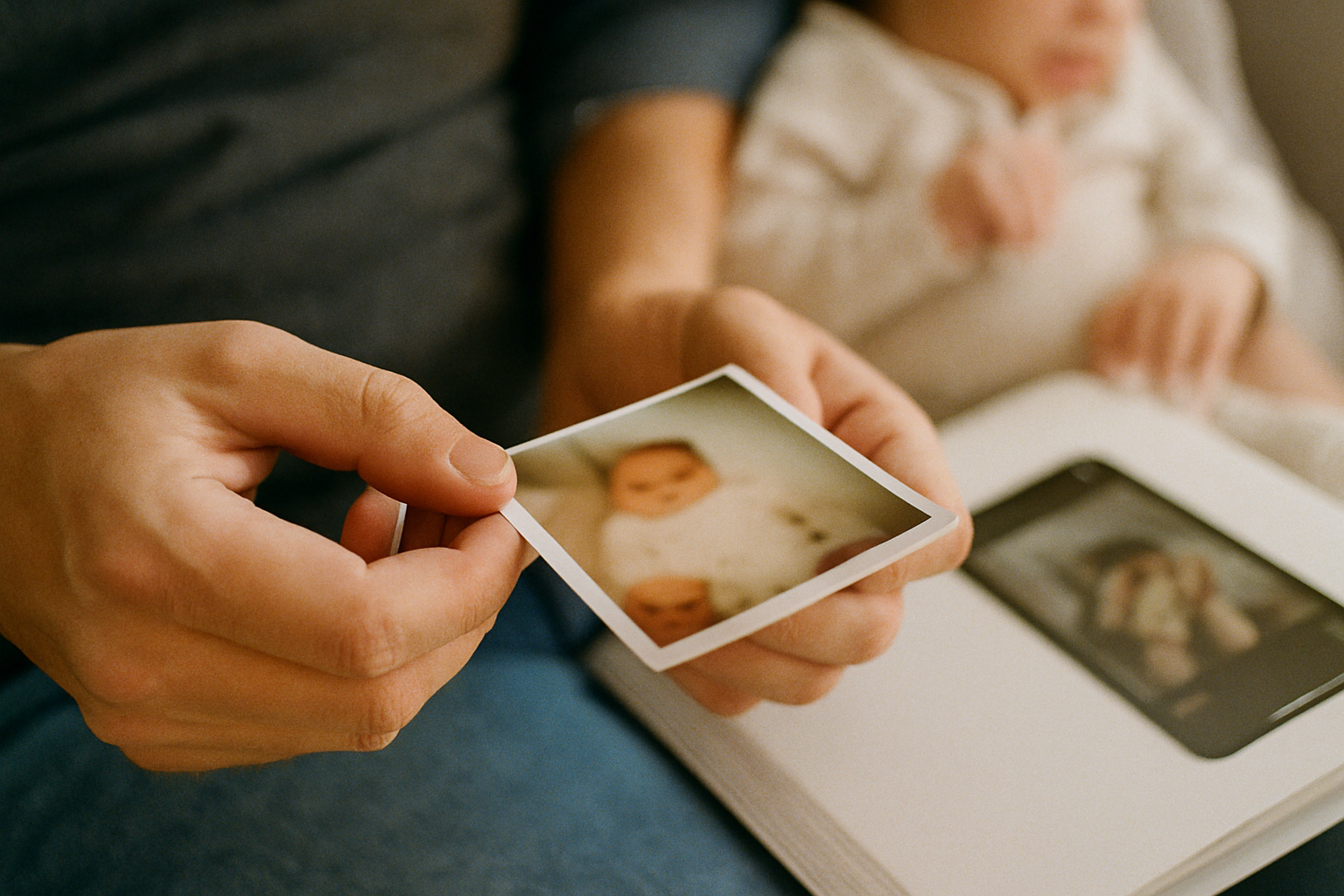
There’s a photo on your phone from 3:17 AM. The light is terrible, your eyes are half-closed, but the tiny person asleep on your chest is perfect. You have a thousand photos just like it—a camera roll overflowing with evidence of love and exhaustion. You swear you’ll organize them, print them, write down the stories. But then the baby wakes up.
The pressure on new parents to document everything is immense. You see curated baby books and perfectly captioned social media posts, and the gap between that ideal and your reality feels vast. The fear isn't just about forgetting the big milestones; it's about losing the texture of these fleeting days—the gummy smiles, the specific weight of a sleeping infant, the sound of your own tired, happy whisper.
But what if memory keeping wasn't another item on your to-do list? What if it could be a simple, grounding practice that fits into the cracks of your new life, rather than demanding a space you don't have?
The short answer
For easy memory keeping, new parents should ditch the idea of a perfect, chronological baby book. Instead, focus on creating a 'story bank' with tiny, consistent habits. Use your phone to capture not just photos, but quick voice notes explaining a moment. Choose a private, shared space where you and your partner can both add memories in seconds. A simple five-minute weekly ritual of saving one moment with context is more sustainable and meaningful than a grand project you never start.
The 'Good Enough' Family Archive
The single biggest barrier to preserving memories isn't a lack of love or a lack of moments. It's the pressure of perfection. We imagine a beautiful, leather-bound book with perfect handwriting and chronologically ordered photos. When we can't achieve that, we often do nothing, and the moments slip away, trapped in the digital noise of our camera rolls.
The solution is to redefine success. The goal is not a flawless heirloom; it's a heartfelt, messy, and authentic collection of moments that tell the real story of your family's beginning. It’s about capturing the feeling, not just the facts.
The 'Perfect' Baby Book
A traditional approach that can result in a beautiful, highly detailed physical object. It’s a classic for a reason and feels satisfying to flip through.
The 'Perfect' Baby Book
The pressure to keep it current is immense. Falling behind by a few weeks can feel so overwhelming that many parents abandon the project entirely, leaving it half-finished.
The 'Good Enough' Archive
This digital-first approach is flexible, forgiving, and fast. It allows you to capture moments as they happen—photos, audio, video—and add context later. It’s a living, breathing collection.
The 'Good Enough' Archive
It can feel less tangible and might require more intention to revisit. Without a good organizational system, it can become as chaotic as your camera roll.
Embracing the "good enough" mindset is liberating. It prioritizes consistency over polish and authenticity over performance. A voice note capturing your awe at their tiny fingernails is more powerful than a perfectly penned caption you never got around to writing.
The 5-Minute Weekly Ritual
Sustainable memory keeping is built on habits, not heroics. Instead of waiting for a free afternoon that will never arrive, anchor your efforts to a tiny, repeatable ritual. This process takes the decision-making and pressure out of the equation. It makes preserving memories as automatic as brewing your morning coffee.
A Sustainable Memory Keeping Habit
Set a Weekly Anchor
Pick a consistent time each week. It could be Sunday morning while the baby naps, or Tuesday night after they're asleep. Set a recurring, low-pressure reminder on your phone: "Add one memory."
Pick Just One Moment
Scroll through your phone's camera roll from the past week. Don't overthink it. Choose one photo or video that makes you feel something. It doesn't have to be a major milestone; a quiet, everyday moment is often more potent.
Add a Spark of Context
This is the most crucial step. Use your phone's voice memo app to record a 30-second note about the photo. What was happening? What did you feel? What was funny or sweet or challenging about it? Or, just type two or three sentences. The context is what transforms a picture into a story.
Save It to a Safe Place
Move the photo and the audio note or text into a single, dedicated location outside your camera roll. This could be a specific folder in a cloud drive, a private family archive app, or even an email to a dedicated address you've set up for your child.
This entire process takes less than five minutes, but after a year, you'll have 52 curated, contextualized memories that beautifully narrate your baby's first year. It's one of the most gentle ways to start a family archive without the overwhelm.
Choosing Your Digital Shoebox
The right tool can make or break your memory-keeping habit. The goal is to find a platform that reduces friction, not adds to it. Many new parents use apps like Tinybeans to share updates with a select group of family, which is great for in-the-moment sharing.
However, for a permanent family archive, it's worth considering a few other factors. When we built Memory Murals, we focused on what was missing from many platforms: a focus on privacy, long-term preservation, and the richness of multi-media storytelling. A true archive should be a private sanctuary, not just a social feed.
Look for a tool that makes it easy for both parents to contribute from their own devices. It should seamlessly handle photos, videos, and audio files, and most importantly, keep the context connected to the media. Your data should be secure—encrypted in transit (TLS) and at rest (AES-256)—and you should own it, always.
Capture More Than Milestones
Your archive should have space for the little things. Look for ways to document the non-visual memories that define this era.
The Sound of Home
Record the sound of your baby's coos, your partner's lullaby, the white noise machine. Audio is a powerful, often-overlooked trigger for memory.
Your Inner Monologue
Use voice memos to capture your own thoughts and feelings. A 60-second clip of you describing the exhaustion and overwhelming love of a 2 AM feeding is a priceless piece of your family's story.
The Everyday Routines
Snap a picture of the messy high chair, the pile of board books by the bed, the way they sleep with their arm flung over their head. These are the details you'll miss the most.
A Shared Responsibility, A Shared Joy
Memory keeping doesn't have to be a solo mission. In fact, it's richer when it's collaborative. Your partner, parents, and close family members see moments you might miss. Creating a central, private place for these memories invites them into the process.
When you're sharing baby milestones with grandparents, you're not just giving them an update; you're giving them a role in building the family story. A grandparent might add a photo from their visit and a voice note about how the baby's smile reminds them of you at that age. Your partner might capture a moment of you with the baby that you never would have seen yourself.
This collaborative approach lightens the load and deepens the narrative. It transforms the archive from a parent's record into a family's collective memory, a tapestry woven from multiple perspectives and voices.
It can feel like these days will last forever, and also like they're gone in a flash. The fatigue is real. The joy is profound. Holding space for both is the work of being a parent, and of being a memory keeper.
The goal isn't to capture everything. It's to capture what matters, in a way that honors your energy and your time. The archive you build, one tired Tuesday at a time, is a gift of presence for your future self, and for the child who will one day want to know the story of how their family began. If you're looking for a private, collaborative home for these moments, you can start building your family's legacy today.
Get 50 questions to ask your parents — before the stories are gone
The exact prompts families use to draw out the stories nobody ever wrote down. Free, straight to your inbox.
No spam. Unsubscribe anytime.
Frequently asked questions
What is the easiest way for new parents to keep memories?
The easiest way is to build small, consistent habits rather than attempting large projects. Focus on one 'memory moment' per week. This could be saving one favorite photo and adding a quick voice note explaining the context, or sending a short email to a dedicated address for your child. The key is choosing a low-friction method that takes less than five minutes.
How do you make a memory book when you have no time?
Instead of a traditional, chronological book, create a digital-first 'story bank.' Use an app to quickly save photos, videos, and audio notes from your phone. When you do have a rare moment of downtime, you can add written context. This approach separates the act of capturing from the act of curating, making it far more manageable for time-strapped new parents.
What should I record for my baby's first year?
Beyond the major milestones like first steps, capture the everyday sensory details. Record the sound of their laugh, a video of their funny eating habits, a photo of their hand wrapped around your finger, and quick notes about your own feelings. These seemingly small details are what truly evoke the feeling of that first year and are often the [milestones you'll otherwise forget](/journal/baby-milestones-youll-forget).
Is a digital or physical baby book better?
Both have their merits. Physical books offer a tangible, screen-free experience. However, digital archives are often more practical for new parents—they're faster to update, can include video and audio, are easily shared with family, and can be backed up securely. A hybrid approach, where you collect memories digitally and later create a printed book from your curated collection, offers the best of both worlds.
How can I involve my partner in memory keeping?
Choose a tool that allows for easy collaboration. A shared digital album or a private family archive app where both parents can add content from their own phones is ideal. You can also create simple rituals, like taking five minutes together on Sunday evenings to each share one favorite moment from the week and add it to your collection. This makes it a shared responsibility and a point of connection.
About the author
Patrick Moore, Founder of Memory Murals
Patrick Moore is the founder of Memory Murals. He built it after realizing how much of his own family's history had quietly slipped away — to help families preserve their stories, voices, and photos while they still can.
Related Stories
How-To Guides
How to Create a Baby First Year Memory Capsule Your Child Will Cherish
The first year flies by in a blur of sleepless nights and incredible firsts. This guide helps you move beyond just snapping photos, showing you how to intentionally create a digital 'first year' memory capsule—a collection of stories, sounds, and moments your child can explore for years to come.
Patrick Moore • June 24, 2026

Insights
Baby Milestones You'll Forget If You Don't Write Them Down
You'll remember the first steps. You won't remember the exact day they figured out how to clap. Here's why the small milestones matter most — and how to make sure they don't disappear.
Patrick Moore • April 17, 2026
How-To Guides
Preserving Your Childhood Art: A Guide for Parents and Grandparents
That ever-growing pile of your child's art is a treasure trove of memories, but it's also overwhelming. How do you decide what to keep and how to save it forever? This guide offers a practical, heartfelt approach to digitally preserving your child's artwork, ensuring these precious creations become a lasting part of your family's story.
Patrick Moore • July 4, 2026
The first year is the one you'll want back.
Record the voices, keep the photos that matter, and write down why you chose the name. Free to start.