
Building Your Child's First Memories
Ever wonder what your baby will remember? We explore the fascinating science of how infants form their earliest memories and offer simple, science-backed ways to build a rich memory foundation for your child. Learn how daily habits can shape their inner world for years to come.
Patrick Moore, Founder • June 21, 2026
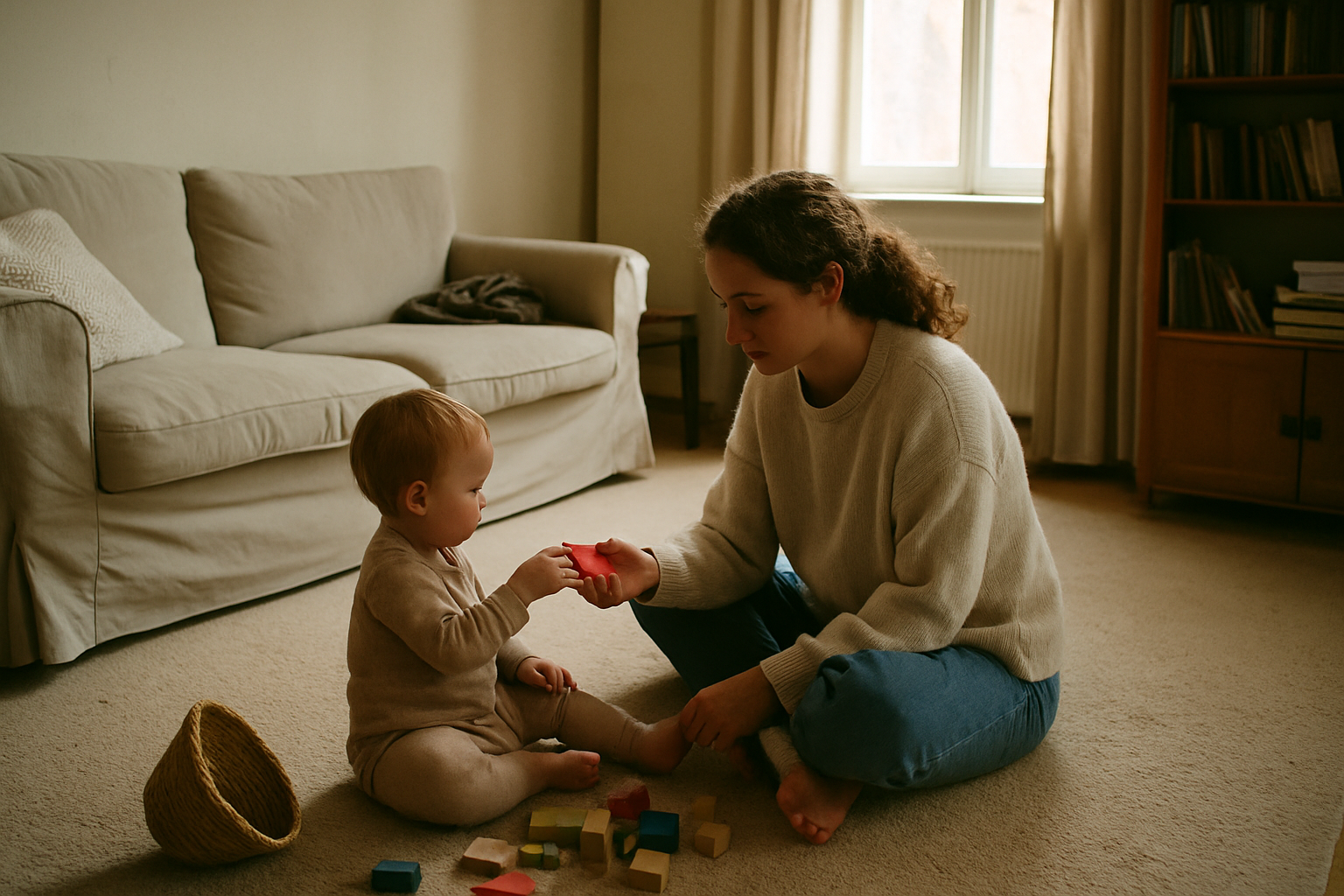
My daughter, Maya, who is now four, had this small, bright red ball when she was about ten months old. It was perfectly sized for her clumsy grip, and the thud it made on our hardwood floors was, to her, the pinnacle of comedy. I have this crystal-clear image of her sitting in a patch of afternoon sun, dropping the ball, watching it roll, and then letting out a squeal of pure delight that was part laugh, part shriek.
I must have a dozen photos of her with that ball. But the photos don't capture the smell of the dust motes dancing in the sunbeam or the specific, gummy texture of her drool on my hand when I’d retrieve it for the tenth time. I remember thinking, I need to bottle this. Will she remember this? Will she remember me, right here, smiling at her?
It’s a question every parent asks. We watch these tiny humans experiencing the world for the first time, and we ache for them to hold onto the good stuff. We want to build them a foundation of happy memories. But how does that even work when their brains are so new? What, if anything, actually sticks?
The short answer
Babies form memories from birth, but they are primarily implicit—emotional and procedural—rather than explicit, story-like memories. Their brains create a foundational blueprint of safety, love, and routine through repetition and sensory experiences. While they won't recall specific events from infancy due to an undeveloped hippocampus (a phenomenon called infantile amnesia), parents can enrich this foundational period by narrating daily life, establishing rituals, and providing a responsive, multisensory environment. This builds the neural architecture for stronger memory recall later in life.
How a Baby's Brain Builds Memories
When we think about memory, we usually think of stories. We remember our fifth birthday party, or the plot of a movie. This is called explicit or declarative memory. It requires a fairly sophisticated brain structure, particularly a part of the temporal lobe called the hippocampus, to act as a file clerk, organizing events into narratives we can consciously recall later.
In babies, the hippocampus is still developing. This is thought to be a key reason for what scientists call “infantile amnesia”—which is why most adults recall little from before about age three or four. The filing clerk simply wasn't fully on the job yet.
But that’s not the whole story. Babies are masters of another kind of memory: implicit or procedural memory. This is the memory of feelings, skills, and associations. It’s the calm a baby feels when they hear a parent's voice. It’s the learned anticipation of milk when they're placed in a certain position. It’s the muscle memory of learning to clap.
Think of it this way: a baby won't remember the story of you singing them a lullaby every night. But their body and their nervous system will remember the feeling of safety, comfort, and love associated with that ritual. They are not building a library of stories yet; they are building the library itself. They are learning the fundamental, implicit truths of their world: I am safe. I am loved. When I am hungry, I am fed. When I cry, I am held. This emotional residue is what truly matters in these early years.
Simple Habits for a Memory-Rich Environment
So, if we can't gift our infants with explicit memories, what can we do? We can create an environment that enriches their implicit learning and builds strong scaffolding for the explicit memories to come. It’s not about grand gestures or educational toys; it’s about the texture of daily life.
Narrate Everything
Become the sportscaster of your baby's life. "Now we're putting on your soft, fuzzy blue socks. Can you feel how soft they are? Then we'll go into the kitchen and smell the banana I'm peeling for your breakfast." This constant stream of language connects words to objects and sensations, building critical context.
Engage the Senses
Memory is deeply multisensory. Let your baby touch the rough bark of a tree, smell a sprig of rosemary from the garden, feel cool water on their toes. Describe these sensations as they happen. You're not just creating an experience; you're helping their brain build a richer, more detailed map of the world. It’s about more than just sight; it's about the entire sound of home and all its accompanying senses.
Establish Loving Rituals
Consistency and repetition are how a baby's brain strengthens neural pathways. A silly song you sing during every diaper change, a specific book you read before every nap, a gentle massage with lotion after a bath. These predictable rituals become cornerstones of their day, creating powerful, positive implicit memories of security and care.
Practice 'Serve and Return'
When your baby coos, coo back. When they point, look at what they're pointing to and name it. This back-and-forth interaction, called "serve and return" by developmental scientists, does more than just teach them social cues. It tells their brain, "My actions matter. I am seen and heard." This emotional connection is the glue that makes experiences stick.
Turning Moments into Memories with Narrative
As your child moves into toddlerhood and their language skills explode, you can begin to co-create memories with them. This is the bridge from their implicit world to the explicit, narrative world we inhabit. The primary tool for this is reminiscing.
Looking at photos together is a powerful way to do this. Instead of just swiping through, pause and tell the story. "Look, here you are at the beach! Do you remember how the sand felt on your toes? A big wave came and you laughed so hard!" You are giving them the language and structure to organize their own sensory and emotional recollections. This is one reason why it's so helpful to organize your baby photos; they become tools for connection.
My wife and I started a simple routine with Maya around age two that we call the "Memory Chat." It's a gentle way to practice the skill of remembering.
A Simple 'Memory Chat' Routine
Pick a 'Tiny Story'
At the end of the day, choose one small, specific, and usually positive moment. It doesn't have to be a big outing. It could be, "Remember when we were watering the plants today?"
Ask Simple Questions
Use simple "what," "who," and "where" questions. "What did we use to water the plants?" "Who held the watering can?" "Where did the water go?" This guides them through the sequence of events.
Add Sensory & Emotional Details
You provide the richer details they might not have the words for yet. "The water made a cool splashing sound. You had such a big smile on your face. That was a really fun moment together, wasn't it?"
Let Them Lead
As they get older, they'll start to add their own details, sometimes hilariously inaccurate ones. That's okay. The goal isn't perfect recall; it's the shared practice of building a narrative out of a lived experience.
The Camera and the Moment: A Delicate Balance
In our quest to preserve every moment, we can sometimes step out of it. We see a beautiful scene and our first instinct is to grab our phone, framing the memory before we've fully experienced it ourselves. This is the photographic paradox: the act of documenting can sometimes inhibit our own memory formation.
Finding a balance is key. There's no right answer, but it's worth considering the trade-offs.
The Value of Capturing
Photographs and videos are priceless memory cues. They are the illustrations for the stories you will tell your child about their own life. They allow you to share their early years with them in a concrete way, showing them the people, places, and moments that shaped their beginning.
The Risk of Outsourcing
When we're focused on getting the perfect shot—the lighting, the angle, the smile—we aren't fully present. Our brain can effectively "outsource" the job of remembering to the device. We end up with a great photo but a weaker personal memory of the actual feeling of the moment.
For our family, we try to be intentional. Sometimes we'll say, "Okay, let's take a few pictures of this," and then consciously put the phone away to just live in the moment. Other times, we just let a beautiful moment pass by, undocumented, holding it only in our own minds. Both have their place.
That red ball from Maya's babyhood? It’s long gone. She has no memory of it. But the other night, as I was tucking her in, I told her the story of the sunny afternoon and her favorite red ball. I described her squeal-laugh and the thud it made on the floor. She listened, rapt, and when I was done, she said, "Tell it again."
And in that moment, it didn't matter that it wasn't her memory. It was her story. It was part of the foundation. We aren't just helping our children form memories; we are becoming the keepers of their earliest history. We are their first archivists.
These stories, the ones we save for them, are the greatest gift. They become the bedrock of their identity. And having a dedicated, private place to hold that history as it grows is invaluable. A tool like Memory Murals isn't just about storing photos; it's about curating the narrative of their life, starting from chapter one. If you want to start building that beautiful, private archive for your family, you can get started here.
Ultimately, building a rich memory foundation isn't a task to be checked off a list. It's the simple, profound act of being present, of paying attention, and of sharing in the quiet wonder of a life just beginning.
Get 50 questions to ask your parents — before the stories are gone
The exact prompts families use to draw out the stories nobody ever wrote down. Free, straight to your inbox.
No spam. Unsubscribe anytime.
Frequently asked questions
At what age do babies start forming long-term memories?
Babies form implicit, or procedural, memories from birth, like recognizing a parent's voice. However, explicit, narrative memories (the kind we recall as stories) typically don't become reliable until after age three or four. This is thought to be linked to the gradual development of the hippocampus, a key part of the brain's memory system. The emotional foundation laid in infancy is crucial, even if specific events aren't recalled.
Can you actually help a baby remember things?
While you can't force a six-month-old to remember their first birthday party, you can create a memory-rich environment. Consistent routines, narrating your day, and engaging all their senses help build strong neural pathways. This creates a robust framework that supports the formation and retrieval of explicit memories later in childhood, strengthening their ability to remember in the long run.
What is infantile amnesia?
Infantile amnesia is the common inability of adults to retrieve episodic memories from before the age of two to four. It's not that memories aren't being formed; rather, the brain structures needed to consolidate and consciously recall them, like the hippocampus and prefrontal cortex, are still maturing. Language development also plays a key role in organizing memories into narratives we can later access.
Do babies remember trauma?
Yes, though not in a narrative way. While an infant won't have a story-like memory of a traumatic event, the experience can be stored as implicit or emotional memory. This can influence their nervous system, behavior, and feelings of safety long-term. This is why creating a secure, responsive, and loving environment is so critical for their development—it builds a foundation of trust and security.
How does talking to a baby help their memory?
Talking to a baby is incredibly beneficial for memory development. It provides a constant stream of language, which later becomes the tool for organizing memories into stories. By narrating activities—"We're putting on your red shoes to go outside"—you connect words to objects and experiences. This contextual scaffolding helps their developing brain make sense of the world and strengthens the connections needed for future recall.
About the author
Patrick Moore, Founder of Memory Murals
Patrick Moore is the founder of Memory Murals. He built it after realizing how much of his own family's history had quietly slipped away — to help families preserve their stories, voices, and photos while they still can.
Related Stories

Insights
Baby Milestones You'll Forget If You Don't Write Them Down
You'll remember the first steps. You won't remember the exact day they figured out how to clap. Here's why the small milestones matter most — and how to make sure they don't disappear.
Patrick Moore • April 17, 2026

How-To Guides
How to Organize Baby Photos on iPhone: A New Parent's Guide
The first few months with a new baby are a blur of joy, exhaustion, and a thousand photos a day. If your iPhone's camera roll has become a chaotic sea of nearly identical sleepy smiles, you're not alone. This guide offers a simple, sustainable system to bring order to the adorable chaos.
Patrick Moore • June 15, 2026

Insights
Surgeon General's Warning: Navigating Kids' Screen Time for Healthy Memories
The recent Surgeon General's warning about children's screen time has many parents concerned. This post breaks down the key implications for family life, offering practical strategies to balance digital tools with the irreplaceable value of real-world experiences and memory-making.
Patrick Moore • September 24, 2026
Preserve your family's memories in one private place.
Start free in minutes. No credit card required.