
Meta's $40B Lawsuit & Your Family Photos
A massive $40B lawsuit by New Mexico against Meta raises urgent questions about data privacy. If you use platforms like Facebook or Instagram to store family memories, what does this legal battle mean for the safety and ownership of your most precious photos and stories?
Patrick Moore, Founder • October 2, 2026
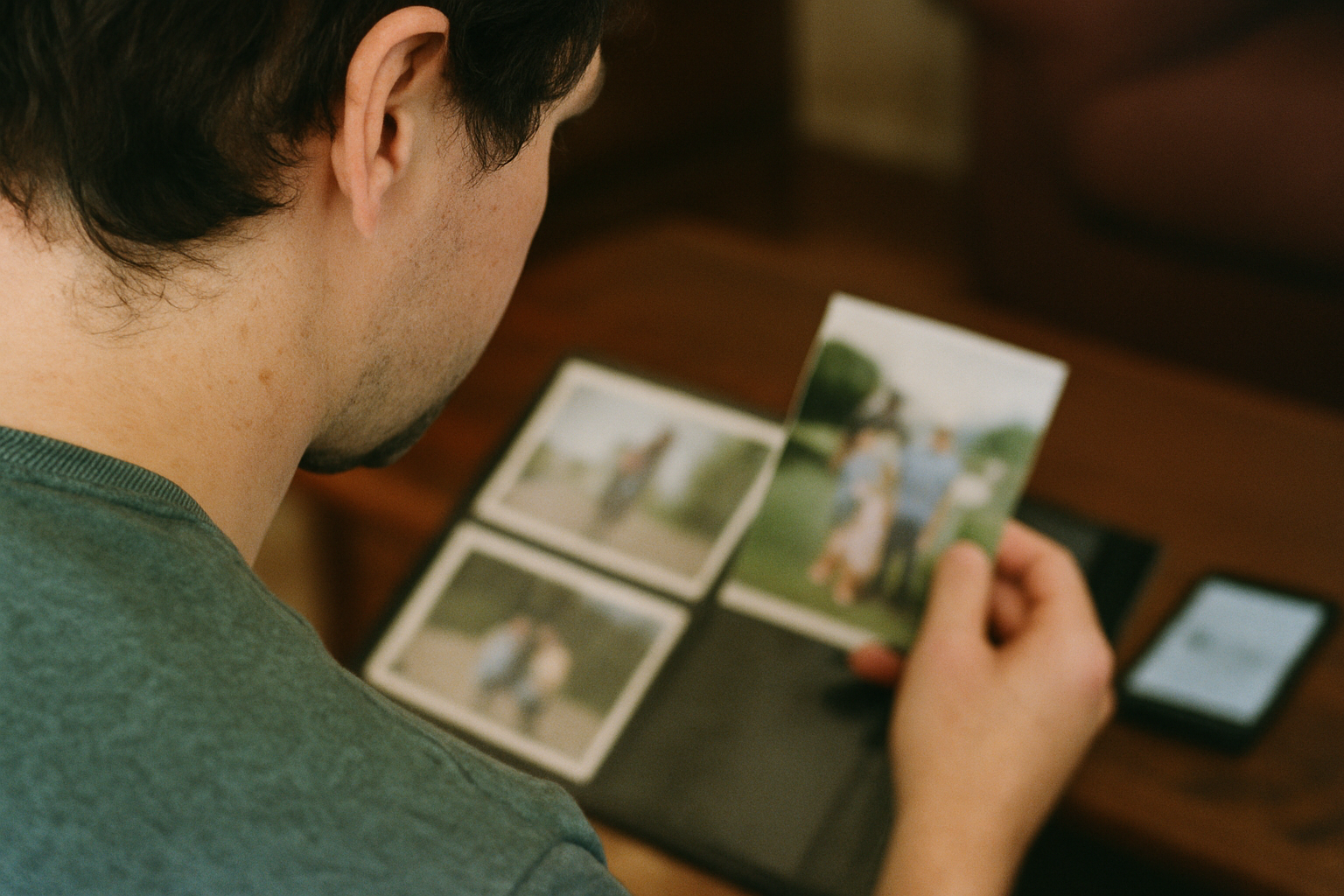
It’s a familiar, pleasant feeling. You’re scrolling through your phone and a social media app serves up a “memory”—a photo from this day five years ago. There’s your daughter, missing her two front teeth, grinning on the first day of school. It’s a sweet, unexpected moment of connection to your own past, delivered right to your screen.
For over a decade, we’ve been encouraged to use these platforms as de facto family albums. It’s effortless to share a baby’s first steps with hundreds of relatives and friends at once. A grandparent’s 90th birthday party can be documented and broadcast in real-time. This convenience is powerful.
But a recent headline serves as a jolting reminder that these platforms are not quiet, dusty photo albums. They are complex businesses with their own priorities. When a state government decides to sue one of the world's largest tech companies, it forces us to ask a crucial question: what is the true cost of storing our most intimate memories on their servers?
The short answer
New Mexico is suing Meta, the parent company of Facebook and Instagram, for a reported $40 billion over data privacy concerns. This lawsuit highlights the fundamental conflict between social media business models, which rely on analyzing user data, and the deep need for privacy when it comes to personal family memories. For families, it's a stark reminder that "free" platforms may come with a hidden cost to the privacy and control you have over your own stories.
Why This Lawsuit is a Wake-Up Call
First, let’s look at the news itself. According to Seeking Alpha, “New Mexico reportedly seeks up to $40B in penalties from Meta over data privacy.” A number that large isn't just a fine; it's a statement. Lawsuits of this magnitude don't happen in a vacuum. They arise from a fundamental disagreement about the responsibilities a company has to its users.
When you upload a photo of your grandfather or a video of your child’s first words, you’re not just storing a file. You are entrusting a piece of your family’s legacy to a third party. The core of the issue is what that third party is allowed to do with it. Is that photo simply being stored for you, or is it being scanned, analyzed, and used to build a profile about you, your family, and your relationships?
For years, the implicit agreement was one of convenience. We get a free service to share and connect, and the platform gets to use our data to sell targeted ads. But as technology has evolved, so has the platform's ability to use that data. It's no longer just about showing you an ad for baby formula; it's about training artificial intelligence systems, shaping content feeds, and building ever-more-detailed profiles. This lawsuit is a sign that governments are starting to question whether that original, implicit bargain is still fair, or if the scales have tipped too far. It forces a conversation about the often-unread terms of service and privacy policies that govern our digital lives.
The Convenience vs. Control Dilemma
It’s not fair to say that using social media for family memories is unequivocally bad. There are real, tangible benefits. But it's crucial to see both sides of the coin and understand the trade-offs you're making, often without realizing it.
The Benefits of Social Sharing
Sharing moments on social media is frictionless and fast. You can reach all your family and friends instantly, no matter where they are. The feedback loop of likes and comments creates a sense of community and shared celebration. For families spread across the globe, it can be a vital lifeline for staying connected with new babies, milestones, and everyday moments.
The Hidden Costs of 'Free'
The business model of “free” social media means your data is the product being sold to advertisers. Your family photos and personal updates become data points used to build advertising profiles. The platform's terms can change, giving them new rights to your content. Ultimately, you don't have true control in a space designed for data collection, not private preservation.
The central issue is the conflict of interest. A platform funded by advertising is fundamentally motivated to keep you engaged and learn as much about you as possible. A private archive, by contrast, has a business model that should align with your interests: keeping your data safe and accessible only to you and the people you choose.
Building a Private Family Archive
This is why we built Memory Murals. We believe there should be a different kind of digital home for family stories—one that operates more like a private sanctuary than a public square. A place where privacy isn't a setting you have to hunt for, but the foundation everything is built upon.
A true private archive starts from a different premise. Its purpose is preservation, not performance. Its audience is your family, not an algorithm. Its business model is a simple, transparent subscription, which means we work for you, not for advertisers.
When you’re considering how to create a secure family archive, the platform's philosophy matters just as much as its features. Here are the principles that should guide any service you entrust with your legacy:
True Ownership & Portability
You should always own your data. A trustworthy service will make it easy for you to download your entire archive—photos, videos, stories, and all—at any time, in a non-proprietary format. Your legacy should never be held hostage.
Privacy by Design
The service should be built from the ground up for privacy. This means no data selling, no ad-targeting, and a business model (like a subscription) that ensures the company's only priority is serving you, the customer.
Controlled, Intentional Sharing
You, and only you, should decide who sees each memory. A private archive replaces the public feed with specific, invitation-only access, so you can share a story with your siblings without broadcasting it to the world.
Built for Permanence
Social media is ephemeral, designed for the now. A family archive is built for the future. It's a tool for creating a lasting resource for generations to come, focusing on context, storytelling, and long-term preservation.
Questions to Ask Before You Upload
Whether you're exploring Memory Murals or another service, the news from New Mexico is a prompt to become a more conscious consumer of technology. Before you entrust your family's most precious assets to any platform, ask these critical questions:
- What is the business model? If the service is free, how does it make money? Understanding this will tell you whether you are the customer or the product.
- Can I easily export all of my data? Look for a one-click export or “takeout” feature. If it's difficult or impossible to leave with your memories, that's a major red flag.
- Who can see my content by default? Are the privacy settings clear and easy to understand? Is the default setting private or public?
- How is my data used behind the scenes? Read the privacy policy. Does the company explicitly state that your photos and stories will not be used to train AI models or sold to third parties?
- What is the plan for my digital legacy? Does the platform offer a way to designate a beneficiary or a plan for the account after you pass away? A service serious about preservation will have thought about this.
These questions aren't just technical details; they get to the heart of trust and intention. The answers will reveal a platform's true purpose.
News of a $40 billion lawsuit can feel abstract and distant, another story of corporations and governments. But at its core, this is about something deeply personal: the safety and sanctity of our family stories.
An archive is more than a backup. It's a curated, intentional space where memories are honored, not monetized. It’s a quiet place to connect with your past and build a bridge to your family’s future. In a noisy digital world, we believe every family deserves that peace of mind. If you're looking for that kind of private space for your own family's stories, we hope you'll explore what we're building.
Get 50 questions to ask your parents — before the stories are gone
The exact prompts families use to draw out the stories nobody ever wrote down. Free, straight to your inbox.
No spam. Unsubscribe anytime.
Frequently asked questions
What is the New Mexico lawsuit against Meta about?
The lawsuit reportedly involves New Mexico seeking up to $40 billion from Meta over data privacy issues. While specific details of the case are emerging, it centers on how the company handles user data. For families, it raises critical questions about the security and use of personal photos, videos, and messages shared on platforms like Facebook and Instagram, highlighting the potential risks of using ad-supported services for preserving sensitive memories.
Is it safe to post family photos on social media?
Safety on social media is a complex issue. While platforms connect you with loved ones, their business models often rely on using your data. When you post photos, you may grant the platform a license to use them in various ways, including for advertising or AI training. For truly sensitive family memories, a dedicated private archive offers greater control and security than a public-facing social network where privacy settings can be complex and change over time.
What's the difference between a social media site and a private family archive?
The core difference is the business model and purpose. Social media sites are designed for broad sharing and engagement, and they are typically funded by advertising that uses your data. A private family archive, like Memory Murals, is a subscription-based service designed for preservation and security. Its purpose is to safeguard your memories for your family only, not to monetize your attention or personal information. You are the customer, not the product.
How can I protect my family's photos online?
To protect your photos, start by reviewing the privacy settings on all your social media accounts and limit the audience for your posts. Be selective about what you share publicly. For your most cherished memories, consider using a dedicated private archiving service that doesn't sell your data or use it for advertising. Regularly back up your photos in multiple locations, including a local hard drive and a secure, private cloud service built specifically for family preservation.
What happens to my photos if I delete my social media account?
When you delete a social media account, your photos are typically removed from public view. However, the platform's terms of service often state they may retain copies of your data for some time in their backup systems. It's also possible that others have already saved or shared your photos. Before deleting an account, it's crucial to download a complete archive of your data to ensure you don't lose access to your precious memories permanently.
About the author
Patrick Moore, Founder of Memory Murals
Patrick Moore is the founder of Memory Murals. He built it after realizing how much of his own family's history had quietly slipped away — to help families preserve their stories, voices, and photos while they still can.
Related Stories
Insights
Meta's New Photo Rule: How to Keep Family Memories Truly Private
Meta's latest policy update raises questions about how our family photos are used online. Can they use your pictures without permission? We break down what the new rule means for your privacy and show you how to create a truly private, ad-free home for your most precious memories.
Patrick Moore • June 19, 2026

Insights
Why Privacy is the Heart of Memory Murals
In an age of oversharing, Memory Murals was built on privacy. Learn why your family's story deserves a space free from ads, algorithms, and public scrutiny.
Patrick Moore • December 10, 2025

Insights
Apple Photos Facial Features Lawsuit: What It Means for Family Privacy
A recent lawsuit against Apple highlights a growing concern: how are our most precious family photos being used? We explore what facial recognition in apps like Apple Photos means for your family's privacy and contrast it with a private-by-design approach to memory keeping.
Patrick Moore • August 3, 2026
Preserve your family's memories in one private place.
Start free in minutes. No credit card required.