Keep Your Family Photos Private
Meta's latest policy update raises questions about how our family photos are used online. Can they use your pictures without permission? We break down what the new rule means for your privacy and show you how to create a truly private, ad-free home for your most precious memories.
Patrick Moore, Founder • June 19, 2026
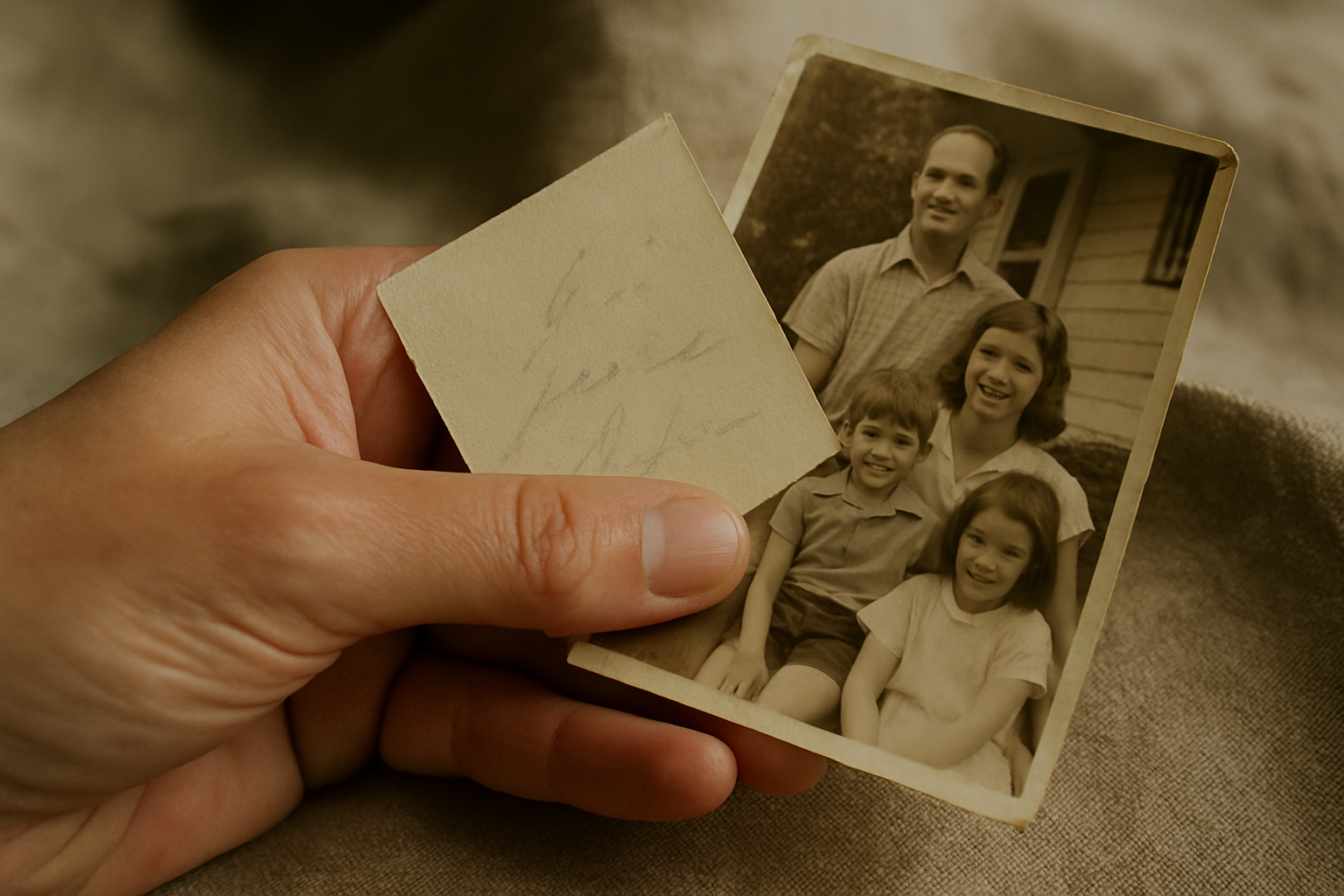
I almost posted a photo of my daughter's first lost tooth on Instagram the other day. It was a classic shot: the goofy, gappy grin, the tiny tooth held up like a trophy. It felt like a moment to share with family and friends.
But I paused. I thought about where that photo would live, what it would become. It wouldn't just be an image in a feed. It would be a data point, scanned and analyzed, potentially used to train an algorithm I'll never see. That sweet, fleeting moment would become part of a vast, commercial machine.
This isn't paranoia. It's the new reality of sharing our lives online, brought into sharp focus by headlines about Meta's latest policy updates. It forces us to ask a critical question: are we sharing our memories, or are we giving them away?
The short answer
Meta's new photo privacy policy grants them broader rights to use the photos you upload to services like Instagram and Facebook. According to recent reports, this includes using your personal images to train their AI models. While you still own your photos, you grant Meta a license to use them. The only way to ensure your family photos are not used for AI training or advertising is to store them on a platform that contractually guarantees your privacy, like a dedicated family archive.
Unpacking Meta's New Photo Rule
For years, we've operated under a vague understanding with social media platforms. We get to use their services for free, and in exchange, they use our data to show us ads. But recent headlines, like one from ExpressVPN asking, "Can Meta use your photos without permission?", highlight a significant evolution in this arrangement.
The shift isn't just about ads anymore. It's about artificial intelligence. The powerful AI tools that can generate text, images, and code need to be trained on massive datasets. And what is Facebook or Instagram but one of the largest datasets of human life ever created? Your family picnics, your baby's first steps, your graduation photos—they are all potential fuel for the next generation of AI.
This isn't a practice limited to one company. We've seen reports that even Apple collects extensive user data for its photo recommendations. It's an industry-wide trend where our personal content is becoming the raw material for technological advancement. One recent article detailed a user's experience combining Google Photos and Instagram with AI to boost engagement—a perfect example of how our personal archives are being repurposed for goals that have nothing to do with preserving memories.
The Convenience of Social Sharing
Platforms like Instagram and Facebook make it incredibly easy to share moments with a large network of friends and family instantly. The tools are free, familiar, and offer a built-in audience for life's updates.
Your Memories are the Product
The trade-off for this convenience is that your content is not truly yours to control. It's analyzed for ad targeting, used to develop new features, and now, to train AI. Your family's story becomes a part of their business model.
Who Are You Building Your Archive For?
When you post a photo, you're not just sharing a moment; you're contributing to an archive. The question is, who is that archive for? Is it for your children and grandchildren, or is it for Meta's shareholders and data scientists?
This isn't just a philosophical debate. It has real-world consequences. A recent story in Fortune detailed how a college photo-sharing app called Swsh pivoted to become an AI-powered fan data business. What started as a fun way to share campus photos became a data-mining operation. It's a stark reminder that when a service is free, its business model can change in ways you never agreed to, and your data goes along for the ride.
This is the fundamental difference between a social media platform and a true private archive.
Public-by-Default Platforms
These services are designed for broadcast. Their success depends on network effects and engagement, which are fueled by collecting and analyzing as much user data as possible. Privacy is a setting you have to manage, not a feature you're guaranteed.
Private-by-Design Archives
Services like Memory Murals are built on the opposite premise. Our service exists to protect your memories, not exploit them. The business model is a simple subscription, which means our only obligation is to you, our customer—not to advertisers or AI developers.
Building Your Family's Digital Sanctuary
Choosing to keep your family's most important memories off of data-hungry platforms isn't about being anti-social media. It's about being pro-family. It’s about deciding that some stories are too precious to be used as training data. It's the digital equivalent of keeping a box of cherished family photos in your home instead of on a public bulletin board.
This is why we built Memory Murals. We believe that privacy is the heart of memory preservation. Your family’s legacy shouldn't be a publicly traded asset. It should be a private sanctuary, a place where your stories are safe, secure, and owned entirely by you.
Taking control of your family's digital narrative is a powerful act. It's a deliberate choice to curate your history in a space designed for intimacy and longevity. Here's how you can start.
How to Create a Truly Private Family Archive
Audit Your Public Footprint
Begin by taking stock of what's already out there. Review your social media profiles and consider what you're comfortable leaving in the public domain. Our guide on how to audit your family's digital footprint can walk you through the process.
Choose a Private-First Platform
When looking for alternatives, read the privacy policy first. The business model is the policy. If the service is free and supported by ads or data, your privacy is not the priority. Look for subscription-based services that explicitly state they will not use your data. There are several excellent private family photo sharing apps to consider.
Migrate Your Most Important Memories
You don't have to delete your social media accounts. Just be more intentional. Download your most cherished photos—the ones that form the core of your family's story—and upload them to your new, private archive. This becomes the official, protected version of your family history.
Set New Sharing Habits
Going forward, make a conscious choice. For broad life updates, maybe Facebook is fine. But for the truly intimate moments—like a child's first lost tooth—share them directly with your inner circle inside your private archive. It's a small shift that makes a huge difference.
What About Your Digital Legacy?
Choosing a private archive also has profound implications for the future. Public social media accounts are notoriously difficult for families to manage or access after a person passes away. A private, dedicated service is designed for legacy, ensuring the memories you save today can actually be passed down to the next generation. It answers the question of what happens to your photos when you die with a clear plan.
The photo of my daughter's gappy grin never made it to Instagram. Instead, I uploaded it to our family's Memory Mural. I added a small voice note, telling the story of how the tooth came out during a particularly intense battle with a piece of toast. It's there now, safe and sound, alongside stories of her grandparents and photos of my wife and me when we first met.
It's not there to get likes or boost engagement. It's just there for us. It's part of our story, told on our terms. That peace of mind is worth more than all the free platforms in the world. If you're ready to build that kind of digital home for your family, you can start your own Memory Mural today.
Get 50 questions to ask your parents — before the stories are gone
The exact prompts families use to draw out the stories nobody ever wrote down. Free, straight to your inbox.
No spam. Unsubscribe anytime.
Frequently asked questions
What is Meta's new photo privacy policy?
Meta's updated policy clarifies their right to use content, including your personal photos, for various purposes like training their AI models. While you still own the copyright to your images, by using services like Facebook and Instagram, you grant them a broad license to analyze and utilize that content. This has raised significant privacy concerns for users who share family photos on these platforms.
Can Meta use my photos without my permission?
When you agree to the terms of service for platforms like Facebook or Instagram, you are giving Meta permission to use your content in the ways outlined in their policies. This is a form of permission, even if it's buried in legal text. The new policy specifically expands on using this content for developing technologies like AI, which many users may not have originally anticipated when they uploaded their photos.
How can I protect my family photos from being used by AI?
The most effective way is to avoid uploading them to platforms that use customer data for AI training. You can review and tighten your privacy settings, but this often only limits visibility to other users, not the platform itself. For sensitive family photos, consider using a dedicated private service that contractually guarantees your data won't be used for training models, advertising, or any other external purpose.
What is the most private way to share family photos?
The most private method is to use a service specifically designed for secure family sharing with a privacy-first business model. Look for platforms that encrypt your data in transit and at rest and have a clear policy stating they will never sell your data or use your photos for advertising or AI training. Unlike social media, these private family archives are built to protect your memories, not monetize them.
Are photos on Instagram and Facebook private?
While you can set your account to 'private' to control which users see your posts, the photos themselves are not private from Meta. The company retains the right to scan, analyze, and use your uploaded content as per their terms of service. This data is fundamental to their business model, powering everything from ad targeting to the development of new AI features. True privacy means the platform itself can't exploit your content.
About the author
Patrick Moore, Founder of Memory Murals
Patrick Moore is the founder of Memory Murals. He built it after realizing how much of his own family's history had quietly slipped away — to help families preserve their stories, voices, and photos while they still can.
Related Stories

Insights
Why Privacy is the Heart of Memory Murals
In an age of oversharing, Memory Murals was built on privacy. Learn why your family's story deserves a space free from ads, algorithms, and public scrutiny.
Patrick Moore • December 10, 2025

Comparisons
The Best Private Family Photo Sharing Apps in 2026 (Honest Facebook Alternatives)
Most families already know they want off Facebook. The real question is where to go. We compared the 8 most popular private family photo sharing apps — honestly, with the tradeoffs that actually matter.
Patrick Moore • April 10, 2026
Insights
Cancel iCloud+? What Happens to Your Family Photos & Backups
Thinking of canceling your iCloud+ plan to save a few dollars? It's a common thought, but it's crucial to understand what happens next. Your photos, videos, and backups are at risk of permanent deletion. Here’s how to protect your family's memories before you downgrade.
Patrick Moore • August 30, 2026
Preserve your family's memories in one private place.
Start free in minutes. No credit card required.