
A New Link Between Gut Health and Memory
A recent study suggests a fascinating connection between gut health and cognitive function, showing a specific probiotic can improve memory. This breakthrough offers a new perspective on how we can support our loved ones' ability to recall and share the precious stories that define a family.
Patrick Moore, Founder • July 21, 2026
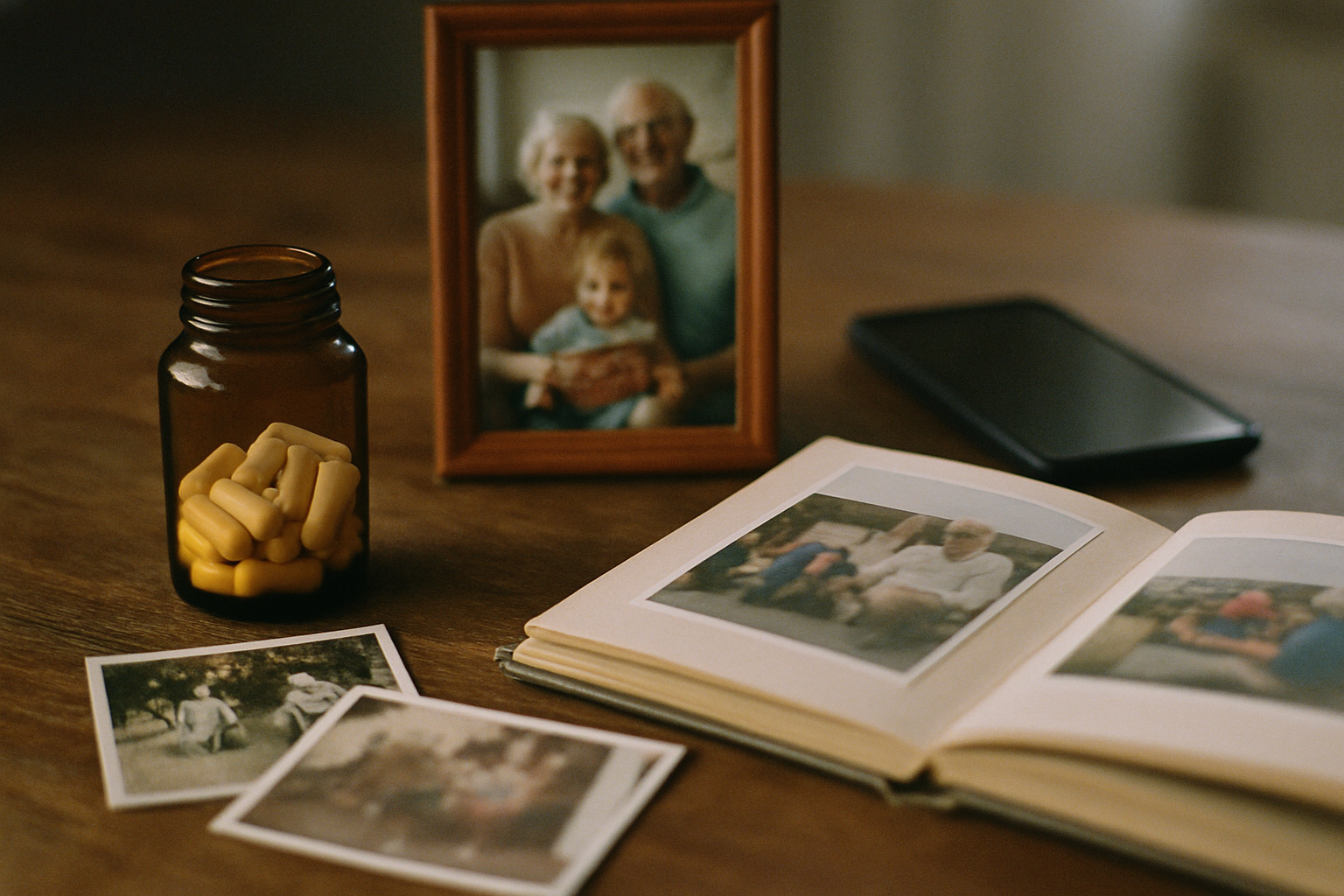
It’s a familiar scene in so many families. A story starts, one you’ve heard a dozen times, but this time a detail gets snagged. Your mom is trying to remember the name of the bakery her father used to take her to every Saturday morning. She can picture the flour-dusted counter and the smell of the bread, but the name is just out of reach, a word on the tip of her tongue.
That small moment of frustration is a universal human experience. It’s a reminder of the fragility of memory, and of how much these details—the name of a bakery, a childhood friend, a favorite song—are the threads that weave the rich tapestry of a life story.
We all want to help our loved ones hold onto these precious threads. For years, we’ve focused on brain games, photo albums, and social visits. But what if one of the next frontiers in supporting memory isn't in the head, but somewhere much more surprising?
The short answer
A recent scientific study has found a significant link between gut health and cognitive function. The research indicated that participants taking a specific probiotic supplement showed measurable improvements in memory performance. This discovery highlights the 'gut-brain axis' and suggests that supporting our digestive health could be a promising new strategy for preserving cognitive abilities and protecting our most cherished memories.
Unpacking the Science
The idea that our gut influences our mind isn't entirely new. We’ve all felt 'butterflies' in our stomach when nervous or a 'gut feeling' about a decision. But science is now revealing just how deep this connection runs. It’s called the gut-brain axis, a constant, two-way communication highway between our digestive system and our central nervous system.
Trillions of microorganisms—bacteria, fungi, and viruses—live in our gut. This complex community is known as the gut microbiome. Far from being passive passengers, these microbes are incredibly active. They help digest our food, produce essential vitamins, and play a critical role in our immune system.
Crucially, they also produce neurochemicals. In fact, as researchers exploring the gut-brain axis explain, roughly 90% of the body's serotonin—a key mood regulator—is produced in the gut. When the microbiome is out of balance (a state called dysbiosis), it can lead to inflammation. This low-grade, chronic inflammation doesn’t just stay in the gut; it can affect the entire body, including the brain, potentially impairing cognitive functions like memory and focus.
What is the Gut-Brain Axis?
The gut-brain axis is the biochemical signaling that takes place between the gastrointestinal tract and the central nervous system. This network involves direct nerve pathways, hormones, and immune system responses, allowing the gut microbiome to influence everything from mood and stress levels to cognitive functions like learning and memory.
A Probiotic for Thought
This brings us to the research that's generating so much excitement in this field. In one randomized, double-blind, placebo-controlled trial published in Nutrients, researchers investigated whether a specific probiotic—the Bifidobacterium longum strain BB68S—could have a measurable impact on memory in healthy older adults aged 60 to 75. While we must be careful not to overstate the findings of a single study, the results were promising.
The group of participants who took the probiotic supplement demonstrated improved performance on memory-related tasks compared to the placebo group, with significant gains in both immediate and delayed memory scores. This suggests that introducing certain beneficial bacteria into the gut could potentially help reduce inflammation and support the complex signaling along the gut-brain axis, ultimately benefiting cognitive health.
It’s important to see this not as a magic pill, but as a significant clue in the ongoing puzzle of brain health. It reinforces a more holistic view of the body, where the health of one system is deeply intertwined with another. The implications are profound for how we approach supporting our loved ones as they age.
A Holistic View of Health
This research moves the conversation about memory beyond just the brain, encouraging a whole-body approach to cognitive wellness.
A New Tool for Seniors
For families supporting aging parents, this opens up a new, non-invasive avenue to explore for promoting cognitive vitality.
Empowering Families
Understanding this link gives you another way to care for your loved ones through diet and lifestyle, fostering a sense of agency.
The Future of Memory Care
This is likely just the beginning. As scientists learn more, we may see more targeted approaches to supporting brain health through the gut.
How This Matters for Your Family's Stories
Scientific findings are fascinating, but what do they mean for you, your parents, and the stories you cherish? The connection is more direct than it seems. The act of remembering is a complex biological process. For a parent to share a detailed story from their past, their brain needs to access and assemble countless pieces of information. Cognitive clarity is the foundation of storytelling.
When we support our loved ones' overall health—whether through a balanced diet, regular walks, or potentially, gut-friendly foods and supplements—we are also supporting the biological machinery they need to access their own life stories. It's one more way to help keep those memories within reach.
Of course, this is just one piece of a much larger picture. The most powerful way to preserve memories is to engage with them. This research complements, rather than replaces, the timeless methods of memory keeping. The cognitive benefits of storytelling for seniors are well-documented; the act of recalling and articulating a story strengthens the neural pathways associated with that memory.
Combine this with other memory aids: pull out an old photo album, play music from their teenage years, or ask gentle, open-ended questions. Each of these actions creates an environment where memories feel welcome and accessible.
Creating a Home for Memories
Supporting the biological capacity for memory is one half of the equation. The other is creating a safe and permanent home for the stories that are shared. A memory, once spoken, can vanish into the air if it isn't captured. This is where the thoughtful application of technology becomes so important.
Social media feeds are fleeting and public. A shoebox of photos is vulnerable and lacks context. We built Memory Murals for this very reason: to provide a private, secure, and permanent digital space for families to preserve their most meaningful moments. It’s a place where a photo of that old bakery isn't just a picture, but an anchor for your mom’s voice recording, sharing the story in her own words.
When you create a private and secure family archive, you’re building more than a collection of files. You're building a legacy—a space where future generations can not only see their ancestors but hear them, understand them, and feel connected to them. It's the modern equivalent of the family bible or the cherished box of letters, designed for the digital age.
Ultimately, the journey of preserving family history is a partnership. It's about supporting the health and well-being of our elders so they can access their memories, and it's about using the right tools to give those memories a lasting home. If you're ready to start building that home for your family's stories, you can get started with Memory Murals today.
This new research is a hopeful reminder that the body has a remarkable capacity for wellness, and that even the smallest things—down to the microbes in our gut—can play a part in preserving the memories that make us who we are.
Get 50 questions to ask your parents — before the stories are gone
The exact prompts families use to draw out the stories nobody ever wrote down. Free, straight to your inbox.
No spam. Unsubscribe anytime.
Frequently asked questions
What does the new study say about probiotics and memory?
A recent study highlighted a link between gut health and brain function. Researchers found that a specific probiotic supplement was associated with improved memory performance in participants. This suggests that nurturing a healthy gut microbiome could be a new avenue for supporting cognitive abilities, particularly as we age. The findings open up exciting possibilities for holistic approaches to brain health.
How does gut health affect the brain?
The gut and brain are connected through the 'gut-brain axis,' a complex communication network. The trillions of microbes in our gut can produce neurotransmitters, vitamins, and other compounds that influence brain function, mood, and cognitive processes like memory. An imbalance in these microbes can lead to inflammation, which may negatively impact the brain. Promoting a healthy gut can therefore support clearer thinking and memory recall.
Can taking a probiotic really help me remember family stories?
While a single probiotic isn't a magic bullet for memory, emerging research suggests it's a supportive piece of the puzzle. By potentially reducing inflammation and supporting the gut-brain axis, certain probiotics may help maintain the cognitive clarity needed to access and share cherished memories. Think of it as another tool, alongside storytelling and active engagement, to help keep those precious family stories alive and accessible.
What are other ways to support memory function in seniors?
Beyond potential supplements like probiotics, several lifestyle factors are crucial for supporting senior memory. Regular physical activity, a balanced diet rich in antioxidants, social engagement, and mentally stimulating activities like puzzles or learning a new skill are all proven to help. Actively sharing and recording life stories is also a powerful cognitive exercise, reinforcing neural pathways and preserving a priceless legacy for the family.
About the author
Patrick Moore, Founder of Memory Murals
Patrick Moore is the founder of Memory Murals. He built it after realizing how much of his own family's history had quietly slipped away — to help families preserve their stories, voices, and photos while they still can.
Related Stories
Insights
Beyond Legacy: The Surprising Cognitive Benefits of Storytelling for Seniors
We often think of preserving family stories as a gift for future generations. But what if the greatest benefits of storytelling for seniors are for the storytellers themselves? From boosting memory recall to fighting social isolation, the act of sharing a life story is a powerful tool for cognitive and emotional well-being.
The Memory Murals Team • June 29, 2026

Pillar Articles
The Biological Glue: How Your Brain Builds Your Legacy
New research shows memory can be stabilized by physical structures in the brain. Here's what functional amyloids reveal about why some moments last a lifetime.
Patrick Moore • February 22, 2026
Insights
New Study Suggests We're Wrong About How the Brain Stores Memory
Recent neuroscience research is challenging long-held beliefs about how our brains store memories. This new understanding suggests memories aren't static files but are actively reconstructed each time we recall them. What does this mean for the stories we cherish and the ways we try to preserve them?
Patrick Moore • September 1, 2026
Preserve your family's memories in one private place.
Start free in minutes. No credit card required.