
Family Traditions to Start
The best family traditions aren't expensive or elaborate — they're small, repeatable, and they quietly become the thing your kids remember most. Here are traditions worth starting this year, plus the one habit that turns any tradition into a keepsake you can revisit for decades.
Patrick Moore, Founder • July 10, 2026
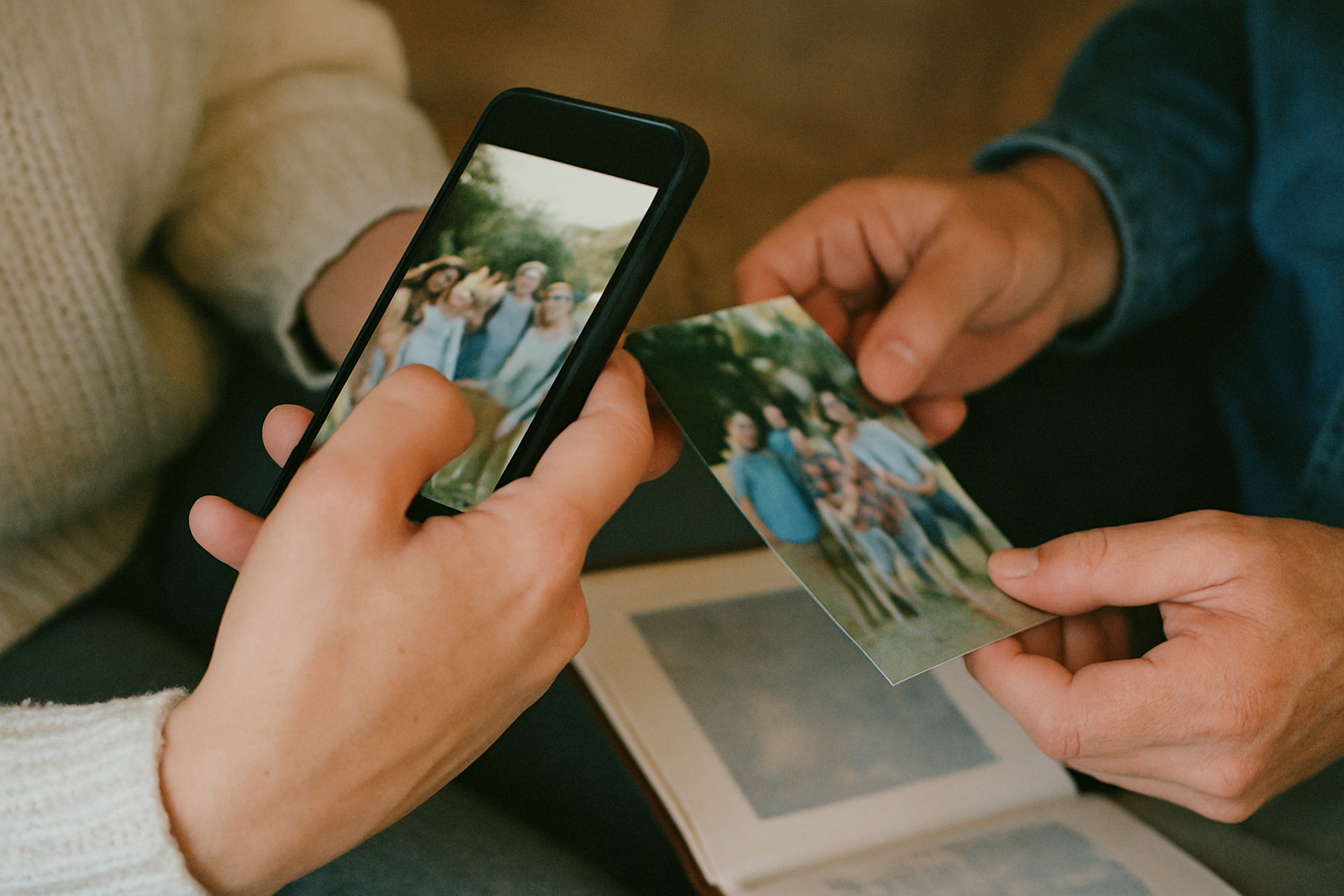
Ask a grown adult about their favorite childhood memories and you'll rarely hear about the expensive vacation. You'll hear about the pancakes every Sunday. The specific way the tree went up. The dumb song Dad sang on the way to school. The small, repeated things — the traditions — are what actually stick.
That's good news, because it means the most memorable thing you can give your kids isn't money or a big trip. It's a rhythm. A few small rituals, repeated often enough to become "how our family does things."
Here are traditions worth starting this year — chosen because they're easy to keep, not just nice in theory. And because a tradition you don't record is a tradition you slowly forget, each one comes with the simplest way to capture it, so it builds into a keepsake instead of just evaporating.
The short answer
The best family traditions to start are small, repeatable, and anchored to a recurring day so you actually keep them: a weekly ritual (pizza-and-movie night, Sunday pancakes), a seasonal one (same first-day-of-school photo, a holiday ritual), and an annual reflection (a birthday interview or a New Year's gratitude jar). Start smaller than feels meaningful — the meaning comes from repetition. And capture each occurrence with a quick photo or voice note so the tradition builds a visible record you can revisit for decades.
The best traditions are small and repeatable
The reason most "new family traditions" don't survive is that they're too ambitious. An elaborate monthly adventure sounds wonderful in January and quietly dies by March. A tradition is a habit, and habits live or die on how easy they are to repeat when you're tired.
So the rule is: start smaller than feels meaningful. A five-minute ritual you actually do every week beats a grand event you do once. The meaning isn't in any single occurrence — it accrues, invisibly, across dozens of small repetitions, until one day your kid says "we always do this" and you realize you built something.
Weekly traditions (the everyday rhythm)
These run on the calendar's smallest loop, so they compound the fastest.
Same-night dinner ritual
Friday pizza, Sunday pancakes, taco Tuesday — one meal that's always the same. Capture it: a quick photo of the table a few times a year; the changing faces around the same meal is the whole story.
Rose & thorn at dinner
Everyone shares the best and hardest part of their day. Capture it: once a month, record 30 seconds of it — you'll have your kids' actual daily worries and joys, in their voice.
Weekly one-on-one
A short walk or errand with one kid at a time, rotating. Capture it: a selfie each time; the series becomes a record of that specific relationship.
Sunday-night reset
A small ritual that closes the week — a candle, a favorite show, planning the week together. Capture it: jot one line about the week into a running family note.
Seasonal & annual traditions (the ones kids count on)
These come once a year, which makes them easy to remember and powerful to compare over time.
- The same-spot first-day-of-school photo. Same doorway, same pose, every September. The year-over-year series is one of the most-loved traditions there is — and it only works if you keep them together to see them in sequence.
- A birthday interview. Ask your child the same questions every year and record the answers. It's the single best annual tradition for memory-keeping — so much so it gets its own full guide and question set here.
- A holiday ritual that's yours. Not the whole holiday — one specific small thing (the first-snow hot chocolate, decorating on the same night with the same playlist). Kids latch onto the specific, repeated detail.
- A "year in review" conversation. On New Year's morning or a birthday, talk through the year's highlights and lowlights together. Capture it: record it; a stack of these becomes your family's oral history.
- A gratitude jar. Drop notes in all year, read them together on New Year's Eve. The jar itself is the keepsake.
Milestone traditions (marking the changes)
- A letter on each birthday. Write (or voice-record) a short letter to your child each year, to be given to them when they're grown. It doubles as your own record of who they were that year.
- The "when you were [age]" story. Once a year, tell your kids a story about themselves at a younger age. It teaches them their own history — the kind of thing that also helps involve your kids in memory-keeping instead of it being all on you.
- A growing time capsule. Add one small thing a year — a drawing, a note, a recording — to a box or a digital collection to open at eighteen.
The thread that ties them together
Notice the pattern: every tradition here is a recurring event, which means each one naturally produces a series — the same photo every year, each holiday, every annual interview. That series is where the magic is. But it only exists if you can actually find last year's. The traditions that become treasured keepsakes are the ones you captured and kept in one place; the rest just happen and fade.
Turn a tradition into a keepsake
A tradition is a memory factory — it produces the same beautiful moment on a loop. The difference between a tradition you remember and one you can actually revisit is whether you captured each occurrence and kept them together.
That's the same simple habit behind capturing your kids' childhood memories: grab the moment, add a scrap of context, and save it somewhere permanent — in order, so the tradition reads as a time-lapse of your family growing up. Do that with even one tradition and, ten years in, you'll have something no store sells: a visible record of your family being your family, year after year.
Pick one tradition from this list and start it this week — small, on a day you won't forget. Then give it a home: start a private family archive where each year's version lives with the last, and watch your smallest ritual quietly become the thing your kids remember most.
Get 50 questions to ask your parents — before the stories are gone
The exact prompts families use to draw out the stories nobody ever wrote down. Free, straight to your inbox.
No spam. Unsubscribe anytime.
Frequently asked questions
What are some good family traditions to start?
The best traditions are small, repeatable, and low-cost: a weekly pizza-and-movie night, a Sunday morning pancake ritual, a first-day-of-school photo in the same spot every year, an annual 'highlight of the year' conversation, a birthday interview, a gratitude jar you open on New Year's. What makes a tradition stick isn't how elaborate it is — it's how easy it is to repeat. Pick one or two, anchor them to a day, and let them run.
How do you start a new family tradition that actually lasts?
Anchor it to something recurring you won't forget — a day of the week, a birthday, a season — and keep it simple enough that you'll still do it when you're tired. Traditions die from being too ambitious. Start smaller than feels meaningful; the meaning accrues through repetition, not scale. And capture each occurrence (a quick photo, a voice note) so the tradition builds a visible record over the years, which is its own motivation to keep going.
Why are family traditions important for kids?
Traditions give children a sense of identity, security, and belonging — a reliable rhythm that says 'this is who we are.' Family rituals are widely associated with stronger family bonds and children's well-being. They also become the raw material of memory: the specific, repeated moments (not the big expensive trips) are what kids most often carry into adulthood as 'how my family did things.'
How do I remember and keep our family traditions over the years?
Capture each occurrence and keep them together. A tradition is a recurring event, so it naturally builds a series — the same first-day-of-school photo every September, each year's holiday, every annual interview. Save each instance in one place, in order, and the tradition becomes a time-lapse of your family growing up. Without capturing it, the tradition happens and evaporates; with a quick photo or voice note each time, it becomes a keepsake.
About the author
Patrick Moore, Founder of Memory Murals
Patrick Moore is the founder of Memory Murals. He built it after realizing how much of his own family's history had quietly slipped away — to help families preserve their stories, voices, and photos while they still can.
Related Stories
How-To Guides
How to Capture Your Kids' Childhood Memories (a Simple System That Sticks)
You have thousands of photos and almost none of the story behind them. Here's a simple, all-ages system for capturing your kids' childhood memories — the everyday ones you'll actually want back — in under a minute at a time, and keeping them somewhere they won't get lost.
Patrick Moore • July 10, 2026
Lists & Roundups
Questions to Ask Your Kids Every Year: the Simplest Memory Tradition
Ask your child the same short list of questions once a year and record the answers. It takes ten minutes, and by the time they're grown you'll have something almost no parent has: their actual voice, changing year by year. Here's the question set and how to make it a tradition that sticks.
Patrick Moore • July 10, 2026

Insights
Surgeon General's Warning: Navigating Kids' Screen Time for Healthy Memories
The recent Surgeon General's warning about children's screen time has many parents concerned. This post breaks down the key implications for family life, offering practical strategies to balance digital tools with the irreplaceable value of real-world experiences and memory-making.
Patrick Moore • September 24, 2026
Preserve your family's memories in one private place.
Start free in minutes. No credit card required.