
The Digital Orphan Crisis: Why Photos Can't Replace Stories
We're raising a generation of digital orphans — children with thousands of images but no context. Here's why family stories matter more than photos.
Patrick Moore, Founder • January 20, 2026
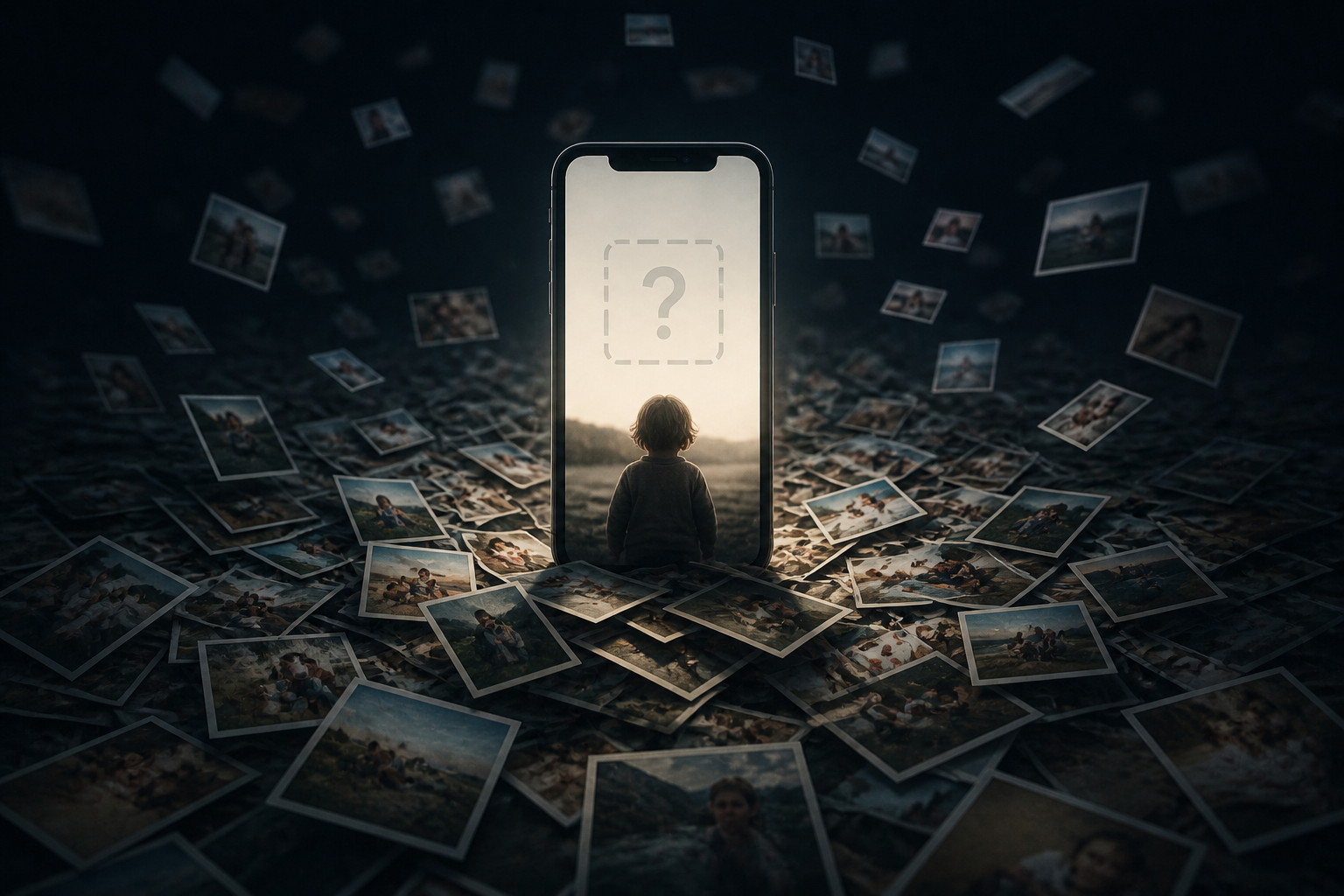
My grandmother had maybe 30 photos from her entire life. I've got 30 from last Tuesday. And here's the strange part — I think she passed down more of herself in those 30 photos than I'll manage with my 30,000.
That's the "Digital Orphan" problem in a sentence. We're leaving our kids thousands of images but almost no context. They'll get the "what" — faces, places, birthday cakes — but none of the "why." A gallery of people they can recognize but can't really know.
The Digital Orphan Problem
We're giving our children the largest visual archive any generation has ever inherited. And the least amount of story to go with it. They'll see the faces but won't hear the voices. They'll know what happened but not why it mattered.
Photos Are Silent Witnesses
We take more photos in a weekend than our great-grandparents took in a lifetime. Our phones and cloud accounts are bursting. And there's a comforting feeling that comes with that — a sense that because it's all "in the cloud," it's safe. Because we have a photo of Mom at the birthday party, we've preserved her.
But a photo can't talk.
It captures a hairstyle, a smile, a moment. It doesn't capture the person inside. It shows what happened but can't tell your children why it mattered. It can't convey the advice your grandmother whispered on your wedding day, the courage your father found when he almost gave up on a dream, or the values that actually shaped your family.
Without the story behind it, a photo eventually becomes a mystery — a beautiful face in a digital drawer that nobody can describe. And your kids? They'll inherit a lineage of faces without any real connection to the people in them. As we wrote about in the person you never knew your parents were, the richest inheritance isn't money. It's wisdom and resilience passed through stories.
Think about the "invisible inheritance" — the struggles, triumphs, and defining moments that shape a family's character. A picture of a family gathering might show joy, but it can't reveal the sacrifice it took to bring everyone together, or the lessons learned from getting through hard times. We dig into this more in the invisible inheritance.
20,000+
Photos Inherited
A massive visual archive with no context — faces without names, events without meaning, moments without stories
0
Voice Recordings
No record of how loved ones sounded, laughed, or told their stories — the most emotionally powerful medium, completely absent
0
Written Narratives
No explanation of why moments mattered, what lessons were learned, or what values drove the family forward
The More Photos You Take, the Less You Remember
Here's the cruel irony. Taking all those photos might actually be making your memory worse.
Psychologists call it the "Photo-Taking-Impairment Effect." When you click the shutter, your brain quietly outsources that memory to the phone. You stop deeply processing the moment because you know the device has it covered. It's a form of "Digital Amnesia" — and the research backs it up. Reliance on extensive photo-taking demonstrably weakens our personal memory of the things we're photographing.
So we're constantly documenting but paradoxically remembering less. And if we — the people who were actually there — can't recall the details without looking at the photo, what are we going to pass on?
For more on this, check out the photographic paradox.
What We Have in Abundance
What We're Desperately Missing
We're drowning in data but starving for meaning. To fix that, we need to move past the snapshot and get back to the story.
Why Voice Beats Photos Every Time
If we want to save the next generation from digital orphanhood, we need to change what we prioritize saving.
One minute of your mom explaining her philosophy on life is worth more than a terabyte of silent vacation photos. Why? Because voice captures things photos can't touch — emotion, personality, humor, the way someone pauses before saying something important.
Think about what it means for a child to hear their grandparent's actual voice. Not a photo. The real voice — the cadence, the laughter, the slight tremor when they're remembering something emotional. That's not just listening. That's connecting across time. As we explored in the sound of home, voice is an emotional bridge that images alone can't build.
Voice Captures What Photos Can't
Voice preserves the humor, the resilience, the emotional texture of a person. The tone, the pauses, the inflection — these carry personality in a way a frozen image never will. It gives future generations an authentic, direct connection to someone they may never meet in person.
Mentorship Across Time
When a grandchild hears their grandparent's voice recounting a life lesson or a moment of courage, they're not just looking at the past — they're being actively guided by it. That auditory connection builds identity, resilience, and belonging in ways that shape their future.
Photos Alone Create Digital Orphans
A child left with thousands of images but no authentic connection to the people in them. They see faces but hear no voices. They observe moments but understand nothing about what those moments meant. That's a profound disconnect from their own history.
This is exactly why Memory Murals prioritizes Audio Memories and guided storytelling prompts in the Legacy feature. Hearing someone's own words — their cadence, their emotion — is the most direct bridge to who they were. Start your free 7-day trial to see how simple it is.
The 1% Challenge: From Snapshots to Sagas
Count Your Photos
For every 100 photos you take this month, commit to recording just one story
Pick a Prompt
Ask a loved one about a first car, a treasured heirloom, or the day they felt grown up
Record Their Voice
Use your phone or Memory Murals to capture the story in their own words
Pair Story with Photos
Connect the narrative to existing images — silent snapshots become living memories
Stop Observing. Start Building.
You don't need to delete your photo library. Just balance it.
For every 100 photos you take this month, capture one story. That's the 1% Challenge. It's not about perfection — it's about starting. One story a week turns a chaotic camera roll into something your grandchildren will actually care about.
Three Stories to Record Today
Ask a loved one to describe their first car and what it meant to them. Get the story behind their oldest or most meaningful possession. Ask about the day they realized they were truly grown up.
When you add narrative to your photos, you turn a gallery of strangers in old clothes into a detailed map of who your family actually is. Where they came from. What they survived. What they believed in.
Don't let your family's history dissolve into a pile of disconnected images. The time to capture the why behind the what is right now. Memory Murals makes it simple — record voice stories, pair them with photos, and build a legacy your children will actually inherit. Not just a gallery. A living, breathing history. Start your free 7-day trial.
Frequently Asked Questions
What exactly is the "Digital Orphan" crisis?
It's the growing problem where children inherit massive photo libraries of their family — thousands of images — but have zero context for any of it. No stories. No voice recordings. No explanation of who these people were or why the moments mattered. Despite having more visual documentation than any generation in history, they end up feeling disconnected from their own heritage.
How does taking more photos actually diminish my memories?
It's called the "Photo-Taking-Impairment Effect." When you rely on a camera to capture a moment, your brain does less work encoding it. You stop deeply processing the experience because you trust the device to remember for you. The result is "Digital Amnesia" — weaker personal recall of the very things you photographed. Studies confirm this affects both individual memory and the family history you're able to share.
Why are voice recordings more important than photos for legacy?
Because voice captures things photos literally can't — tone, emotion, humor, pauses, personality. When a grandchild hears their grandparent's actual voice telling a life lesson, they're getting mentorship across time. That direct auditory connection builds identity and resilience in ways a static image never will.
What's the simplest way to start preserving my family's stories?
The 1% Challenge: for every 100 photos you take this month, record one story. Use audio or video — they capture nuances that text alone misses. Start with simple prompts: "Tell me about your first car." "What's the story behind that old photo on the mantle?" Tools like Memory Murals have guided prompts and easy audio recording built in, so you can capture a story in the time it takes to scroll through your camera roll.
Get 50 questions to ask your parents — before the stories are gone
The exact prompts families use to draw out the stories nobody ever wrote down. Free, straight to your inbox.
No spam. Unsubscribe anytime.
About the author
Patrick Moore, Founder of Memory Murals
Patrick Moore is the founder of Memory Murals. He built it after realizing how much of his own family's history had quietly slipped away — to help families preserve their stories, voices, and photos while they still can.
Related Stories
Insights
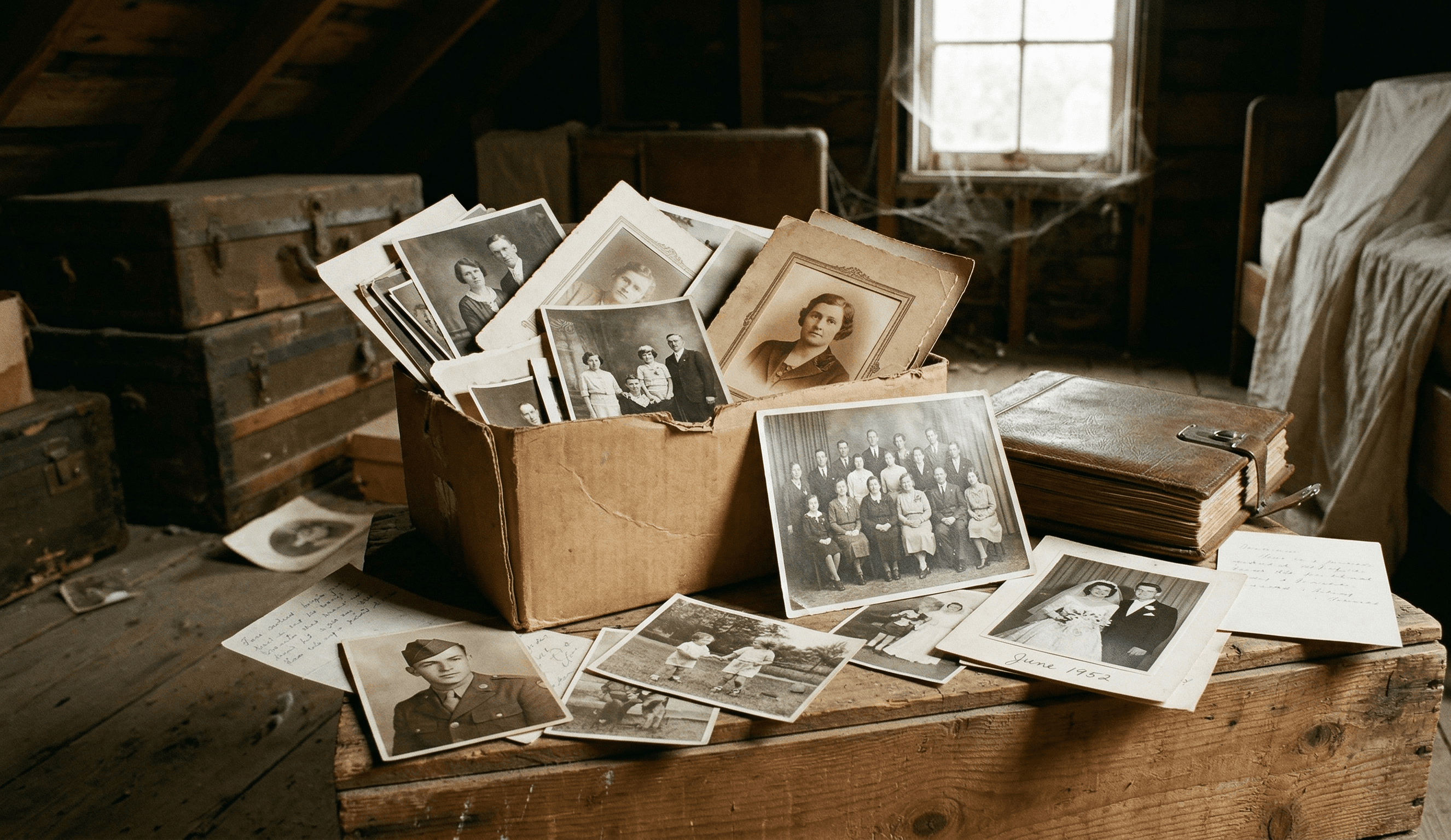
What Happens to Your Family Photos When You Die?
When someone dies, their iCloud, Google Photos, and social media don't transfer to family. One woman spent years fighting Apple for her husband's wedding photos. Here's what actually happens to your digital memories — and how to make sure your family never loses them.
Patrick Moore • April 8, 2026
Insights
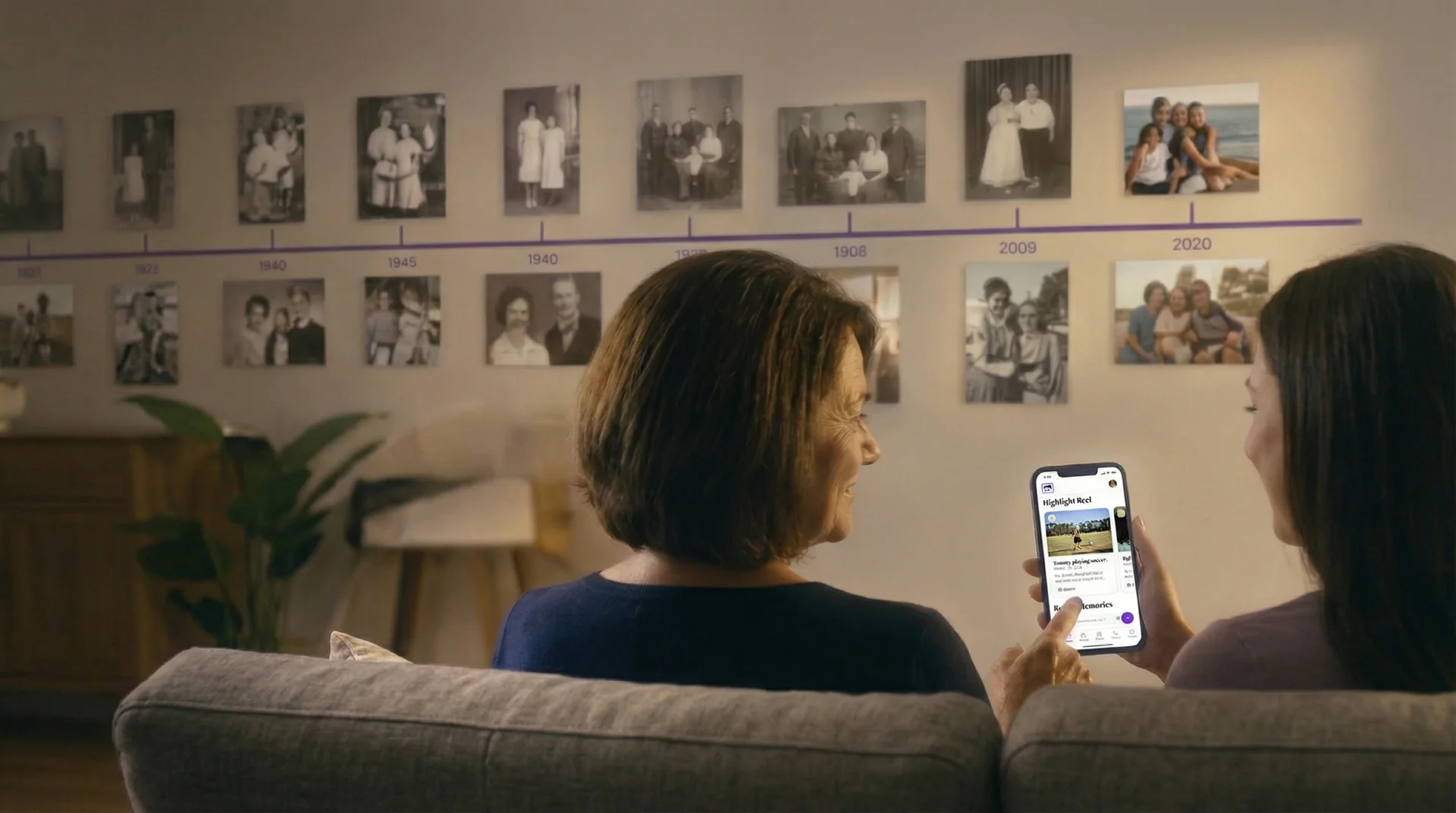
The Stories You'll Never Hear Again: Why Every Unrecorded Day Is a Permanent Loss
Your family is losing stories every single day. Not to tragedy or disaster, but to the quiet, ordinary passage of time. Here's why the window is closing faster than you think.
The Memory Murals Team • March 29, 2026

Pillar Articles
Why You Have Thousands of Photos But Feel Like You're Not Preserving Your Family's Memories
You have thousands of photos and still feel like nothing is being preserved. Here's why volume erodes memory — and the small ritual that fixes it.
Patrick Moore • May 4, 2026
Preserve your family's memories in one private place.
Start free in minutes. No credit card required.