
AI Grandkid Photos: Fun or Folly?
A grandparent excitedly shares an AI-generated photo of their grandchild as a tiny astronaut. For them, it's harmless fun. For the Millennial parents, it's a digital privacy violation. This post explores the generational divide over AI-generated kid photos and offers a path forward for families.
Patrick Moore, Founder • September 21, 2026
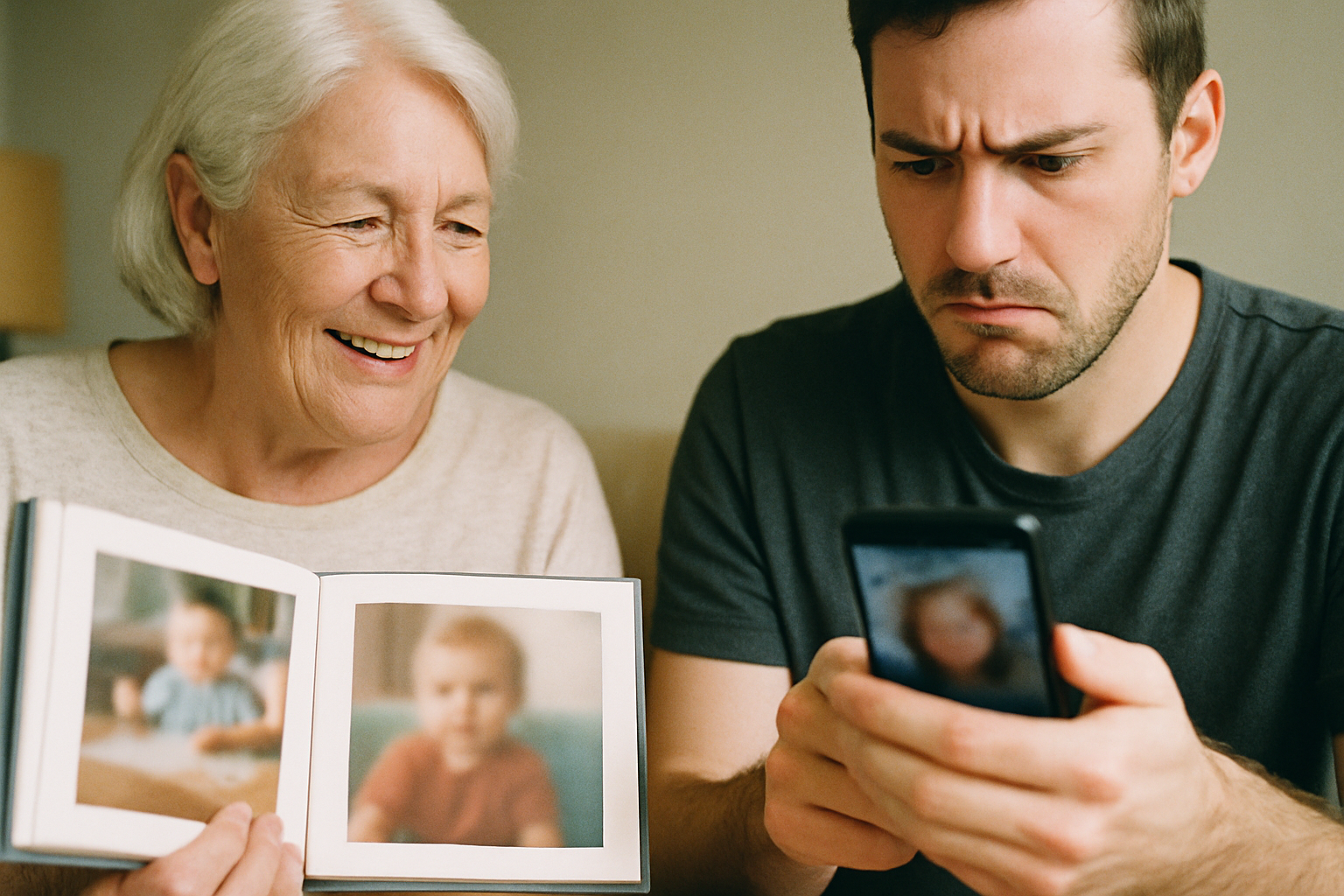
It starts with a ping in the family group chat. It’s a photo from your dad, a picture of your six-month-old daughter, but not. She’s wearing a tiny, perfectly rendered astronaut helmet, floating in a starry nebula. The caption is simple: “Our little star!”
For your dad, this is pure joy. He saw a fun trend, used a simple app, and created a cute image to share his love and pride. It’s the digital equivalent of buying a silly onesie. For you, the new parent, your stomach clenches. It’s an adorable image, but your first thought isn’t about the cuteness. It’s: What app was that? Where did her photo go? Who owns her face now?
This scenario is playing out in families everywhere, opening a new front in the generational tech divide. As publications like Business Insider have noted, what one generation sees as harmless fun, another sees as a serious privacy breach. It’s a conflict born not of malice, but of vastly different experiences with the digital world.
The short answer
The trend of creating "AI grandkid photos" highlights a generational gap in understanding digital privacy. Grandparents, from a Boomer or Gen X perspective, often see it as harmless, creative fun—a digital dress-up game. Millennial and Gen Z parents, raised on news of data breaches and digital footprints, see the risk of their child's biometric data being used for AI training without consent. The core of the conflict is balancing the joy of sharing with the modern necessity of protecting a child’s permanent digital identity.
Why Grandparents Love the Trend
For many grandparents, the internet is a tool for connection. They didn't grow up with the ambient anxiety of data harvesting and algorithmic manipulation. A photo is a photo. Its purpose is to be shared, admired, and to bring a smile. When they see an app that can turn their grandchild into a fairy, a superhero, or a historical figure, the appeal is immediate and uncomplicated.
It's about:
- Creative Expression: It’s a fun, novel way to dote on a grandchild. It feels creative and participatory.
- Ease of Use: These apps are designed to be incredibly simple. In a few taps, they can produce a high-quality, imaginative image that would have once required a professional artist.
- Connection: Sharing these images is a bid for connection. It’s a way to participate in the child's life, show they are thinking of them, and get a positive reaction from the rest of the family.
From their perspective, the image is ephemeral, a fleeting bit of fun. The concept that uploading that photo might mean a tech company in another country now has a permanent, analyzable copy of their grandchild’s face is often not part of the mental calculation.
Why Parents Are Worried
For parents today, every digital decision for their child feels weighted. They are the gatekeepers of their child’s digital identity, an identity being formed long before the child can understand what that even means. Their concern isn't about the cute picture; it's about the invisible transaction that created it.
The core worries include:
- Data Privacy: What does the app's Terms of Service say? Most users click “agree” without reading, but the fine print often gives the company a broad, royalty-free, worldwide license to use, modify, and distribute the content you upload. Your child's face becomes their asset.
- AI Training: Many of these services use uploaded photos to train their AI models. Your child’s unique facial features help make their algorithm smarter, contributing to a massive database of biometric information.
- Lack of Consent: A child cannot consent to having their image used in this way. The parent is making a permanent decision on their behalf, adding to a digital footprint that could have unforeseen consequences years down the line.
- Potential for Misuse: While it may seem far-fetched, the rise of sophisticated deepfakes is a real concern. The more high-quality images of a child exist in databases, the easier it is for those images to be used for nefarious purposes. It's a risk, however small, that many parents are unwilling to take. You can read more about this in our guide to protecting family photos from AI deepfakes.
The Appeal of AI Photo Fun
It's an easy and imaginative way to create a unique image that sparks joy and conversation. For a grandparent living far away, it can feel like a tangible way to participate in the fun of a child's early years, turning a simple snapshot into a whimsical piece of art to be shared and celebrated.
The Unseen Privacy Costs
The transaction is often your child's biometric data. Vague terms of service can allow companies to use their likeness to train AI models indefinitely. This creates a permanent digital identity without the child's consent, and you lose control over who has access to and is profiting from their image.
A Bridge, Not a Battle
So, what do you do when that AI-generated photo lands in the group chat? The instinct might be to react with frustration, but that rarely leads to a productive outcome. The key is to frame the conversation around a shared goal: loving and protecting the child.
This isn't a lecture about technology; it's a conversation about family values. Grandparents aren't trying to cause harm; they are trying to show love. Your job is to help them see that in today's world, protecting a child's privacy is a profound act of love.
How to Talk to Grandparents About AI Photos
Acknowledge the Love First
Always start with appreciation. "Dad, that picture of her as an astronaut is so creative and cute! Thank you for thinking of her. I can see how much fun you're having with these new apps."
Explain Your 'Why' Calmly
Use "I" or "we" statements. "As we're navigating being new parents, we've been reading a lot about digital privacy for kids. We've decided we're not comfortable uploading her pictures to any third-party apps because we can't be sure where the photos go or how they're used."
Set a Clear, Gentle Boundary
Be specific and kind. "Would you be okay if we made a family agreement to not use her photos in those AI generator apps? We want to be really careful about her digital footprint from the start."
Offer a Wonderful Alternative
This is the most crucial step. The boundary can't feel like a punishment. "Instead, let's make sure we're sharing all the real, beautiful photos in our private Memory Mural. That way, we have a safe space just for us, and we know her memories are protected." This reframes the issue from restriction to protection.
Creating a Safe Space for Digital Memories
The fundamental issue here is the platform. Public social media and free-to-use apps are built on a business model of data collection. They are the opposite of a family photo album. The solution is to create a digital environment that mimics the privacy and intimacy of that old, leather-bound album on the coffee table.
This is why we built Memory Murals. We believe that a family’s story is its most precious asset, and it should belong to the family alone. A private archive provides a space where you can set the rules. It becomes the designated, trusted place for sharing baby milestones with grandparents without worry.
What 'Private' Really Means
When a service is truly private, your data isn't the product. It means the company's business model is to protect your memories, not monetize them. At Memory Murals, your photos and stories are never used for AI training or sold to data brokers. Everything is encrypted in transit (TLS) and at rest (AES-256), ensuring your family's archive is a sanctuary, not a resource to be mined.
By creating a central, secure home for your family's memories, you provide the perfect answer to the AI photo dilemma. You give grandparents a place where they are encouraged to share, comment, and engage with every real, authentic photo you post. It satisfies their desire for connection while respecting your need for privacy.
This isn't about stopping the fun. It's about channeling that loving energy into a space that is safe, permanent, and owned by you. The joy isn’t in the AI-generated gloss; it’s in the real moment—the messy face after eating spaghetti, the wobbly first step, the sleepy cuddle on the couch. Those are the images that truly matter.
It’s about creating a space where everyone feels safe to share, from the first ultrasound photo to the high school graduation. If you're looking for that kind of private family archive, you can start your own Memory Mural today. The goal is to build a bridge between generations, using technology that connects us without compromising the privacy of those we love most.
Get 50 questions to ask your parents — before the stories are gone
The exact prompts families use to draw out the stories nobody ever wrote down. Free, straight to your inbox.
No spam. Unsubscribe anytime.
Frequently asked questions
Is it safe to use AI photo apps with my kids' pictures?
Safety depends on the app's terms of service, which often grant them a broad license to use your photos. Many apps use submitted images, including your child's face, to train their artificial intelligence models. This creates a permanent digital record you don't control. For maximum safety, it's best to avoid uploading children's photos to third-party AI generators and instead use private, secure platforms for sharing family memories where your data is not the product.
What are the privacy risks of AI-generated photos of children?
The primary risks involve data privacy and digital consent. When you upload a child's photo, their biometric data can be stored indefinitely and used to train AI systems. This contributes to a digital footprint they didn't consent to. There's also the long-term risk of this data being used for deepfakes or other forms of misuse. Essentially, you lose control over your child's likeness, and it becomes part of a commercial company's dataset.
How can I talk to my parents about not posting AI photos of my kids?
Approach the conversation with empathy. Acknowledge their loving intentions first. Then, calmly explain your concerns about digital privacy and consent, framing it as a new-parent precaution in a changing world. Say something like, 'We're being extra cautious about where her photos live online.' Offer a positive alternative, like a shared private family archive, so they understand the goal is safety, not secrecy. This makes the boundary feel like a shared agreement rather than a restriction.
Why are grandparents so excited about AI photo trends?
For many grandparents, AI photo trends are simply a new, fun way to engage with their grandchildren's images. It feels like a high-tech version of scrapbooking or framing a photo. They often view it as harmless play, disconnected from the data privacy concerns that are top-of-mind for younger generations. Their digital experience comes from a time when a photo was just a photo, not a data point, so the excitement is rooted in creativity and connection, not a disregard for privacy.
Are there private ways to share AI-generated photos with family?
If you choose to create AI photos, the most private way to share them is within a secure, closed system. Instead of posting on social media, you can share them directly in a dedicated family app like Memory Murals. This ensures the image is only seen by your invited family members and isn't scraped by public platforms. However, remember the initial privacy risk occurs when you upload the original photo to the AI generator itself, so the creation process is where the most caution is needed.
About the author
Patrick Moore, Founder of Memory Murals
Patrick Moore is the founder of Memory Murals. He built it after realizing how much of his own family's history had quietly slipped away — to help families preserve their stories, voices, and photos while they still can.
Related Stories
Insights
How to Protect Family Photos from AI Deepfakes & Preserve Their Truth
With AI tools making it easy to create fake images, how can we trust our family photos? Recent news about Apple's new authentication features highlights the growing need to protect our digital memories. This guide explains the risks and offers practical steps to safeguard your family's visual history.
Patrick Moore • August 12, 2026

Insights
Why Privacy is the Heart of Memory Murals
In an age of oversharing, Memory Murals was built on privacy. Learn why your family's story deserves a space free from ads, algorithms, and public scrutiny.
Patrick Moore • December 10, 2025
Insights
Google's New Privacy Policy: Is Your Family's Public Data Training AI?
Google recently updated its privacy policy, clarifying it uses publicly available information to train its AI models. For families, this raises questions about photos and stories shared online. This post explains what the change means for your digital memories and how to protect what's most precious.
Patrick Moore • August 1, 2026
Preserve your family's memories in one private place.
Start free in minutes. No credit card required.