That New 'Retro' App & Your Family Photos
A new photo-sharing app called Retro just raised $21M, aiming to reconnect friends over shared moments. But what does another social-style app mean for the deeper work of preserving your family's legacy? We explore the difference between sharing for today and archiving for generations.
Patrick Moore, Founder • September 2, 2026

It’s a familiar scene: you snap a perfect photo of your kid blowing out their birthday candles. You post it, a flurry of likes and comments from friends rolls in, and for a moment, that memory feels celebrated, shared. Then, it vanishes, pushed down the feed by the next meal, the next vacation, the next meme. The moment is gone, a digital ghost in a stream designed for what’s next.
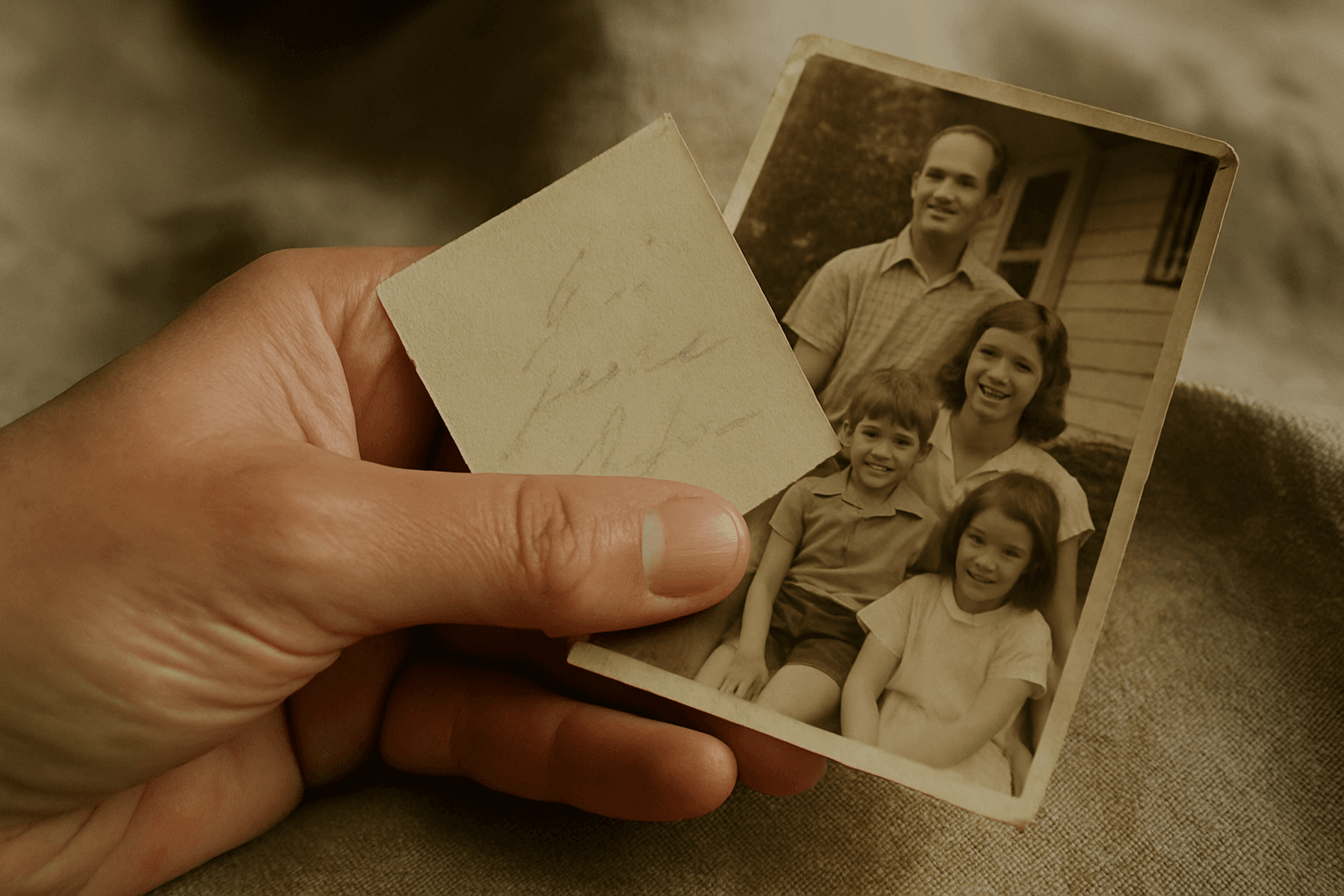
Now, picture a different kind of photo: a faded black-and-white print of your grandmother on her wedding day. It’s not in a feed. It’s in a box, or an album, or a frame. It doesn't have likes, but it has something far more valuable: a story. A legacy. A connection to a past that shaped your present.
The digital world is fantastic at the first scenario. It’s built for the flash, the immediate reaction. But what about the second? A new app's arrival on the scene brings this question into sharp focus.
The short answer
The news that the Retro app raised $21M highlights a growing desire for more intimate, curated social sharing among friends. For family photo sharing, this means recognizing the critical difference between a social app built for today's connections and a private archive built for tomorrow's generations. While Retro focuses on peer groups, a true family archive prioritizes privacy, permanence, and the rich context that turns a simple photo into a piece of your family's legacy.
What is Retro?
You may have seen the headlines buzzing across tech sites. According to TechCrunch, the "friend-focused photo-sharing app Retro snags $21M." This significant investment signals a clear trend: people are tired of the massive, impersonal nature of mainstream social media. They're looking for smaller, more meaningful spaces to connect with the people they actually know.
From what has been made public, Retro is designed to fill that gap. It’s not for your thousand followers or your distant professional contacts; it’s for your core group of friends. It’s a space to share moments, inside jokes, and daily life with a curated audience. In a world of public performance, it’s a welcome move toward a more private, intentional kind of social connection.
But this raises an important question for anyone thinking about their family's memories: is a friend-focused app the right home for family-focused history?
The Audience Defines the App
The core difference between an app like Retro and a platform like Memory Murals comes down to one word: audience. When you share with friends, you’re sharing for the present. When you archive for your family, you’re preserving for the future.
These two goals create fundamentally different products. One is built for speed and engagement, the other for depth and permanence. One is a conversation; the other is a time capsule. Neither is inherently better, but using the wrong one for the job can mean your most important stories get lost.
Social Sharing Apps (like Retro)
Designed for instant connection and feedback from peers. They are often fun, easy to use, and great for keeping up with friends' daily lives in a low-friction way.
Social Sharing Apps (like Retro)
Moments are ephemeral, buried in a feed. They lack deep context, and their business models can rely on data or future pivots that may not align with preserving a private legacy.
Family Archive Apps (like Memory Murals)
Built for permanence, privacy, and intergenerational storytelling. They create a secure, dedicated home where memories are enriched with stories, voices, and details for your children and grandchildren.
Family Archive Apps (like Memory Murals)
Requires a more deliberate, thoughtful approach. Building an archive is a slower, deeper process than posting to a social feed, but the result is a lasting family treasure.
Beyond the 'Like': The Story Behind the Photo
The biggest risk of using a social tool for an archival job is the loss of context. On a feed, a photo is just an image. It’s a visual data point that gets a quick reaction. In a family archive, a photo is a prompt—a doorway to a deeper story.
Think about that photo of your grandfather. Is it just a picture of a man in a suit? Or is it the story of how he borrowed that suit from his older brother, how he was so nervous he almost dropped the ring, how your grandmother’s laugh sounded that day? That’s the context that gives a memory its soul. It's the kind of detail that gets lost in a group chat and is impossible to capture in a social media caption. You can end up with a shoebox full of unlabeled family photos, but digital instead of physical.
A true archive is built to capture that soul.
Voice & Text Stories
Attach the actual voice of your loved one telling the story behind the photo. There is no more powerful way to preserve a person's essence.
Permanent, Organized Context
Tag people, dates, and locations. Write down the full story. Everything is saved with the photo, creating a rich, searchable tapestry of your family's history.
Privacy by Design
A family archive should be a sanctuary. It’s an invitation-only space where your family can be themselves, safe from data mining and public scrutiny.
Intergenerational Access
It’s not just for you. It’s for your kids, and their kids. The platform is designed for easy, secure sharing across generations, ensuring the stories survive the storyteller.
This is the work we’re dedicated to at Memory Murals. We believe that the most important stories deserve a home built specifically for them.
Your family’s stories deserve a safe place
Photos, voice recordings, and the stories behind them — private, ad-free, free to start.
Start preserving memories freeFree plan available • No credit card required
Is a 'Retro' Vibe Enough for Your Legacy?
The name 'Retro' itself suggests nostalgia, a look back at the past. But venture-backed social apps are, by their nature, focused on the future—on growth, engagement metrics, and eventual profitability or acquisition. Their roadmaps can change, their privacy policies can evolve, and sometimes, they shut down entirely.
When the product is free, the user's data often becomes the asset. We’ve seen how major platforms use personal photos and data to train AI, a reality that raises serious questions for anyone considering where to store their family's most precious moments. It's a key reason we encourage families to understand the privacy policies of the services they use.
We built Memory Murals on a different foundation. Our business model is simple: a straightforward subscription. We work for you, our members, not for advertisers or data brokers. Our timeline isn't next quarter; it's the next generation.
Our Commitment to Your Family's Story
At Memory Murals, our promise is to provide a private, permanent home for your family's legacy. We will never sell your data or use your memories to train artificial intelligence. Our sole focus is on safeguarding your stories and making them accessible to your family for generations to come. This isn't just a feature; it's the reason we exist.
The news about Retro is exciting. It shows a healthy demand for more human-scale connection in our digital lives. By all means, use it to share a laugh with your college friends or coordinate a weekend getaway. It’s likely a wonderful tool for that job.
But when it comes to the story of your family—the photos, the voices, the memories that define who you are—choose a home built to last. Choose a space designed not for fleeting likes, but for enduring love. The tools are different because the purpose is different. One helps you connect with your friends today; the other helps your great-grandchild connect with you tomorrow.
If you're ready to start building that permanent home for your family's stories, you can start your private archive today.
Get 50 questions to ask your parents — before the stories are gone
The exact prompts families use to draw out the stories nobody ever wrote down. Free, straight to your inbox.
No spam. Unsubscribe anytime.
Frequently asked questions
What is the new Retro photo app?
Retro is a new, friend-focused photo-sharing app that recently raised $21 million in funding. It's designed for sharing moments and memories within a smaller, more intimate circle of friends, as an alternative to larger, more public social media platforms. Its focus is on peer-to-peer social connection rather than long-term family archiving.
Is the Retro app good for sharing family photos?
While you can share any photo on Retro, its primary design is for social sharing among friends, not for building a permanent family archive. For families looking to create a lasting digital legacy with stories and context for future generations, a dedicated private family archive app would be a more suitable choice, offering better privacy and preservation features.
What's the difference between a photo sharing app and a family archive?
Photo sharing apps are built for immediate, social interaction—likes, comments, and fleeting moments shared with peers. A family archive is designed for long-term preservation and intergenerational storytelling. It prioritizes privacy, context, and the ability for future family members to access and understand their history, focusing on legacy over likes.
How can I privately share photos with just my family?
To share photos privately with family, you can use a dedicated family archive app like Memory Murals, which is built with privacy as a core feature. Other options include creating shared albums on services like Apple Photos or Google Photos, but it's crucial to review their privacy settings. Always choose a service where you control who sees your family's precious moments.
Why is privacy important for a family archive?
Privacy is crucial for a family archive because it creates a safe, trusted space for sharing vulnerable and personal stories. It ensures that intimate family moments, voices, and histories are not used for data mining, advertising, or AI training. Strong privacy controls protect your family's legacy from being exposed or exploited, preserving it exclusively for the people you choose.
About the author
Patrick Moore, Founder of Memory Murals
Patrick Moore is the founder of Memory Murals. He built it after realizing how much of his own family's history had quietly slipped away — to help families preserve their stories, voices, and photos while they still can.
Related Stories

Comparisons
The Best Private Family Photo Sharing Apps in 2026 (Honest Facebook Alternatives)
Most families already know they want off Facebook. The real question is where to go. We compared the 8 most popular private family photo sharing apps — honestly, with the tradeoffs that actually matter.
Patrick Moore • April 10, 2026

Insights
Why Privacy is the Heart of Memory Murals
In an age of oversharing, Memory Murals was built on privacy. Learn why your family's story deserves a space free from ads, algorithms, and public scrutiny.
Patrick Moore • December 10, 2025
Insights
Meta's New Photo Rule: How to Keep Family Memories Truly Private
Meta's latest policy update raises questions about how our family photos are used online. Can they use your pictures without permission? We break down what the new rule means for your privacy and show you how to create a truly private, ad-free home for your most precious memories.
Patrick Moore • June 19, 2026
See the version we built.
Voice-first, multi-contributor, and priced on one page — $12.99/mo, $99.99/yr, or a $7 weekend pass. Free for 7 days.