
iOS 27 AI, Privacy, and Your Family Photos
Apple's new iOS 27 brings powerful AI features to Siri, giving it access to your photos and messages. While convenient, this raises new questions about family privacy. We'll explore what this means for your most precious memories and how a dedicated private archive can offer peace of mind.
Patrick Moore, Founder • June 14, 2026
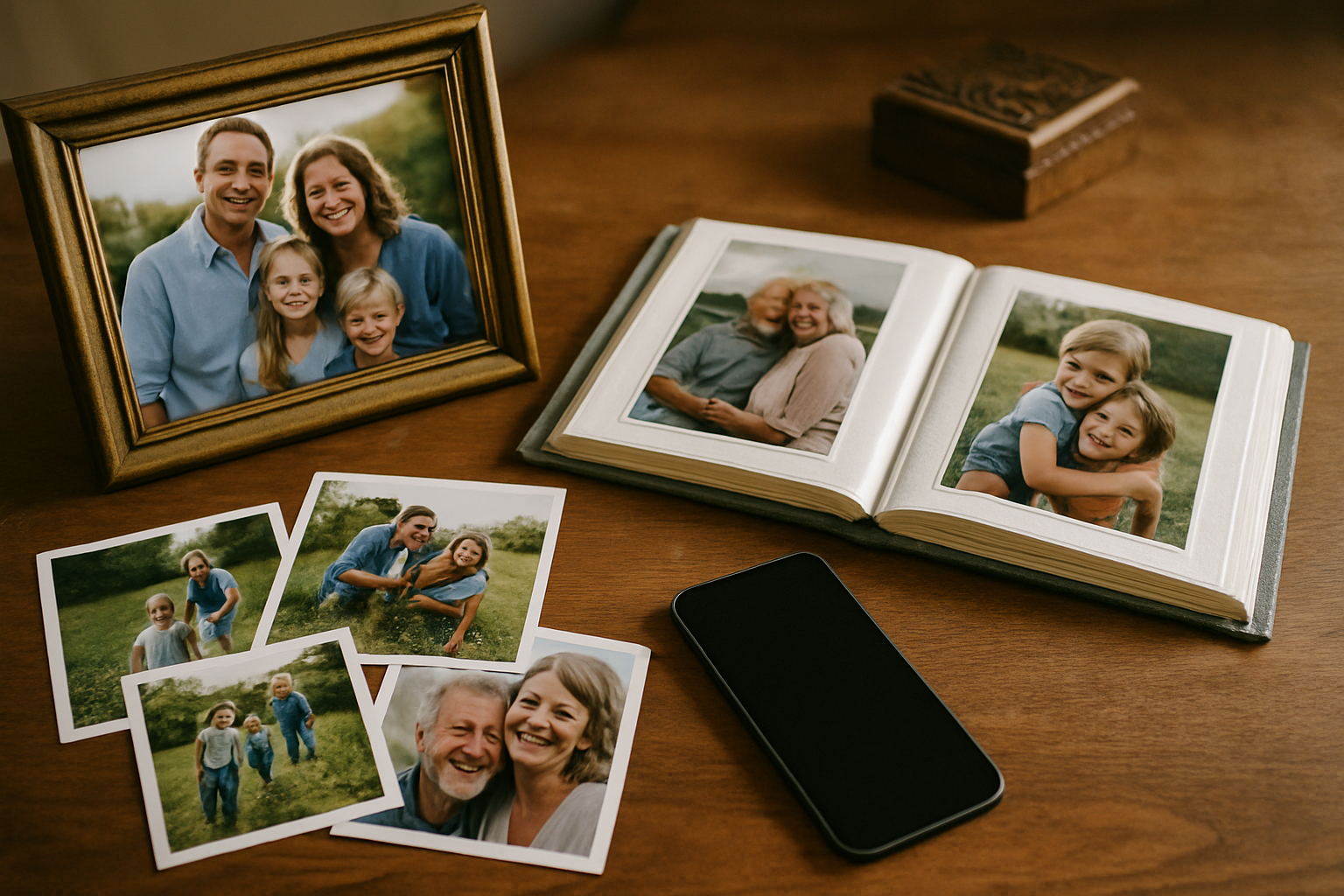
I have a terrible habit of taking a dozen photos of the same thing. My camera roll is a chaotic mix of blurry toddler shots, duplicate sunset pictures, and screenshots of recipes I'll never make. The other day, I wanted to find a specific photo of my daughter wearing a yellow raincoat. I typed “toddler yellow jacket rain” into my phone's search bar, and after a moment, there it was. It felt like magic.
That magic is about to get a whole lot more powerful. At its recent developer conference, Apple announced that with iOS 27, Siri and a new “Apple Intelligence” system will be able to dig deep into our personal data—our messages, our emails, and yes, our photos—to be more helpful. The convenience is undeniable. Imagine asking, “Show me photos from Dad’s birthday where everyone is smiling.”
But as I thought about it, a different feeling crept in. My photo library isn't just data. It’s a life. It’s the first photo of my son after he was born, the last picture I have of my grandmother, the silly, private moments that make up a family. The idea of this intimate history becoming accessible to a system-wide AI, however smart, gives me pause. It’s a new frontier for privacy, and one we need to navigate carefully.
The short answer
Apple's iOS 27 integrates a new AI, dubbed Apple Intelligence, that can access personal data like photos and messages to provide proactive assistance. This raises new privacy questions for families. While convenient, it means your entire photo library—a visual record of your life—could be processed by a system connected to all your apps. The core concern is balancing this new utility against the potential risks of broader data access, which is different from storing memories in a dedicated, private archive designed only for preservation.
What We Know About iOS 27 and AI
Based on the announcements from WWDC 2026, the goal of iOS 27’s AI is to create a truly personal assistant. By understanding the content of your photos and conversations, Siri can do much more complex things. It can find information, organize your day, and connect dots you might have missed. Apple has long championed its privacy features, and I have no doubt they’re building this with more safeguards than many competitors.
But the fundamental architecture is changing. Until now, my photo library has been a relatively siloed application. I open it, I look at photos, I share them. With iOS 27, it becomes a data source for an intelligence layer that spans the entire operating system. This is a powerful shift from an app you use to a resource the phone consumes to understand you better.
The Convenience of Integrated AI
The upside is clear: a seamless, almost prescient user experience. Your phone will understand context without you having to spell it out. Finding specific memories, organizing trips, and creating summaries will become effortless. It's the promise of technology fading into the background and simply serving your needs.
The Privacy Risk of Centralized Access
The downside is more abstract but just as real. When a single AI has keys to your entire digital kingdom, it creates a much larger and more valuable target. We've seen headlines about rogue employees at major tech companies accessing user data. A sophisticated AI with access to everything from your private messages to your family photos represents a new level of personal data consolidation.
It's Not Just Apple
This move by Apple isn't happening in a vacuum. It’s part of an industry-wide race to build the most capable AI, and that requires enormous amounts of data. We recently saw news about how to opt out of Google’s new AI training default, and a college photo app's pivot into an AI data business — both showing that our data is often swept in by default, not by choice. (If you're weighing where to keep family photos instead, our roundup of private family photo sharing apps compares the options.)
This push for data comes at a time when data breaches are frighteningly common. We see headlines almost daily about breaches at universities, healthcare companies, and government agencies. Even more troubling, governments themselves are wrestling with who should have access to powerful AI models, as seen with recent US restrictions on Anthropic's latest AI.
When we place our most sacred memories—the visual history of our families—onto these mainstream platforms, we're placing them in the middle of this turbulent landscape. The platform's primary goal is not preservation; it's utility, engagement, and the development of its own technology.
The Ecosystem Approach
In an ecosystem like Apple's or Google's, your photos are a data point that helps the whole system work better. The AI's goal is to improve your immediate experience across maps, mail, search, and messaging. Your memories serve the system.
The Archive Approach
In a purpose-built archive, the system serves your memories. The platform's only goal is to protect, organize, and share your family's story according to your rules. It is intentionally separate from your daily digital life to ensure its integrity and privacy.
Why a Separate Archive Still Matters
I think of it like this: my iPhone is my smart wallet. It’s incredibly useful. It has my keys, my money, my communication tools. I use it every minute of every day. But I don’t keep my family heirlooms in my wallet.
Those irreplaceable things—the fragile letters from my grandfather, my parents' wedding album, the one good photo of my great-grandmother—belong in a safe deposit box. A place built for one purpose: safekeeping.
That's the philosophy we used when building Memory Murals. We believe that a family’s story is a sacred trust, not a data set for training the next generation of AI. We wanted to create a private, secure family archive that was completely separate from the churn of social media and the data appetites of big tech ecosystems. Our commitment to privacy is at the heart of everything we do.
Your data is never sold, never used for advertising, and never used to train machine learning models. It is yours and yours alone. It's a quiet, permanent home for your family's story. If you're looking for that kind of dedicated space, you can start building your own private mural and see if it feels right for your family.
Technology will continue to march forward, offering amazing new conveniences. The new AI in our phones will undoubtedly do wonderful things. But as it weaves itself deeper into our lives, it becomes more important than ever to consciously decide which parts of our lives are for public utility and which parts are for private legacy. Some memories aren't just data points; they are the whole point.
Get 50 questions to ask your parents — before the stories are gone
The exact prompts families use to draw out the stories nobody ever wrote down. Free, straight to your inbox.
No spam. Unsubscribe anytime.
Frequently asked questions
What is Apple's new AI feature in iOS 27?
At its 2026 WWDC, Apple announced new AI capabilities, sometimes called Apple Intelligence, integrated into Siri for iOS 27. This update allows the AI to access and understand personal data on your device, including your photo library and messages, to provide more context-aware and helpful assistance. The goal is to make your device more proactive and intelligent by understanding your personal content.
Is it safe to let AI access all my family photos?
Safety involves a trade-off between convenience and risk. While Apple emphasizes on-device processing for many tasks, broader AI integration creates a new landscape. The risks aren't just about hackers, but also how data is used for future AI training or potential access by company employees, as has been seen at other tech firms. A dedicated, private archive minimizes this risk by keeping precious photos isolated from these large, integrated AI systems.
Can I opt out of iOS 27 AI using my photos?
Apple has a strong track record with privacy controls, but the specific settings for opting out of AI photo access in iOS 27 haven't been fully detailed yet. Tech companies like Google have recently made AI training an opt-out setting, so it's likely Apple will offer some level of control. Users should watch for new privacy settings when the update is released to make an informed choice.
How is Memory Murals different from iCloud for privacy?
iCloud is part of a vast ecosystem designed for broad functionality and AI-powered convenience across all your apps. Memory Murals is a purpose-built, private archive. Its only job is to safeguard your family's memories. Your photos and stories are never used to train AI models, are never accessed by our team, and are kept in a completely separate environment, isolated from the data-sharing needs of a large tech ecosystem.
About the author
Patrick Moore, Founder of Memory Murals
Patrick Moore is the founder of Memory Murals. He built it after realizing how much of his own family's history had quietly slipped away — to help families preserve their stories, voices, and photos while they still can.
Related Stories

Insights
Why Privacy is the Heart of Memory Murals
In an age of oversharing, Memory Murals was built on privacy. Learn why your family's story deserves a space free from ads, algorithms, and public scrutiny.
Patrick Moore • December 10, 2025
How-To Guides
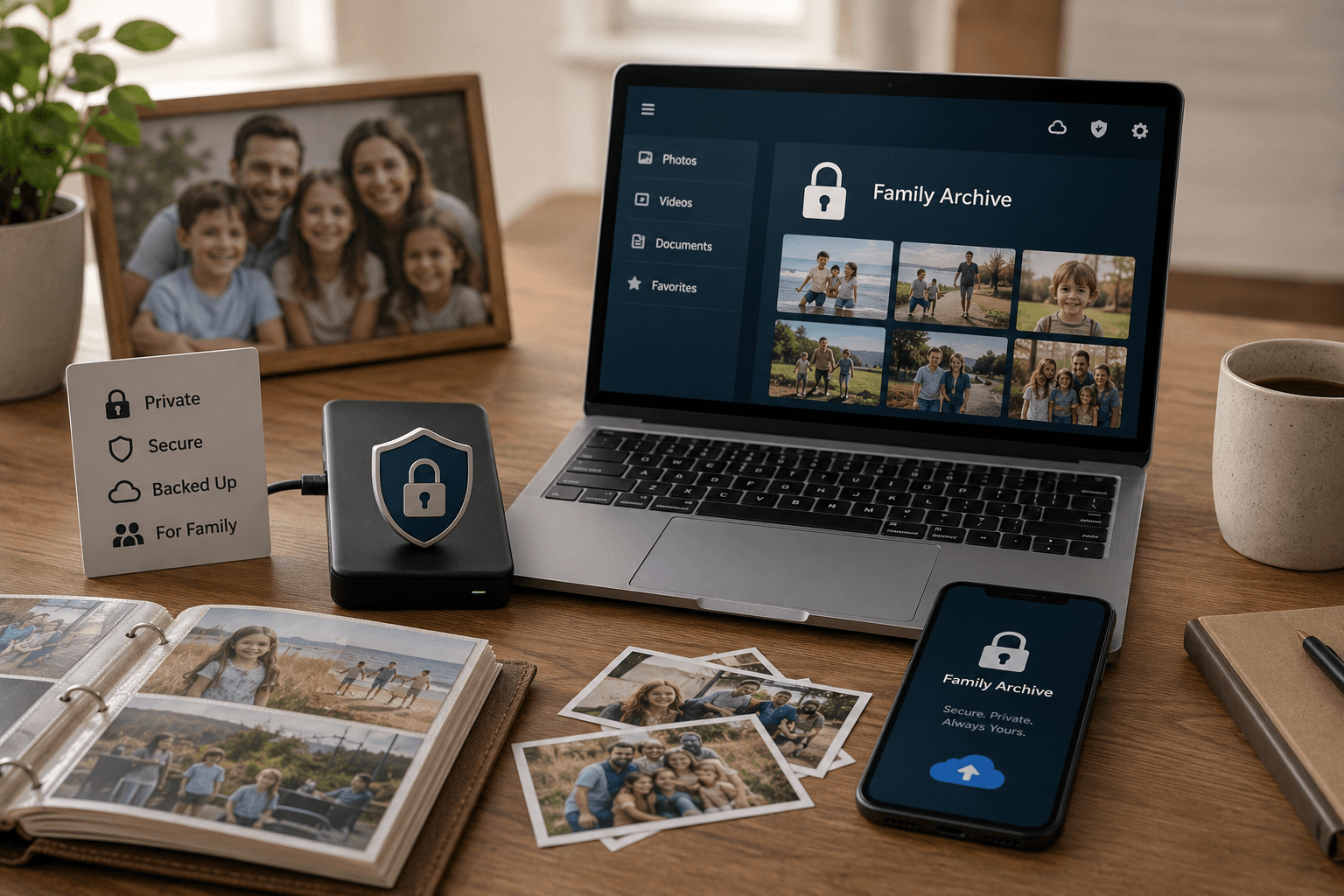
How to Create a Private, Secure Digital Family Archive (2026 Step-by-Step)
Most family photos today live somewhere a stranger's algorithm can scan them or a forgotten password can lock them away forever. Here's how to build a private archive only the people you choose can see — and that doesn't belong to anyone but you.
Patrick Moore • May 27, 2026
Insights
Cancel iCloud+? What Happens to Your Family Photos & Backups
Thinking of canceling your iCloud+ plan to save a few dollars? It's a common thought, but it's crucial to understand what happens next. Your photos, videos, and backups are at risk of permanent deletion. Here’s how to protect your family's memories before you downgrade.
Patrick Moore • August 30, 2026
Preserve your family's memories in one private place.
Start free in minutes. No credit card required.