
Google's AI Video Remix & Your Family Memories
Google Photos recently announced an AI Video Remix tool, promising to automatically create highlight reels from your family videos. But what does this mean for the real stories behind the clips? We explore the pros and cons of AI-generated video and how it compares to a more intentional approach to preserving your family's legacy.
Patrick Moore, Founder • July 20, 2026
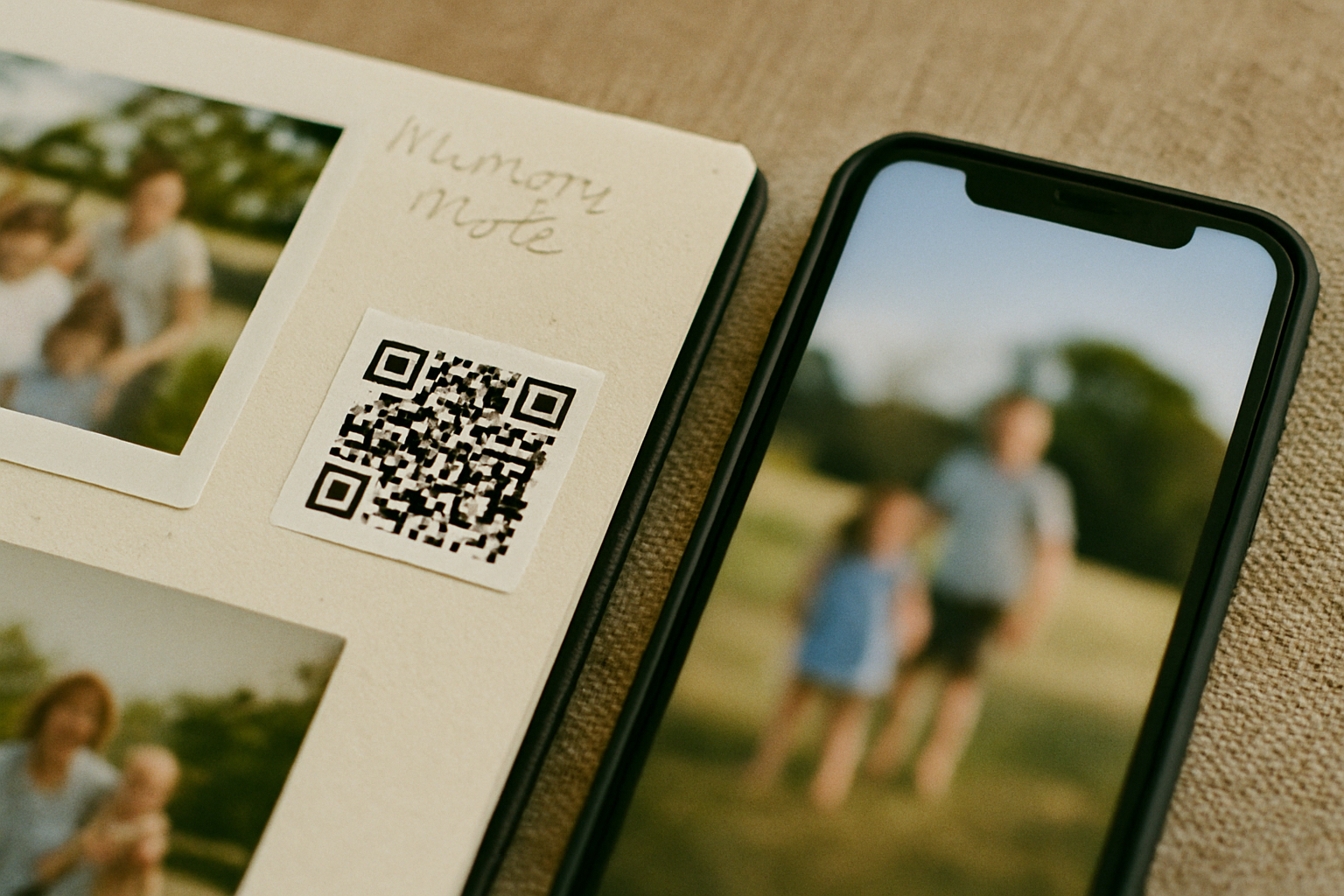
Your phone’s camera roll is a digital shoebox, overflowing with moments. There’s the seven-second clip of your toddler’s first wobbly steps, the shaky pan across the dinner table at Thanksgiving, the thirty seconds of your dad telling the punchline to a familiar story. Each one is a little fragment of a life being lived.
You had every intention of stitching them together. You pictured a beautiful montage of the beach vacation, a highlight reel of the school play. But life, in all its beautiful, messy reality, got in the way. The clips sit there, isolated and silent, waiting for a storyteller who is just too busy.
Now, technology offers a solution. With its new AI Video Remix tool, Google Photos promises to be that storyteller for you. It can sift through that digital shoebox, pick out the “best” parts, and deliver a polished, shareable video in moments. It’s a tempting offer. But when an algorithm becomes the author of your memories, what story does it choose to tell? And more importantly, what parts does it leave out?
The short answer
Google's new AI Video Remix tool automatically edits your video clips into polished highlight reels. While convenient for sharing quick social media updates, it may miss the context and nuance of the full story. An algorithm can't know the inside joke behind a laugh or the significance of a quiet glance. For deep, lasting family archives, a more intentional, human-curated approach ensures the "why" behind the memory is preserved alongside the "what."
A New Tool for Your Digital Shoebox
On July 20, 2026, Google announced a new feature for its ubiquitous photo and video service. While the announcement on their official blog was light on technical specifics, the core idea is straightforward: using artificial intelligence to automate video creation.
The AI Video Remix tool is designed to analyze the content of your videos—the people, the action, the setting—and automatically edit them into a short, stylized movie. Think of it as a director who lives in your phone, ready to assemble a highlight reel on demand. For anyone who has ever felt overwhelmed by the sheer volume of footage they've captured, the appeal is obvious. It’s a way to finally do something with all those clips.
This places Google Photos squarely in the growing field of AI-driven content creation. It’s a powerful tool, but it also represents a specific philosophy of memory: that memories are best consumed as fast, polished, shareable snippets. For some purposes, that’s perfect. For building a family legacy, it’s worth looking a little closer.
The Pros and Cons of AI-Generated Memories
Letting an algorithm take the director's chair has clear benefits, but it also comes with significant trade-offs. When we're talking about something as personal as family history, it's crucial to understand what we gain and what we might be giving up.
Effortless Creation
The biggest advantage is speed and convenience. The tool eliminates the time-consuming and often technical task of video editing. For busy parents or anyone not comfortable with editing software, this makes creating and sharing videos accessible to everyone.
Rediscovering Lost Moments
An AI scanning your entire library might surface wonderful clips you'd completely forgotten about. It can act as a serendipity engine, pulling a forgotten laugh from years ago into a new creation and reminding you of moments that have slipped from conscious thought.
The Storyteller is an Algorithm
An AI doesn't understand human relationships or emotional subtext. It might select a clip with a dramatic zoom or a fast pan, but miss the quiet, two-second shot of a grandparent's hand holding yours. It optimizes for visual data, not emotional resonance, and can't tell the difference between a birthday party and a memorial.
Homogenization of Memory
AI tools often rely on templates, popular music, and trendy editing styles. This can result in your unique, personal family moments looking and feeling like countless other videos on the internet. The very tool meant to highlight your memories can inadvertently strip them of their distinct character.
Why the Director's Cut Matters
An AI-generated video is like a movie trailer. It’s exciting, fast-paced, and hits the high notes. But it’s not the movie. The full film contains the quiet character development, the subtle foreshadowing, and the emotional depth. Our family stories are the same. They aren't just a collection of peak moments; they are a rich tapestry of conversations, mundane routines, and unspoken connections.
This is the core reason why thousands of photos are not preserving memories in a meaningful way. A highlight reel misses the context. It doesn't include the story your uncle was telling just before everyone burst out laughing. It cuts away before your daughter explains the elaborate backstory of the drawing she's so proudly holding up. The AI can show you what happened, but it can never tell you why it mattered.
More Than a Montage
True legacy isn't just a highlight reel; it's the director's cut, complete with commentary. It's the full, unedited video of Grandpa's war story, paired with a note from you about how his voice cracked at the end. It's the five-minute video of a chaotic kitchen scene, preserved because it perfectly captures the feeling of home. These are the textures AI is designed to smooth over.
At Memory Murals, we built our entire platform around this belief. We believe the most important storyteller in your family is you. Technology should serve the storyteller, not replace them. It should provide a safe, permanent home for the full movie, not just the trailer.
Your family’s stories deserve a safe place
Photos, voice recordings, and the stories behind them — private, ad-free, free to start.
Start preserving memories freeFree plan available • No credit card required
A Different Approach to Video Memories
Instead of automating the creation process, Memory Murals focuses on providing the perfect venue for preservation and contextualization. We see video not as content to be remixed, but as primary-source evidence of a life well-lived.
This means we handle video differently. It’s not about filters and trending audio; it’s about permanence and meaning. When you want to go beyond a simple montage, you need a different set of tools—tools built for archiving, not just for sharing.
Here’s how you can build a richer video history, moving from automated clips to a true family archive:
Preserve the Full Story
Upload the entire, unedited video. Memory Murals doesn't limit you to short clips. That 20-minute interview with your mom or the complete footage of a wedding toast can be saved in its entirety, ensuring no nuance is lost.
You Add the Context
A video is just one piece of the puzzle. Alongside each video, you can write the story behind it. Who was there? What was the occasion? What do you remember most? You can even record your own voice telling the story, adding another layer of personal connection for future generations.
Private by Design
Your family's most precious moments shouldn't be used as training data for an algorithm. Memory Murals is a private, subscription-based sanctuary. Your archive is yours alone, encrypted in transit (TLS) and at rest (AES-256), and we never analyze or monetize your personal data. You can learn more about why privacy is the heart of Memory Murals.
Create a Living Storybook
Combine videos with photos, letters, and audio recordings to build a multi-faceted story. Instead of a single, flat video, you can create a rich, explorable Mural that shows a moment from every angle, told by the people who were actually there. Consider learning how to record family video interviews to add even more depth.
AI tools like Google's Video Remix are undeniably powerful and fun. They serve a real purpose in a world where we crave instant connection and shareable updates. But they are built for the present moment.
A family archive is built for the future. It’s a quiet, deliberate act of love for people you may never meet. It requires a human touch, a thoughtful eye, and a storyteller's heart. It's about choosing to preserve the raw, uncut, beautifully imperfect footage of your family's life, and then taking a moment to whisper to the future, "This is why it mattered."
When you're ready to tell the whole story, you can start building your family's private archive today.
Get 50 questions to ask your parents — before the stories are gone
The exact prompts families use to draw out the stories nobody ever wrote down. Free, straight to your inbox.
No spam. Unsubscribe anytime.
Frequently asked questions
What is Google Photos' new AI Video Remix feature?
Google Photos' AI Video Remix is a new tool that uses artificial intelligence to automatically analyze your video clips and photos, then edits them together into stylized, shareable highlight reels. The goal is to make video creation effortless by having an algorithm select what it considers the best moments and set them to music, saving you the time of manual editing.
Is AI-generated video good for preserving family memories?
AI-generated video can be a fun way to create quick, shareable montages for social media. However, for deep preservation, it has limitations. An algorithm can't understand the emotional context, inside jokes, or quiet significance of a moment. It optimizes for visual action, potentially leaving out the subtle but meaningful parts of a memory. True preservation often requires human curation to capture the full story.
What are the privacy concerns with AI video tools?
Whenever you use a large-scale AI tool, it's wise to consider your data privacy. Your personal videos could potentially be used to train the AI models. While companies have privacy policies, these can change. For sensitive family moments, using a private, dedicated archive that pledges not to use your data for model training ensures your memories remain yours alone and are not used for commercial purposes.
How is Memory Murals different from Google Photos' AI video features?
Memory Murals is designed for deep, contextual storytelling, not automated content creation. Instead of an AI making a video for you, we provide a private space to store your full, unedited videos and pair them with your own written stories and audio narration. The focus is on human curation and preserving the 'why' behind a memory, ensuring the complete story is saved for future generations, in your own words.
What's the best way to create a family video archive?
The best approach combines organization and context. Start by gathering all your video files in one place. Focus on capturing full events or conversations, not just short clips. Then, use a platform where you can add notes, stories, or narration to each video. This ensures that future generations will not only see the moment but also understand its importance, who was there, and what was being celebrated.
About the author
Patrick Moore, Founder of Memory Murals
Patrick Moore is the founder of Memory Murals. He built it after realizing how much of his own family's history had quietly slipped away — to help families preserve their stories, voices, and photos while they still can.
Related Stories

Comparisons
We Tested 11 Family Archive Apps — Here's What Actually Works (2026)
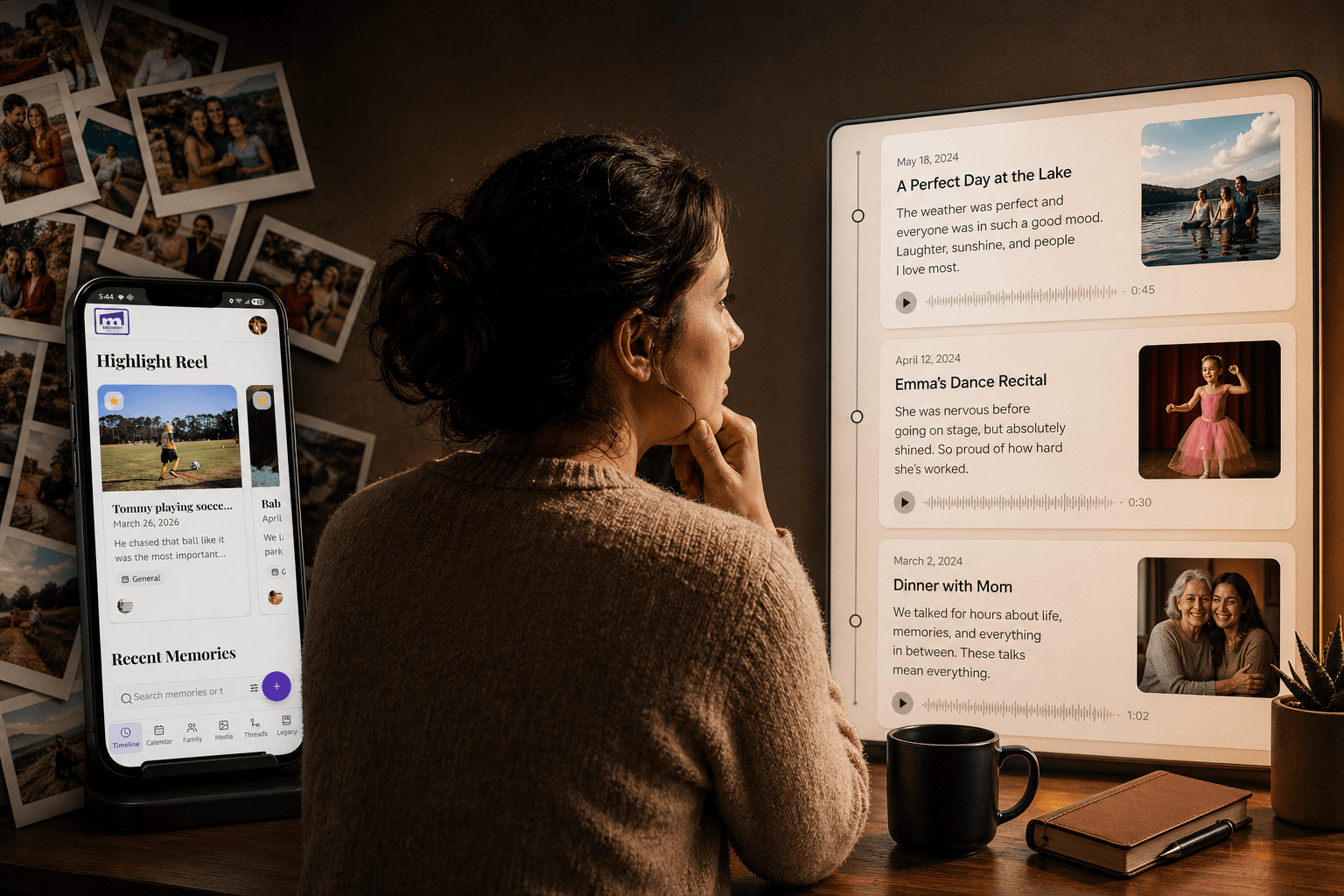
Most family archive apps fall into two traps: they're either too clinical or too focused on death. We tested everything from AI biographers to memorial sites to find what actually works for living families.
Patrick Moore • April 13, 2026
Pillar Articles
Why You Have Thousands of Photos But Feel Like You're Not Preserving Your Family's Memories
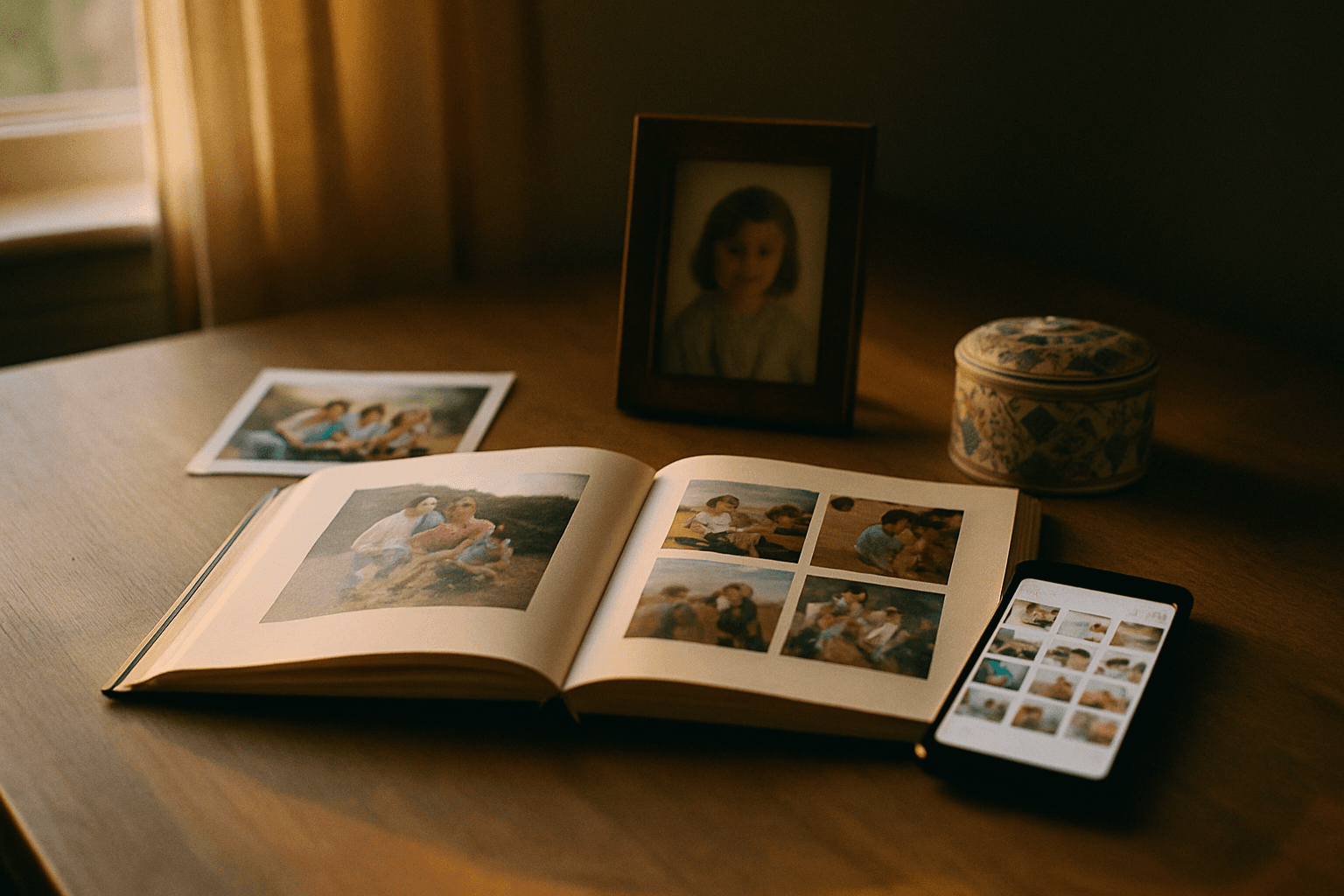
You have thousands of photos and still feel like nothing is being preserved. Here's why volume erodes memory — and the small ritual that fixes it.
Patrick Moore • May 4, 2026
Comparisons
FamilyAlbum vs. Memory Murals: Best App for Sharing with Grandparents?
Choosing the right app to share family photos with grandparents can be tough. FamilyAlbum is a popular, free choice for daily updates, but is it the best for preserving legacy? We compare FamilyAlbum vs. Memory Murals on ease of use for seniors, privacy, and the crucial ability to save stories and voices.
Patrick Moore • September 25, 2026
See the version we built.
Voice-first, multi-contributor, and priced on one page — $12.99/mo, $99.99/yr, or a $7 weekend pass. Free for 7 days.