
Gen Z's Analog Photo Revival
Why are young people suddenly reaching for film cameras and 2000s-era digital point-and-shoots? This trend is about more than just a retro aesthetic. Gen Z is seeking a more intentional, tangible way to capture family memories, moving away from the endless scroll of smartphone photos and toward moments that feel earned and real.
Patrick Moore, Founder • August 31, 2026
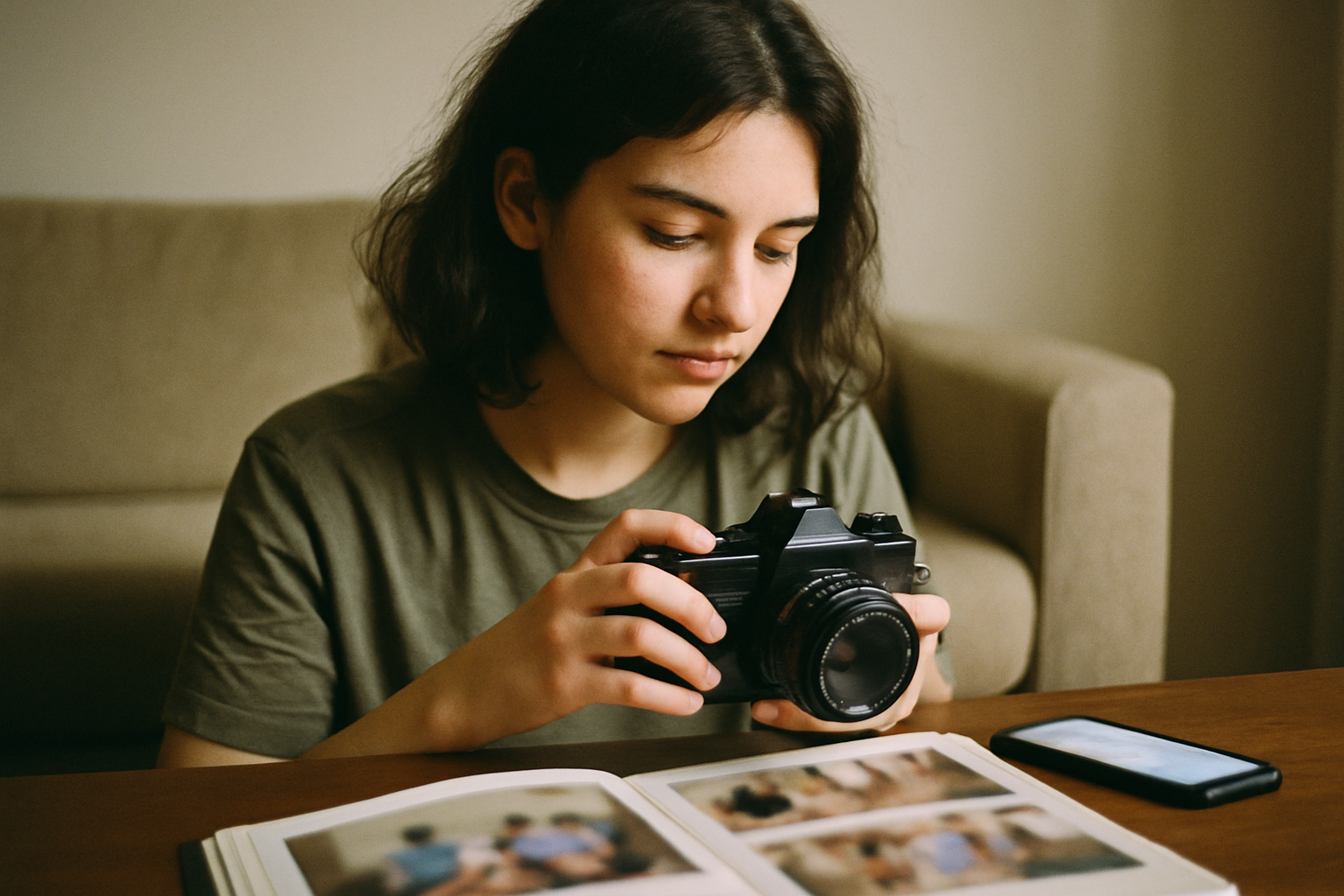
At a recent family get-together, something unusual happened. Amidst the sea of smartphones capturing the scene, a cousin pulled out a chunky, silver point-and-shoot camera. It was a relic from the early 2000s, complete with a slow-to-focus lens and a blinding flash. A few minutes later, another family member was carefully advancing the film on a 35mm camera that looked like it belonged to their grandfather.
There was no instant review, no burst mode, no swiping through a dozen identical shots to find the 'perfect' one. There was just the click of the shutter, a moment of presence, and the quiet faith that a memory had been successfully captured.
This scene isn't an isolated one. All over, young people—Gen Z in particular—are deliberately reaching for the technology of the past. They're buying up old digicams and scouring eBay for film cameras, turning away from the hyper-advanced computers in their pockets. And while it's easy to dismiss this as just another wave of nostalgia, a closer look reveals something deeper at play, especially when it comes to documenting family life.
The short answer
Gen Z's return to old-school cameras is driven by a desire for authenticity and intentionality, not just nostalgia. By choosing film or early digital cameras, they are rejecting the sterile perfection and overwhelming volume of smartphone photos. This trend embraces the friction of a slower process, the finality of a limited number of shots, and the unique aesthetic of analog, turning photo-taking back into a deliberate act of memory-making for important family moments.
The Search for Authenticity
For a generation that grew up with curated social media feeds, the appeal of the 'imperfect' image is powerful. Smartphone cameras are engineered for flawlessness. They automatically smooth skin, brighten shadows, and saturate colors to create an image that is often more flattering than it is true. Filters and editing apps take this even further, creating a digital reality that can feel disconnected from lived experience.
Old cameras, by contrast, are unapologetically real. Film has grain, light leaks, and unpredictable colors. Early digital cameras produce images with a distinctive, slightly blurry, flash-heavy look that screams Y2K. These 'flaws' are now seen as features. They are a visual signature of authenticity, a rebellion against the algorithmic perfection of the modern smartphone image.
When a photo of a grandparent laughing has a bit of motion blur or the color is slightly off, it doesn't feel like a mistake. It feels like a genuine moment, captured as it happened, without digital intervention. This pursuit of the authentic is a core reason why younger generations are finding that the camera might be stealing the memory less when it's a device with limitations.
Every Shot Counts
Think about the last time you took photos at a family event with your phone. You likely took dozens, if not hundreds, of pictures. You fired off bursts to catch a smile, took the same group shot ten times to make sure everyone's eyes were open, and recorded long videos you may never watch again. The result is a camera roll clogged with digital noise.
Now, consider a roll of 35mm film. You have 24 or 36 chances. Each press of the shutter has a real, tangible cost. This scarcity fundamentally changes the photographer's mindset. You don't just point and shoot; you watch, you wait, you anticipate. You become a curator of the moment before you even take the picture. This intentionality makes each resulting photograph feel more valuable, more earned.
This dynamic creates a healthier relationship with memory-making. Instead of experiencing an event through your screen, you are forced to be present, choosing your shots with care. It’s a powerful antidote to the feeling that having thousands of photos doesn't mean you're preserving memories effectively.
Smartphone Convenience
Your phone is always with you, ready to capture any moment instantly. Sharing with family is immediate, and you can take unlimited photos and videos without worrying about cost or space.
The Paradox of Plenty
With thousands of photos, individual images lose their value. They become digital clutter, buried in a massive camera roll and rarely revisited. The pressure to capture everything can take you out of the moment.
Analog Intentionality
Limited shots force you to be selective and present. The process—from shooting to developing—makes each photo feel like a special artifact. The final prints are tangible objects to be treasured.
The Cost and Hassle
Film and development can be expensive and time-consuming. There's a learning curve, and you risk losing moments to technical errors. The delayed gratification isn't for everyone.
Holding a Memory in Your Hands
Perhaps the most significant difference between the old and new ways of photography is tangibility. A photo on your phone is an ephemeral collection of pixels. A printed photograph, a negative strip, or even a dedicated SD card from a digicam is a physical object. You can hold it, pass it around, put it in an album, or frame it on the wall.
This physical connection matters. The act of sitting down with family to look through a stack of freshly developed prints is a shared experience that scrolling through a phone can't replicate. It creates a ritual around remembering. This trend highlights a growing awareness of the difference between digital and physical memory books and their longevity, with many seeking a more permanent, tactile connection to their past.
The Ritual of the Album
The deliberate act of choosing the best photos and placing them in a physical album creates a curated story that can be revisited for generations.
The Surprise of Development
The anticipation of waiting for your film to be developed, followed by the joy (or surprise) of seeing the results for the first time, is a unique and rewarding experience.
A Distraction-Free Device
A camera's only job is to take pictures. It doesn't buzz with notifications or tempt you to check your email, allowing for a more focused and present form of memory capture.
An Aesthetic of Its Own
The unique visual characteristics of film and early digital—from grain and lens flare to pixelation—are embraced as an authentic style that sets these memories apart.
Curating a Legacy, Not Just a Camera Roll
This return to older cameras isn't about Luddism or rejecting technology. It's about re-evaluating our relationship with it. It's a movement toward mindfulness and curation in an age of digital excess. And it holds a vital lesson for anyone tasked with preserving a family's history.
The goal of a family archive shouldn't be to save every single photo ever taken. The goal is to preserve the moments and stories that matter most. The principles behind the analog revival—intentionality, curation, and focusing on the authentic—are the very same principles that make for a meaningful and lasting family legacy.
Whether a photo was taken on a 1985 Minolta, a 2005 Canon PowerShot, or a 2026 iPhone, its true value is unlocked by the context that surrounds it. Who is in the photo? What was happening just outside the frame? Why was this moment important enough to capture? This is the work of building a true archive.
It’s why we built Memory Murals. We wanted to create a space that encourages this same level of intentionality for your digital memories. It’s a private home for your most treasured photos and videos—the ones that would make the cut for the 36-exposure roll—along with the rich, detailed stories that bring them to life. It’s about turning a cluttered camera roll into a curated legacy.
This trend isn't about which camera is 'better.' It’s about a shift in mindset. It’s about realizing that the most precious memories aren't always the most polished or plentiful. They are the ones that feel real, the ones that were captured with intention, and the ones whose stories we take the time to save. Whether your most treasured family photo is a grainy film print or a tack-sharp iPhone portrait, the story behind it is what gives it life. You can start your own family archive today and ensure your most important memories—and their context—are safe for generations.
Get 50 questions to ask your parents — before the stories are gone
The exact prompts families use to draw out the stories nobody ever wrote down. Free, straight to your inbox.
No spam. Unsubscribe anytime.
Frequently asked questions
Why is Gen Z using old cameras?
Gen Z is using old cameras to escape the perfectionism of smartphone photography. The delayed gratification of film, the unique lo-fi look of early digital cameras, and the finite number of shots encourage them to be more present and intentional. This creates a more authentic and tangible record of their lives and family moments, moving beyond the endless, often-forgotten camera roll.
What is the appeal of film photography for young people?
The appeal of film photography for young people lies in its deliberate, hands-on process. Unlike instant digital photos, film requires patience and skill, from loading the roll to waiting for development. This 'friction' makes each photo feel earned and valuable. The distinct grain, color saturation, and occasional imperfections of film also offer a unique aesthetic that stands out from polished smartphone images.
Are digital cameras from the 2000s coming back?
Yes, early 2000s digital cameras, or 'digicams,' are experiencing a major comeback. Valued for their simplicity and characteristic Y2K aesthetic—often featuring soft focus, vibrant flash, and a slightly pixelated look—they offer a nostalgic alternative to hyper-realistic smartphone photos. Their pocket-sized convenience without the distractions of a phone makes them popular for capturing candid, unfiltered moments with friends and family.
How does using an old camera change how you take photos?
Using an old camera forces a shift from quantity to quality. With a limited number of exposures on a film roll or the clunky interface of a digicam, you think more carefully before pressing the shutter. This encourages you to be more present in the moment rather than trying to capture every possible angle. It transforms photography from a passive act of documentation into an active, intentional art of memory-making.
Is it better to use a film camera or a smartphone for family memories?
Neither is inherently 'better,' as they serve different purposes. Smartphones are perfect for capturing spontaneous, everyday moments easily and sharing them instantly. Film cameras excel at creating deliberate, artful memories that feel special and tangible. Many find a healthy balance, using their phone for daily snaps and a film or old digital camera for meaningful occasions, creating a richer, more diverse family archive.
About the author
Patrick Moore, Founder of Memory Murals
Patrick Moore is the founder of Memory Murals. He built it after realizing how much of his own family's history had quietly slipped away — to help families preserve their stories, voices, and photos while they still can.
Related Stories

Insights
The Photographic Paradox: Is Your Camera Stealing Your Memories?
The more we document, the less we may remember. Here's the science behind the photo-taking impairment effect — and how to use photos as cues instead of replacements.
Patrick Moore • February 23, 2026

Pillar Articles
Why You Have Thousands of Photos But Feel Like You're Not Preserving Your Family's Memories
You have thousands of photos and still feel like nothing is being preserved. Here's why volume erodes memory — and the small ritual that fixes it.
Patrick Moore • May 4, 2026
Insights
The Mental Health Benefits of Nostalgia (and When to Step Back)
Nostalgia is more than just a wistful sigh for the past. When engaged with mindfully, looking back can boost our mood, strengthen our sense of self, and connect us to loved ones. Discover the science-backed benefits of healthy reminiscence and learn how to navigate memory without getting stuck.
The Memory Murals Team • August 13, 2026
Preserve your family's memories in one private place.
Start free in minutes. No credit card required.