
The Great Un-Tagging: Why Parents Are Pulling Kids' Photos Offline
A recent court ruling has parents scrambling to remove their children's photos from social media. This isn't just a fleeting headline; it's a pivotal moment in how we think about digital privacy, consent, and the long-term impact of a public childhood.
Patrick Moore, Founder • September 29, 2026

It’s a quiet Tuesday evening. You’re scrolling through your own social media feed, a digital time capsule of the last decade. There’s the first day of kindergarten, the missing front tooth, the disastrous home haircut, the triumphant soccer goal. Each photo is a tiny, love-filled breadcrumb marking a path through your child’s life.
For years, this felt normal. Natural, even. Sharing these moments with friends and family was a way to bridge distances, to build a village online. But lately, a new feeling has started to creep in. A quiet unease. Looking at that public timeline, you realize those moments weren’t just shared with your village. They were shared with the whole world.
Now, a new headline is amplifying that feeling for parents everywhere. It’s not just a feeling anymore; it’s a conversation backed by legal weight, and it’s causing a digital migration of family memories from public squares to private albums.
The short answer
A recent court ruling, highlighted in reports from sources like The Boston Globe, has brought the issue of children's digital privacy to a head. The ruling underscores the legal and ethical complexities of "sharenting," causing a wave of parents to pull their kids' photos offline. This isn't about fear; it's a proactive move to protect children from AI data scraping, future privacy invasions, and to honor their right to control their own story. It marks a significant shift toward private, secure family archives.
A Turning Point for 'Sharenting'
For the better part of two decades, sharing our lives—and our children's lives—online has been the default. We became the first generation of parents to document childhood in public, in real-time. The term “sharenting” was coined to describe this blend of sharing and parenting. It connected us, it created community, and it felt harmless.
But the digital world of 2026 is vastly different from the one where many of us first posted a baby photo. What was once a simple photo-sharing site is now a data-harvesting ecosystem. The recent court ruling, while the specific details remain within the legal system, has acted as a societal alarm bell. Its impact is less about the single verdict and more about the cultural shift it represents: a formal acknowledgment that a child’s life story isn't public domain.
This isn’t about blaming parents who shared with loving intentions. It’s about recognizing that the rules of the game have changed. The platforms where we shared these memories were never designed to be secure family archives. They were designed for engagement, and our family photos became the fuel.
Understanding Your Child's Digital Footprint
The central tension for any parent is the desire to share joy versus the duty to protect. Posting a photo of a birthday party feels innocent, but it contributes to a vast, permanent, and searchable digital footprint for a person who has never given consent.
Sharing Builds Connection
Posting photos allows grandparents in another state to see the first steps. It lets friends celebrate milestones with you. In our often-isolated modern world, online sharing can be a vital thread of community and support.
Sharing Means Losing Control
Once a photo is online, you lose control. It can be saved, altered, and used by anyone. More alarmingly, it can be scraped by AI companies to train facial recognition models or used to create convincing deepfakes that can be hard to detect.
The long-term implications are what's truly driving this change. The silly bathtub photo from today could be seen by a college admissions officer or a future employer in fifteen years. The location tags on your vacation pictures create a detailed map of your child’s life. We are, in effect, writing the first chapter of our children's biographies without their input, and leaving it on a public library shelf for anyone to read.
From Public Square to Private Sanctuary
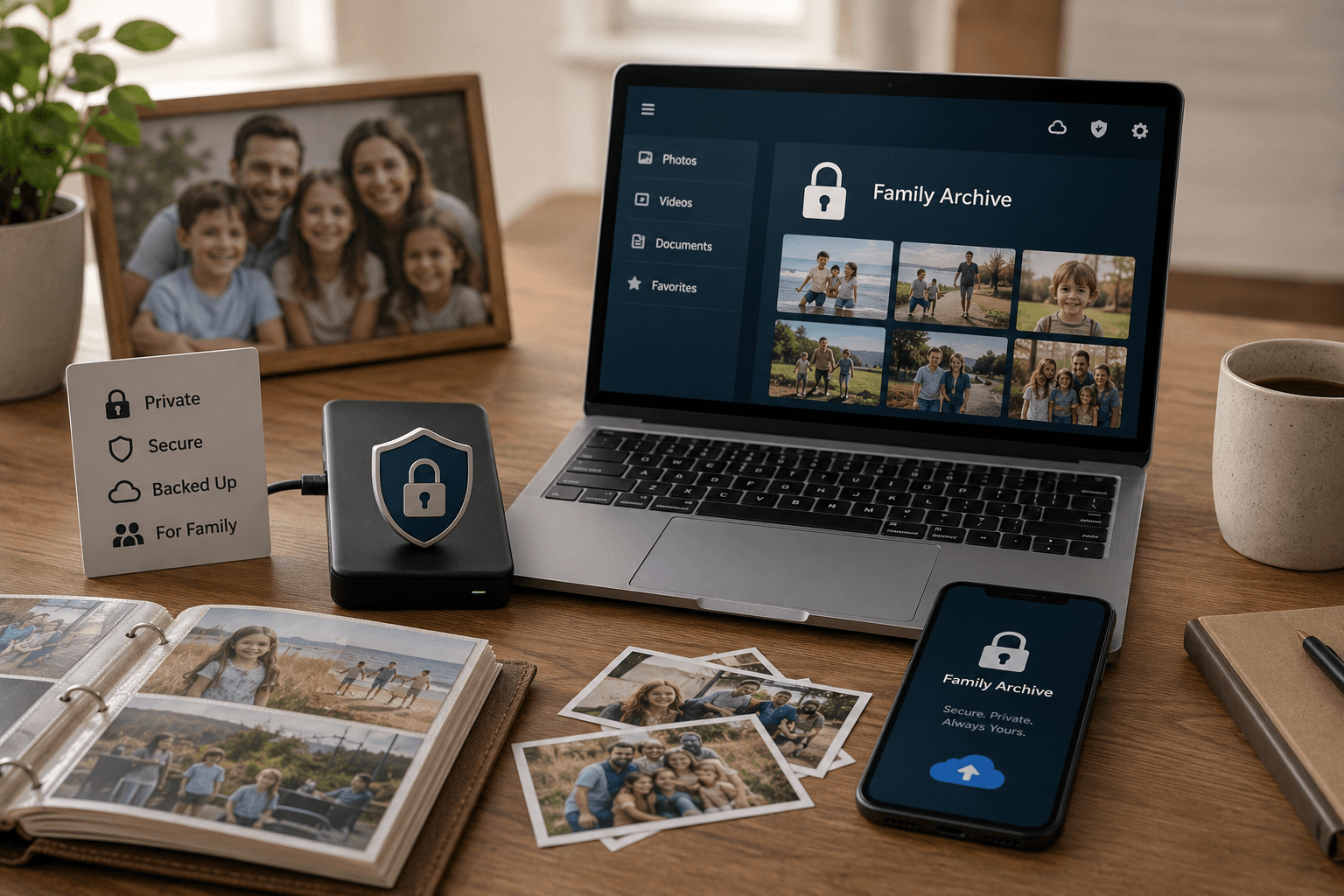
So what’s the alternative? Do we stop capturing these precious, fleeting moments? Absolutely not. The solution isn’t to stop documenting childhood, but to change the venue. It’s about moving your family’s story from the noisy, unpredictable public square into a quiet, protected sanctuary built just for you.
This is the entire philosophy behind why privacy is the heart of Memory Murals. A true family archive should be a place of safety and intention, not a platform for performance or data collection. When considering where your memories should live, the focus should be on principles of ownership, control, and permanence.
You Own Your Data
In a private archive, your photos and stories are yours alone. They are never used to train algorithms or target ads. The platform is a service, not a data mine.
Invitation-Only Access
You should have absolute control over your audience. A private space allows you to hand-pick the family and friends who can view your memories, ensuring the right people see them for the right reasons.
Built for Posterity
Social media feeds are designed for the now. A true archive is built for the future. It’s about preserving not just the image, but the context and story for your children and their children to inherit.
Context is Everything
A photo of your grandpa is just a picture. A photo with his recorded voice telling the story of that day is a legacy. An archive prioritizes depth over likes, preserving the meaning behind the moment.
Practical Steps for Protecting Your Memories
Making the shift from public sharing to private archiving can feel daunting, but it can be broken down into manageable steps. It's a thoughtful process of digital housekeeping that puts you back in the driver's seat.
A Path to a Private Family Archive
Audit Your Public Footprint
Take an afternoon to scroll through your social media profiles. What's publicly visible? Consider archiving or deleting old posts featuring your children, especially those with identifiable information like school uniforms or home locations. Think of it as tidying up their future digital home.
Choose a Private Home for Your Memories
This is the most important step. Research options specifically designed for privacy. A platform like Memory Murals is purpose-built to be a secure, permanent home for your family's most important stories, photos, and recordings. You can explore a list of the best private family photo sharing apps to see what fits your needs.
Communicate With Your Family
Explain to grandparents, aunts, and uncles why you're making this change. Let them know you’ll be sharing photos in a new, more private way. Most will understand and appreciate the care you're taking. Frame it as a new, more intimate way to share that’s safer for everyone.
Establish New Habits
Going forward, make the private archive your default. Instead of reflexively posting to Instagram, upload that new photo to your secure space and invite your inner circle to see it. It's a small change in habit that makes a world of difference for your child's privacy.
Creating this space isn't just about hiding from the world. It’s about creating a rich, meaningful, and safe environment where your family’s stories can truly flourish. When you're ready, you can start building your private family archive today and feel the peace of mind that comes with knowing your memories are finally home.
This isn't a moment for panic, but for thoughtful action. The recent news is simply a reflection of a truth many parents have been feeling for a while: our children’s stories are precious gifts. And like any precious gift, they deserve to be handled with care, shared with intention, and protected for the future.
Get 50 questions to ask your parents — before the stories are gone
The exact prompts families use to draw out the stories nobody ever wrote down. Free, straight to your inbox.
No spam. Unsubscribe anytime.
Frequently asked questions
Why are parents deleting photos of their kids from social media?
A recent court ruling has highlighted the legal and privacy risks of 'sharenting,' or publicly sharing children's information online. This has prompted many parents to delete photos to protect their children's digital footprint from data scraping, AI training, potential misuse, and to respect their future right to privacy. The trend reflects a growing awareness of the long-term consequences of creating a public identity for a child without their consent.
What are the risks of posting children's photos online?
Posting children's photos online creates a permanent digital footprint they can't control. Risks include data mining by tech companies, use in AI training datasets, digital kidnapping (where others use photos to create fake profiles), and potential for future embarrassment or professional harm. It also exposes them to cyberbullying and removes their ability to consent to how their own image is used, which has emerging legal implications.
Can a child sue their parents for posting photos online?
While still a developing area of law, the concept of a child suing their parents over online photos is becoming a reality in some parts of the world. These cases often center on the right to privacy and control over one's own image. Recent court rulings are strengthening the legal standing for such claims, signaling a major shift in how society views a child's digital rights and the responsibilities of parents as their first digital archivists.
How can I share family photos privately?
To share family photos privately, avoid public social media platforms. Instead, use dedicated private family archive apps that are invitation-only and don't mine your data. You can also create shared albums on your phone with specific people or use cloud services with tightly controlled folder permissions. The key is to choose a platform where you, not an algorithm, have complete control over who sees your family's precious moments.
What is a digital footprint for a child?
A child's digital footprint is the complete trail of data left by their presence online, often created by parents long before the child can consent. It includes social media photos, school announcements, comments, and location check-ins. This footprint can be tracked, analyzed, and used by advertisers, data brokers, and AI systems. A carefully managed or non-existent public footprint gives a child a clean slate to build their own digital identity when they are older.
About the author
Patrick Moore, Founder of Memory Murals
Patrick Moore is the founder of Memory Murals. He built it after realizing how much of his own family's history had quietly slipped away — to help families preserve their stories, voices, and photos while they still can.
Related Stories
How-To Guides
How to Create a Private, Secure Digital Family Archive (2026 Step-by-Step)
Most family photos today live somewhere a stranger's algorithm can scan them or a forgotten password can lock them away forever. Here's how to build a private archive only the people you choose can see — and that doesn't belong to anyone but you.
Patrick Moore • May 27, 2026

Comparisons
The Best Private Family Photo Sharing Apps in 2026 (Honest Facebook Alternatives)
Most families already know they want off Facebook. The real question is where to go. We compared the 8 most popular private family photo sharing apps — honestly, with the tradeoffs that actually matter.
Patrick Moore • April 10, 2026

Insights
MS Paint's Invisible Watermarks: A New Privacy Risk for Your Family Photos
A recent discovery reveals that common Windows apps like MS Paint and Photos are adding invisible, unique watermarks to your pictures, even ones you create locally. This raises new questions about digital privacy and who can track our family memories. Here’s what this means and how to protect your photos.
Patrick Moore • September 3, 2026
Preserve your family's memories in one private place.
Start free in minutes. No credit card required.