AWS and Myseum.AI: What's Next for Private Photo AI?
News of AWS funding Myseum.AI signals a major shift in personal tech. It highlights a growing demand for AI that can organize family photos without compromising privacy. What does this mean for the future of our digital memories, and what should you look for in a truly private photo archive?
Patrick Moore, Founder • July 22, 2026
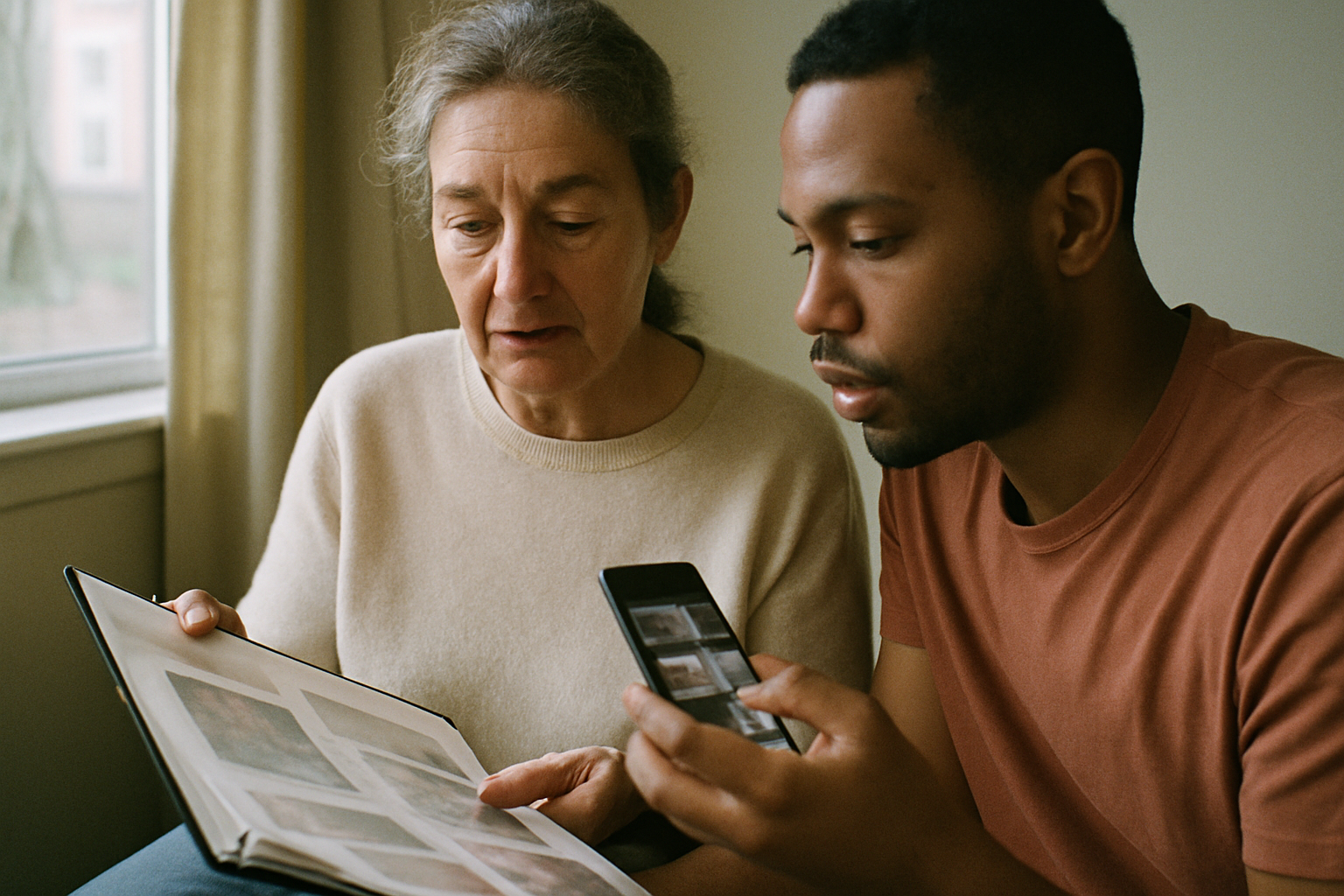
You have the box. Maybe it’s a dusty shoebox in the attic or a plastic tub in the basement. It’s filled with curled photographs, slides you can’t view, and envelopes of negatives. Inside are your parents’ wedding, your first birthday, a family reunion from a decade before you were born. You want to digitize them, organize them, and finally see who’s in that photo of your grandfather in his army uniform.
The task feels monumental. The idea of scanning everything is exhausting. But the thought of uploading these priceless, intimate moments to a free cloud service feels unsettling. You’ve heard the stories—privacy policies that change overnight, photos being used to train facial recognition algorithms. So the box sits, its stories trapped inside, caught between manual labor and a quiet sense of digital unease.
This is the tension so many of us feel. We want the magic of modern technology to help us connect with our past, but we don't want to pay for it with our privacy. A recent piece of news suggests the tech industry is finally starting to understand.
The short answer
News that Amazon Web Services (AWS) is funding Myseum.AI, a company focused on privacy-first AI, validates the growing demand for secure memory solutions. It signals a potential shift away from AI models that learn from your family's personal data. This move suggests a future where you can use powerful tools to organize your photos without sacrificing your privacy, making it more important than ever to know what to look for in a truly private digital archive.
What the AWS & Myseum.AI News Means
According to a recent report from GlobeNewswire, Amazon's cloud computing arm, AWS, is funding a company called Myseum.AI. While the specific details of the funding or the product's features are not yet public, the core concept is what matters: a major tech player is backing a company built on the idea of "privacy-first AI" for personal media.
For years, the unwritten contract of the internet has been a trade: you get powerful, often free, services, and the provider gets to analyze your data to improve its products and sell ads. This model powered the growth of social media and free photo storage. But a quiet shift is happening. People are becoming more aware of their digital footprint and are starting to question what happens to the memories they upload. We've seen public concern over how social media platforms train their AI and how the terms of service for cloud storage can change unexpectedly.
AWS's investment in Myseum.AI is an acknowledgment of this shift. It's a bet that a significant number of people are now willing to seek out—and even pay for—services that treat their memories as precious cargo rather than raw data for a global algorithm. It suggests the market is maturing, creating space for two distinct approaches to AI and our personal lives.
Public Models vs. Private Sanctuaries
When we talk about "AI for photos," we're really talking about two fundamentally different philosophies. Understanding the distinction is the key to protecting your family's story.
General-Purpose AI Models
These are the massive AI systems built by major tech companies. They are incredibly powerful, capable of identifying thousands of objects, translating languages, and generating stunning images. They learn by processing enormous datasets, and often, the data you upload becomes part of that training set. The goal is to make the model itself smarter for everyone.
The Hidden Cost
The trade-off is a loss of control. Your family photos—your child's face, your private moments—could be used to teach an algorithm. Your data is co-mingled and analyzed. The privacy policy you agree to today might not be the one in place tomorrow, as the company's business needs evolve.
Private, Purpose-Built AI
This is a different approach. Instead of a single AI to rule them all, this model uses AI as a specific tool to serve only you. The AI operates within your private, dedicated space. It learns about your family to tag your photos, but that knowledge never leaves your account. At Memory Murals, this is our guiding principle. Our AI helps identify faces in your archive, but that learning stays within your family's space. It isn't used to improve a global model.
The Business Model
Because your data isn't being monetized, these services typically rely on a straightforward subscription. You are the customer, not the product. This means they may not always be free, but their financial incentive is aligned with protecting your privacy, not harvesting your data. This is the core of why privacy is central to Memory Murals.
The news about Myseum.AI suggests that the second path, the private sanctuary, is gaining momentum. It's a move towards a more sustainable and respectful model for handling our most personal information.
How to Spot a Truly Private Service
As "privacy" becomes a popular marketing term, it's crucial to look past the buzzwords and understand what makes a service genuinely secure. If you're looking for a safe home for your family's memories, here are the non-negotiable features to look for.
A Clear Business Model
How does the company make money? If the service is free, they are almost certainly making money from your data in some way. Look for a clear subscription model. A transparent price means their primary commitment is to you, the user.
A Readable Privacy Policy
Don't settle for a 50-page legal document filled with jargon. A company that respects your privacy will explain in plain language what it does and doesn't do with your data. It should explicitly state that your content will not be sold or used for training third-party AI models.
Robust Encryption
Your data should be protected at all times. The industry standard is encryption in transit (using TLS, which protects data as it travels from your device to the server) and at rest (using AES-256, which protects data while it's stored on the server). This ensures your memories are secure from outside threats.
Easy Data Export
True ownership means you can leave at any time, with everything you put in. A private service must provide a simple way to download your entire archive—photos, stories, audio, and all associated data. Your memories should never be held hostage.
Building a private, secure family archive requires a foundation of trust. These features aren't just technical details; they are the pillars of that trust. They are the commitments we made when we built Memory Murals from the ground up.
Your family’s stories deserve a safe place
Photos, voice recordings, and the stories behind them — private, ad-free, free to start.
Start preserving memories freeFree plan available • No credit card required
Beyond the Code: Why This Matters for Families
Ultimately, this conversation isn't about algorithms or server architecture. It's about what these photos represent. That faded picture of your grandmother isn't just a collection of pixels; it's the only visual record of her smile. The audio clip of your dad telling a story is a piece of his voice you can return to forever.
These are not just files. They are your family's unique cultural and emotional inheritance. For decades, we kept them safe in physical boxes. As we move them into the digital world, the need for a safe box—a sanctuary—doesn't disappear. It becomes even more critical.
The promise of AI isn't just about automatically tagging faces or creating slideshows. It's about connection. It's about helping you find the photo of your mom and her sister on the porch swing, and then easily pairing it with the story she told you about that summer. It's about making your archive a living, breathing space where future generations can discover not just what their ancestors looked like, but who they were.
The news that major players like AWS are investing in privacy-focused AI is encouraging. It means the industry is waking up to a truth that families have always understood: our memories are not a commodity. They are the threads that connect us to our past and guide us into the future.
Choosing a home for those memories is one of the most important digital decisions you'll make. It's an act of preservation, of love, and of trust. Whether you're just starting to scan that old shoebox or have thousands of photos on your phone, we hope you'll choose a place built to honor them. You can start building your family's private archive today in a space designed for that purpose alone.
Get 50 questions to ask your parents — before the stories are gone
The exact prompts families use to draw out the stories nobody ever wrote down. Free, straight to your inbox.
No spam. Unsubscribe anytime.
Frequently asked questions
What is Myseum.AI and why is the AWS funding significant?
Myseum.AI is described as a privacy-first AI company. The recent news of its funding by Amazon Web Services (AWS) is significant because it signals a major investment from a tech giant into the concept of private AI for personal media. It suggests a growing market demand for tools that manage sensitive data, like family photos, without using that data for broader model training, which has been a common practice in the tech industry.
Is it safe to use AI on my family photos?
The safety of using AI on family photos depends entirely on the service's privacy policy and business model. Some services may use your photos to train their algorithms. Truly private services, however, use AI in a way that isolates your data, ensuring it remains yours alone. Always read the privacy policy to understand how your photos are handled and whether the company's business model relies on selling data or subscriptions.
What is the difference between public AI models and private AI?
Public or general AI models are trained on vast, often internet-scraped, datasets and may use your inputs to improve their future performance. Your data becomes part of the collective intelligence. Private AI, in contrast, is designed to work exclusively on your data within a secure environment. The AI's purpose is to serve you directly, and your personal information, like family photos and stories, is never used to train a shared, global model.
How can I tell if a photo app is truly private?
Look for a clear business model; if you aren't the paying customer, your data is likely the product. A trustworthy app will have a readable privacy policy that explicitly states your data won't be sold or used for AI training. It should also offer robust security, like encryption for data in transit and at rest, and allow you to easily export all of your information. Transparency is the key indicator of a genuinely private service.
Does AWS funding guarantee Myseum.AI is private?
Not necessarily. AWS provides cloud infrastructure to countless companies with varying privacy standards. The funding is a strong vote of confidence in Myseum.AI's business direction, which is reportedly 'privacy-first.' However, users should always evaluate the final product's terms of service and privacy policy themselves. The news is a positive trend, but the responsibility for verifying privacy claims still rests with the individual user choosing the service.
About the author
Patrick Moore, Founder of Memory Murals
Patrick Moore is the founder of Memory Murals. He built it after realizing how much of his own family's history had quietly slipped away — to help families preserve their stories, voices, and photos while they still can.
Related Stories

Insights
Why Privacy is the Heart of Memory Murals
In an age of oversharing, Memory Murals was built on privacy. Learn why your family's story deserves a space free from ads, algorithms, and public scrutiny.
Patrick Moore • December 10, 2025

Comparisons
The Best Private Family Photo Sharing Apps in 2026 (Honest Facebook Alternatives)
Most families already know they want off Facebook. The real question is where to go. We compared the 8 most popular private family photo sharing apps — honestly, with the tradeoffs that actually matter.
Patrick Moore • April 10, 2026

Insights
Google Photos Changes Mean Your Pictures Disappear Faster
A recent Google Photos change halves the time you have to recover deleted photos, from 60 days to just 30. This seemingly small update has big implications for your family's digital legacy, making accidental deletions more permanent. We'll explore what this means and why a dedicated archive offers better protection.
Patrick Moore • September 8, 2026
Preserve your family's memories in one private place.
Start free in minutes. No credit card required.