How to Opt Out of Meta's AI Photo Usage
Meta's new AI can remix your public Instagram photos without your explicit consent. This guide explains why this matters for your family's memories and walks you through the steps to opt out and protect your pictures from being used in AI image generation.
Patrick Moore, Founder • July 9, 2026
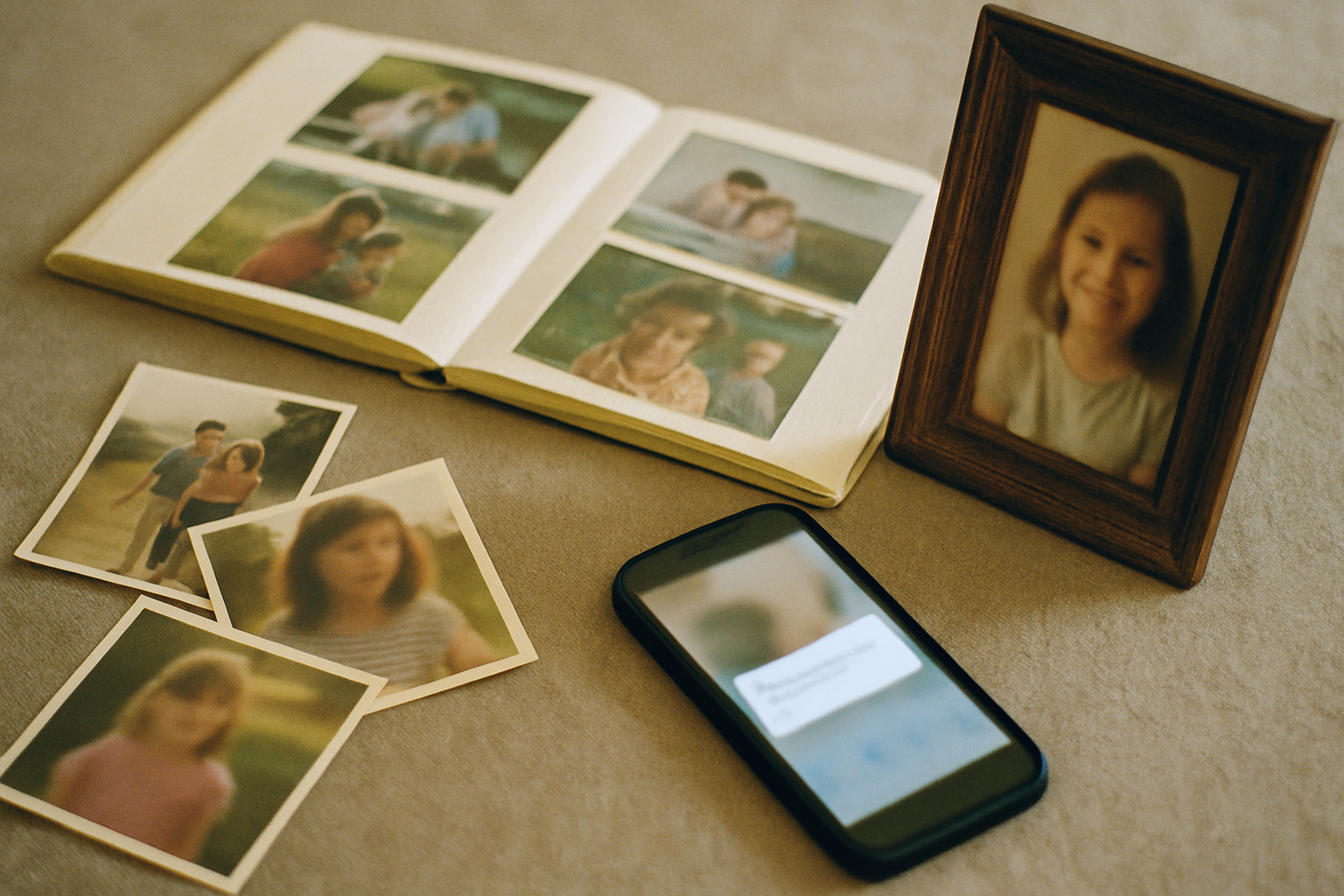
You post a quick photo to Instagram: your daughter, beaming, holding the giant zucchini she grew in the garden. It’s a small, sweet moment, shared for grandparents and a few close friends to see. You get a few heart emojis, a comment from your cousin, and you move on with your day.
Most of us think of this as a modern-day photo album, a casual way to keep loved ones in the loop. We aren’t thinking about what happens to that photo next. We assume it just… sits there. But lately, that assumption is being challenged.
Recent headlines have revealed that Meta, the parent company of Instagram and Facebook, can use your public photos to train its new generative AI tools. That sweet picture of your daughter and her zucchini could become raw material for an AI to learn from, potentially allowing strangers to remix or alter your images in ways you never intended. It’s a jarring thought, and it fundamentally changes the contract we thought we had with these platforms.
The short answer
Meta is using public Instagram posts to train its AI image generation tools, but the company provides a process to opt out. To protect your photos, you need to find the specific data rights form within your Instagram account's help or privacy settings. You will likely need to fill it out and state your objection to your content being used for AI training. This is the most direct way to formally request that your public photos are excluded.
Understanding Meta's New AI Tool
According to reports from outlets like WIRED and The New York Times, Meta has rolled out an AI feature that can use the vast library of public Instagram photos as its learning material. When you post a photo publicly, you're not just sharing it with your followers; you may also be feeding it into a massive AI model.
This isn't just about the AI seeing your photo. Generative AI learns patterns, styles, and subjects from the data it's trained on. It can then use that knowledge to create entirely new images. Social media users have raised concerns that this could allow people to take a public photo—of you, your child, your home—and use an AI tool to alter it. The backlash from privacy advocates has been swift and significant.
This marks a major shift. Before, the main privacy concern on social media was about data collection for advertising. Now, the very content of your life—the images that make up your family's story—can become an active ingredient in someone else's creation. The line between viewer and user is blurring, and your memories are caught in the middle.
The Public Square vs. The Family Album
For generations, family photos were kept in a shoebox, a dusty album, or a frame on the mantelpiece. They were private by default. The internet, and social media in particular, changed that. We traded privacy for convenience and connection. But we're now seeing the unintended consequences of that trade.
Sharing family photos on a public or semi-public platform was always a calculated risk, but the risks were different. You worried about a stranger reposting a photo, or maybe a comment from someone you didn't know. The idea that the photo itself could be deconstructed and used to teach a machine is a new, more abstract threat.
Sharing on Social Media
It's fast, easy, and the primary way many of us keep distant family and friends updated on our lives, especially the milestones of children and grandchildren.
The Hidden Cost
You lose control. Your photos can be scraped, archived, and now, used to train AI systems in ways you never agreed to, turning personal memories into public data.
Community and Connection
Platforms like Instagram allow you to find and connect with others who share your interests and experiences, creating a sense of community around shared moments.
A Permanent Record
Opting out of AI training is a good step, but it highlights a larger issue: once something is public online, it's nearly impossible to fully erase it or control its future use.
The photos of your family aren't just data points. They are your legacy, your history, the visual proof of your life's most important relationships. They deserve a space that respects their meaning, not one that sees them as fuel for an algorithm.
A Step-by-Step Guide to Protect Your Photos
Navigating privacy settings can be confusing, but taking action is the first step toward reclaiming control. While Meta hasn't made the process a single click, reports confirm an opt-out path does exist. Here’s a general guide to what that looks like.
Finding and Submitting the Opt-Out Form
Locate the Rights Form
The opt-out option is typically buried within Instagram's settings. Start by looking in sections related to "Privacy," "Help Center," or "Data Policy." You are searching for a form related to your data rights or how your information is used. The exact path can change, so you may need to search for terms like "generative AI data usage" or "object to data processing."
Fill Out and Submit Your Request
Once you find the form, you'll need to provide your details and state your reason for the request. You can explain that you do not consent to your personal photos, especially those featuring family and children, being used to train generative AI models due to privacy concerns. Be clear and direct in your request.
Confirm and Monitor
After submitting the form, you should receive some form of confirmation from Meta, even if it's just an automated email. It's a good idea to take a screenshot of your submission for your records. Keep in mind that these requests may take time to process.
An Important Caveat
Opting out is a crucial step, but it's more of a shield for the future than a way to erase the past. It's unclear if this process removes data that has already been used to train models. The best long-term strategy is to be mindful of what you make public in the first place. For memories that are truly precious, a public platform may no longer be the right home.
The Case for a Dedicated Family Archive
Opting out is a reaction to a problem. But what if you could build a space for your family's memories where this problem doesn't exist in the first place? That's the core idea behind why we built Memory Murals.
Social media is designed for broadcasting. A family archive is designed for preservation. The goals are fundamentally different. A true private archive offers a different promise:
- You Are in Control: You decide, on an individual basis, who gets to see your family's stories. Everything is invitation-only.
- Privacy is the Default: Your photos and stories are not for sale. They are not used to target you with ads or to train third-party AI models. The platform's business model is aligned with protecting your memories, not monetizing them.
- Context is King: A memory is more than a picture. It’s the story behind it, the voice of the person telling it, the connection to other moments in your family's history. An archive is built to capture that richness, not to chase likes and engagement.
Choosing to keep your most treasured memories off public platforms isn't about hiding from the world. It’s about creating a safe, intentional space where your family's legacy can be honored and passed down. You can learn more about our approach in our post explaining why privacy is at the heart of Memory Murals.
Your family’s stories deserve a safe place
Photos, voice recordings, and the stories behind them — private, ad-free, free to start.
Start preserving memories freeFree plan available • No credit card required
This isn't just about security; it's about dignity. Your family's history deserves to be more than a dataset. It's a story, and you should be the only one who decides how it's told.
Auditing Your Digital Footprint
Taking control of your photo privacy starts now, but it also involves looking back. It's worth taking an hour to scroll through your own Instagram or Facebook profile and review your past posts.
Ask yourself:
- What photos are set to "Public" that contain sensitive family moments?
- Are there pictures of children that you'd be more comfortable making private?
- Could an old, forgotten photo be misinterpreted or used in a way you wouldn't like?
You can change the audience for individual posts or make your entire account private. This process of reviewing your online presence is a key part of managing your digital legacy—the story you'll leave behind online for future generations.
It’s a simple act of digital housekeeping, but it’s one of the most powerful things you can do to align your online presence with your real-world values.
Technology will continue to evolve in ways we can't predict. The tools will get more powerful, and the lines will get blurrier. But the importance of family, memory, and story remains constant.
Choosing where and how we share those stories is one of the most important decisions we make in the digital age. It’s not about rejecting technology, but about using it with intention. By creating a dedicated, private home for your memories, you’re not just opting out of something; you’re opting in to a more thoughtful way of preserving what matters most. You can start building your family's private archive today, ensuring your stories are safe for generations to come.
Get 50 questions to ask your parents — before the stories are gone
The exact prompts families use to draw out the stories nobody ever wrote down. Free, straight to your inbox.
No spam. Unsubscribe anytime.
Frequently asked questions
What does Meta AI do with my Instagram photos?
Meta is using publicly shared photos from Instagram to train its generative AI models, like Muse AI. This means your images can be used as raw material to help the AI learn and to generate new, entirely different images for other users. Essentially, your public photos can be remixed or used as inspiration for AI creations without your direct involvement on a case-by-case basis.
Can I stop Meta from using my photos for AI training?
Yes, according to recent reports, Meta provides a way for users to opt out of having their public Instagram photos used for AI model training. This typically involves finding and submitting a specific rights form through your account settings. By opting out, you are formally requesting that your content not be included in this process, though the specifics of how quickly this takes effect can vary.
Does opting out of Meta AI remove photos already used for training?
It's not entirely clear. Opting out is intended to prevent your photos from being used in the future, but it may not retroactively remove any data that has already been incorporated into a trained AI model. Think of it like unscrambling an egg—once the data is learned, it can be very difficult to isolate and remove. The most effective strategy is to prevent your photos from being used in the first place.
Are my private Instagram photos safe from Meta's AI?
The current focus of Meta's AI training is on public Instagram posts. If your account is set to private, your photos are generally not included in this public data scrape for AI training. However, privacy policies can and do change. It's always a good practice to regularly review the privacy settings of any social media account where you share sensitive family photos.
What's the best way to share family photos privately?
The most secure way to share family photos is to use a service designed specifically for private archiving, rather than public broadcasting. Look for platforms that prioritize user privacy, give you full control over who sees your content, and do not use your personal data to train AI models or for advertising. A dedicated service like Memory Murals ensures your family's stories and images are kept in a protected, invitation-only space.
About the author
Patrick Moore, Founder of Memory Murals
Patrick Moore is the founder of Memory Murals. He built it after realizing how much of his own family's history had quietly slipped away — to help families preserve their stories, voices, and photos while they still can.
Related Stories
Insights
Meta's New Photo Rule: How to Keep Family Memories Truly Private
Meta's latest policy update raises questions about how our family photos are used online. Can they use your pictures without permission? We break down what the new rule means for your privacy and show you how to create a truly private, ad-free home for your most precious memories.
Patrick Moore • June 19, 2026
How-To Guides
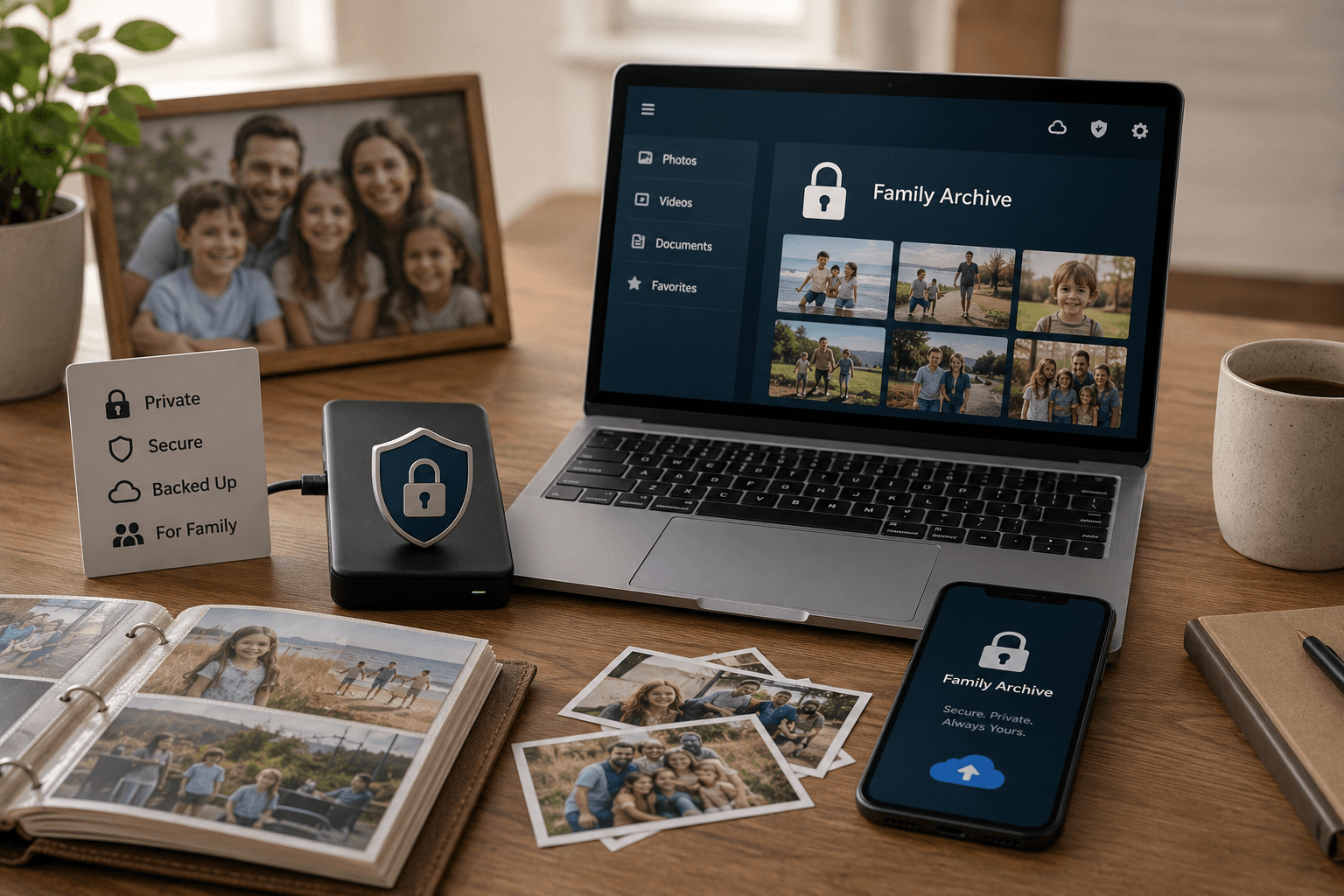
How to Create a Private, Secure Digital Family Archive (2026 Step-by-Step)
Most family photos today live somewhere a stranger's algorithm can scan them or a forgotten password can lock them away forever. Here's how to build a private archive only the people you choose can see — and that doesn't belong to anyone but you.
Patrick Moore • May 27, 2026
Insights
SK Telecom's AI Photo Search: What It Means for Your Family's Privacy
SK Telecom's new service turns your photo library into a searchable AI database, raising new questions about data privacy. This technology can find any person, object, or place in your pictures, but what happens to that data? We explore the implications and why a private archive is more important than ever for your family's memories.
Patrick Moore • August 31, 2026
Now give it somewhere to live.
The file you just saved outlasts nothing on its own. Put it where your family can still find it in thirty years.