Ancestry's New Quebec Obituaries: What They Mean for Your Family History
A massive new collection of 570,000 Quebec obituaries has just been added to Ancestry.com, opening new doors for anyone with Canadian roots. We explore what this means for your family history search and how it highlights the difference between collecting data and preserving the stories behind the names.
Patrick Moore, Founder • October 3, 2026
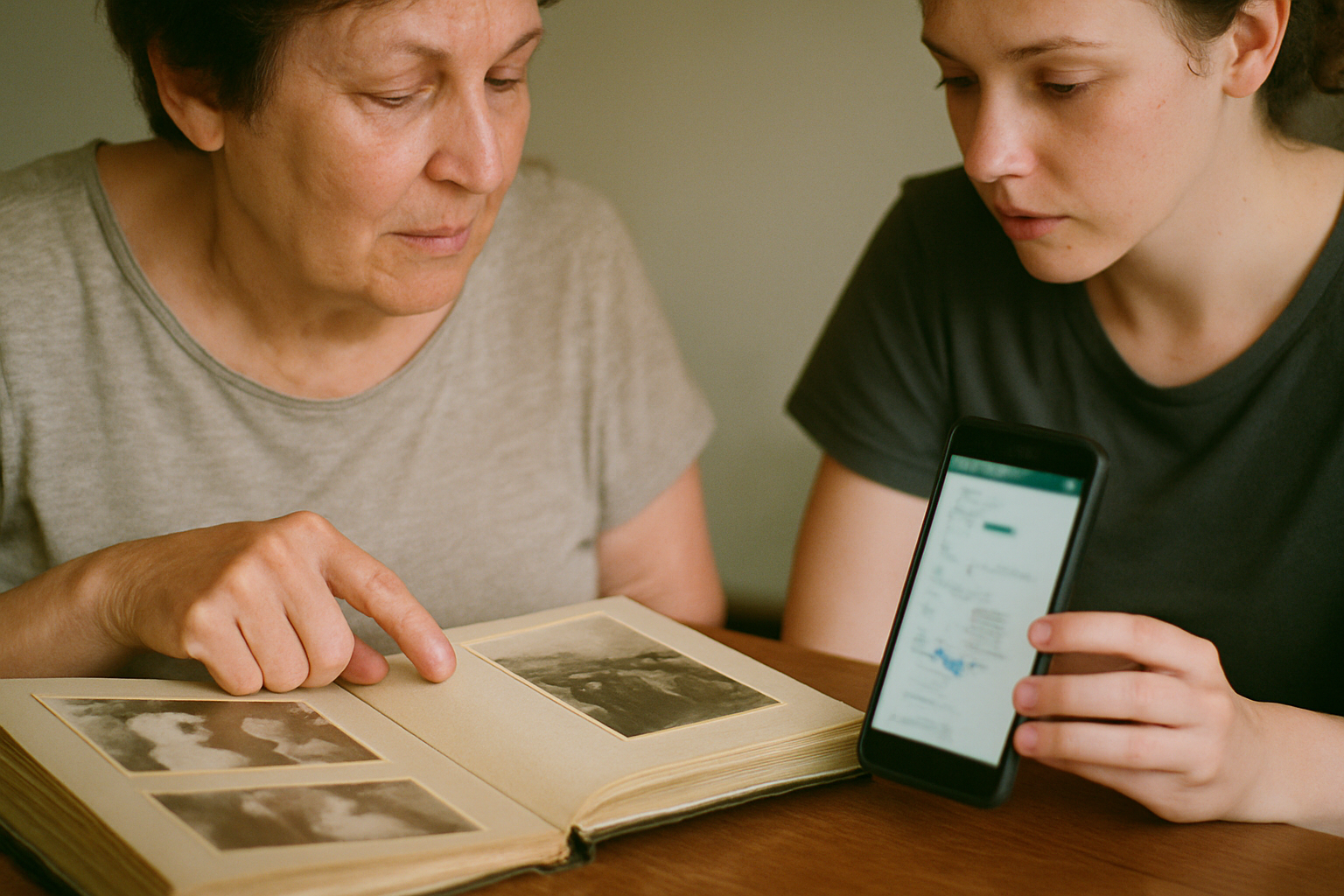
For anyone tracing their family tree, there’s a familiar feeling: the brick wall. You follow a line of ancestors back through census records and ship manifests, and then, suddenly, the trail goes cold. A name on a page is all that’s left, a person reduced to a single data point. For those with Canadian, and especially French-Canadian roots, this can be a common hurdle.
These historical dead ends are frustrating because they represent a disconnect. We know these people lived, loved, and had full lives, but the records only tell us a fraction of their story. We’re left with the names, but not the narrative. That’s why any new collection of historical records feels like a breakthrough—a chance to turn a name back into a person.
The short answer
A major update for family historians: Ancestry.com has added a massive collection of 570,000 Quebec obituaries. According to CIC News, this new resource provides a wealth of information—names, dates, family relationships, and locations—that can help break down brick walls in Canadian family trees. This data is a powerful starting point, but it also highlights the crucial difference between genealogy (finding ancestors) and memory preservation (saving the stories of people you knew).
What This New Collection Means for Your Family Tree
An obituary is more than just a notice of passing; it’s a compact family story. It’s one of the few historical documents that explicitly lists relationships. While a census record might show a family unit living in a household, an obituary often names parents, spouses, children (and their spouses), and siblings who may live across the country. For a genealogist, this is pure gold.
The addition of half a million records from Quebec is particularly significant. Quebec’s unique history and record-keeping practices can sometimes make research challenging. This single, searchable database provides a new, accessible entry point for millions of people with roots in the province. It's a key that could unlock connections and confirm relationships that were previously just educated guesses.
This is the power of platforms like Ancestry. They aggregate vast amounts of historical data, digitize it, and make it searchable. They allow us to build the skeleton of our family history, connecting generations across time and geography.
Genealogy Is Not Memory Preservation
Finding a great-great-grandmother’s obituary is a thrilling moment of discovery. It gives you her name, her husband's name, and maybe the town where she lived. But it doesn’t tell you the sound of her voice, the story of how she met her husband, her favorite season, or the lullabies she sang to her children. It gives you facts, but not the feeling.
This is the fundamental distinction we explore often: the difference between public genealogy and private memory preservation. One is about breadth, and the other is about depth. One is about finding the lost, while the other is about holding onto those we knew.
Here’s a look at how the two approaches compare:
Genealogy Platforms (e.g., Ancestry)
These platforms are unmatched for discovering distant relatives and mapping out your family tree across centuries. They provide access to historical documents that would otherwise be locked away in physical archives, helping you solve family mysteries and understand your broader heritage.
The Limits of Data
The information is often impersonal and can lack emotional context. A name and a date on a census form don't capture a person's personality or life experiences. Furthermore, the public nature of these records can raise privacy concerns for some.
Private Memory Archives (e.g., Memory Murals)
A private archive is built for depth. It's a secure space to save the rich, multimedia stories of your immediate family—the people you actually knew. You can record your dad's voice telling a story, save your mom's handwritten recipes, and add context to old photos that no public record could ever provide.
Not for Distant Research
These platforms aren't designed for discovering unknown ancestors from the 1800s. Their focus is on preserving the living memories and collected stories of your known family, ensuring the essence of who they were is passed down, not just their names.
How to Use This New Resource
So, you have Canadian roots and want to explore this new database. How do you bridge the gap between the data you might find and the stories you want to preserve? It’s about using the historical record as a key to unlock a conversation.
From Record to Remembrance
Search and Verify
Start by searching the new obituary collection on Ancestry for names you know or suspect. When you find a potential match, cross-reference the details with other records you have to confirm it’s the right person.
Identify the Gaps
The obituary will give you names and relationships. Note what's missing: the stories, the personalities, the daily-life details. Who in your family might remember this person or have heard stories about them?
Start a Conversation
This is the most important step. Use the obituary as a prompt. Call your aunt, uncle, or parent and say, "I found Great-Uncle Louis's obituary. It says he lived in Trois-Rivières. What do you remember about him?" This tangible piece of history can open the door to a flood of memories. Be ready with more questions to ask your parents to keep the stories flowing.
Preserve the Whole Story
Don't let those newly shared memories fade away. Record the conversation (with permission, of course) or write down the stories immediately. Scan the photo they show you. This is the living history that complements the historical record.
Building Your Private Family Archive
Once you’ve used a genealogy tool to find a name and a date, the real work of memory preservation begins. That’s where a service like Memory Murals comes in. It’s the place you bring the stories you’ve gathered to give them a permanent, private, and beautiful home.
Genealogy platforms are databases. A family archive is a sanctuary. It’s a space you control, built not for public research but for private reflection and sharing with the people who matter most. It’s where data becomes a legacy.
Your family’s stories deserve a safe place
Photos, voice recordings, and the stories behind them — private, ad-free, free to start.
Start preserving memories freeFree plan available • No credit card required
Instead of just a name and a date, you can create a rich, multimedia portrait of a person. You can add:
- Voice Recordings: The actual sound of your mother telling a story about her childhood.
- Annotated Photos: A picture of your grandparents on their wedding day, with a detailed caption explaining who everyone is and what the day was like.
- Handwritten Letters & Recipes: Scans of precious documents that reveal personality and love in a way a typed record never could.
- Video Interviews: Short clips of your dad explaining how he built the family deck or his memories of his first car.
This is how you ensure the next generation doesn't just know of their ancestors; they can truly know them. It's about building a private and secure family archive that holds the soul of your family, not just its skeleton.
The news from Ancestry.com is fantastic for anyone on a journey of discovery. It’s another powerful tool for mapping the past. But the most important stories are often not in the public record. They’re sitting in the memories of your living relatives, waiting to be asked for.
Use this new data to ask the questions, start the conversations, and then bring those priceless answers home. Because a family tree shows you where you come from, but a family archive shows you who you are. To get started building your own private archive, you can create a Memory Mural today.
Get 50 questions to ask your parents — before the stories are gone
The exact prompts families use to draw out the stories nobody ever wrote down. Free, straight to your inbox.
No spam. Unsubscribe anytime.
Frequently asked questions
What kind of information is in the new Ancestry Quebec obituaries?
The new collection of Quebec obituaries on Ancestry.com contains vital details for family history research. You can typically find a person's full name, birth and death dates, and place of residence. More importantly, they often list surviving family members like spouses, children, parents, and siblings. This information can help you connect branches of your family tree and discover previously unknown relationships, providing crucial clues to guide your further research into historical records.
Is Ancestry.com a good tool for Canadian genealogy?
Yes, Ancestry is an extremely powerful resource for anyone researching Canadian family history. It holds vast collections of Canadian census records, immigration documents, vital records, and specialized databases. The recent addition of 570,000 Quebec obituaries further strengthens its offerings, particularly for those with French-Canadian heritage. It's one of the most comprehensive platforms for building a broad family tree and accessing historical documents about your Canadian ancestors.
What is the difference between Ancestry and a memory preservation app?
Ancestry is a genealogy platform designed for research. Its purpose is to help you discover ancestors and build a family tree using historical records like census data and obituaries. A memory preservation app, like Memory Murals, is for the family you already know. It helps you privately save the personal stories, photos, voice recordings, and memories of your loved ones, creating a rich, emotional archive that captures who they were, not just their names and dates.
How can I preserve family stories related to an obituary?
Use the obituary as a conversation starter. Share the document with living relatives to spark their memories. Ask open-ended questions like, "What do you remember about them?" or "What was their personality like?" Record these conversations—their voice and their words. Then, use a private digital archive to save these stories alongside photos and the obituary itself. This process transforms a historical record into a living memory, preserving the rich context for future generations.
About the author
Patrick Moore, Founder of Memory Murals
Patrick Moore is the founder of Memory Murals. He built it after realizing how much of his own family's history had quietly slipped away — to help families preserve their stories, voices, and photos while they still can.
Related Stories

Pillar Articles
Family History Preservation Services vs. Genealogy Platforms: Which Actually Protects Your Old Documents?
Ancestry and MyHeritage help you research a family tree. Legacybox and EverPresent digitize your originals. Neither one preserves the story behind the documents. Here's how the three categories actually differ — and how to pick for securing old family papers.
Patrick Moore • July 1, 2026

Insights
How AI Is Changing Genealogy & Bringing Old Family Records to Life
AI is no longer just science fiction; it's a powerful new partner for anyone exploring their family tree. From automatically colorizing black-and-white photos to deciphering faded handwriting on census records, artificial intelligence is revolutionizing genealogy. Discover how these new tools are making family history more accessible and vivid than ever before.
Patrick Moore • August 22, 2026

Comparisons
MyHeritage Y-DNA: Trace Your Paternal Line Back Thousands of Years
MyHeritage recently announced Y-DNA testing, allowing users to trace their paternal lineage thousands of years into the past. This deep genetic data offers a new way to understand your roots. Discover how this powerful tool works and how it can complement the personal stories and photos you preserve in a family archive like Memory Murals.
Patrick Moore • August 20, 2026
See the version we built.
Voice-first, multi-contributor, and priced on one page — $12.99/mo, $99.99/yr, or a $7 weekend pass. Free for 7 days.